Chartering a Yacht for Photoshoots: Permits, Insurance & More
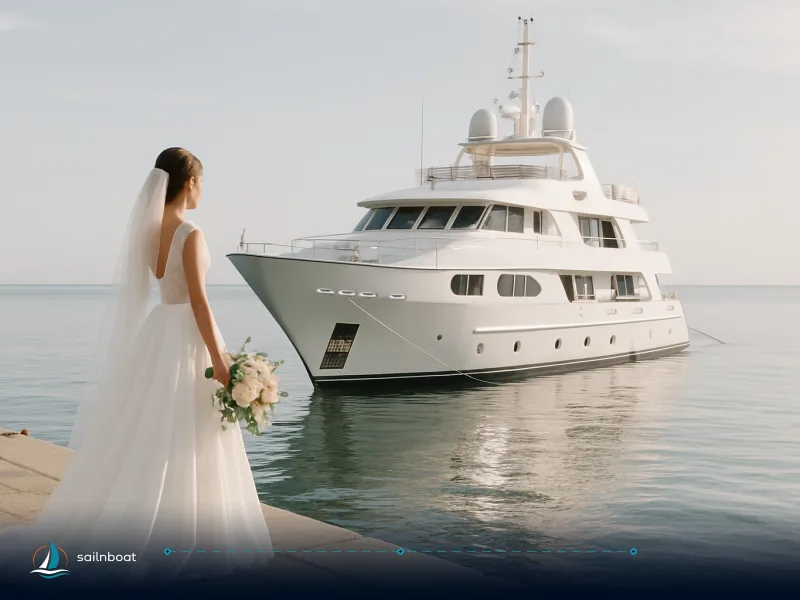
A practical, production-ready guide for booking a yacht photoshoot charter: choose vessel and location, secure marine/port/drone permits, get production insurance, assign crew roles and run a day-of schedule that minimises risk and extra cost.

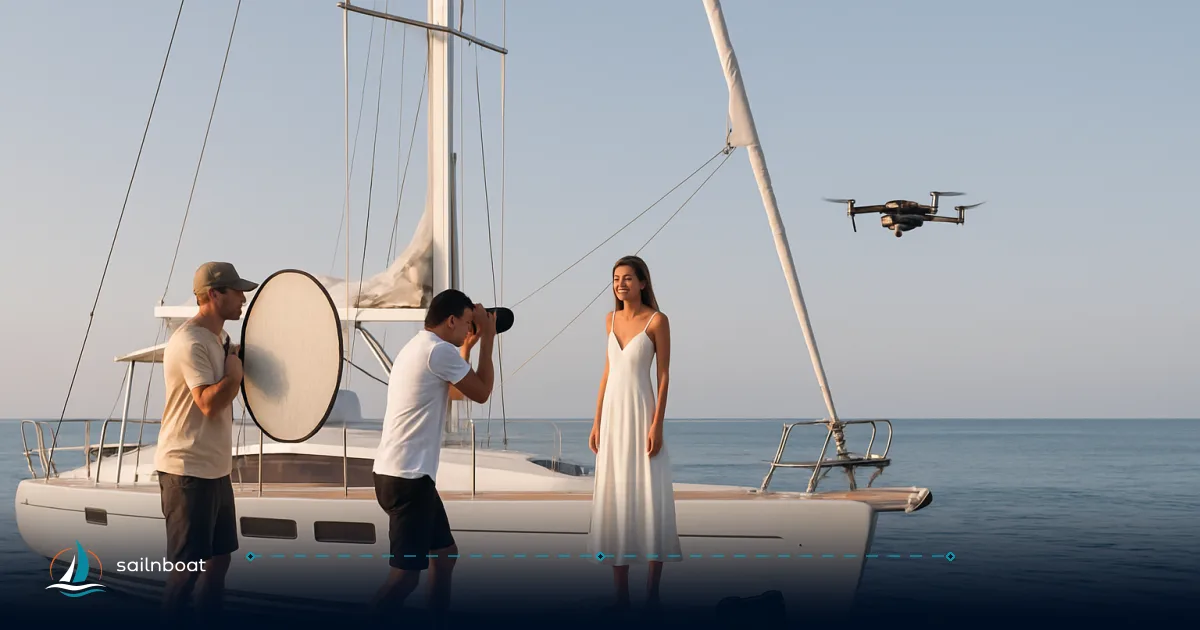
Start with the three non-negotiables: owner/operator permission and a vessel that can legally be used commercially, a production insurance programme that protects the production and the yacht owner, and the correct permits for the port/sea/airspace where you’ll shoot. Nail those three and the day will be straightforward; miss any of them and you risk refusal to sail, denied drone flights, or an uninsured claim that can stop the shoot and cost far more than the day-rate.
Selecting the Right Yacht and Location for Your Photoshoot
A photoshoot needs the right combination of usable deck space, safe working angles and predictable logistics (loading, parking, shore power, transfer time). Choose the vessel and the location together — the same boat in two harbours can be a smooth day or a logistical nightmare.
Yacht Selection Criteria
- Layout and usable deck area: measure and note clear working zones (aft deck, foredeck, flybridge) and mark equipment footprints. Confirm freeboard and swell exposure — higher freeboard can restrict easy water-level shots and increases rigging height.
- Capacity and stability: discuss maximum permitted crew on deck with the owner; charterers commonly limit how many people may work on exposed gangways or narrow decks for safety.
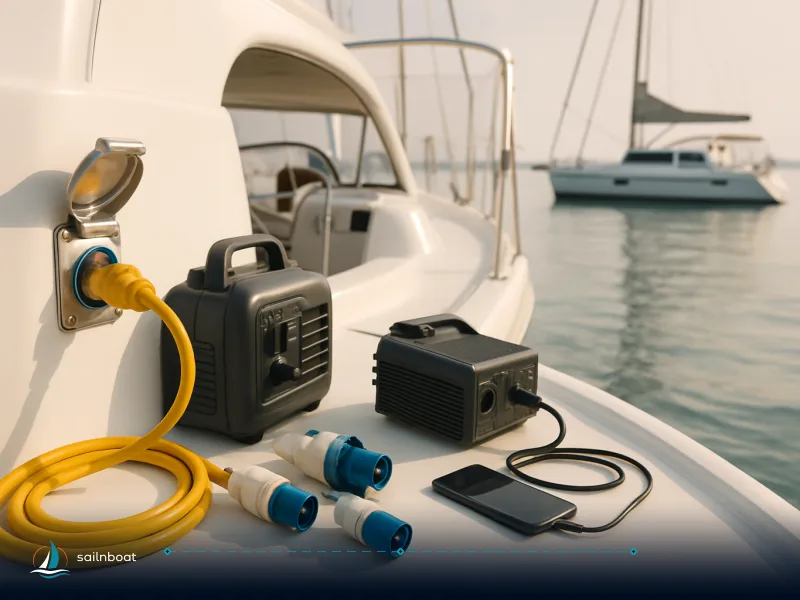
- Power and services: confirm shore-power options (voltage and socket type), battery-charging capacity, and whether you can run silent generators or must rely on the yacht’s systems.
- Crew and certificates: verify the skipper’s commercial licence or local equivalent, and whether the owner requires proof of production insurance and a security deposit before handover.
- Communications and comms: confirm VHF channels, phone coverage and whether the yacht has a Wi‑Fi hotspot large enough for DIT transfers or live feeds.
Choosing the Ideal Location
- Port vs. open water trade-off: a quiet bay gives controlled light and fewer wakes; a working harbour offers visual context but brings traffic and port restrictions. Many port authorities require explicit filming licences for commercial work in their jurisdiction.
- Access and transfers: check the load/unload point for baggage trucks, the distance from parking to tender or pier, and whether hotels are within a short transfer to reduce dead time between scenes.
- Environmental restrictions: marine parks, protected foreshore and some coastal municipalities require separate environmental permits or seasonal limitations. Allow enough time for those approvals.
- Weather and sea-window planning: schedule the shoot in a weather window that fits your creative needs but also leaves at least one contingency day for sea or wind changes.
Permits Required for Yacht Photoshoots
Permits are the single most common source of last-minute cost and delay. What you need depends on where you plan to operate — ports and marinas usually expect a permit and insurance; national aviation authorities regulate drone work; protected marine areas commonly require a park or environmental permit.
Types of Permits (at-a-glance)
| Permit type | Typical issuer | Why it’s needed | Typical paperwork / proof |
|---|---|---|---|
| Port / harbour filming permit | Port or harbour authority (harbourmaster) | Controls commercial activity, safety corridors, river closures and buoyage | Application form, risk assessment, vessel licence, COI / indemnity |
| Vessel commercial-use licence / survey | Port authority / flag state / classification society | Confirms the vessel is licenced for commercial carriage or “picture boat” use | Vessel certificate, passenger endorsement, skipper qualifications |
| Drone / aerial authorisation | National aviation authority (EASA framework in EU; national CAAs elsewhere) | Legal airspace permission for commercial aerials; may require operational authorisation | Operator registration, pilot competency, operational risk assessment. |
| Marine park / environmental permit | National park or environment agency | Filming in protected zones, anchoring, interacting with wildlife | Site application, mitigation plan, fees |
| Local municipality / public space permit | City or municipal film office | Use of quayside, foreshore, public land or closure requirements | Local permit, fees, public liability evidence |
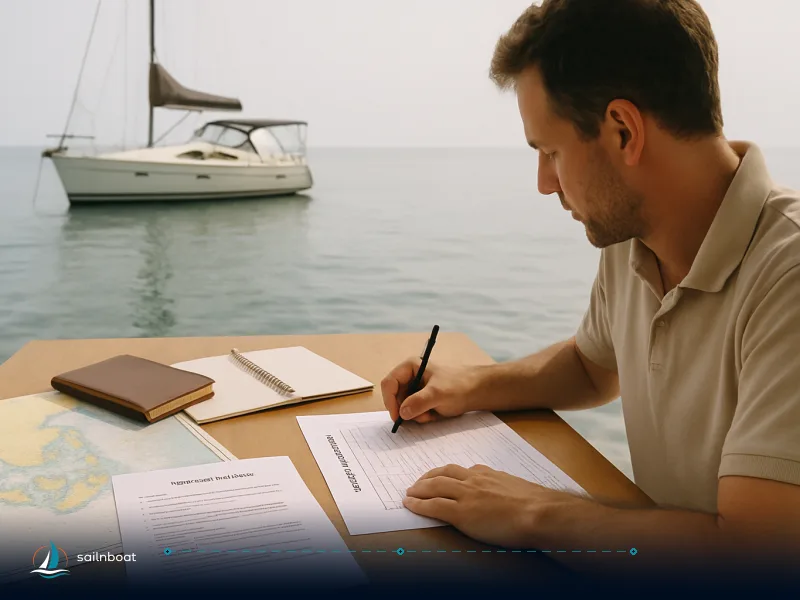
Plan permits as milestones in pre‑production. Complex shoots or ones involving closures, low-level aerials or stunts often need weeks of lead time; simple in‑port shoots sometimes clear in days but still require a formal letter of consent from the harbourmaster and evidence of insurance. Many film commissions and regional fixers recommend starting permit requests at least 2–4 weeks in advance for standard shoots, and longer for multi‑authority operations.
Drone Filming Permits
- In the EU the EASA framework sets the operational categories (open / specific / certified). “Specific” operations — which include many close-proximity commercial aerials — require an operational authorisation from the national authority; AESA manages operator registration and authorisations in Spain and runs a national portal. Plan for the drone operator to supply a documented risk assessment (SORA or equivalent), insurance and pilot credentials.
- Ports and harbourmasters commonly require to be informed and may insist on separate permission to launch from a vessel or quay, even where the aviation authority has cleared the flight; coordinate both approvals early.
Specialized Insurance for Yacht Filming
Insurance is two separate conversations: what the production buys to protect its budget and people (production/producer’s indemnity, public liability, equipment cover) and what the yacht owner wants to see (proof of hull insurance, COI, and often being named as additional insured).
Types of Insurance Needed
- Commercial Producers’ Indemnity / Production Insurance: covers interruption, cancellation, extra expense, media loss and some third‑party liabilities arising from the production. This is the primary cover that pays for reshoots or delays caused by insured perils. Production insurers and brokers describe this as core for any commercial shoot.
- Public Liability (third‑party): protects against claims for injury or property damage to third parties (for example, damage to quay infrastructure or injury to a bystander).
- Employers’ Liability (where applicable): if you have employees on payroll this is usually mandatory in many jurisdictions.
- Equipment insurance (all‑risk or “inland marine”/floaters): covers owned or hired kit for theft, accidental damage and water ingress — essential on yachts where spray and salt are constant hazards.
- Hired‑in equipment cover: for rented camera and lighting packages where your contract requires it.
- Specialist covers: watercraft-specific liability, wreck removal/pollution, and contingent extra expense (weather overruns) can be critical depending on the brief.
Producers and commercial production brokers recommend a combined programme: a producers’ indemnity package plus general liability and equipment floaters. Insurers are used to naming third parties (yacht owners, marinas, port authorities) as additional insureds on the certificate of insurance (COI); owners routinely require that.
Indemnity and Contract Considerations
- Expect the charter contract or base operator to require: a current COI, the owner named as additional insured, a waiver of subrogation against the owner, and sometimes a deposit or security hold. Marinas and organisers commonly request these items.
- Indemnity language in production contracts should be reviewed with legal counsel: charter owners typically want protection from claims caused by production activities; producers want to limit exposure for acts outside their control. Use plain, specific clauses and ensure the insurance program’s limits match contractual risk allocation.
Defining Crew Roles and Responsibilities
Assign roles that map to the yacht environment — a few job titles change green‑room names into sea‑ready responsibilities.
Essential Crew Roles
- Production Manager (or Line Producer) — overall point for logistics, contracts, permits and insurance; holds the master risk assessment.
- Marine Coordinator / Skipper — responsible for navigation, mooring, and the vessel’s safe operation; signs crew access protocols and confirms the vessel’s operating limits.
- Director of Photography (DOP) — leads creative lighting and camera placement decisions; coordinates with the marine coordinator to ensure shots are safe to execute.
- Safety Officer / Health & Safety Officer (HSO) — runs the site-specific safety brief, PPE, muster and emergency plan and ensures compliance with the port/harbour requirements. Industry guidance recommends a dedicated HSO whenever water is involved.
- Gaffer / Grip / Kit Manager — adapts gear to the wet/salty environment, secures kit and manages safe rigging on motion-prone decks.
- Drone Pilot (licensed) — operates to the approved operations plan and keeps the pilot briefed on vessel movement and radio traffic.
Supporting Roles
- Safety Divers / Rescue Boat Crew — required if talent or camera work goes in the water; divers must hold appropriate competencies and medical clearance.
- Medic / First Aider — on outside shoots or where remote transfers are likely.
- Loader / Dock Liaison — handles tendering logistics and liaises with port security and the marina office during load/unload.
Rule of thumb: put the production manager and the skipper on the same radio channel for all manoeuvres and have one person (usually the marine coordinator) authorised to stop any operation that compromises safety.
Safety Measures for Yacht Photoshoots
Safety planning on water is non‑negotiable. Industry safety guides call for formal risk assessment, documented method statements and competent rescue capability for any activity near or over water.
Safety Protocols
- Pre‑production risk assessment: document specific hazards (tide, swell, crowding, propulsion wash, electrical water exposure) and controls. The HSO should circulate this before the first call time.
- Safety briefing and SIF (safety induction form): everyone signs in and acknowledges the muster points, lifejacket policy, and phone/VHF emergency channels.
- PPE and floatation: lifejackets and harnesses for work on exposed decks; designate a “no-go” area for non-essential crew during manoeuvres.
- Electrical safety: isolate shore-power where wet work is planned; use RCD protection and keep distribution off the deck unless suitably rated and secured.
- Kit control: keep heavy kit low and lashed; use non‑slip pads and blocks; double‑secure lights and stands with ballast and safety lanyards.
- Environmental protection: ban polluting materials on deck and plan for spill response; many parks and ports will require a pollution mitigation plan.
Staging Tips
- Minimal deck footprint: only the kit you need should be on deck; store the rest below in waterproof cases.
- Use low centre‑of‑gravity support: sandbags in gimballed crates or bolted bases reduce tipping risk.
- Plan for motion: rehearse choreographies that involve stepping on and off tenders or gangways; treat every transfer as a safety critical lift and brief crew on hand signals.
- Weather-stop rule: set a clear wind/swell threshold with the skipper at pre‑prod; if the skipper says “no,” the plan changes — not negotiable.
Creating a Day-of Schedule for Your Photoshoot
A disciplined day-of plan is the single best cost saver. Set sequencing to avoid repeat trips and to close out dependencies early (permits, tidal windows, drone window).
Sample Schedule Template (half‑day, adapt to full day)
- 06:00 — Key crew call (Marine Coordinator, PM, HSO, DOP, Skipper) for radio checks and final weather review.
- 06:15 — Onboard safety brief; sign-in; lifejackets issued; kit manager runs pre-light check.
- 06:30 — Shore load complete; tendering to vessel begins.
- 07:00 — Camera & lighting set-up (deck zones cleared); drone operator completes pre-flight checks if applicable.
- 07:30 — First shooting block (golden-hour/exteriors); minimal crew on deck.
- 09:30 — Break / battery & data swap; quick safety check and equipment lash.
- 10:00 — Second shooting block (interiors/portrait set-ups); stow large kit for transit if vessel will move.
- 12:00 — Lunch and media offload (DIT); re-locate to alternate set or quay as required.
- 13:00 — Contingency block or additional aerials (if authorised); wrap plan confirmed with skipper and marina.
- 14:00 — Strip & secure; final bridge / harbour checks; crew offboard and kit into vehicles.
- 15:00 — Handover meeting with owner/agent; COI and sign‑off; confirm any post-event obligations (wash/rinse, repairs).
Adjust times for charter check-in/check-out windows — many bases expect return by mid/late afternoon; confirm cut-off at booking.
Communication Plans
- Channel discipline: production radio for internal comms, VHF for navigation and harbour comms; log who monitors the harbourmaster channel.
- Single point of contact: production manager handles client, owner, port and authority queries; the marine coordinator handles helm decisions.
- Emergency contacts: list local coastguard/harbourmaster numbers and the nearest medical facility on the call sheet.
Production Checklist: pre‑prod to wrap
- Before booking: confirm vessel suitability, commercial operating status, and owner requirements.
- 4+ weeks prior: lodge port/harbour permit applications where needed; apply for drone authorisation if applicable.
- 2+ weeks prior: secure production insurance and provide COI naming owner/port/marina as additional insured; deliver risk assessment and method statements.
- 1 week prior: run a technical recce with the skipper on board to confirm load plan, power and transfer points.
- 48 hours prior: final weather check and contingency confirmation; verify tender availability and pilot credentials.
- Day-of: mandatory safety brief, sign-in, lifejackets available, kit secured and charged, media backups scheduled.
- Wrap: confirm any cleaning/repair obligations and obtain written handover from the owner/agent.
Port authorities and marinas commonly require a COI and indemnity wording before granting permission to operate commercially inside their limits; be ready to show these documents during application and at check-in.
Final decisions and trade-offs
- Trade-off 1 — creative control vs. simplicity: filming in a protected bay gives control and fewer permits but fewer dramatic backdrops than an urban harbour, which brings authorisations and costs.
- Trade-off 2 — renting a picture boat vs. chartering a private yacht: a purpose-surveyed picture boat may be licensed for passenger operations and pose fewer contractual hurdles; a private yacht can be more photogenic but commonly requires stricter insurance and owner‑approved indemnities.
- Trade-off 3 — aerial charisma vs. regulatory burden: aerials add production value but introduce drone authorisations, extra insurance and sometimes port-level objections; weigh whether the creative lift justifies the time and cost.
Start permit and insurance conversations early and keep the skipper/owner in the loop — they will be your partner in converting creative plans into a safe, permitted and insurable production.
Sources and further reading used to verify rules and standard industry practice: AESA / EASA drone rules, Port of London Authority filming guidance, industry production-insurance briefs and location safety guidance.
Frequently Asked Questions
You will usually need (1) the yacht owner/operator’s permission and a commercial-use licence if the vessel will be used for hire; (2) a port or harbour filming permit when working inside managed port/marina limits; and (3) a drone/airspace authorisation for aerials — requirements and paperwork differ by country and authority.
Apply to the port/harbour authority for river/port permissions and to the national maritime or coastguard office for commercial-use queries; get drone authorisation from the national aviation authority (or follow EASA rules in EU states). Start early and supply COIs, risk assessments and method statements.
A standard production programme includes commercial producers’ indemnity (production insurance), public liability, employers’ liability (if you hire staff), and equipment (camera/kit) cover; the yacht owner will commonly require to be named as additional insured.
Essential roles are Production Manager, Marine Coordinator/Skipper, Director of Photography (DOP), Safety Officer/HSO, gaffer/grip, and a dedicated kit manager; add safety divers/medic for water work and a drone pilot when aerials are planned.
Complete a location-specific risk assessment; require lifejackets and harnesses where appropriate; brief the whole unit; keep kit dry and low; operate a safety boat or lookouts for water ops; and document emergency and evacuation procedures.
A tight call sheet with staggered call times, kit-load windows, safety brief, set-up, shooting blocks, meal and weather contingencies, and a wrap/strip plan; include margin for tide or port traffic and a clear point of contact.
Written by
Sailnboat Editorial
The Sailnboat editorial desk covers yacht and boat chartering worldwide — routes, bases, seasons, boat types, paperwork and the practical costs that decide a trip. We are a charter marketplace, not a boat owner or a local agency: what we sell is judgement and support, so our guides are written to help you make a decision, not to sell you a specific boat. Every guide is checked against live operator and marina data before it goes out.
Fact-checked against live operator and marina data, and published under our editorial standards. Last reviewed: .