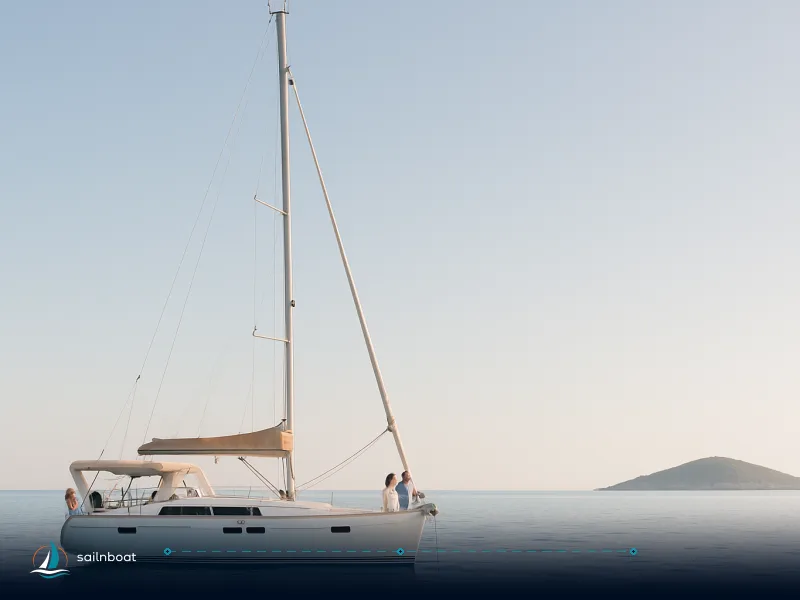
Ensuite vs Shared Heads: Choosing the Right Bathroom for Your Charter
Choose ensuites for privacy and minimal queuing; choose shared heads to squeeze extra cabins and lower weekly costs. This guide explains the trade-offs and booking checklist.

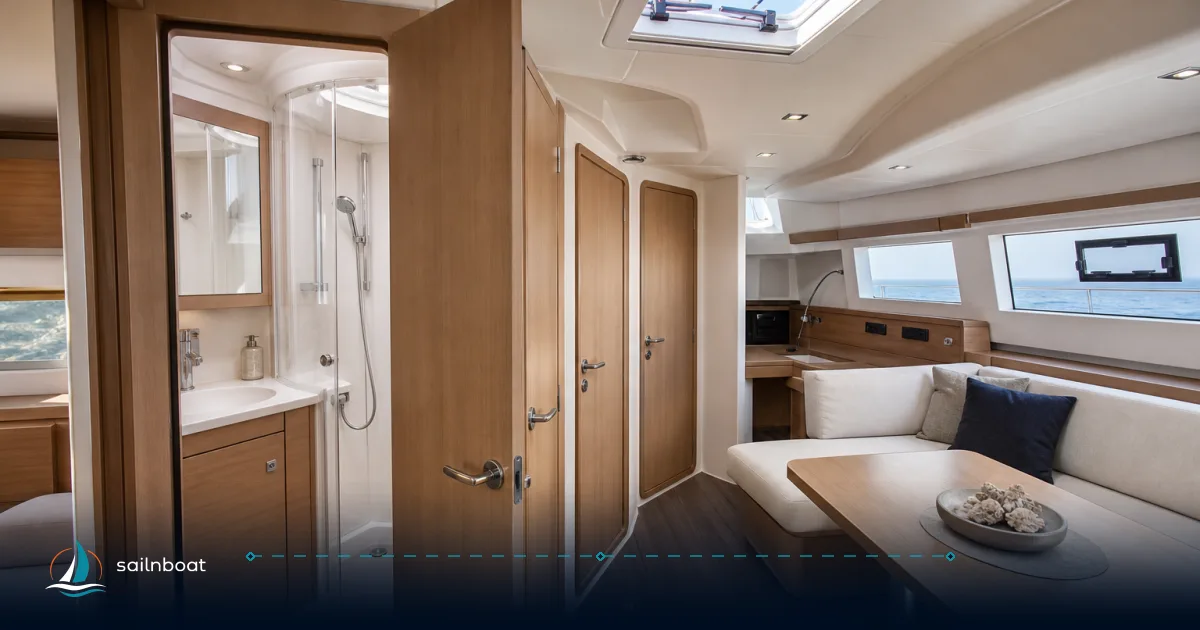
A clear rule of thumb solves the "ensuite vs shared heads" decision: if privacy and independent routines matter to most of your guests, choose a boat with ensuites; if your priority is sleeping more people on a fixed budget, accept shared heads and plan use. Below are the operational trade‑offs, layout examples, and a booking checklist that will let you match your guest list to the right yacht quickly.
Understanding Ensuite Heads
Ensuite heads are private bathrooms that sit inside a guest cabin, usually accessed directly from the berth. They are a strong, visible comfort upgrade in charter listings — and they change how a week runs.
Privacy and Convenience
- What you get: instant private access to a toilet and shower, no corridor trips at night, and fewer morning queues when everyone needs the bathroom at once. That quietly speeds up departure from anchorages in the morning and reduces awkward door‑knock moments at night.
- Who benefits most: adult groups, couples sharing cabins, and mixed‑age parties where older guests prefer privacy.
- Operational note: ensuites can be smaller than a shore bathroom — expect compact layouts and a wet‑head style (toilet + shower in one wet area) on many production yachts.
Design and Layout
- Typical placement: ensuites are placed aft or forward within the cabin footprint and use flexible plumbing layouts to save volume; they often contain a manual or electric toilet, small basin, and either a separate shower stall or a combined wet area.
- Trade-off: every ensuite consumes hull/volume that could otherwise be used for a second cabin, a larger saloon, or extra tankage. On production catamarans and many motor yachts, a 4‑cabin charter version often has 4 heads (one per cabin). Owner’s versions typically combine two cabins into a larger owner’s suite, reducing the number of cabins and heads; smaller models also tend to have fewer cabins/heads simply due to length.
Advantages of Shared Heads
Shared heads are bathrooms accessed from a corridor or common space and used by two or more cabins. They are a deliberate design choice on many charter boats to prioritise sleeping capacity and storage.
Space Efficiency
- How they save space: one well‑placed shared head can serve two cabins; that single bathroom is smaller in total volume than two separate ensuites, leaving room for an extra cabin or a more spacious cockpit/salon.
- Typical configurations: a common charter layout is 3 cabins served by 2 heads (owner’s ensuite + one shared head for two cabins) or 3 cabins with 2 heads that are shared between guests; production builders also offer 2‑cabin/1‑head owner versions for private owners. Examples exist across the market.
Cost Considerations
- Direct cost effect: boats with fewer heads and higher berthing density are often cheaper to rent per week — the build reduces fittings and plumbing complexity and lets a given-length yacht sleep more people, which spreads the base rate.
- Operational costs: shared‑head boats often have lower maintenance and provisioning demands (fewer plumbing systems), but consider water capacity if many guests will shower frequently — producers and charter companies sometimes configure smaller fresh‑water tanks on high-density layouts, so confirm tank sizes on the spec sheet.
The Role of Day Heads in Yacht Design
A day head is one of those small features that disproportionately improves comfort on a cruise week.
What is a Day Head?
- Definition: a day head is a bathroom located off the salon or another common area rather than inside a sleeping cabin; it’s intended for daytime use by guests and crew. The term appears in standard yachting glossaries and brokers’ glossaries.
- Why it matters: it prevents the need to traipse through cabins in wet swimwear, and it avoids waking cabin occupants when someone needs the loo during social time on deck.
Placement and Access
- Common placement: adjacent to the companionway or salon, sometimes by the galley or cockpit — anywhere convenient for guests entering from the deck.
- Effect on routines: a single, easily accessed day head reduces cabin wake‑ups and keeps the private cabins for sleeping and changing.
Matching Guest Needs to Yacht Configurations
Make the match in three quick steps: establish functional requirements, filter by layout, and confirm operational details with the base.
Assessing Your Group Size
- Quick checklist:
- Count adults who expect private bathrooms (e.g., couples).
- Count children or guests happy to share.
- Note special needs: mobility limits, night‑shift sleepers, or late arrivals.
- Practical filter: if a majority of adults want privacy, prioritise yachts with at least as many ensuites as adult couples.
Evaluating Cabin Layouts
- Read the layout carefully: “3 cabins, 2 heads” is not the same as “3 cabins, 3 heads”; check whether heads are ensuite or shared and where the day head sits.
- Ask for photos/plans: some charter bases will send interior layout drawings; compare those directly to your passenger list.
- Confirm technical points with the base: freshwater capacity, shower pump type, and whether heads are electric or manual — these affect comfort for larger groups and the timing of showers.
Table: common layout types and when to choose them
| Layout example | Cabins | Heads | Best for | Main trade‑off |
|---|---|---|---|---|
| Owner / 4‑cabin charter | 4 | 4 (ensuite each) | 4 couples or groups valuing privacy | Higher charter rate; less storage per cabin. |
| Family / 3‑cabin mixed | 3 | 2 (owner ensuite + 1 shared) | Families with kids or one couple needing privacy | Morning queues; need scheduling for showers. |
| Owner’s 2‑cabin | 2 | 1 (shared) | Small party, private owner use or couple | Lower guest capacity but more living space. |
Impact on Overall Charter Experience
Bathroom layout affects more than comfort — it shapes routines, provisioning, and the social vibe aboard.
Comfort and Convenience
- Morning runs: boats with multiple ensuites remove a predictable pain point — simultaneous showers. If your group has three or more adults who plan on showering each morning, the time savings are real.
- Water and power: more showers mean higher fresh‑water and generator usage; on boats with watermakers this is less of an issue, but on smaller yachts confirm tank and generator specs if you expect frequent showers.
Social Dynamics
- Privacy fosters independence: couples keep different schedules without intrusion.
- Shared heads encourage communal time: families and close groups often accept shared facilities and find it speeds social interaction — but it requires the group to manage morning/evening routines and respect others’ privacy.
Booking and Onboard Management Checklist
Before you confirm a booking, run this list with your charter broker or base:
- Passenger-to-head match: give the base the exact passenger list and call out the number of couples who expect ensuites.
- Ask for a detailed layout drawing and photos of each head so you can see layouts (shower stall vs. wet head) and door swing directions.
- Confirm day head presence and location — it reduces cabin interruptions during daytime hours.
- Check freshwater tank capacity and whether the yacht has a watermaker; if not, stagger showers or budget for marina water fill‑ups.
- Confirm check‑in/out times and base requirements for returning the yacht the evening before the final day (many bases run check‑in at ~17:00 and check‑out at ~09:00). Plan flights around these times.
- If on a crewed (plus‑expenses) yacht, budget the Advance Provisioning Allowance (APA) — typically a percentage of the charter fee and commonly in the mid‑20s to mid‑30s percent range depending on yacht type and itinerary. Ask your broker what range applies to the specific yacht.
Final decision rules (short)
- Pick ensuites when: most adults want private bathrooms, you value independence, or the budget allows a higher tier.
- Pick shared heads when: you need extra sleeping capacity for a budget, the group is family/friends comfortable sharing, or you want more living space instead of extra bathrooms.
- Insist on a day head when: you expect lots of daytime deck use, have kids, or want to avoid waking sleeping cabin occupants.
Make the bathroom layout a primary filter when you search — it is a low‑effort change with a high impact on how smoothly your week proceeds.
Frequently Asked Questions
An ensuite (a head inside that cabin) gives each party private access to a toilet and shower, removes late‑night trips along the passageway, and reduces queuing in the mornings — useful when every guest values their own space.
Shared heads free up interior volume, letting designers add extra cabins or storage; on the charter market yachts with shared heads are commonly offered at lower weekly rates because the boat fits more guests on a given length.
A day head is a bathroom accessible from the common areas (salon/deck) rather than through a cabin; it reduces cabin interruptions and is especially useful when guests change from swimwear or use the salon during the day.
Start with a simple matrix: number of adults, number of couples, number of children, tolerance for sharing — then filter yachts for cabins/heads that meet the privacy or budget trade-offs; request layout photos and confirm toilet/shower placement with the base.
Bathroom layout affects morning routines, night privacy, and social dynamics aboard: ensuites reduce friction and are higher comfort; shared heads require scheduling and good crew coordination but can make charters more social and affordable.
Written by
Sailnboat Editorial
The Sailnboat editorial desk covers yacht and boat chartering worldwide — routes, bases, seasons, boat types, paperwork and the practical costs that decide a trip. We are a charter marketplace, not a boat owner or a local agency: what we sell is judgement and support, so our guides are written to help you make a decision, not to sell you a specific boat. Every guide is checked against live operator and marina data before it goes out.
Fact-checked against live operator and marina data, and published under our editorial standards. Last reviewed: .