Tender Garage Checklist: Inspect Before Boarding Your Charter Yacht
A practical, step-by-step tender garage checklist so you can confirm garage access, hoist function, tender condition, fuel and batteries, and who handles what with the base crew.

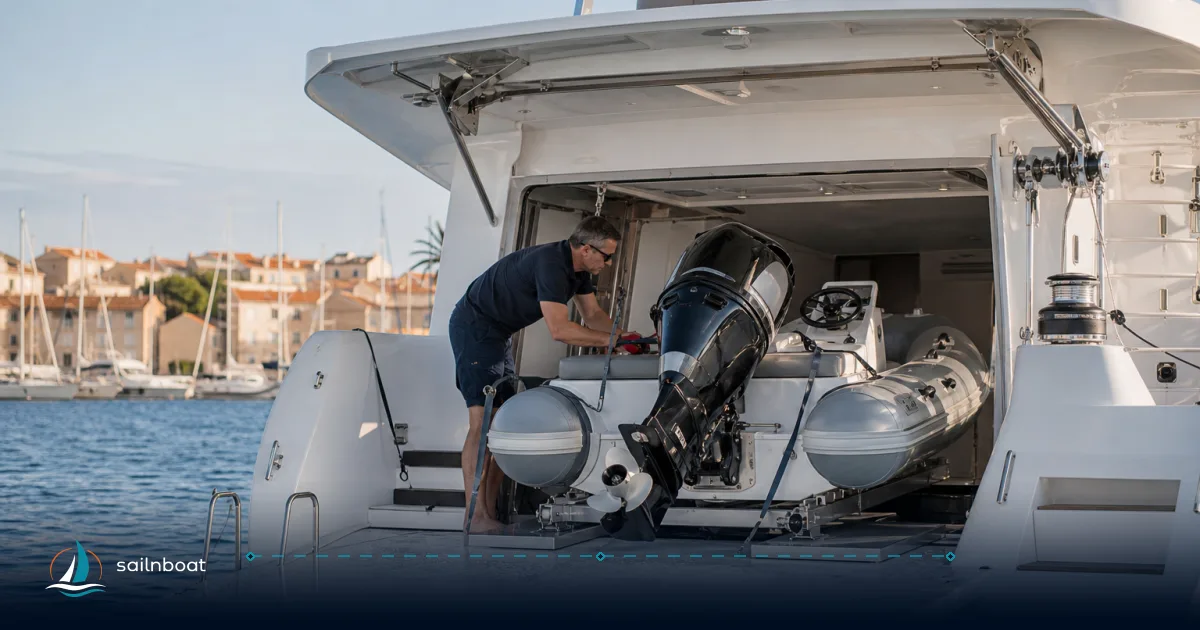
Before you step aboard, use this tender garage checklist to confirm the garage, hoist and tender are safe, operable and recorded—this reduces delays, avoids damage claims and keeps your first hour ashore calm. The checklist below (tender garage checklist) tells you exactly what to look for in the garage, how to test hydraulic/electric handling systems, what to run on the dinghy engine and what to agree with the base crew.
Tender Garage Access and Inspection
Start here: if you cannot open, enter, or safely move around the garage you cannot safely use the tender. Walk the space with the chief steward or base technician and check the items below.
Safety Features
- Non‑slip surfaces and handholds: confirm there are secure handrails or fixed grab points on the garage ceiling and hatch edges for safe entry/exit. If mats are used, they must be secured.
- Emergency access: ask whether there is an emergency manual release for the garage hatch and, if present, watch the crew operate it. Check with the operator if any crew are specifically trained to use the emergency release, as procedures vary.
- Lighting and drainage: check fixed lighting works and that water drains from the garage—standing water accelerates corrosion and hides hazards. (Operational check: ask the crew to open/close the hatch while you watch for pinch points or misalignment.)
Ease of Use
- Clearance and lifting geometry: visually confirm there is adequate height and width to remove the tender without rubbing hulls, rails or rigging; tight clearances increase the risk of cosmetic and structural damage.
- Door operation: the hatch/door should operate smoothly, lock positively and have visible stops or limit switches; note any slow or jerky movement—the crew should be able to explain normal cycle time and emergency stops.
Tender Handling Systems: Hydraulic and Electric
You are not expected to service the davit, but you must confirm it functions reliably during handover and that the crew can run a controlled test.
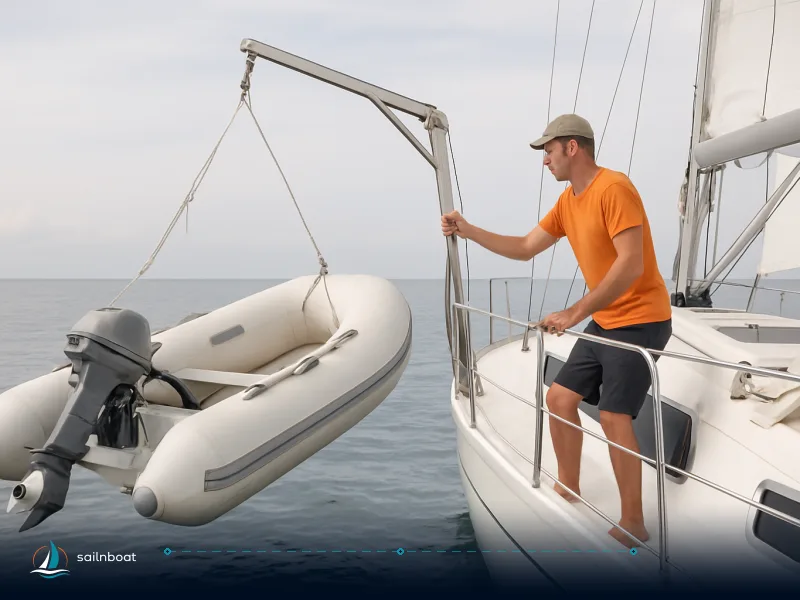
Start by asking the crew to demonstrate an open/close and a raise/lower cycle with no people aboard the tender. Watch and listen—many system faults announce themselves during a short demo.
Hydraulic Systems
- Pump responsiveness: the system should lift/lower smoothly with consistent speed; slow, laboured movement or surging points to low fluid, air ingress, or pump wear.
- Reservoir, hoses and fittings: look for wet areas, seepage, or rusty fittings around the hydraulic unit and along hoses—any visible leak requires rectification before you use the system.
- Control function and brakes: verify limit switches, manual overrides and brakes engage; ask the crew how they perform manual recovery in a power loss.
Electric Systems
- Winch motor and wiring: on electric winches listen for grinding, smell of overheated insulation and inspect visible wiring for chafing or exposed conductors.
- Limit switches and remote controls: test the up/down limits and emergency stop; confirm remote pendant and any deck‑mounted controls function and are labelled.
- Battery and power source for the handling unit: ensure the hoist has a dedicated power feed and ask when it was last tested; stored power units and capacitors can hide faults—crew should be able to explain redundancy.
Quick comparison: hydraulic vs electric systems
| Aspect | Hydraulic systems | Electric winches |
|---|---|---|
| Typical failure signs | Slow/jerky motion, visible oil leaks | Motor overheating, burned smell, tripped breakers |
| What to inspect | Reservoir level, hoses, fittings, pump sound | Wiring, control pendant, limit switches, motor noise |
| Crew question to ask | When was the last hydraulic oil/sample taken? | When was the winch last load‑tested and who maintains it? |
| Best user practice | Operate only with crew present for safety | Use the designated pendant; never override limits |
Practical note: both systems should be load‑tested and maintained by qualified technicians; ask to see the most recent maintenance tag or record if you have concerns.
Dinghy Engine Condition and Maintenance
A tender is a working boat. The engine condition is the single biggest operational risk for a charter’s shore plan—check it thoroughly.
Engine Inspection
- Visual check: look for external corrosion, loose fasteners, frayed control cables, oil or fuel stains around the engine housing and on the transom. Corrosion on mounting bolts and fittings suggests a neglected maintenance history.
- Fuel and oil: confirm oil level on the dipstick and that the engine has a clean fuel feed—ask where spare oil is stored and how often oil was last changed. Avoid putting precise dates into a conversation; instead ask the crew for the last oil and service checks they recorded.
Operational Testing
- Cold start and warm behaviour: request the crew start the engine in front of you (one start is not sufficient if it has been sitting); it should start promptly, idle smoothly and show a clean exhaust. Watch for white or blue smoke (burnt oil) or rough idling.
- Load test and steering: if possible, run the tender at idle and apply brief throttle, observe for overheating (no continuous runs necessary), and confirm steering works through its full range without binding.
- Safety features: confirm kill‑cord operation and that the fuel shut‑off is accessible. If the tender is a 2‑stroke, confirm the correct oil/fuel mixing procedure is followed and spares are onboard.
Fuel and Oil Management for Tenders
Fuel problems are common and easily avoidable. Ask questions and inspect key items.
Fuel Quality
- Water separators and clear bowls: many tenders have a water‑separating filter with a clear bowl—check for water or sediment in the bowl. If present, it should be drained and the cause investigated before use. Carrying spare separator cartridges is good practice on charters.
- Fuel type and age: confirm the fuel type in the tender matches the engine (unleaded petrol, diesel, etc.) and ask when the tank was last filled. Modern fuels with ethanol are more prone to water absorption—expect crews to monitor contamination more frequently.
Oil Levels
- Dipstick and visual: check oil level and colour on the dipstick; milky or frothy oil suggests water contamination in inboard/4‑stroke engines. Look for sludge or strong fuel smell in the oil.
- Spares and consumption: ask whether the base will top up tender fuel and oil during the charter or whether you must manage that yourself; responsibilities vary by operator.
Retrieval Lines and Safety Equipment
Retrieval lines, slings and emergency equipment are both safety and liability items—inspect them carefully.
Retrieval Lines
- Visual rope/wire inspection: check for fraying, bird‑caging or rust on wire rope and check soft lines for chafe and heat damage; inspect splices, thimbles and shackles for corrosion or deformation. Replace suspect lines immediately.
- Functional test: request a simulated retrieval (often crew will perform this without people aboard the tender). Observe for staggered movement, slipping, unusual noise or excessive heat build at the winch—these are signs of mechanical issues. Rigging and lifting standards recommend pre‑use visual checks before each operation.
Safety Equipment
- Batteries: check battery resting voltage with a voltmeter if you can, or ask the crew for the battery’s last test date; slow cranking, dim lights or inability to hold voltage after charging are signs a battery is nearing replacement. A simple resting voltage guide is useful: ~12.6V suggests a full 12V battery, lower values indicate partial or low charge—crew should be able to show charging behaviour or a recent load test.
- Flares and expiry dates: verify the tender’s flares and pyrotechnics are present and not expired—many safety lists flag flares at roughly a multi‑year expiry, so date checks are essential. Replace any expired items before you leave the base.
- Other kit: lifejackets for the tender’s passenger count, bailer/pump, anchor and rode suitable for the tender length; check that the VHF handheld is charged and programmed.
Storage and Maintenance of Water Toys
Water toys are high‑use items; poor storage causes damage and claims.
Organization
- Secure storage: toys should be lashed, placed in racks or stored in compartments where they cannot move and damage the tender or the yacht hull. Soft items like SUPs should be stowed away from sharp equipment.
- Inventory: confirm the toy inventory on the handover form — note missing or damaged items before departure and ask the crew to initial the list.
Maintenance Tips
- Rinse and dry: rinse inflatables and boards with fresh water after each use and dry fully before stowage to avoid mould and adhesive failure. Deflate long‑term stored inflatables slightly to avoid pressure damage in heat.
- Inspection: check valves, seams, pump and repair kit presence; a small puncture kit is standard equipment for inflatables.
Confirming Responsibilities with the Base Crew
Clear written responsibilities at handover prevent disputes later. Do this before you sign the inventory and take the boat keys.
Crew Interaction
- Who handles what: ask and note whether the crew will deploy/retrieve tenders during the charter, whether they will refuel/refill oil, and whether they will stow toys after use. Many charters expect the skipper to operate the tender; many others will have the base crew demonstrate and leave you to operate it—this varies by company and vessel.
- Emergency protocols: ask the crew to explain the procedure for a davit failure, tender engine failure or man‑overboard from the tender—practice or at least walk through the steps once with the crew present.
Documentation
- Signed handover: insist the tender condition, fuel level, battery condition and inventory are written on the check‑in form and signed by a base representative and by you. Photographs of any existing damage dated and placed in the charter file are extremely useful.
- Maintenance records: where available, ask to see recent davit and tender servicing records or maintenance tags; while you are not auditing the vessel, a current maintenance tag reduces the risk of mechanical failure while you are depending on the equipment.
Short pre‑departure tender garage checklist (printable)
- Garage: hatch opens smoothly, lighting works, non‑slip and handholds present.
- Handling system: crew demonstration of raise/lower; no leaks, no jerky motion.
- Tender engine: visual check, start in front of you, idle and light throttle ok.
- Fuel: water separator clear, correct fuel type, spares onboard.
- Retrieval lines: no fray/rust; splices and shackles intact.
- Batteries & flares: battery state shown or recent test; flares in date.
- Water toys: rinsed, dry, secured; repair kit present.
- Paperwork: inventory signed, responsibilities and emergency procedure noted.
Final practical note: if anything materially affects safe use (a leak on the davit hose, rusted wire rope, expired flares, a tender that won’t start reliably), insist the issue is rectified or that a base technician accompanies the first few deployments. Many problems are fixable in minutes; the cost of ignoring them is operational delay or a damage claim.
Use this tender garage checklist as your handover script—work through it with the base crew, get the answers and the signed inventory, and you’ll start your charter with the confidence of a crew that knows the risks and how they’re being managed.
Frequently Asked Questions
Look for safe walkways (non‑slip, handrails), clear emergency access, adequate lighting, and structurally sound garage hatches and locking points; ask the crew to demonstrate the door and the emergency-release function.
On hydraulic systems check pump responsiveness, reservoir level and visible leaks; on electric winches check motor start, limit switches and wiring for damage, and watch for smooth controlled travel during a raise/lower cycle.
Visually inspect for corrosion and fuel leaks, confirm fresh fuel and oil levels, start the engine (observe warm and cold start behaviour), and listen for rough running or unusual vibration during idle and light throttle.
Check the fuel for water/sediment (clear bowl on a water‑separator), confirm fuel type is correct, verify oil level on the dipstick and look for discolouration or sludge.
Visually inspect for fraying, bird‑caging or corrosion on wire rope, check splices and terminations, and request a dry run or simulated retrieval to verify operation under no‑load and nominal load conditions.
Slow cranking, dim lights, inability to hold voltage after charging, or a failed load test are common signs; a voltmeter and a simple load test are quick checks.
Toys should be rinsed with fresh water after use, dried before stowage, secured in dedicated racks or lashings, and checked for punctures, missing valves, or damaged fittings before deployment.
Confirm who deploys and retrieves the tender, who refuels and tops up oil, who will handle water toys, who signs damage reports, and what the emergency procedure is if the davit or engine fails.
Written by
Sailnboat Editorial
The Sailnboat editorial desk covers yacht and boat chartering worldwide — routes, bases, seasons, boat types, paperwork and the practical costs that decide a trip. We are a charter marketplace, not a boat owner or a local agency: what we sell is judgement and support, so our guides are written to help you make a decision, not to sell you a specific boat. Every guide is checked against live operator and marina data before it goes out.
Fact-checked against live operator and marina data, and published under our editorial standards. Last reviewed: .