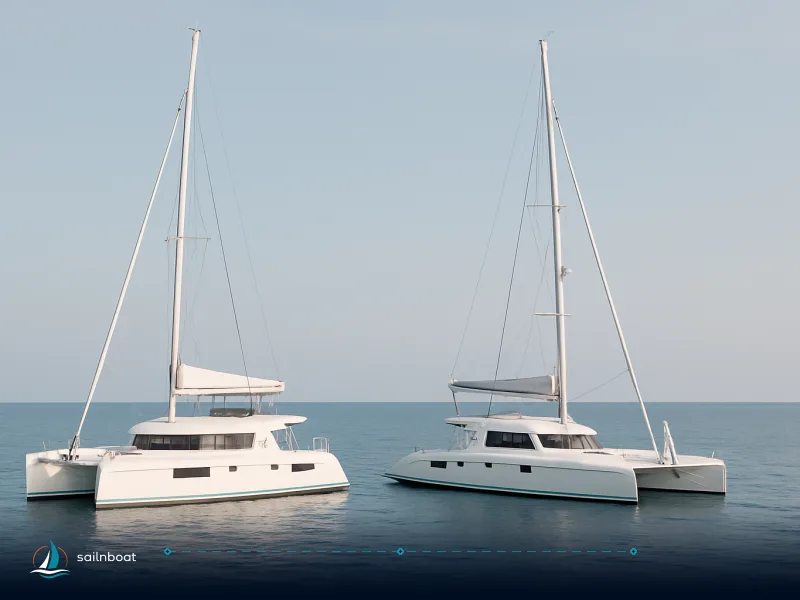
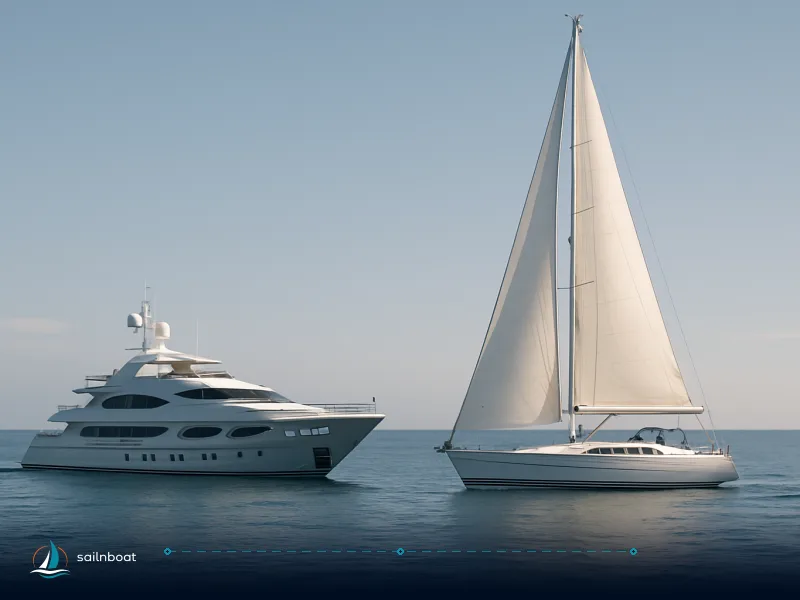
Catamaran vs Motor Yacht: Choosing Your Mediterranean Charter
Head-to-head practical comparison of catamarans and motor yachts for Mediterranean charters, with numbers you can act on — drafts, fuel use, speeds, tender capacity and noise.

Catamaran vs motor yacht comes down to three linked trades: draft vs speed, social area vs enclosed luxury, and fuel costs vs time saved. If you want low‑draft access, broad cockpit life and minimal fuel for island hopping, a catamaran typically wins; if you need fast transfers, a dedicated toy garage, and larger internal volume with heavy soundproofing, a motor yacht is usually the better pick.
Boarding and Access: Which is Easier for Your Crew?
Boarding and disembarkation determine how quickly your group gets ashore, how luggage is handled and how children or older guests move around.
Catamaran Boarding Procedures
- Typical entry points: wide aft swim platforms and dual transoms (one per hull) with fold‑down steps or integrated ladders allow several people to board at once. Many production catamarans also have stern davits for the tender and a low step‑on distance when rafted stern‑to quay. Manufacturer specs and charter inventory commonly show transom boarding and davit systems as standard on mid‑size catamarans.
- Practical effect: boarding onto a catamaran is usually stable and quick for a large group because the wide beam keeps the deck level; however, when you stern‑to a quay you must manage two hull cleats and lines (crew or an experienced skipper will organise this).
- Trade‑off: rafted stern‑to berths are convenient but require skill in tight marinas; some marina quays don’t allow stern‑to, in which case you’ll step ashore from the outer side or use the tender.
Motor Yacht Boarding Procedures
- Typical entry points: a single passerelle (hydraulic gangway) or a fold‑out swim platform is the usual access; large motor yachts have formal passerelles and crew handling for safe embarkation. Passenger boarding often takes place from the side dock using a guarded passerelle.
- Practical effect: one controlled entry point simplifies security and luggage transfer but creates a bottleneck for large parties; crew usually manage the passerelle and will take lines and luggage.
- Trade‑off: motor yachts are marginally quicker to transfer people between marinas and shore when a passerelle is in place and the crew is set up, but you lose the simultaneous access advantages a wide catamaran deck provides.
Fuel Efficiency and Time Trade-offs
This is the decisive cost/time comparison for most groups: how much fuel do you pay to save hours at sea?
Fuel Consumption Rates
- Catamarans: typical charter sailing catamarans (40–50 ft) commonly show modest motoring consumption — combined figures often range from single‑digits to low double‑digits of litres per hour at cruising rpm (for example, production 42–46 ft catamarans report cruise burns of several litres per engine; combined consumption figures are often in the single to low double digits L/h, but actual values vary by model and should be confirmed with the operator). Catamarans with larger powercats or powercats sit higher in that range.
- Motor yachts: planing or semi‑displacement motor yachts in the 60–95 ft bracket commonly burn hundreds of litres per hour at cruising speed; manufacturer and broker figures for models such as the Sunseeker 95 suggest cruise consumption figures in the several-hundreds of L/h range, but published values vary widely by model and load; confirm with the operator for specific numbers.
- How to use these numbers: multiply the vessel’s cruise burn by the expected transit hours. Fuel differences compound quickly on long reposition legs or a week with many open‑water days.
Travel Time Estimates (practical examples)
- Typical cruise speeds you can expect: sailing catamarans under power commonly cruise in the ~6–10 kt band; many mid‑size planing motor yachts cruise at ~18–25 kt. Use the boat’s published cruise speed when planning.
- Concrete example: the short Turkish Fethiye ↔ Göcek leg is commonly around 12–16 nautical miles (sources report roughly 12 NM as a typical figure). At 7 kt a catamaran takes ~1.7–2.3 hours; at 20 kt a motor yacht does the same leg in ~0.6–0.8 hours — you trade 1–1.5 hours for much higher fuel burn on the yacht.
- Planning rule: for island‑hopping with many short hops (under ~15–25 NM), lower fuel use and a slower average speed on a catamaran often reduces time tied to fuel stops and APA line items; for long single transfer legs (30–100+ NM) the time saved on a motor yacht may justify the fuel.
Anchorability in Shallow Coves
If your plan includes secluded beaches, small bays or stern‑to quay landings, draft and anchoring capacity are decisive.
Catamarans in Shallow Waters
- Typical draft: common production charter catamarans in the 40–50 ft range have drafts around 1.1–1.6 m; larger cruising catamarans such as Lagoon 77 list drafts near ~1.9 m. Those figures let catamarans enter many shallow bays and stern‑to on shallow quays that exclude deeper monohulls.
- Real‑world anchoring: many small Cycladic or Ionian bays with depths 2–6 m are entirely accessible to catamarans, and cats can sometimes lie closer to shore where deeper monohulls cannot. Use the depth sounder and local guidance — a catamaran still needs adequate holding and swing room.
- Trade‑off: while shallow access is a major advantage, catamarans have a larger swinging circle (wide beam) and need clear space to avoid dragging into shallows when wind shifts or currents change.
Motor Yachts in Various Depths
- Typical draft: many motor yachts in the 60–95 ft bracket have drafts typically around 2.0–2.5 m or more; specific figures vary by model and should be checked with the operator, which limits access to the smallest shoal anchorages and some shallow marina fingers.
- Real‑world anchoring: motor yachts can anchor in the same 3–15 m bays as cats where depth allows, and their narrower swinging circle sometimes makes tight anchorages easier to manage — but they cannot get into the very shallow coves cats can.
- Practical rule: if your route includes tiny coves, shallow tidal quays or stern‑to beach drops, a catamaran usually increases the number of viable stops.
Social Zones: Comfort and Design Differences
How you and your party actually spend the day — lunch on deck, a shaded cockpit, or wide sunbeds — should steer the decision.
Social Areas on Catamarans
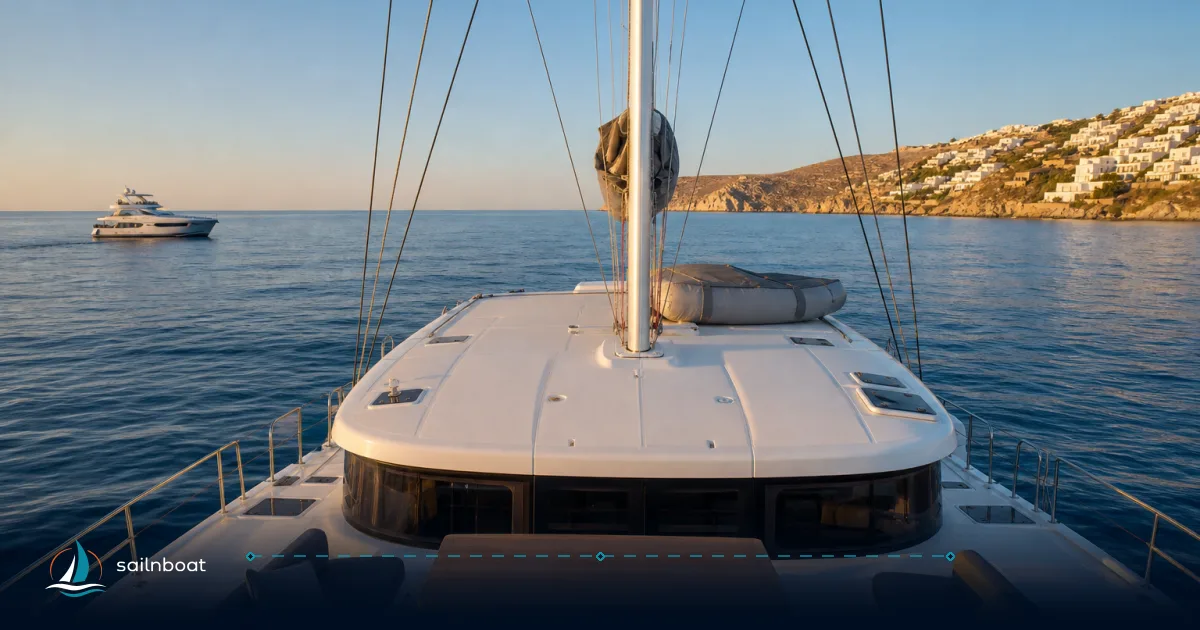
- Layout: catamarans maximise usable outdoor space. Expect a large aft cockpit that opens directly onto a broad swim platform, a spacious foredeck often used for lounging, and a raised saloon with panoramic glazing on many models. That layout favours communal dining, child supervision and free movement between sea and cockpit.
- Comfort: airflow and visibility are generally excellent; the broad beam creates separate zones (aft cockpit, saloon, foredeck) so groups can spread out. For social groups that prize outdoor living, cats usually deliver the best square metres of deck per guest.
- Trade‑off: internal volume below decks may be shallower than a motor yacht’s vertical space — but plenty of charter cats are luxuriously fitted and win on outdoor life.
Social Areas on Motor Yachts
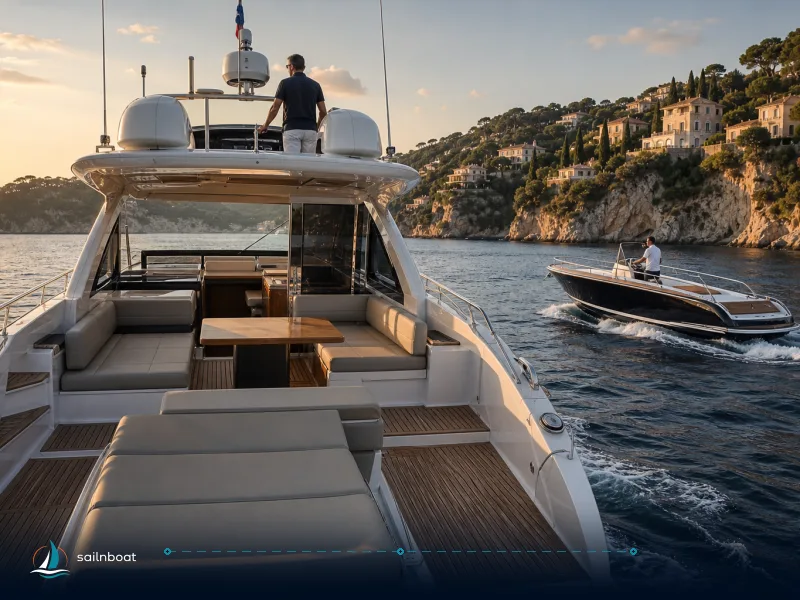
- Layout: motor yachts concentrate luxury into larger uninterrupted indoor saloons, full‑height windows and multiple deck levels (main deck, flybridge, foredeck sunpads). If a sheltered indoor lounge, formal dining and a protected sky lounge are priorities, motor yachts excel.
- Comfort: heavier insulation and enclosed spaces mean quieter interiors at anchor while the flybridge and aft deck provide protected outdoor space.
- Trade‑off: available outdoor square footage per guest is often smaller than on a catamaran of similar LOA — but what outdoor space exists is usually more elaborately furnished and private.
Tender Storage and Generator Noise Considerations
Two operational items that shape your onboard comfort: where the toys go and how loud the boat is at anchor.
Tender Storage on Catamarans
- Typical setup: catamarans often carry tenders in the 3.0–3.5 m range on davits or chocks on the transom; actual tender size varies by vessel and should be confirmed with the charter company. These are quick to deploy and recover and suit guests for short shore runs, snorkeling and towing light toys.
- Capacity limit: davit storage constrains tender weight/length — larger rigid or heavy jet tenders are rarer on production catamarans.
Tender Storage on Motor Yachts
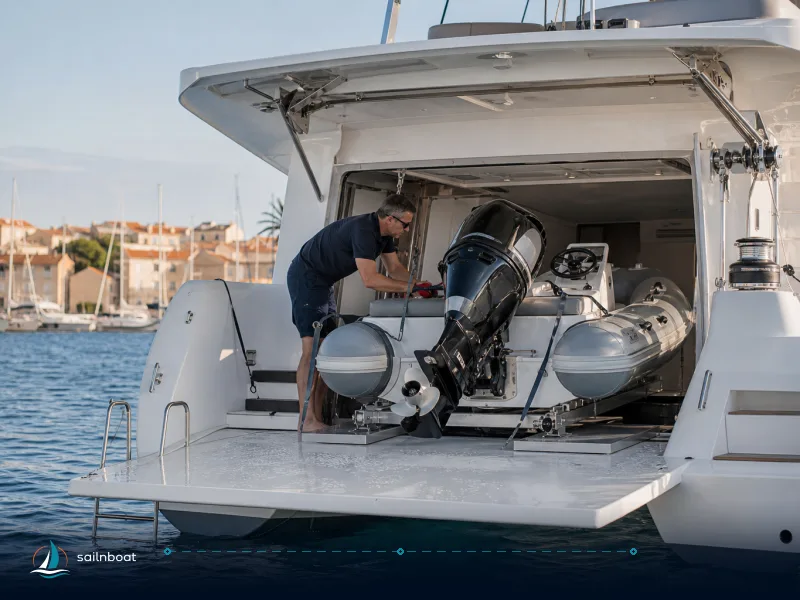
- Typical setup: motor yachts often feature a hydraulic tender garage or large stern locker that can stow tenders in the 3.5–5.0 m range plus jetskis and multiple toys; actual capacity and equipment vary by model and should be confirmed with the operator. Manufacturer brochures and garage systems show this as a standard on larger motor yachts.
- Practical effect: if you plan to run a large tender, Seabobs, two PWCs or a big rigid with an inboard jet, a motor yacht’s garage will be the more convenient choice.
Generator Noise and Where It Matters
- Measured noise: modern marine gensets, depending on model, mounting and soundshield, commonly publish acoustic figures from roughly mid‑50s dB(A) to low‑70s dB(A) at specified distances; compact ‘quiet’ models report low‑50s at 7 m while larger units can be louder at 1 m. Shipping manufacturers’ data vary by brand and installation.
- Practical impact: at anchor, a running genset for air‑conditioning or shore‑power support is audible; motor yachts often place gensets in larger dedicated engine rooms with heavier soundproofing, which reduces perceived noise in guest areas. Catamarans sometimes mount gensets closer to cabins inside a hull trunk or engine room space — quality of soundshielding and installation determines how noticeable it is.
- Mitigation: prefer yachts with low‑noise gensets, sound enclosures, inverter/shore power options and shore‑power availability in marinas; ask the charter company for published dB figures or an owner/charter log note where this matters.
Practical Comparison Table
| Feature | Typical Catamaran (40–50 ft charter) | Typical Motor Yacht (50–95 ft charter) |
|---|---|---|
| Typical cruise speed | ~6–10 kt. | ~18–25 kt. |
| Draft | ~1.1–1.9 m (many production cats ~1.1–1.6 m). | ~2.0–2.5 m or more (varies by model; check specific yacht). |
| Fuel burn (cruise) | Often low double‑digit L/h combined or less, depending on model; powercats higher. | Several-hundred L/h at cruise for large planing yachts; confirm with operator for specific figures. |
| Tender capacity | Often: 3.0–3.5 m RIB on davits/chocks (varies by vessel). | Often: 3.5–5.0 m tender + jetskis in garage; hydraulic recovery (varies by vessel). |
| Social/outdoor area | Very large aft cockpit, foredeck and easy sea access. | More internal luxury, flybridge and enclosed saloon; outdoor area usually smaller by sqm. |
| Generator noise (real world) | Depends on model and install; quieter inverter systems available (mid‑50s to 70s dB(A) range). | Often better soundproofing and engine room isolation; still model/install dependent (similar dB ranges). |
Choosing the Right Option for Your Charter
Match the platform to the trip you actually plan to run — not the one you could run.
For Tight Island Loops
Choose a catamaran if:
- Your itinerary includes many short hops, sheltered shallow bays or stern‑to quay calls (catamarans reach shallower water because typical drafts are often around 1.1–1.9 m).
- You care more about outdoor social space and low fuel line items than shaving a couple of hours off each crossing.
Trade‑offs: a catamaran’s wider swing circle requires careful anchor selection and more attention to sheltered anchorages.
For Long‑Distance Transfers
Choose a motor yacht if:
- You have long open‑water legs and time is the priority — motor yachts cruise significantly faster (often ~18–25 kt), making single long transfers practical.
- You want a large tender garage and rapid toy deployment or to reach a destination the same day on a tight schedule.
Trade‑offs: fuel will be a major line in the APA; expect hundreds of litres per hour on larger planing yachts and the need to budget accordingly.
For Luxury Day Cruising
Choose a motor yacht if:
- You prioritise enclosed, temperature‑controlled interiors, formal dining and a beach‑club garage — motor yachts usually provide higher internal volume and more extensive soundproofing.
Choose a catamaran if:
- Your day group is large and you want continuous indoor/outdoor flow and easy access to the water for swimming, paddleboards and socialising.
Final checklist — questions to ask before you book
- What is the vessel’s published cruising speed and fuel burn at that speed (ask for figures in L/h at cruise RPM)? Compare those numbers to estimated leg times.
- What is the boat’s draft and the minimum depth at anchorages on your intended route? Aim to see the boat’s table or brochure draft and cross‑check with local pilotage notes.
- How is the tender stowed and how large is it? If you need a larger rigid or PWCs, request photos of the garage/davit area.
- What genset is fitted, and do you have published dB figures for the installed soundshield at a standard distance? If night‑quiet matters, prioritize low‑noise gensets or inverter systems.
- How many entry points and what boarding setup does the boat use in marinas (stern‑to, passerelle, side ladder)? This affects luggage handling and accessibility for older guests or children.
Choose the platform that trades off best for your priorities: if you value shallow access and roomy outdoor living for a week of island‑hopping, a catamaran earns its place; if time, a larger toy garage and enclosed luxury are non‑negotiable, a motor yacht will deliver — but budget for the fuel.
Evaluate your charter needs (itinerary distances, guest mobility, toys and noise tolerance) and ask the charter company for the boat’s draft, published cruise burn and tender details before you sign; those three figures will make the decision immediate and practical.
Frequently Asked Questions
Catamarans typically board from the transom (wide swim platforms) using steps, aft platforms and davits for tenders; they also commonly allow stern‑to quay berthing. Motor yachts normally use a passerelle (gangway) or hydraulic swim platform and often require crew to hand the passerelle and manage lines—expect fewer entry points. These practices vary by marina and vessel size.
Small-to-mid sailing catamarans typically use low double‑digit litres per hour combined while motoring (often single‑ or low‑two‑digit litres per engine at cruise for 40–50 ft units); larger planing motor yachts commonly burn hundreds of litres per hour at cruising speed (examples: a 40–50 ft powercat/cat around tens of L/h, a 70–95 ft motor yacht can be 300–550 L/h at cruise). Actual burn depends on engine size, hull type and speed.
Popular Mediterranean coves and island bays commonly anchor in roughly 3–15 m of water; many small, sheltered bays are 2–6 m, while steep‑walled coves (e.g. some Lycian or Cycladic spots) drop rapidly to 15–30 m. A catamaran’s shallow draft (often ~1.1–1.9 m on production charter models) gives access to some 2–3 m anchorages that are off‑limits to deeper motor yachts (typically ~2–3 m or deeper).
Catamarans most often carry a 3.0–3.5 m RIB on davits or chocks on the transom; that Highfield‑type tender is standard on many charters. Motor yachts typically have hydraulic tender garages that can house larger tenders (commonly 3.5–5 m) and jetskis, plus powered launch/recovery gear on bigger models.
Modern marine generators range roughly 54–72 dB(A) depending on model, shielding and measurement distance; poorly insulated gensets will be audible in guest areas and at anchor, especially at night. Motor yachts often feature heavier soundproofing and larger, more isolated engine rooms that reduce perceptible noise compared with some catamarans where gensets sit closer to cabins.
Written by
Sailnboat Editorial
The Sailnboat editorial desk covers yacht and boat chartering worldwide — routes, bases, seasons, boat types, paperwork and the practical costs that decide a trip. We are a charter marketplace, not a boat owner or a local agency: what we sell is judgement and support, so our guides are written to help you make a decision, not to sell you a specific boat. Every guide is checked against live operator and marina data before it goes out.
Fact-checked against live operator and marina data, and published under our editorial standards. Last reviewed: .