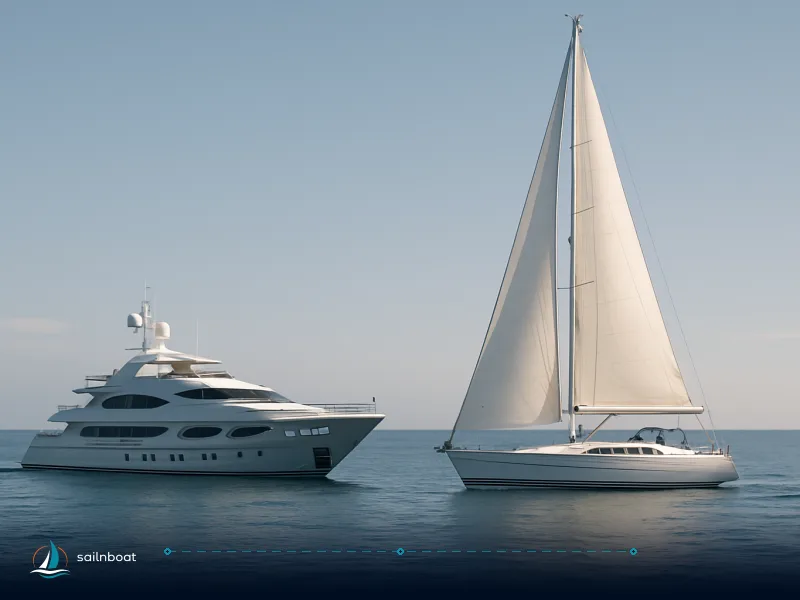
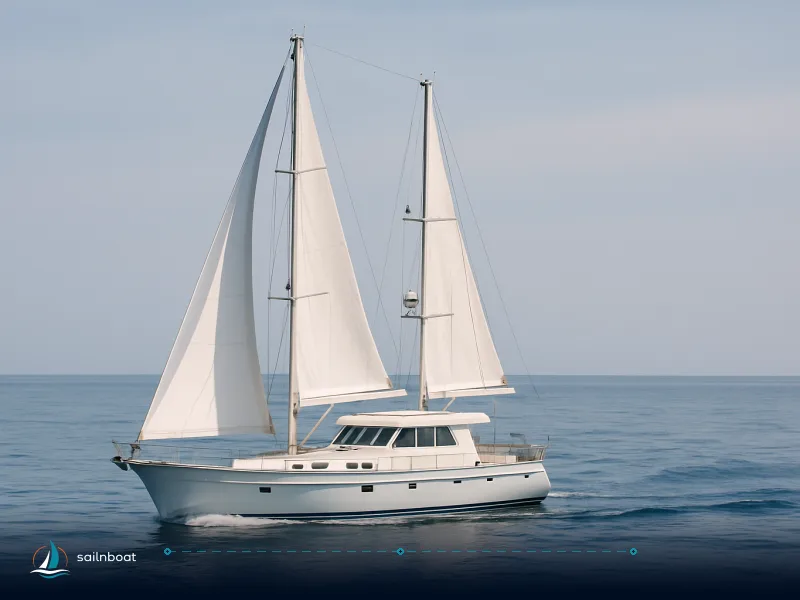
Motor Yacht vs Cruiser: Choosing the Best Power Option for Your Charter
A practical comparison to help families and groups decide between a motor yacht and a cruiser: speed, living space, fuel, berthing and the trade-offs that matter for a week-long charter.

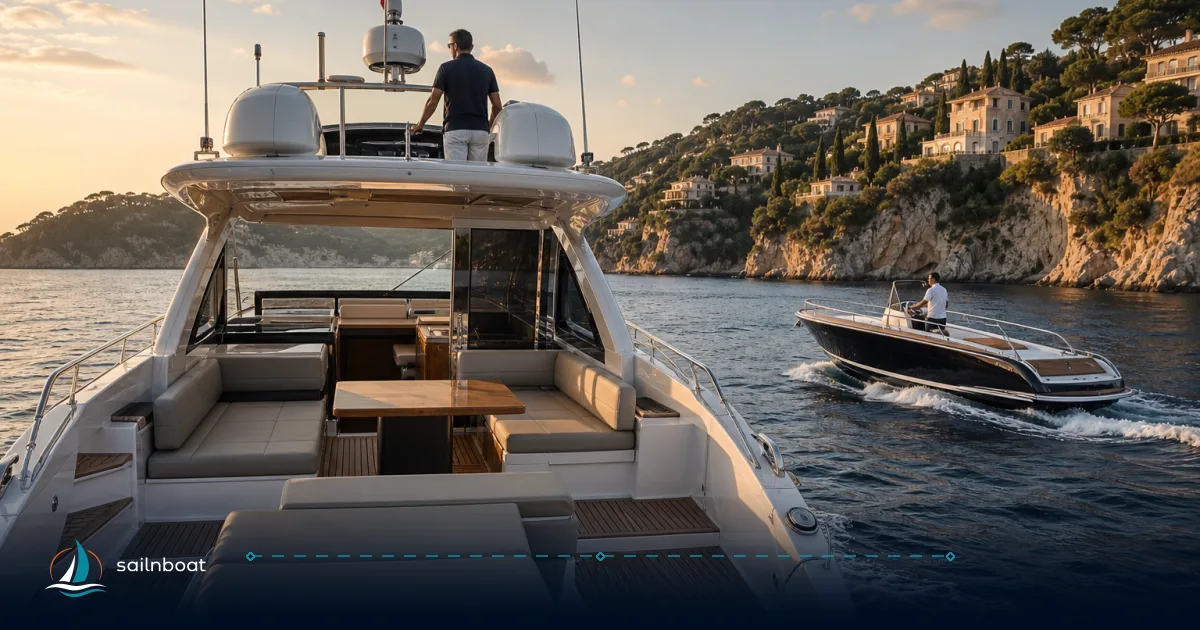
A ruled decision up front: choose a cruiser if your priority is speed and frequent short hops; choose a motor yacht if you need interior space, separate cabins and a hotel-like onboard experience for family members who value comfort over transit time.
Understanding Motor Yachts and Cruisers
Defining Motor Yachts
A motor yacht (in the charter context) is a powerboat primarily built around interior volume and liveability: multiple cabins, a full galley, sizeable saloon and often a flybridge or upper deck for lounging. They come with displacement, semi-displacement or planing hulls depending on length and speed target; displacement and semi-displacement models favour a steadier motion and greater range at modest speed. Expect more internal systems (generators, watermakers, air conditioning) and therefore higher ongoing running costs for fuel and services.
What this means in practice for a family:
- More private cabins and heads (useful for three-generation groups).
- Larger refrigerated and pantry capacity for provisioning.
- Easier separation of guest and crew spaces—useful if you want crew to prepare meals and leave family spaces undisturbed.
Defining Cruisers
'Cruiser' in common usage covers a range of smaller, more agile powerboats: express cruisers, sport cruisers, day-cruisers with cabins, and smaller sedan or pilot-house designs. The emphasis is on deck flow, easy helm sightlines, and planing hulls that deliver higher cruise speeds. Layouts trade interior volume for open cockpit and sundeck space—handy when your group plans lots of time outside and short hops between beaches or marinas.
What this means for a family:
- Faster repositioning between anchorages or islands (good for squeezing more stops into a week).
- Simpler systems and lower fuel burn on short legs, but usually fewer cabins and smaller heads.
- Easier marina access and lower berth costs in many places.
Speed Considerations: Motor Yachts vs Cruisers
Speed of Motor Yachts
Motor yachts generally favour comfortable, economical cruising speeds rather than outright pace. While top speeds vary by hull and engine fit, many motor yachts cruise in a broadly comfortable band rather than pushing for sprint performance; manufacturers and industry reviews commonly show motor yachts operating comfortably in the low-to-mid 20s of knots for planing examples and lower for semi-displacement/displacement models.
Why that matters:
- Longer daily transits at higher cruise speeds consume fuel exponentially more quickly—so every knot faster can materially raise the fuel line in your APA.
- For families with younger children or older guests, a steadier semi-displacement hull on a motor yacht will usually make for a more comfortable ride over longer legs.
Speed of Cruisers
Cruisers—express or sport types—are designed to plane and therefore typically reach higher cruising speeds for the same installed power compared with heavier motor-yacht hulls. Typical cruising speeds for modern express cruisers and day cruisers commonly sit in the mid-20s to low-30s knots depending on engine package and sea state; that capability makes them the natural choice for island-hopping itineraries where you want to visit several spots in a day.
Trade-off to watch:
- Fast cruise shortens transit time but raises immediate fuel burn and therefore APA. If your itinerary is tight or fuel-cost sensitive, model selection and planned cruise speed must be considered together.
Onboard Living: Space and Comfort
Interior Space of Motor Yachts
Motor yachts win on dedicated inside space: multiple en-suite cabins, larger saloons, a proper galley and often separate crew quarters. For family charters that value private space and living-with-privacy, this layout is compelling.
Operational considerations:
- More berths and heads often mean more linen, more provisioning and higher APA spend on consumables.
- Stairs, steps and companionways can fragment deck flow—check how children or elderly guests will move between levels at anchor and in marinas.
Interior Space of Cruisers
Cruisers compress living and social areas: the saloon and cockpit often feel like a single, flowing space, and deck seating/ sunpads are optimised for daytime socialising. Cabins exist but are usually fewer and cozier.
Operational considerations:
- Faster planing hulls reduce motion sickness risk in certain conditions (but can be a firmer ride in chop).
- If the family spends most of the day outside, cruisers can feel larger than they are because of generous cockpit and sunpad real estate.
Fuel Efficiency and Range
Both fuel burn and tankage matter more in a motor yacht vs cruiser decision than most clients expect. Fuel is frequently the largest line in an APA for power charters.
Fuel Efficiency of Motor Yachts
Motor yachts—especially larger, heavier displacement or semi-displacement examples—are typically less fuel-efficient than a comparably sized planing cruiser when both are asked to cruise fast. Fuel burn varies hugely by hull and speed, but published examples for large motor yachts show very high hourly consumption at fast cruise (hundreds of litres per hour on superyacht-sized examples) and substantially lower burns at conservative speeds. Use the yacht’s published range figure only when tied to the speed at which it was calculated.
Example guidance (typical patterns):
- On a large motor yacht, fuel burn rises steeply above economical cruise; APA provisioning on motor yachts is commonly higher because fuel is the biggest variable cost.
Fuel Efficiency of Cruisers
Cruisers generally use less fuel per hour at the speeds they are intended for, and planing hulls can be efficient over short, fast legs. That said, cruisers usually carry smaller tanks than true motor-yacht designs, so their practical single-fill range can be shorter unless you accept frequent refuelling. Practical range depends on tankage, chosen cruise speed and sea state; range figures should always be read alongside the speed used to calculate them. Good guides and fuel calculators show how to convert tank volume and burn rate into range using the yacht’s speed.
Quick operational rule: if your itinerary requires long, uninterrupted passages (longer than a day), favour a motor yacht with larger tankage or a semi-displacement design; if you plan many short hops and daily returns to marinas or anchorages, a cruiser is usually cheaper on fuel.
Marina Access: Docking and Mooring
Mooring Motor Yachts
Motor yachts require larger berths and usually deeper water, which can push you into better-equipped marinas with higher transient rates and more restrictive booking windows. Expect larger beams and sometimes deeper drafts as your boat size increases, and arrange berthing well in advance in high season.
Two practical impacts:
- Berth availability can limit itinerary flexibility in high-demand destinations.
- Transient marina fees and utility surcharges (electricity, pump-out) are typically higher for larger berths. Published regional price surveys show a wide range—many Mediterranean marinas charge from roughly €50 to well over €150 per night for 12–15 m boats in peak season, with premium locations considerably higher.
Mooring Cruisers
Cruisers generally fit into tighter berths and benefit from more guest berths and municipal quays in popular anchorages. That makes late changes of plan or a last-minute stop easier and usually cheaper.
Operational considerations:
- Smaller beam means you can use marina fingers and some municipal quays unavailable to larger motor yachts.
- Mooring buoy or anchoring options are often cheaper alternatives but check local rules and capacity for your boat’s length.
Choosing the Right Option for Your Charter
Matching to Your Itinerary
Decide the dominant shape of your week and choose to match it.
Checklist by itinerary type:
- Numerous short hops, many stops in one day, and lots of water-time toys: favour a cruiser or sport-express type that will let you cover ground quickly and return to marinas/anchorages. Check tender size and boarding arrangements for frequent ashore trips.
- Fewer moves, more time aboard, focus on onboard comfort and separate cabins: favour a motor yacht, especially with a flybridge and sheltered cockpit for family meals and mixed-age groups.
- Long passage (single multi-hour transit day): choose a yacht with larger tankage and a hull form suited to efficient passage (often semi‑displacement motor yachts).
Budget Considerations
Fuel, APA and marina fees create the biggest running-cost delta between a motor yacht and a cruiser.
Numbers you should plan around:
- APA (Advance Provisioning Allowance) is commonly set as a percentage of the base charter fee; for motor yachts this is typically in the 25–35% range and can be higher on fast or long-range superyachts. That APA mainly covers fuel, marina fees, provisioning and any extras.
- Marina rates vary by country and marina quality; for many Mediterranean marinas, expect a 12–15 m berth in high season to fall in a broad band from around €50 to €150+ per night depending on location and amenities. Plan your itinerary with these variable costs in mind and factor them into the APA estimate.
Table — Quick comparison at a glance
| Feature | Motor Yacht | Cruiser |
|---|---|---|
| Typical cruise emphasis | Comfort, volume, long-range economy at modest speed | Speed, agility, short-hop efficiency |
| Usual cruise speed (industry examples) | Modest-to-mid 20s knots for planing types; displacement/semi-displacement lower. | Mid-20s to low-30s knots common for express/sport cruisers. |
| Fuel impact on APA | Higher: fuel is often the single biggest APA item (larger tanks & systems). | Lower on short legs, but smaller tanks may require more refuelling stops. |
| Cabin count / privacy | More cabins and en‑suites (better for multigenerational groups) | Fewer cabins, more open cockpit/social deck space |
| Marina access / berthing | Needs bigger, deeper berths and advanced planning; higher fees likely. | Easier to fit into smaller marinas, often lower berth cost |
| Tender & toys | Larger tenders common; storage and lifting arrangements needed | Smaller tenders common; easier launch/recovery but less carrying capacity |
Model-type Checklists (match a boat to your family)
Below are practical checklists by common powerboat model types rather than brands—use these at booking and again at handover.
Flybridge Motor Yacht (45ft+ / semi‑displacement or planing)
- Why pick it: Best balance of interior volume, multiple cabins and an upper social deck. Good for mixed-age groups.
- Ask the base: usable fuel in litres, generator capacity, number of fridges/freezers and laundry availability.
- Handover checks: stabiliser function, freshwater capacity, tender hoist rating and boarding ladder for kids.
Express Cruiser / Sport Cruiser (35–50ft / planing)
- Why pick it: Fast, direct passage-making and large cockpit space for daytime activity.
- Ask the base: recommended continuous cruise RPM and fuel burn at that RPM (L/h), and tender stowage plan.
- Handover checks: sunshade/deck batten ease, swim platform access for children, lifejackets sized for young guests.
Sedan / Pilot House Cruiser (trawler-style or long-range)
- Why pick it: Comfortable, economical for long legs, easier helm ergonomics and protected walkways.
- Ask the base: realistic single-tank range at normal cruise and nearest refuelling options on your route.
- Handover checks: bilge pump alarms, engine room access, heating/air-conditioning control, and clarity on generator starting.
Day Cruiser / Sports Dayboat (short charters)
- Why pick it: Lowest berthing and fuel costs for day trips; simple to operate.
- Ask the base: maximum recommended passenger count for safety, shade/shelter options, and local speed limits.
- Handover checks: seating harnesses, fuel level calibration, and local rules about beaching or close-in anchoring.
Practical Pre-Charter Questions to Ask (and why they matter)
- What is the APA percentage and what is your estimate for our planned itinerary? (This defines your true budget.)
- What is the yacht’s usable fuel capacity and calculated range at our expected cruise speed? (Range must be tied to speed.)
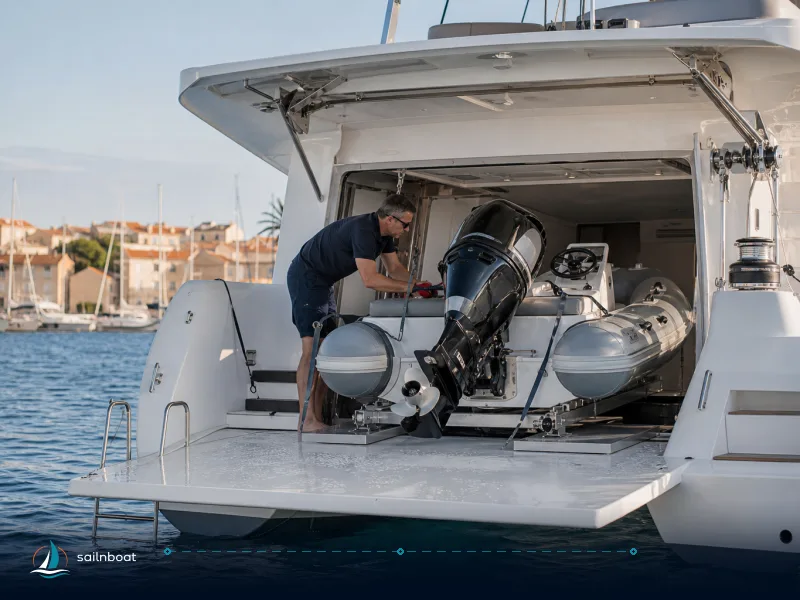
- How big is the tender and where is it launched/stored? (Frequent shore runs mean you need an easy-launching tender and room to store toys.)
- What are the typical marina fees for the proposed itinerary? (Marina costs can eclipse food if you choose premium berths.)
- Which systems will the crew use that are chargeable to APA (generator hours, watermaker usage, satcom)? (Some systems get expensive fast.)
Final decision framework (short)
- Prioritise cruiser if: you want to move quickly between multiple stops in a week, have a family that spends most time outside, and want lower fuel and berth costs.
- Prioritise motor yacht if: you need more private cabins, a sheltered social saloon for older guests or infants, and fewer moves with more onboard living time.
- Hybrid decision: choose a semi-displacement motor yacht if you want a compromise—better economy at moderate speeds with more living space than a pure planing cruiser.
Evaluate your itinerary first (number of stops per day, total miles, and how much time you'll actually spend onboard vs ashore), then match hull type and tankage to that plan. Ask the charter base for fuel-burn numbers at the planned cruise speed and an APA estimate for your exact route before you sign.
Evaluate your charter needs and consult with our experts to select the best option.
Frequently Asked Questions
Motor yachts prioritise interior volume, multiple cabins and creature comforts; cruisers prioritise speed, deck access and a tighter, activity-focused layout. Motor yachts generally carry more fuel-consuming systems and need larger operational budgets, while cruisers are more agile and use less fuel on short hops.
If your week includes long transits or a desire to cover many miles in a day, speed shortens passage time but raises fuel costs; cruisers typically cruise faster and are better for island-hopping, whereas motor yachts cruise more slowly but offer a more relaxed onboard life.
Prioritise cabin layout, NATURAL circulation (no dangerous steps between play areas), a protected cockpit, a family galley, and crew accommodation ratio. Motor yachts usually offer more separate cabins and larger saloons; cruisers concentrate social space on deck and may have fewer private cabins.
Fuel consumption and range determine APA and refuelling stops: larger motor yachts burn more fuel per hour and increase APA; cruisers burn less on short legs but may have lower tankage for long passages—plan routes to match tank capacity and expected speeds.
Prioritise safe tender stowage and easy boarding, shallow draft if anchorages matter, number and arrangement of cabins (ensuite vs shared heads), deck flow for children, shaded cockpit, refrigeration capacity, and the onboard toys you really will use.
Written by
Sailnboat Editorial
The Sailnboat editorial desk covers yacht and boat chartering worldwide — routes, bases, seasons, boat types, paperwork and the practical costs that decide a trip. We are a charter marketplace, not a boat owner or a local agency: what we sell is judgement and support, so our guides are written to help you make a decision, not to sell you a specific boat. Every guide is checked against live operator and marina data before it goes out.
Fact-checked against live operator and marina data, and published under our editorial standards. Last reviewed: .