Essential Sailing Weather Terms Every Skipper Should Know
A practical glossary of 15+ sailing weather terms—what each means, how it changes your plan, and the concrete actions a skipper should take.


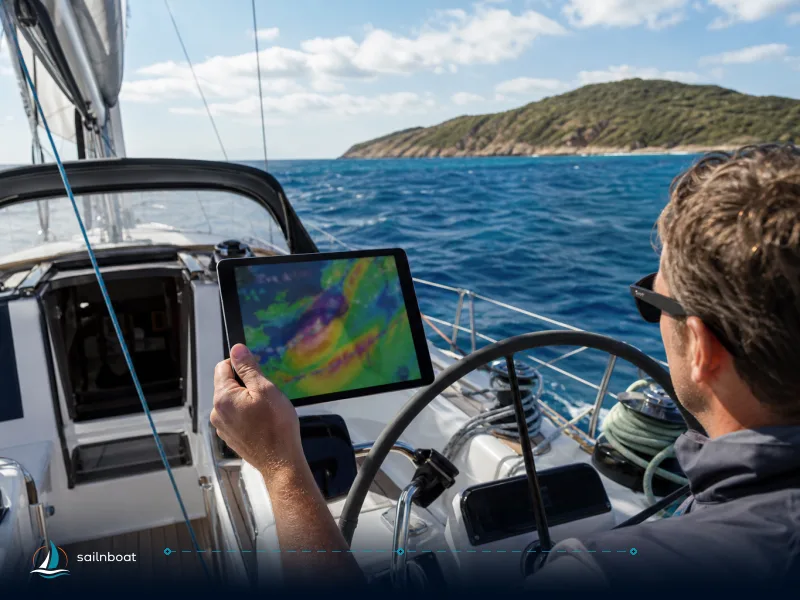
Learning these sailing weather terms will let you translate a forecast into concrete decisions—when to leave, when to reef, which anchorage to pick, and when to wait ashore. This guide decodes 15+ common forecast words into plain English, gives quick examples of how they change a plan, and lists an action tip you can use on deck right now (or at the planning table).
Understanding the Basics of Sailing Weather Terms
What Are Sailing Weather Terms?
- Weather forecasts use specialised words so meteorologists can be concise; for a skipper those words are decision signals. Wind words tell you sail choice and course; pressure trends hint at system development; swell and period tell you how the boat will behave offshore.
- Read the forecast as four linked layers: wind (direction and speed), barometric pressure (trend), waves (height and period/swell), and local coastal effects (sea/land breeze, fetch, wind shifts). Treat any change in one layer as potentially relevant to the others.
Why this matters when you charter or skip a passage
- Small differences change actions: a 5–8 knot difference in wind on a 40‑ft monohull will alter apparent wind enough to change sail trim; 8–12s of swell period will change how the boat rolls at anchor.
- Charts, pilot books and your passage plan should reference forecast layers, not single-line statements. Build contingency time and a protected anchorage in your plan if forecasts show any unstable terms (squall, gale, long-period swell).
Key Marine Forecast Terms You Should Know
Below are 15 terms you will see in marine forecasts. Each entry gives a plain-English definition, a short example of how it affects sailing plans, and one action tip.
Beaufort Scale
Definition: A standard scale (0–12) that describes wind strength by observable effects and approximate wind-speed ranges; sailors use it to translate words like “gale” into expected wind speeds and sea states. Example: A forecast of Beaufort 6 (strong breeze) tells you to expect whitecaps and to consider reefing for comfort on a 40‑ft boat if you’re making a long passage. Action tip: Use Beaufort to set thresholds: decide beforehand at which Beaufort you reef, reduce sail area or cancel a passage.
Apparent Wind
Definition: The wind you feel on board: the vector sum of the true wind and the wind created by your boat’s motion. It determines actual sail loads and angle of attack. Example: With a 15‑kt true wind and 6 kt boat speed on a close reach, apparent wind will be stronger and forward of the true wind — you may need to flatten sails or depower. Action tip: Trim for apparent wind: if your instruments show rapid AWA (apparent wind angle) change as speed rises, ease sheet or reduce sail to prevent broach.
Barometric Pressure
Definition: Atmospheric pressure at sea level reported in hPa/mbar; falling pressure usually signals an approaching low‑pressure system and more unsettled weather, rising pressure suggests improving, calmer conditions. The standard reference pressure is about 1013.25 hPa. Example: A steady fall of 6–8 hPa over 12–24 hours usually corresponds with strengthening winds and a higher chance of rain or squalls. Action tip: Monitor trends, not single values—record pressure at check-in and watch for a steady fall; if it falls quickly, shorten the planned leg or pick a sheltered harbour.
Swell
Definition: Long-period waves generated far from your location that travel into your area; they produce the characteristic rolling motion distinct from wind chop. Example: A 12–14s swell with 2.5 m height produces slow, powerful rolls—exhausting for crew and risky for anchoring off exposed coastlines. Action tip: For long-period swell, choose anchorages with a lee from the swell direction or delay overnight anchoring in exposed bays.
Swell Period
Definition: The time in seconds between successive swell crests passing a point (longer period = more energy and longer sport‑style rolls). Example: 6–8s period = short choppy waves; 12–16s period = ocean swell that can make a yacht roll heavily even in modest height. Action tip: If swell period is >10s and height is significant, avoid sleeping in exposed anchorages and stow loose gear.
Significant Wave Height (SWH)
Definition: The average height of the highest one‑third of the waves observed over a sampling period; it’s the standard way services report wave heights. Example: A forecast SWH of 3 m with a 10s period describes a different risk than a 3 m SWH with a 7s period—the shorter period produces steeper, more breaking waves. Action tip: Use SWH and period together—longer period with same SWH feels heavier but is often more predictable; short period waves increase slamming risk.
Sea State
Definition: A descriptive term combining wave height, period and wind—used to describe overall surface conditions (calm, slight, moderate, rough, very rough, etc.). Example: “Very rough sea state” on the forecast suggests uncomfortable and potentially hazardous conditions for passage-making. Action tip: Translate sea state into operational limits for your crew and vessel (e.g., no overnight passages at “very rough”).
Gale
Definition: A strong wind condition reported as “gale” (commonly associated with sustained winds roughly 34–47 knots, depending on classification); Beaufort forces 8–9 cover the gale/strong gale range. Example: A gale forecast across your planned route means you should consider postponing departure or seeking shelter early rather than attempting to beat against it. Action tip: Treat any gale forecast as a high‑risk condition—reef early, shorten sail plans, and identify secure harbours or marinas along your route.
Squall
Definition: A sudden, brief increase in wind speed often associated with convective activity (thunderstorms)—arrives quickly and can include wind veer/shift and heavy rain. Example: A squall line moving through a bay can hit with gusts well above the background wind, catching an unreefed boat off guard. Action tip: Keep a lookout for dark cumulus clouds and radar returns, have sails reduced when convective activity is expected, and have crew on quick‑reef/halyard watch.
Windward / Leeward
Definition: Windward is the side facing the wind; leeward is the sheltered side away from the wind. Example: If the forecast predicts an onshore wind, anchor on a windward side is a poor choice—your boat will be forced toward shore in a strong gust. Action tip: Choose anchorages with a lee (sheltered side) relative to the prevailing wind and ensure enough swing room considering tidal range.
Wind Shift
Definition: A change in wind direction; can be gradual (clockwise or anticlockwise) or a sudden veer/backs. Wind shifts alter the optimal course and can affect exposure in an anchorage. Example: A predicted overnight wind shift from SW to NW could change your lee and expose the anchorage to swell or fetch-driven waves. Action tip: Account for likely shifts when selecting anchorages and plan sail changes in advance—if a major shift is forecast, consider relocating before dark.
Sea Breeze / Land Breeze
Definition: Regular coastal circulations driven by differential heating: sea breezes blow onshore in the day, land breezes offshore at night; strengths and timing depend on coastal geography and synoptic winds. Example: A coastal sea breeze that develops each afternoon can strengthen an onshore wind enough to make returning to a lee harbour uncomfortable. Action tip: Plan departures with local breeze timing—leave early to avoid an afternoon sea breeze on an up-coast leg, or use the sea breeze to assist a down-coast reach.
Fetch
Definition: The distance of water over which the wind blows in a single direction—longer fetch produces larger waves for the same wind speed and duration. Example: A short fetch inside a bay means small, choppy waves; a long fetch across an open sea can generate large swell even in moderate wind. Action tip: When forecasts show strong wind over long fetch, assume larger sea states than nearshore observations suggest; choose protected routes accordingly.
Beaufort at a glance (quick reference)
| Beaufort (Force) | Typical wind (knots) | Sea state (short) | Practical skipper action |
|---|---|---|---|
| 4 (Moderate) | ~11–16 kt | Small waves, many whitecaps | Comfortable sail; reef only if heading into heavy seas. |
| 5 (Fresh) | ~17–21 kt | Moderate waves, some spray | Consider reefing if long passage or short-handed. |
| 6 (Strong) | ~22–27 kt | Large waves, white foam | Reef early; shorten sails; confirm crew safety positions. |
| 7 (Near gale) | ~28–33 kt | High waves, more spray | Likely avoid offshore legs; plan shelter. |
| 8 (Gale) | ~34–40+ kt | Very high waves, breaking crests | Postpone or shelter; heavy reefing/motor home only. |
Examples of Weather Terms in Action
Impact of Windward and Leeward
Scenario: You're picking an overnight anchorage with a forecast SW wind that will increase in the evening.
- Practical effect: The leeward side relative to SW gives shelter; an anchorage that looks calm with light wind from the opposite direction will become exposed once wind veers.
- Action: Pick a berth that remains leeward to the dominant forecast direction, allow adequate swing room for predicted tidal range, and set two anchors if the bottom and space allow.
Squall and Wind Shift
Scenario: Radar shows convective cells with squalls moving toward your coast; forecast mentions “squalls possible”.
- Practical effect: Expect sudden gusts, possible 20–40% higher gusts than background wind, and rapid wind-direction changes.
- Action: Reduce sail to a conservative plan (reef 1 or more), crew to safety positions, and avoid leaving canvas up; use storm jib or trysail if conditions escalate quickly. Keep VHF/phone and radar handy to time departures between squalls.
Sea Breeze and Land Breeze
Scenario: A planned coastal leg starts at 0700 and forecast notes a regular afternoon sea breeze up to 12–18 kt.
- Practical effect: Down‑coast legs can use the sea breeze; up‑coast legs will be beat against a strengthening onshore wind later in the day.
- Action: Depart early to be clear of the headland before the sea breeze peaks, or plan to stop at an intermediate harbour if you expect to encounter the full onshore breeze.
Action Tips for Navigating Weather Forecasts
Preparing for Gales and Squalls
- Read the whole forecast: a gale alert plus falling pressure and increasing swell period together signal a system with fetch and sustained wind—this is different from isolated squalls.
- Practical checklist: identify safe harbours along route, check lines and fenders, secure loose gear below, brief crew on reefing and MOB procedures.
- Decision rule: many skippers adopt a conservative operational limit (for your boat and crew) and cancel or shorten legs when forecasts approach that limit; define your limit before leaving the dock.
Using the Beaufort Scale
- Use Beaufort as a common language with crew and other vessels. Translate forecast force into concrete sail plans (which reef, which headsail).
- Example policy: at Beaufort 6 reef one, at Beaufort 7 reef further or reduce to storm sails—adjust for sea state and crew experience.
Monitoring Barometric Pressure
- Record pressure at departure and monitor trend: a steady fall over several hours is more significant than a single low reading.
- If pressure falls rapidly (several hPa over a short time) shift to conservative mode—shorten legs, avoid exposed anchorages, and prepare for stronger winds and squalls.
Wave, Swell and Period: Combine, don’t read singly
- Two short examples:
- SWH 2.5 m, period 7 s = steep, breaking waves; higher slamming risk.
- SWH 2.5 m, period 14 s = slow, heavy rolls; uncomfortable and increases gear strain.
- Action: for steep short-period waves, slow and head the boat into seas when possible; for long-period swell, avoid exposed anchorages and consider motion-sickness measures.
Common Questions About Sailing Weather Terms
What are the most critical weather terms?
- Wind terms (speed, direction, Beaufort), pressure trend, swell/period, and local effects (sea breeze, fetch, wind shifts) are the most directly actionable items in a forecast.
How do these terms affect my sailing plans?
- Wind decides sail plan and route; pressure trends indicate system development; swell and period determine comfort and anchorage choice; squalls and gales determine whether to go to sea at all.
How should I prioritise information in a forecast?
- Prioritise: (1) warnings/alerts (gale, storm), (2) wind direction and speed bands along your route, (3) barometric trend, (4) sea state, SWH and period, (5) local coastal effects like sea breeze or fetch‑driven waves.
Final Thoughts on Sailing Weather Terms
Learning to translate forecast jargon into an operational plan is one of the highest-value skills you can polish before a charter or cruise. Use the terms above as decision triggers—define your own conservative thresholds for sail change and passage cancellation, watch pressure trends, and always pair wind forecasts with swell/period and local coastal effects when choosing an anchor or starting a night passage.
Review your sailing plans and ensure you're prepared for the forecasted weather.
Frequently Asked Questions
The most useful terms are: Beaufort scale, apparent wind, barometric pressure, swell, swell period, significant wave height, sea state, gale, squall, windward, leeward, wind shift, sea breeze, land breeze and fetch; each affects sail choice, course and safety.
Wind terms tell you sail and course choices; pressure trends warn of developing systems; swell and period determine comfort and offshore safety; squalls and wind shifts force immediate sail changes or seeking shelter.
Actions range from reefing early for forecasted gale-force winds, shortening passages when long-period swell is predicted, to avoiding exposed anchorages when a wind shift or strong onshore breeze is expected.
Yes—examples in the article show how a predicted afternoon sea breeze shortens an up-coast leg, or how a 10–12s swell with 2.5–3m SWH changes anchorage choice and night passage decisions.
The article provides short, plain-English definitions and one-line action tips for each term so you can translate the forecast into decisions.
Written by
Sailnboat Editorial
The Sailnboat editorial desk covers yacht and boat chartering worldwide — routes, bases, seasons, boat types, paperwork and the practical costs that decide a trip. We are a charter marketplace, not a boat owner or a local agency: what we sell is judgement and support, so our guides are written to help you make a decision, not to sell you a specific boat. Every guide is checked against live operator and marina data before it goes out.
Fact-checked against live operator and marina data, and published under our editorial standards. Last reviewed: .