How Many Knots Is Good for Sailing? A Skipper's Guide
Practical wind-speed thresholds for charter skippers: what’s a comfortable breeze, when to reef, and when to call it off—numbers you can act on.


Sensible wind thresholds depend on boat, crew and sea. For most charter cruising monohulls, a true-wind window of roughly 8–18 knots is comfortable for full sail and relaxed passages; when winds rise into the high teens you should already be planning a reef and conservative routing. Those numbers change sharply for dinghies, inexperienced crews, catamarans and offshore passages—use the wind ranges below as a working decision tool, not a hard law.
Understanding Wind Speed Classifications
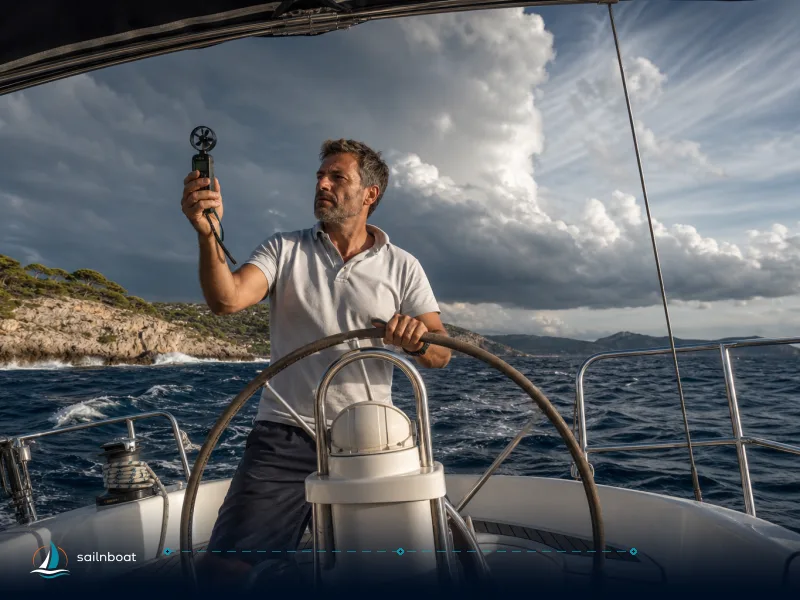
The single most useful way to translate a wind speed number into sea behaviour is the Beaufort scale. It pairs wind ranges in knots with observable sea states (calm, rippled, white horses, spray) so you can judge conditions from what you see rather than only what your anemometer says. Official national guides and training syllabuses use the Beaufort descriptions to link sail plans to conditions.
The Beaufort Scale Explained
- Beaufort 0–2 (calm to light breeze): mean wind roughly 0–7 kt; glassy to small wavelets—ideal for learners and relaxed cruising.
- Beaufort 3–4 (moderate breeze): ~7–16 kt; whitecaps start to appear; many cruisers still carry full sails but watch for increasing seas if fetch or tide amplifies waves.
- Beaufort 5–6 (fresh to strong breeze): ~17–27 kt; frequent white horses, larger waves—this is the zone where most skippers reef the mainsail and reduce headsail.
- Beaufort 7+ (near-gale and above): sustained 28 kt and up; sea state becomes uncomfortable and potentially hazardous for small/crew-limited charters—consider shelter or cancelling.
Use the Beaufort descriptions as your first layer of decision-making: if you see steady whitecaps, spray and breaking crests, treat the conditions like Beaufort 5–6 or higher even if a patchy anemometer reads lower.
Safe Wind Speed Thresholds for Sailing
There is no universal “good” wind in knots. Boat type, load, sea state, and crew skill change the answer. Below is a practical, calibrated table for charter skippers: comfortable cruising ranges, the zone where you should exercise caution and reef, and when you should seriously consider cancelling or seeking shelter.
| Boat type | Comfortable (typical) | Caution / Reefing recommended | Avoid / Seek shelter (typical) |
|---|---|---|---|
| Dinghies / small trainers | typically 0–12 kt | 12–18 kt | >18–25 kt for inexperienced crews (guidance varies). |
| Daysailers / small keelboats (20–30 ft) | typically 6–14 kt | 14–20 kt (check local or operator guidance) | >20–25 kt. |
| Cruising monohull (35–45 ft) | 8–18 kt | 15–25 kt (reef early) | >25–35 kt without experienced crew or sheltered routing. |
| Bluewater monohull (>45 ft) | 10–20 kt | 18–30 kt (reefing, heavy weather seamanship) | >30–40+ kt (special kit and preparation required). |
| Cruising catamaran (30–45 ft) | 8–15 kt | 15–22 kt (reef early; watch pitch-poling risk) | >22–30+ kt depending on design and loading — be conservative with light crews. |
| Performance / race boats | 10–20 kt (upwind) | 20–30+ kt (reef or change sail plan quickly) | Depends on crew and design; racing crews accept higher risk. |
Notes on the table:
- These are practical, commonly used ranges calibrated to training material and operator practice; manufacturer and yacht-specific manuals often give tighter limits—use those when available.
- The NOAA “small craft advisory” range (roughly 20–33 kt, subject to local variation) is a conservative external warning that often lines up with the “caution/avoid” zone for small and charter vessels. Treat it as a serious red flag.
Adjusting Sail Plans Based on Wind Speeds
Good sail handling is proactive: reef early, brief the crew, and change sails while conditions are manageable.
When to Reef the Sails
- Practical trigger: reef the first time you think about it. For many cruising yachts that corresponds to apparent wind in the 15–20 kt band when sailing upwind—this is where heel, weather helm or repeated whitecapping usually appear.
- Reefing progression (typical, boat-dependent): first reef ~15–20 kt apparent; second reef or smaller headsail in the low-to-mid 20s; deep reef / storm jib and trysail in the mid-to-high 30s if passage demands it. RYA training lists reefing guidance tied to Beaufort descriptions (reef at strong breeze/Beaufort 6 onwards).
- Apparent vs true wind: when beating to windward, apparent wind is higher than true; a 12–15 kt true wind can feel like 18–22 kt apparent if you’re doing 6–7 kt boat speed—reef decisions should be driven by apparent wind and boat behaviour.
Consequences of failing to reef early: harder helm, increased weather helm and broach risk, higher loads on rigging and sheets, and greater crew fatigue—each increases the chance of gear failure or loss of control.
Choosing Safe Routes and Shelter Locations
Wind speed is only one factor — route selection must also account for fetch, tide, lee effects and safe anchorages.
Evaluating Potential Risks
- Wind against tide: when wind opposes a strong tidal stream you get short, steep, breaking seas that increase slamming and broach risk; avoid crossing tide against wind on exposed routes.
- Fetch and local amplification: long fetch and open coastline amplify wave height for a given wind speed; a Beaufort 5 over long fetch offshore will produce larger, often longer-period waves and feel rougher than in sheltered, short-fetch coastal water. Use local knowledge and charts to judge how exposed your leg is.
- Shelter selection: prefer harbours with quick access, swinging room, and holding ground; anchorages that are lee-protected from the forecasted wind direction; and berths where you can stern-to or alongside quickly if conditions deteriorate. If you need to abort, choose the nearest sheltered harbour rather than trying to outrun the wind.
Practical routing checklist:
- Identify two escape/shelter options within a single day’s run from your start point.
- Check tidal gates and shallow areas; strong winds make motoring in confined channels harder.
- Ask the base for local anemometer locations and typical lee/swell behaviour — local marina staff and charter desks often have the quickest, relevant intelligence.
Decision-Making Protocols for Adverse Conditions
A short, practical protocol to use before any planned departure.
When to Postpone or Cancel Sailing
- Check the forecast for sustained wind and gusts for your planned hours afloat. If sustained winds forecast enter the NOAA small-craft advisory band (roughly 20–33 kt), treat the day as high-risk for small/short-handed charters and consider postponing.
- Compare the forecast to your boat and crew: novice crews, short-handed charters, or light-general condition boats should apply a lower threshold (lean conservative). Many clubs and training centres decline to go afloat above Beaufort 4–5 for juniors.
- Factor gust spread: if gusts exceed the mean by 30% or more, reduce sails earlier and favour shelter. Weather.gov defines gusts and highlights their effect on sudden loading.
- Use captain’s discretion: many charter operators reserve the right to cancel when conditions are unsafe; examples show operators commonly use sustained winds above ~20 kt as a practical threshold for day-charters, though specific policies vary. Always check the operator’s policy before you book.
A short decision ladder to carry on a tablet or print:
- Forecast sustained <15 kt and no significant gusts → proceed with typical sail plan.
- Forecast 15–25 kt or frequent gusts → reef early, brief crew, pick sheltered route.
- Forecast sustained >25–30 kt or small-craft advisory → cancel, postpone or move to shelter unless you have an experienced crew and a boat prepared for heavy weather.
The Influence of Gusts, Sea State, and Wind Direction
These factors often change a safe day into an unsafe one more quickly than mean wind values.
Understanding Gusts and Sea Conditions
- Gusts: Weather services describe gusts as rapid fluctuations; the weather.gov definition and marine guidance treat gusts of 10 kt+ as operationally significant. Large gust spreads increase rig and helm loading and require earlier sail reduction.
- Sea state: breaking waves, steep short-period seas and spray reduce course-keeping and increase the risk of broach, pitch-poling (in multihulls) and slamming. A wind that is “manageable” in flat water may be dangerous in short, steep seas.
- Wind direction: upwind work generates higher apparent wind and increases loads; reaching or running reduces apparent wind but may expose you to surfing and gybe risk. Plan sail changes on a reach or in calmer conditions where possible.
Practical rules for gusts and sea state:
- Brief and practice reefing drills before departure; do them when conditions are still manageable.
- If whitecaps are widespread and spray is visible, treat the wind as at least one Beaufort level stronger for handling and comfort decisions.
- For catamarans, watch for subtle signs of being overpowered: increased bow burying on waves, sudden pitching and lack of telltales—reef earlier than you might on a monohull.
Practical pre-departure checklist for wind management
- Read two independent forecasts (local MET office + a marine forecast) and the latest tide/current information.
- Note forecasted sustained wind, expected gusts, and the timing window for your planned leg.
- Plan your sail wardrobe: full sail, first reef, second reef, reduced headsail, storm sail — and the order you’ll set them. Practice these evolutions.
- Confirm at least two nearby safe anchorages/shelters and the time to reach them under power and sail.
- Brief crew on roles during reefing and man-overboard contingencies; carry a VHF watch, lifejackets and a tether for forward work.
Final note — trade-offs you must accept
- Sailing later or reefing early reduces speed and comfort but preserves safety and gear. Choosing the “right” number of knots is a balance between mission (short trip vs offshore passage), crew competence and the sea’s reaction to wind. Use conservative choices on charter boats: your company and guests expect risk management, not bravado.
Review your sailing plan now against the forecast for your intended start date and pick at least one shelter option you can reach within the time you’d need to execute an early-reef-and-return maneuver.
Frequently Asked Questions
There is no single safe number—most charter monohulls find 8–18 knots comfortable; small boats and inexperienced crews should be more conservative, and sustained winds inside the NOAA small-craft advisory range (roughly 20–33 kt) usually prompt caution or delay.
Dinghies and small keelboats need lower limits (often under ~16–20 kt for novices), cruising monohulls tolerate higher winds with reefing, and multihulls often require earlier sail reduction despite their high initial stability.
A useful rule: reef the first time you think of it; many cruising yachts use a first reef around 15–20 kt apparent wind and further reefs in the low- to mid-20s, with heavier reductions above ~30–34 kt depending on the boat and sea state.
Postpone or shelter when forecast sustained winds enter the small-craft advisory band (~20–33 kt), when frequent gusts greatly exceed the mean wind, when seas are breaking or steep, or when you lack crew, shelter options, or a safe escape route.
Gusts (rapid spikes) increase loads on rig and crew; steep or breaking seas amplify slamming and broach risk; wind against tide makes short, dangerous waves—use all three to adjust your sail plan sooner than the mean wind alone.
Written by
Sailnboat Editorial
The Sailnboat editorial desk covers yacht and boat chartering worldwide — routes, bases, seasons, boat types, paperwork and the practical costs that decide a trip. We are a charter marketplace, not a boat owner or a local agency: what we sell is judgement and support, so our guides are written to help you make a decision, not to sell you a specific boat. Every guide is checked against live operator and marina data before it goes out.
Fact-checked against live operator and marina data, and published under our editorial standards. Last reviewed: .