How to Effectively Budget for Your Yacht Charter: Essential Tips
A practical, numbers-first plan for budgeting for yacht charter: what the base rate really covers, how to calculate APA, estimate fuel and marina costs, and where to save.


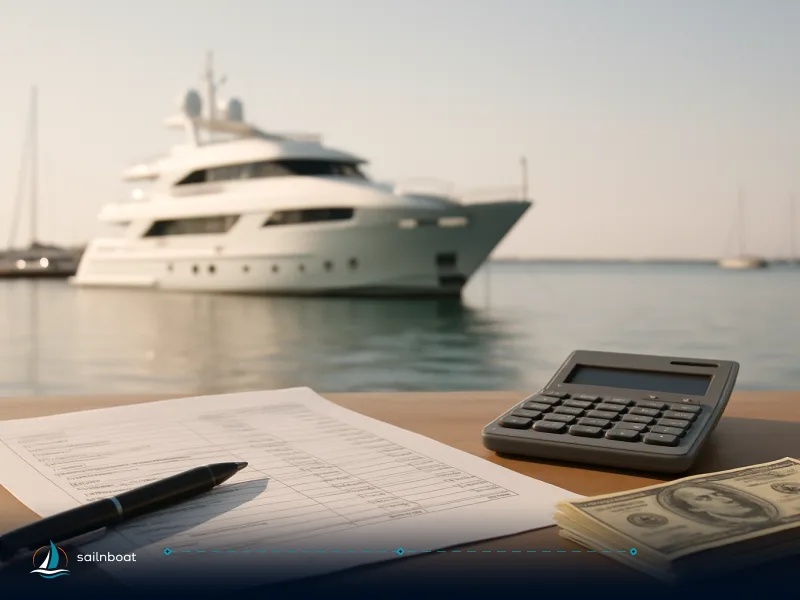
Budgeting for yacht charter begins with the base rate, but the numbers that make or break your trip are APA (Advance Provisioning Allowance), fuel, marinas, taxes and crew gratuity — those extras are the ones you must plan line-by-line, not as a single vague add-on.
Understanding the Base Charter Rate and What It Includes
The base charter rate is the headline weekly (or daily) price you agree to when you sign the charter contract. That rate is the foundation for every other budget line: APA, gratuity, VAT and extras are calculated from it or sit alongside it.
Components of the Base Rate
- What the base rate pays for
- Yacht use (the hull and its standard equipment), crew salaries and basic commercial insurance are normally included in the base rate. It also covers routine maintenance and the normal consumables the yacht carries for operation (linens, standard galley equipment).
- What the base rate does not pay for
- Fuel, provisioning (food, wine, specialty groceries), marina berth fees, custom requests, delivery/reposition fees and crew gratuity are commonly excluded and billed separately. These items are usually funded from the APA or invoiced at the end of the charter.
Practical checklist at booking
- Ask the broker or operator for a clear “what’s included / excluded” list and the yacht’s published APA percentage on the rate sheet.
- Confirm who supplies and pays for tenders, water toys and consumables such as fuel for water toys—these can be charged to APA or invoiced separately.
- Note any mandatory base fees (e.g., end-cleaning, provisioning minimums, local agent fees) and whether they are added to APA or charged on top.
Identifying and Estimating Hidden Costs in Yacht Charters
Hidden costs are where most first-time charterers get surprised. Treat each of these as a separate budget line and get a published figure before you commit.
Common Hidden Costs
- Crew gratuity (tips): Budget commonly ranges from roughly 10–20% of the base rate; industry norms vary (MYBA-era guidance was lower, while many charters—especially in the Caribbean and the U.S.—see higher tipping). Make gratuity a discrete line item in your budget, paid in cash or by bank transfer at the end of the charter.
- Taxes (VAT and local taxes): VAT or equivalent taxes may apply to the charter fee, to delivery, or to specific services and they differ by country and flag state. Ask your broker to show the exact VAT treatment for your charter (it can be charged on the base rate, on delivery, or be zero-rated depending on the yacht’s flag and itinerary).
- Damage deposit and waivers: Many operators require a refundable deposit (or a pre‑authorisation) and offer a non‑refundable deposit waiver (damage waiver) for a fee—these waivers are often quoted as a few hundred euros for typical charters, but amounts vary widely by operator and region. Treat the refundable deposit as cash you can’t access during the trip unless you buy a waiver.
How to estimate hidden costs quickly
- Add gratuity as a percentage: use 10–20% of the base rate as your planning band.
- Assume VAT/tax will add a material percentage in many European destinations; get the broker’s exact figures for your dates and route.
- Plan for deposit or waiver: expect a non-refundable waiver fee that is often a few hundred euros or a refundable deposit that will be pre-authorised on a card, but amounts vary by operator.
The Role and Calculation of Advance Provisioning Allowance (APA)
APA is the operational engine of a crewed charter: the captain spends it, records it, and reconciles it at the end.
Calculating the APA
- How APA is set: Operators set APA as a percentage of the base charter rate. Typical published ranges for APA are roughly 20–40% depending on yacht type, itinerary and operator—sailing yachts are usually at the lower end; motor yachts and long repositioning legs are at the higher end. The APA usually covers fuel, food & beverage provisioning, local port/permit fees, and other running costs while you’re aboard.
- Example arithmetic (for planning): if the weekly base rate is €40,000 and the APA is 30%, expect to provide €12,000 as the working float. The captain will settle marina bills, fuel and purchases against that account and present an APA reconciliation and receipts at the end of the charter.
- APA management and reconciliation
- Request the yacht’s standard APA reconciliation form in advance and ask which expenses are charged to APA versus billed on top (e.g., some operators exclude certain arrival/departure marina nights).
- Insist on daily or at-minimum end-of-day receipts pushed to you or to your broker; good captains use electronic spend tracking and upload invoices to the reconciliation spreadsheet.
- Any unused APA is normally refunded within the timeframe stated in the contract; ask how long that takes and the mechanism for refund.
Red flags to watch for
- A very low APA percentage on a motor yacht route is unlikely to cover fuel—ask for the captain’s fuel burn estimates for your planned passages.
- An APA that explicitly excludes marina fees or fees for special permits should be treated as incomplete—get a concrete estimate for those costs.
Additional Expenses: Crew Gratuity, Taxes, and Insurance
These are predictable line-items when you budget properly.
Impact of Additional Costs
- Crew gratuity: Treat gratuity as a deliberate reward for service, budget it as a separate expense and plan how it will be distributed (captain splits it evenly unless the crew requests otherwise). Expect to see recommendations in the 10–20% band; confirm your preferred percentage with the broker so it’s not an emotional decision at handover.
- Taxes: VAT and local taxes can be applied differently (on the charter fee, on delivery, or on specific services); ask for the contract line that shows tax treatment so you can add it to the booking total.
- Insurance and deposit waivers: A non-refundable damage-waiver fee (hundreds of euros) is a common alternative to leaving a large refundable security deposit on a card; quantify the trade-off (paying a small fee for peace of mind versus a large pre-authorised hold). Typical waiver fees are published by operators and are often a few hundred euros, but the exact amount varies by operator and region.
How to present these lines to your finance approver
- Show them as separate ledger items: Base rate | APA | Gratuity | VAT | Marina fees | Damage deposit/waiver.
- For corporate or shared-charter finance, require the operator’s published examples of an APA reconciliation so stakeholders see how funds are spent.
Typical Marina Fees and Fuel Costs
You must treat marina nights and fuel as two of the highest-variance cost items in your budget.
Marina Fees
- What to expect: Marina pricing is usually charged per metre of LOA and varies dramatically with destination and season — low-cost visitor marinas can be a few euros per metre per night, premium ports in peak season can cost a large multiple per metre and push total nightly bills into the hundreds for moderate-size yachts. Plan marina nights conservatively and use anchorages where practical to lower costs.
- Practical rule-of-thumb for planning: convert a marina’s published per‑metre rate into a nightly figure for the yacht’s LOA and compare it with the cost of anchoring plus tender rides and transit times; for many charterers, limiting paid berths to 2–3 nights per week reduces marina spend materially.
Fuel Costs
- Fuel consumption varies by hull type, size and cruising speed: small dayboats and efficient power catamarans may burn under 30 L/h in cruise; mid-sized planing motor yachts can burn in the range of 50–200 L/h at cruising speeds, but actual consumption depends on the specific yacht and operator data; large superyachts or high-speed boats burn far more. Because fuel is charged at local market rates and consumed quickly when covering long legs, it’s one of the biggest APA drivers.
- How to estimate fuel for an itinerary:
- Ask the captain for the yacht’s fuel burn chart (liters per hour or liters per nautical mile) at your planned cruising speed.
- Multiply the burn rate by planned steaming hours; add fuel for generator use if you’ll run air-conditioning or large hotel loads while at anchor.
- Add a contingency (often 10–25% depending on itinerary and sea state) because speed, weather and hull condition change consumption.
Comparison table — budget planning at a glance
| Cost item | Typical planning range |
|---|---|
| Base charter rate | Operator lists (varies by yacht class) |
| APA | ~20–40% of base rate (lower for sail/catamarans, higher for motor yachts). |
| Crew gratuity | 10–20% of base rate commonly budgeted. |
| Marina fees (per night) | From modest per‑metre rates to premium port prices that translate to tens–hundreds of euros per night depending on LOA and season. |
| Fuel consumption | Small/efficient: sometimes <30 L/h; typical motor yachts: 50–200 L/h. |
| Damage waiver / deposit insurance | Often a few hundred euros (waiver) or a refundable deposit held on card; operator policies vary. |
(Use the table to build a spreadsheet: put your chosen yacht’s base rate in column A, multiply by the APA %, add worst-case marina nights and estimated fuel to get a realistic expected total.)
Strategies for Cost Savings and Budget Management During Your Charter
The objective is to convert uncertainty into controllable line items. The following steps are proven, practical and repeatable.
Effective Budget Management
- Start with a spreadsheet and separate lines for: base rate, APA, estimated fuel, marina nights, VAT/taxes, gratuity, deposit/waiver and incidentals. Populate with quoted numbers from the broker and captain.
- Choose the right hull for the itinerary: if you expect long passages, prefer a sailboat or motor‑efficient catamaran; planing motor yachts burn most when you cruise fast. The fuel difference often justifies a different yacht choice.
- Minimise marina nights: plan anchorages for dinner or overnight where safe and legal—two to three paid berths a week is common for cost-conscious charters.
- Tighten provisioning: finalise the provisioning list before APA is funded; a clear shopping list (quantities, preferred wines/brands, allergy notes) limits last‑minute premium purchases.
- Ask for captain fuel estimates: demand hours × L/h numbers for each steaming leg and the expected generator hours; add them to the APA forecast and check they match the captain’s estimated fuel invoice.
Operational controls during the week
- Daily receipts: ask the captain to email or message a short APA update each evening showing running balance and major expenditures.
- Limit expensive activities: high-use of jet-skis, water‑skiing or frequent high‑speed hops will escalate APA fast; pick a program that fits your budget.
- Approve specialty purchases: require captain to clear big-ticket provisioning or specialty restaurant reservations before ordering.
Negotiation levers at booking
- Ask for a sample APA reconciliation from a similar previous charter on the same yacht to see realistic spend patterns.
- Negotiate marina nights included in the package if the owner is using a management company—sometimes the operator will include 1–2 nights at base port.
- Consider an off-peak week or shoulder season: the same yacht can be materially cheaper and marinas far more affordable.
What to do if the APA runs short
- The captain may request an additional cash infusion mid-week (common if you change itinerary, extend fuel-intensive legs, or order premium provisions). Set an upper limit in advance with your broker if you want strict control.
- For very large overages (unexpected damage, charter extension, major medical evacuation) discuss payment options with your broker—these are rare but costly.
Final reconciliation and refunds
- Expect a final APA reconciliation form with line‑item receipts; unused APA should be refunded according to the contract timeframe (ask the broker how long and by which payment route).
- If you disagree with a charge, hold the remaining APA amount and escalate with the broker—documented receipts are the basis for rapid resolution.
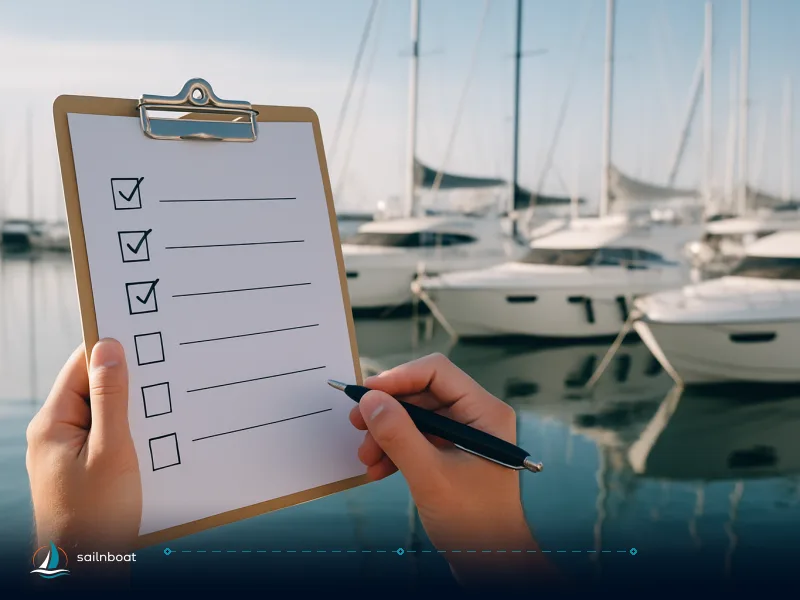
Practical planning checklist (30–60 days before)
- Get the yacht’s rate sheet and confirm the base rate, APA %, deposit/waiver policy and cancellation terms.
- Ask for captain fuel burn figures and a sample APA reconciliation.
- Prepare a detailed provisioning list and confirm dietary restrictions.
- Build your budget spreadsheet with conservative estimates for marina nights and fuel; add gratuity (10–20%) and a tax line per broker guidance.
- Decide on a maximum additional APA you will accept mid-charter and communicate it to the captain.
Closing note Budgeting for yacht charter succeeds when you treat the charter like a small project: get published numbers in writing; separate each cost line; and set rules for mid‑trip approvals. The base rate gets the yacht to the water; the APA, fuel, marinas, taxes and gratuity determine whether the final invoice is an expected outcome or a surprise.
Start planning your yacht charter budget effectively today.
Frequently Asked Questions
The base charter rate pays for the use of the yacht, crew salaries, standard onboard equipment and hull/third-party insurance; it normally excludes fuel, provisioning (food & drink), marina/port fees, local taxes and crew gratuity.
APA is set as a percentage of the base rate (commonly 20–40% depending on yacht type and itinerary), paid in advance as a working account for fuel, provisioning and port fees; the captain accounts for spending and returns any unused balance after the charter.
Hidden costs include crew gratuity (often 10–20% of the base rate), VAT or local charter taxes, marina berthing fees, fuel and deposit/damage insurance; estimate them by using published percentage ranges and local marina per‑metre rates for your itinerary.
Gratuity, taxes and deposit waivers can add materially to the bill—gratuity is a separate, discretionary line (budget 10–20%); taxes vary by flag and destination; deposit waivers typically cost a few hundred euros or a percentage of the refundable deposit.
Marina fees vary by port and size (from modest per-metre rates to high-season premium prices that translate to €40 up to several hundred euros per night for many charter yachts); motor yacht fuel consumption also varies widely—small power boats under 30 L/h, mid-sized planing yachts often 50–200 L/h depending on speed.
Manage costs by choosing a fuel-efficient yacht for long passages, reducing marina nights, finalising a conservative provisioning list, tracking APA spend daily, and clarifying tax and delivery fees with your broker before booking.
Written by
Sailnboat Editorial
The Sailnboat editorial desk covers yacht and boat chartering worldwide — routes, bases, seasons, boat types, paperwork and the practical costs that decide a trip. We are a charter marketplace, not a boat owner or a local agency: what we sell is judgement and support, so our guides are written to help you make a decision, not to sell you a specific boat. Every guide is checked against live operator and marina data before it goes out.
Fact-checked against live operator and marina data, and published under our editorial standards. Last reviewed: .