How to File a Yacht Charter Complaint: A Step-by-Step Guide
A practical, step‑by‑step checklist for charter clients and brokers: who to contact, exactly what evidence to collect, and what outcomes to expect (including MYBA arbitration).

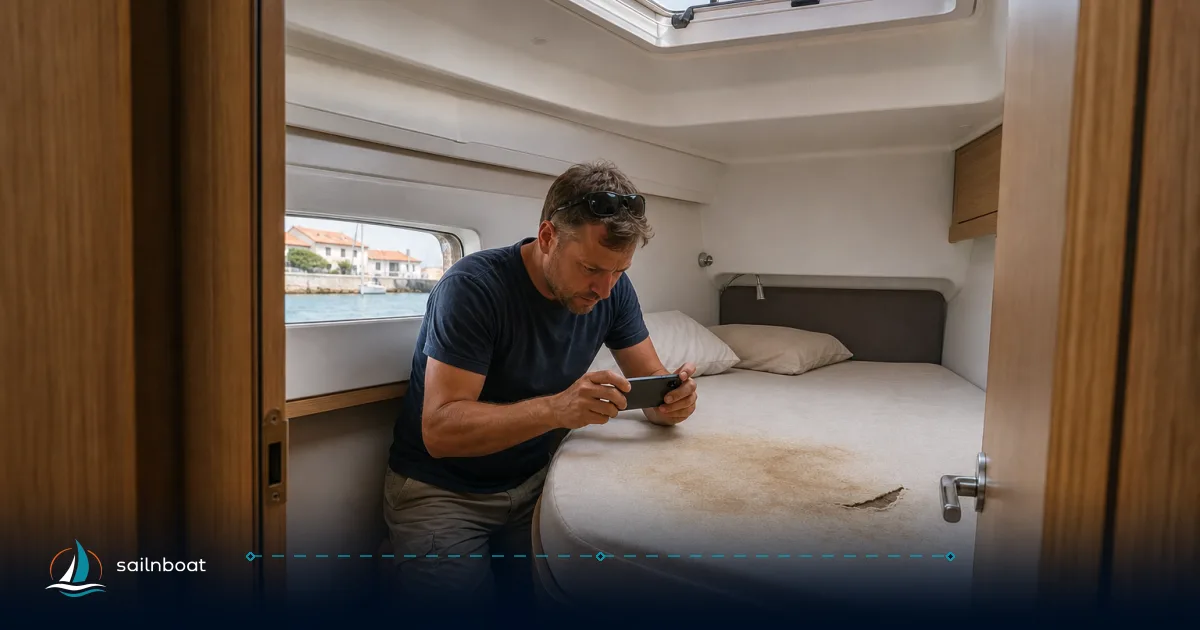
If you need to file yacht charter complaint act quickly: tell the captain, document the problem with timestamped photos and receipts, then notify your broker or the owner in writing—MYBA‑style charter parties commonly require written notice within 24 hours of the event to preserve claims.
Initial Steps to Take During Your Charter
Notify the Captain or Crew
- Tell the captain or senior crew the moment an operational, safety or service problem appears and ask them to note the time, date and the precise nature of the problem in the ship’s log. MYBA‑format contracts explicitly require the charterer to first notify the captain and for the captain to inform the broker as soon as practicable.
- Why this matters: immediate notification gives the crew the opportunity to rectify minor faults (repairs, replacement equipment, service adjustments) and creates an on‑board contemporaneous record that arbitration panels or the owner will expect to see. Practical expectation: most captains will either fix the issue that day or provide a remedial plan within hours; if they cannot, insist they record the action taken and times in the log.
- Keep communications factual and brief. If the crew offers a remedy, ask them to confirm it in writing (email or SMS) so you have a dated commitment.
Documenting Evidence for Your Complaint
Types of Evidence to Collect
Collect a compact, well‑labelled package rather than volumes of disorganised files. Prioritise these items:
- The signed charter agreement and any Special Conditions or preference sheets (they set expectations). Include the page showing embarkation/disembarkation times and security deposit/APA terms.
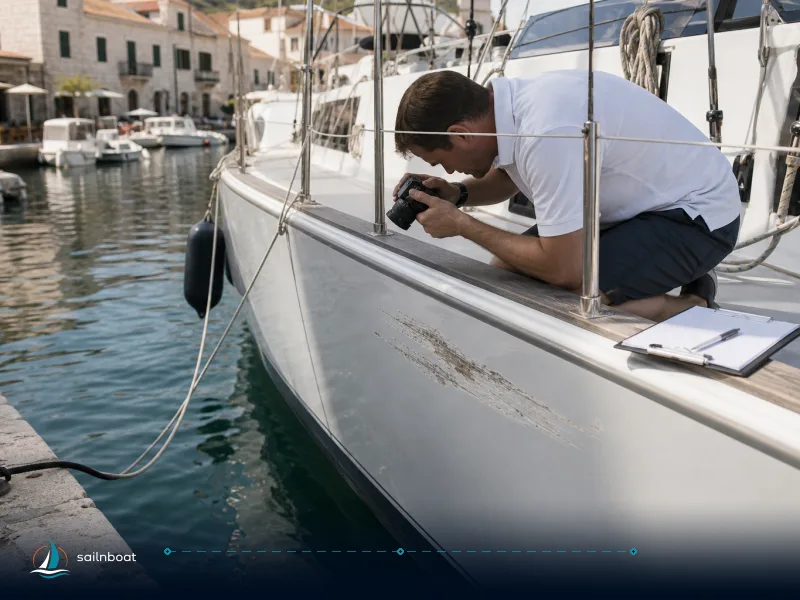
- Condition and inventory reports (check‑in/check‑out): photographs and video taken during handover are the primary proof of the vessel’s state. Photos should show timestamps or be accompanied by a contemporaneous log entry. MYBA and standard brokers treat these as central to any claim.
- Ship’s log entries and the captain’s written notes: request copies or photographs of the log pages that record your complaint and the captain’s response.
- APA (Advance Provisioning Allowance) records and receipts: the APA is commonly taken as a percentage of the charter fee (typical bands are ~20–30% for sailing yachts and higher for motor yachts), and all APA expenditures should be supported with vendor receipts and invoices. Keep the crew’s itemised APA statements and receipts.
- Emails, SMS, WhatsApp threads and voicemail transcripts with time stamps between you, the captain, and the broker.
- Any third‑party reports: marina invoices, surveyor or technical reports, fuel analysis, or medical reports in case of illness.
- Witness names and contacts — other guests or party members who can confirm timings and observations.
Organizing Your Evidence
- Create a single chronological log (one page) listing each event: date, time, location, short description, action taken by crew, and reference to supporting material (photo ID, file name, receipt number).
- File a named folder with: Contract.pdf, Preference_Sheet.pdf, Checkin_Photos (date), Log_Photo_001, APA_Receipts.pdf, Emails.pdf. A tidy folder speeds any broker investigation or arbitration disclosure and signals seriousness.
- If you are in the middle of the charter, photograph the instrument panels, fault indicators and any broken parts; keep broken components where safe until a technical inspection is possible.
- Preserve originals where you can (paper receipts, signed inventory). When you must hand documents to the broker or owner, keep a dated copy.
Escalating Your Complaint Through Your Broker
Contacting Your Broker
- In MYBA practice the next step after onboard notification is to notify the owner or broker in writing if the problem cannot be resolved aboard; the contract language commonly expects this within 24 hours of the event where reasonably practicable. State the precise nature of the complaint and reference any corrective actions already attempted on board.
- Brokers are the practical hub: they can authorise technical teams, order spare parts, arrange a port call, approve refunds or negotiate a pro‑rata make‑good. Most experienced central agents or brokers will acknowledge a properly documented complaint within about 24 hours and outline next steps.
- What to include in the escalation email: one‑line summary, the one‑page chronological log, 3–6 representative photographs, the ship’s log entry (photo), and copies of relevant receipts.
Follow-Up Procedures
- Ask your broker for expected timing on each remedy (e.g., technician on site within 24–48 hours; refund assessment within 7–14 days). Many operators will act immediately to avoid escalation; where remedial work is required they will often request the crew’s technical report and an owner’s decision on compensation.
- Keep all follow‑up in writing. If the broker proposes a goodwill gesture (reduced invoice, partial refund, day credit), request this in writing and insist it references the contract clause or Special Condition it resolves.
- If the broker stalls, request that they place the owner’s response in writing and ask for a deadline to avoid losing enforceable options.
Understanding the MYBA Charter Agreement
Key Provisions for Complaints
- The MYBA Charter Agreement formats used widely in Mediterranean and global charters set out a clear, tiered complaint procedure: notify the captain first, then the owner or broker in writing within 24 hours if the matter is not resolved on board. The initial complaint may be verbal but should be confirmed in writing “as soon as possible” and specify the precise nature of the complaint.
- MYBA also contemplates technical reports and maintenance logs where mechanical failure or disablement is claimed; these are frequently requested by owners to establish causation and remedy.
- Remember: MYBA sets process and expectations for remediation and dispute handling but is not a consumer‑protection statute; it governs how the parties agreed to manage complaints and escalation.
Arbitration Process Under MYBA
- Standard MYBA clauses provide for arbitration of unresolved disputes and in many specimens that arbitration is seated in London under English law (the contract text can be varied under Special Conditions, so always check page one of your charter party).
- Timeline: maritime arbitration is not instant. Mid‑complexity references with typical three‑member tribunals can take several months to over a year from filing to award; faster small‑claims procedures exist but are only suitable for lower‑value disputes. Expect document exchange, witness statements, possibly expert reports, and then an award.
- Costs: tribunal fees, arbitrators’ fees and party legal costs vary widely by procedure and seat. Limited or small‑claims procedures (LMAA small claims / FALCA‑style approaches) can reduce tribunal fees for lower‑value cases, whereas full three‑member arbitrations plus legal and expert fees commonly run into the low to mid five‑figures or higher depending on complexity. The tribunal will usually fix the allocation of costs in the award.
Dispute Resolution Mechanisms
Arbitration vs. Mediation
Use mediation when the parties want a quick negotiated settlement and both sides are willing to engage; arbitration is appropriate when a binding decision is needed or when the contract specifies it (as MYBA often does). Typical differences:
| Mechanism | When to use | Typical timeline | Typical cost (relative) | Outcome & enforceability |
|---|---|---|---|---|
| Mediation | Parties want negotiated settlement and speed | Days–weeks | Low (mediator fee + minimal legal time) | Non-binding unless placed into a settlement agreement; quicker and cheaper |
| Arbitration | Contract requires binding decision (e.g., MYBA clause) or settlement fails | Months (commonly 6–18 months for mid‑complex cases) | Medium–High (tribunal fees + legal/expert fees; full arbitration can reach low‑five‑figures+) | Binding award enforceable under the New York Convention or local courts in many jurisdictions |
Based on comparative practice in maritime arbitration and mediation, practitioners cite LMAA guidance and maritime arbitration commentary.
Choosing the Right Mechanism
- Consider value and speed: for small financial losses, seek mediation or the LMAA small claims track where available; for complex technical disputes or larger sums, arbitration gives a binding decision but costs more and takes longer.
- Enforceability: arbitration awards are usually easier to enforce cross‑border than domestic court judgements, but enforcement still requires local court procedures in the jurisdiction where you seek to execute the award. Plan for enforcement strategy early if monetary recovery is important.
- Evidence matters: arbitrators rely on contemporaneous logs, condition reports and receipts—your evidence package often determines whether you win or reach a favourable settlement.
Proactive Measures to Prevent Disputes
Clear Communication Before the Charter
- Insist on a written preference sheet and Special Conditions before signing: cabins, bedding, diet/allergies, minimum Wi‑Fi speed (if essential), air‑conditioning hours, and port/itinerary restrictions. Put any promised extras into the contract. These items are the simplest source of later disputes; put them in writing.
- Confirm APA percentage and what it covers, plus the expected timing and format of APA reconciliation (the crew should provide itemised receipts and a final APA statement). Typical APA bands are often 20–30% for sailing yachts and higher for motor yachts — but every yacht sets its own percentage.
Regular Check-Ins During the Charter
- Ask the captain for a brief daily check‑in (five minutes) to flag issues early. Small items fixed early rarely grow into contract claims.
- Re‑photograph any previously flagged areas after remediation and keep receipts for any third‑party service calls. If you accept an on‑board remedial solution, get it confirmed in writing and recorded in the log.
Realistic Outcomes and How Claims Are Usually Resolved
- Most complaints resolve before formal proceedings: common remedies are repair at owner expense, pro‑rata refund for time lost, free additional nights or a future credit, replacement of specific equipment, or partial APA refund when receipts do not support charges. Brokers typically mediate these outcomes quickly to avoid arbitration.
- If arbitration is invoked, outcomes can include monetary awards, order to repair, or dismissal; tribunals will weigh the contract terms, contemporaneous evidence and technical reports. Expect a decision timeline of months rather than days and legal costs that can outstrip the claim if you pursue full arbitration.
- Practical trade‑off: weigh the likely award against the time and legal cost of arbitration; for modest sums, a negotiated settlement or mediation is often the cost‑effective route.
Final practical checklist (what to do now)
- Step 1: Tell the captain and ask them to log the complaint (immediately).
- Step 2: Photograph/video the issue with dates/times and save receipts.
- Step 3: Email your broker a one‑page chronological log + 3–6 photos and request written acknowledgement and an action plan.
- Step 4: If unresolved after the broker/owner response, confirm your complaint in writing referencing the MYBA clause and preserve all originals.
- Step 5: Consider mediation for a quick settlement; prepare for arbitration only after you’ve costed counsel and anticipated timelines.
Start gathering your evidence and contact your broker to address any issues—most disputes are settled at that level, and a tight evidence pack makes the difference between a quick credit and months in arbitration.
Frequently Asked Questions
Tell the captain immediately, ask them to log the issue, and—if not resolved—notify your broker or owner in writing as soon as possible (MYBA-form contracts typically require written notice within 24 hours of the event).
Collect the signed charter party and preference sheet, take dated photos and video of the problem, keep the condition/inventory reports, retain APA receipts and ship’s log entries, and save every message or email with timestamps.
Full arbitration under maritime rules commonly takes several months (mid-complexity disputes often 6–18 months) and can cost from low‑five figures upwards in party/legal fees; small-claims or limited procedures can keep tribunal fees to a few thousand pounds but are only suitable for limited-value cases.
MYBA sets a formal complaints procedure (notify the captain; write to owner/broker within 24 hours where practicable) and contains an arbitration clause that typically sends unresolved disputes to arbitration (often in London under English law in standard MYBA versions).
Agree a detailed preference sheet and special conditions before embarkation, run a thorough handover and inventory check with photos, require the captain to confirm agreed items in writing, and schedule brief daily check‑ins.
Written by
Sailnboat Editorial
The Sailnboat editorial desk covers yacht and boat chartering worldwide — routes, bases, seasons, boat types, paperwork and the practical costs that decide a trip. We are a charter marketplace, not a boat owner or a local agency: what we sell is judgement and support, so our guides are written to help you make a decision, not to sell you a specific boat. Every guide is checked against live operator and marina data before it goes out.
Fact-checked against live operator and marina data, and published under our editorial standards. Last reviewed: .