Mooring Fees at Swansea Marina: A Skipper's Guide
Swansea Marina charges by length overall (minimum 6.1 m) and adds harbour/Tawe Barrage fees and VAT; this guide shows how to calculate a 10 m example, typical extras, and what to check before arrival.

Swansea Marina charges moorings by length overall (LOA) with a minimum charge equivalent to 6.1 metres, and the headline mooring fee is exclusive of harbour dues, Tawe Barrage fees and VAT — so “how much to moor a boat in Swansea Marina” is a three‑part calculation: (per‑metre rate × LOA) + harbour/Tawe fees + any service extras.
Understanding Mooring Fees at Swansea Marina
Fee structure
- Swansea City Council states that standard private‑user charges are quoted per annum per metre of overall length (including projections) with a minimum charge equivalent to 6.1 metres; harbour dues, Tawe Barrage fees and VAT are not included in that standard charge.
- The marina does not publish a fixed, up‑to‑date public tariff in a single online list (many councils/marinas give rates on request), so the marina office is the authoritative source for the current per‑metre rate and any visitor tariffs. Use the marina booking/contact form or call reception to get the active price.
How to calculate your base cost
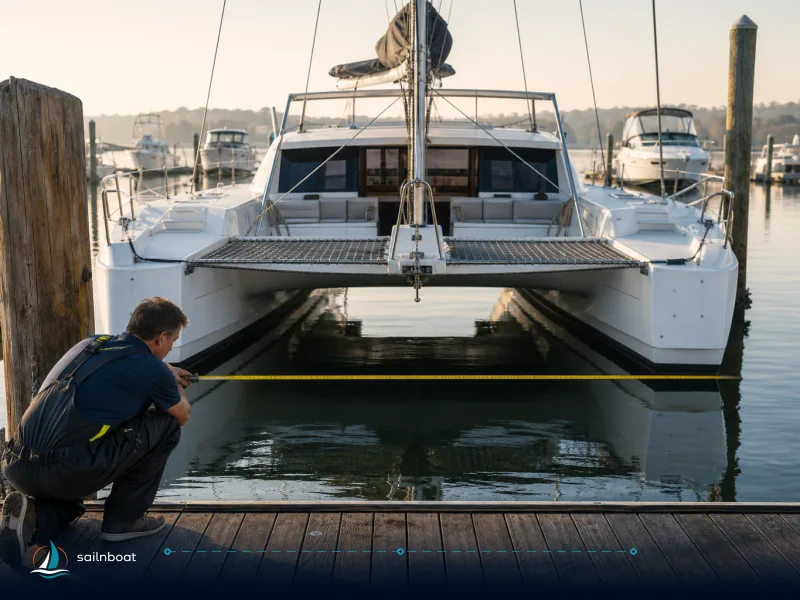
- Confirm the LOA the marina will charge (terms say “overall length including projections” — bowsprits, pulpits, davits and outboards commonly count). Multiply that LOA by the marina’s stated per‑metre rate.
- If LOA < 6.1 m, the charge will be based on 6.1 m (the minimum).
- Add harbour dues and Tawe Barrage charges (these are separate line items under Swansea’s terms), then add VAT if the marina’s rate is quoted exclusive of VAT.
Seasonal variations
- Visitor and short‑stay tariffs in UK marinas commonly differ between summer and winter; Swansea offers a 28‑day visitor bundle and short‑stay visitor berthing, and availability tightens in peak summer weeks. Expect the marina to treat summer visitor rates as higher than winter promotional rates.
- If you need a specific berth (wide enough, deeper draft, shore power), book earlier in the season—several weeks minimum and often months for a fixed annual berth at popular marinas.
Additional Charges and Services
Common additional charges
- Electricity: often billed per kWh or as a flat nightly supplement for visitors; some marinas include shore power in a visitor price but many charge separately. Swansea lists serviced pontoons and shore services—expect an electricity charge if you plug in.
- Water: typically available at the pontoon but may be included or separately metered; ask whether potable water is supplied to visitor berths.
- Waste disposal / pump‑out: marinas commonly charge for pump‑out or include it as a paid service; check whether daily visitor berthing includes pump‑out or whether it’s charged as a one‑off.
- Launch/hoist services and boatyard work: charged separately and often by length or time; if you plan to lift the boat bring an estimate and book the yard in advance.
Confirming costs
- Because Swansea’s public pages set the charging method (per metre + exclusions) but not a fixed tariff, phone or email marina reception for exact figures and ask whether their quoted visitor price includes shore power, harbour dues and lock fees. The marina booking page is the right point of contact for these clarifications.
Booking Your Berth: Key Considerations
Advance booking recommendations
- Peak season: book weeks to months ahead if you need a particular berth size (wider finger, deeper depth, shore power connection) or want a weekend slot during events. Many marinas recommend early booking in summer; Swansea explicitly offers visitor booking and a 28‑day visitor option.
- Flexible plans: if you can accept any available visitor berth, you may find short‑notice space, but don’t rely on that for longer stays or larger vessels.
Booking process (practical steps)
- When you call/email the marina give: boat name, LOA (including projections), beam, draft, arrival/departure dates and a mobile number.
- Ask whether the quoted price is: per night or per 24 hr period, inclusive/exclusive of harbour dues, inclusive/exclusive of VAT, and whether shore power is included for visitors.
- Confirm check‑in procedure (VHF call, office hours) and payment methods — many marinas accept card/online payments but have different payment windows for visitors versus annual berth holders.
A 10‑metre example: how to estimate the bill
Swansea does not publish a single public tariff for immediate quoting online, so you must request their current per‑metre rate. To give practical context, use the method below and the worked examples from other UK marinas as illustrative ranges (these are comparators, not Swansea’s current published price).
Calculation method
- Base mooring = (per‑metre rate) × 10.0 m
- Add harbour/Tawe Barrage fees (if listed separately)
- Add electricity/water/pump‑out as charged (flat or per unit)
- Add VAT if rate is exclusive
Illustrative visitor scenarios (example rates from comparable UK marinas; Swansea’s actual rate must be requested from reception)
| Scenario | Example per‑metre rate used | Calculation for 10 m | Result (example) |
|---|---|---|---|
| Low‑end visitor (illustrative) | £2.80 / m / night (historic comparator) | 10 × £2.80 | £28.00 / night. |
| Typical visitor (illustrative) | £3.50 / m / night | 10 × £3.50 | £35.00 / night. (Many UK marinas publish £2–£5/m/night ranges.) |
| Annual berth examples (market context) | — | Sunderland example: £1,789/year for 10 m → £178.90 per metre/year; Seaham example: £2,700/year for 10 m. | Annual fees for a 10 m boat at UK marinas commonly vary from ~£1,200 to well over £5,000 depending on location/facility—use these comparators to gauge where Swansea may sit. |
Notes on the example table:
- The per‑metre visitor numbers above are illustrative, drawn from published tariffs at other UK marinas and older public reports; Swansea’s specific per‑metre visitor and annual rates are available from their marina office on request.
- Harbour dues can add roughly £1–£2 per metre per day at some harbours (example: Dart Haven shows a harbour‑due line in its tariff); use the marina’s current schedule.
Pre‑Arrival Checklist for Skippers (practical)
Before you cast off for Swansea Marina, tick these items off to avoid a last‑minute scramble:
- Measurements and billing
- Confirm LOA that the marina will use for charging (including bowsprit/davit/outboard). If your LOA would be charged under the 6.1 m minimum, expect the minimum fee.
- Lock and tidal planning
- Check lock operating hours and the low‑water lock closure window: published hours and the low‑water trigger (the Tawe locks close when the tide falls below 1.5 m; that closure lasts roughly 90 minutes either side of low water). Call the lockmaster if your passage will fall near those times.
- VHF calls: call ‘Swansea Marina’ on CH80 before leaving your berth; call ‘Tawe Lock’ on CH18 when approaching the lock. Keep listening on the assigned channel until you have passed.
- Berth suitability
- Confirm the berth beam and available depth alongside at your expected state of tide (Swansea has drying areas and local shallow patches — know the depth relevant to your draft). If in doubt, request a berth with more margin or later lock access so you pass on higher water.
- Power, water, internet, waste
- Ask whether visitor shore power is included or metered (and what plug/socket type), whether water is available to that berth and where the pump‑out is located; confirm Wi‑Fi availability. Swansea advertises serviced pontoons and free Wi‑Fi in its facilities list but any visitor inclusion should be checked at booking.
- Payment and paperwork
- Have card/online payment ready and bring proof of insurance/registration if requested. Give the marina your contact phone and ETA, and agree arrival procedure (do you call on VHF or collect a key from the office?).
- Lines and fenders
- Bring extra fenders and strong warps; many pontoons are finger‑piers where a beam mismatch needs more fendering. Be ready to leave your berth ~15 minutes before the lock cycle (the lock schedule typically operates on the hour/half‑hour pattern).
Practical trade‑offs and real decisions
- Visitor vs annual: a long summer stay can sometimes be cheaper by arranging a 28‑day visitor bundle or negotiating an annual berth—ask whether visitor payments can be credited toward an annual contract. Swansea explicitly offers a 28‑day bundle for visitors. If you plan repeated visits, get an annual quote and compare the per‑metre annual price to the sum of expected visitor nights.
- Berth size vs convenience: a cheaper berth in a crowded finger may be tighter and require extra crew hands to fend off; paying more for a wider finger with dedicated shore power may still be the better operational choice if you rely on shore power daily.
- Lock timing: arriving just after a lock closure due to low tide can strand you on holding buoys or force you to wait; plan arrivals on the published lock schedule and allow contingency for queues.
Quick how‑to: call and book (script you can use)
- VHF first call: “Swansea Marina, this is [Your boat name], 10 metres LOA, ETA 15:30, requesting visitor berth and confirmation of shore power availability, we will be listening on CH80.”
- If phoning/emailing: supply name, LOA, beam, draft, arrival/departure dates, contact number, and ask for a written confirmation of total price including harbour/Tawe fees, electricity and VAT.
Final brief checklist (printable)
- Measure LOA including projections; note whether you’ll be charged minimum 6.1 m.
- Call Swansea Marina reception for per‑metre rate and visitor tariff; ask what’s included.
- Check lock hours and low‑water closures; plan arrival on a lock cycle and call VHF CH80 on departure.
- Confirm shore power socket type, pump‑out location and Wi‑Fi availability.
- Bring fenders, spare lines, payment and paperwork.
Plan your mooring at Swansea Marina now: call reception for the current per‑metre rate, request a written price that lists harbour/Tawe and power charges, and then use the calculation method above to confirm the total for your 10 m yacht.
Frequently Asked Questions
Swansea Marina charges by length overall and applies a minimum charge equivalent to 6.1 m; the marina does not publish a fixed public tariff online, so contact the marina office for the present per‑metre rate—then multiply that rate by 10 m (LOA) and add harbour/Tawe Barrage fees and VAT for the full price.
Yes—electricity, water, pump‑out and launch services are commonly charged separately at Swansea Marina and many UK marinas; confirm the unit rates and whether short‑stay visitor prices include shore power when you book.
Book as early as possible—many marinas recommend several weeks to a few months in summer for a specific berth; Swansea’s visitor booking page advises contacting the marina ahead and a 28‑day visitor bundle is offered for longer stays.
Published lock hours: weekdays 07:00–19:00 GMT (07:00–22:00 BST on weekends), with specific Tawe Lock and Marina procedures—call Swansea Marina on VHF CH80 and Tawe Lock on CH18 before departing your berth.
Swansea Marina lists services including shower blocks, pump‑out/waste facilities on site and free Wi‑Fi for berth holders/visitors, but availability can vary; confirm with reception when you book.
Written by
Sailnboat Editorial
The Sailnboat editorial desk covers yacht and boat chartering worldwide — routes, bases, seasons, boat types, paperwork and the practical costs that decide a trip. We are a charter marketplace, not a boat owner or a local agency: what we sell is judgement and support, so our guides are written to help you make a decision, not to sell you a specific boat. Every guide is checked against live operator and marina data before it goes out.
Fact-checked against live operator and marina data, and published under our editorial standards. Last reviewed: .