Pupnatska Luka: Anchoring Guide for Skippers on Korčula
Practical, chart‑aware advice for anchoring and shore access in Pupnatska Luka: recommended depths, where to avoid seagrass, dinghy landings and how to handle summer day‑trippers.

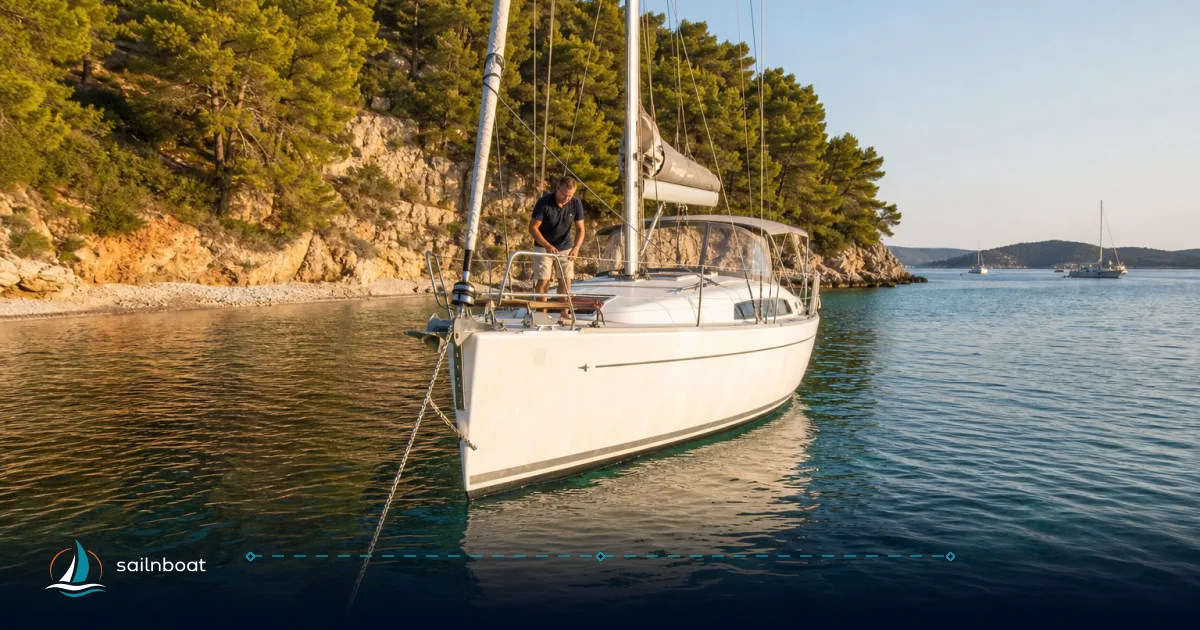
Pupnatska Luka gives you one clear option for an overnight anchorage: the middle of the bay over sandy patches, typically in the 6–12 m range, where holding is best and boats can swing without fouling seagrass. Below I map where to drop, where to avoid, how to land the dinghy, how day‑tripper traffic behaves, and sensible fallback anchorages if the bay is full.
Optimal Anchoring Locations in Pupnatska Luka
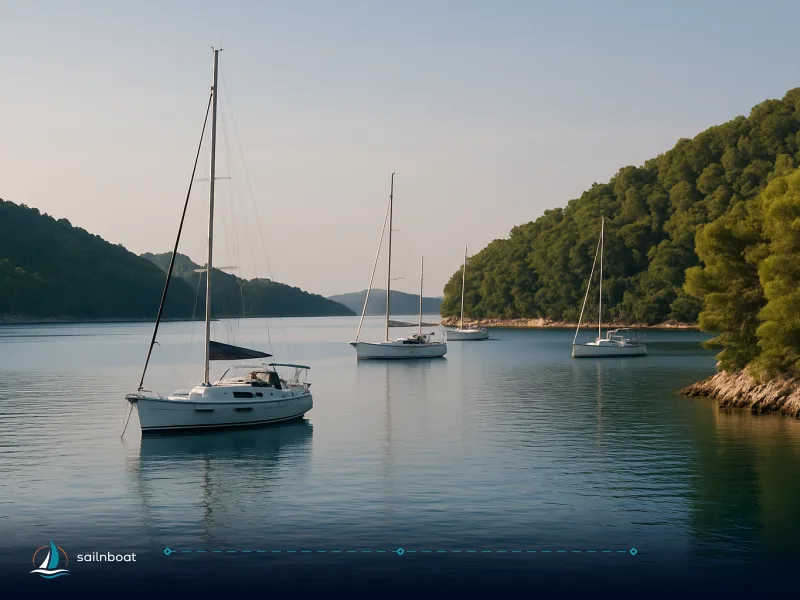
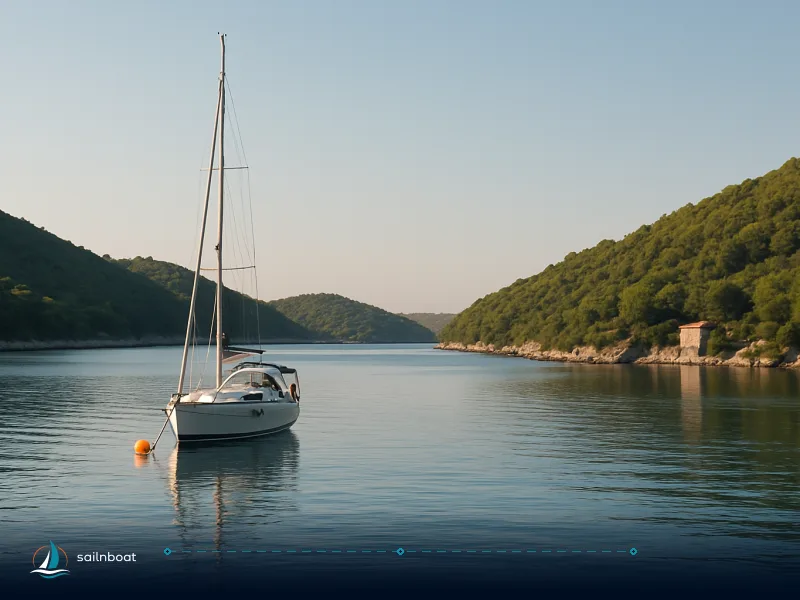
Drop your hook in the mid‑bay sand patches — that’s where most local guides and pilot notes recommend anchoring for overnight stays. Multiple local cruising notes and anchor‑reference services identify the centre of Pupnatska Luka as sandy with good purchase and commonly advise anchoring at roughly 10 m for stable holding; shallower fringes tend toward rock and Posidonia (seagrass).
If your choice is between the very shallow shore fringe and the open centre, choose the centre: it gives space to swing, better holding, and keeps you away from snorkeling swimmers and small boats tying off the beach. Local sources specifically caution that the shoreline is steep and rocky, so stern‑to or close‑in anchoring is less practical than a mid‑bay pick.
Recommended Depths
- Typical anchoring range: about 6–12 m; many guides single out ~10 m as a comfortable overnight depth in the bay. Phrase this as a guidance range rather than an absolute: depth varies across the bay and with tide and charts.
- Scope: use at least 5:1 in calm conditions and increase scope to 7:1 or more if wind or current builds; plan for both maestral and potential jugo or bura gusts. (Scope is operator practice and depends on wind; most charter crews use 5:1–7:1.)
- Holding substrate: look for sand patches — these are the best places to anchor; avoid dense Posidonia meadows to prevent damage and poor scope. The area is reported to include sandbanks and seagrass habitats.
Areas for Anchoring
- Northern/central mid‑bay: sandy patches and the recommended spot for overnighting; room to swing and a reasonably even seabed.
- Southern and near‑shore edges: rock and pebble; holding is variable, and dragging risk rises if you foul seagrass or anchor on stones. Keep clear of the steep shorelines unless you’re stern‑to on a buoy or using a fendered stern‑to technique in calm conditions.
(Table: quick visual comparison)
| Area | Typical depth | Seabed | Suitability |
|---|---|---|---|
| Mid‑bay (centre/north) | ~6–12 m | Sand patches (some Posidonia nearby) | Best for overnight anchoring |
| Shore fringe (southern edge) | 1–4 m | Rock/pebble | Day stop, swim — avoid for overnight |
| Small inlets/rocky shelves | variable | Rock | Poor holding; not recommended |
Dinghy Landing Points and Shore Access
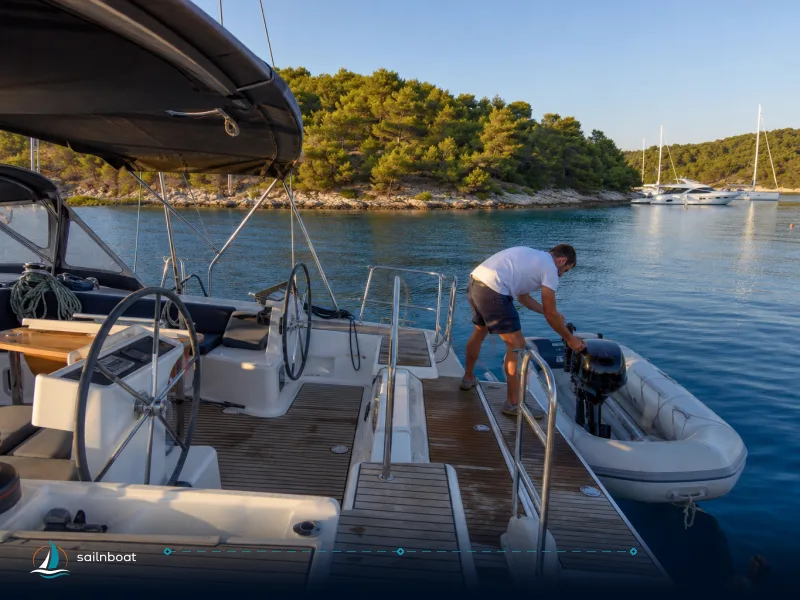
The obvious landing place for a dinghy is the main beach area near Beach Bar M.A.T.E. — an informal, well‑used landing with a short walk up to the terrace and onward to Pupnat village. Expect small day‑boat operators to use the same stretch; the bar and beach form the local focal point for visitors.
Where to aim with the dinghy:
- Beach beside Beach Bar M.A.T.E.: shallow pebbled beach, easy to land in calm conditions; carry your outboard up a short slope to the bar’s access path if you plan to leave the dinghy unattended.
- Informal landing spots elsewhere on the pebble crescent: these work for short shore visits but watch for swimmers and excursion boats. Use a crew member to step ashore and secure the dinghy; on busy days the shore gets crowded.
Practical tips
- Mooring buoys: small local buoy fields or private mooring devices may exist elsewhere on Korčula; in Pupnatska Luka the beach is the primary public landing and you should not assume there is a public buoy field for yachts. If a concession field is present it will usually be closer to shore and signposted by local operators.
- Shore access to Pupnat village: a short walk from the beach leads to Pupnat; expect a 10–30 minute walk depending on where you land and the route. Beach Bar M.A.T.E. is the easiest reference point.
Managing Day‑Tripper Congestion
Pupnatska Luka is one of Korčula’s most photographed and visited beaches — the bay can be busy with day‑boats, excursion launches and bathers during July–August and on holiday weekends. Local guides and tourism pages note heavy midday traffic, especially on weekends and during the high summer season. Plan around that if you want quiet overnight conditions.
Patterns and timings
- Peak congestion: mid‑day to late afternoon on weekends and in July–August when excursion boats run multiple rotations. Arrive early (before 09:30) or late (after 18:00) to secure a central anchoring area and calmer evenings.
Mitigation strategies
- Anchor farther out in the central bay rather than close to the beach — you’ll be beyond the excursion boats’ usual pick‑up/drop‑off band and will reduce noise and tender traffic.
- Communicate with neighbouring skippers: in crowded anchorages a quick VHF or hand signal about swing room and intentions avoids late‑night surprises. Standard seamanship: ensure your swing circle will not overlap with your neighbours; as a rule of thumb, your swing radius is approximately the horizontal distance from your bow to the anchor (about the rode paid out in calm conditions) plus some allowance for your boat’s length. Allow at least the sum of both boats’ swing radii as clearance.
- Have a back‑up plan: if the bay fills or conditions shift (stronger jugo or bura), be ready to relocate to a quieter nearby bay — see the Alternatives section below.
Safety Measures and Local Regulations
Regulatory picture — what to expect
- Croatia’s coastline has a mix of public anchorages, concessioned buoy fields and protected zones; this means fees or buoy‑only rules can apply in some bays and parts of bays. In practice, local harbour masters or concession holders may charge for overnight stays or use of buoy systems; elsewhere anchoring on your own ground remains permitted. Expect variability and be prepared to pay a charge if asked by an official or concessionaire.
Operational safety points
- Posidonia protection: Pupnatska Luka includes sandbanks and seagrass habitats; anchoring on dense Posidonia meadows damages the plant and is discouraged — look for clear sand patches on your chartplotter and with your echo sounder. The bay is noted in regional conservation planning documents for these habitat types.
- Weather and wind: monitor the forecast for jugo (SE), maestral (NW thermal) and bura (NE gusty) patterns; sudden shifts or an incoming jugo can build swell and make an exposed shore uncomfortable. Keep a weather window in mind before committing to an overnight.
- Anchoring technique: set with an initial long scope, back down under power to confirm bite, and put out a second anchor only if necessary and you and your crew are practiced with that technique. Carry a dinghy plan so you can shore‑land fast if you need to move the boat at night.
- Lights and watchkeeping: in season the bay is busy; maintain a proper anchor light and post an anchor watch when winds or traffic increase.
Fees and local enforcement
- Some bays on Korčula fall under concession systems for mooring buoys or regulated anchorages; when a concession exists the operator may charge a daily fee even if you use your own anchor inside the concession area. Harbour masters publish local rules and price lists for regulated zones. Expect to encounter on‑the‑spot requests to pay for buoy or anchorage use in peak season.
Typical Weather Conditions in Pupnatska Luka
Wind patterns that matter to skippers
- Maestral (NW thermal): a reliable afternoon sea breeze in summer, typically filling in from the northwest and diminishing after sunset; useful for day sailing but it can increase choppy conditions in exposed channels.
- Jugo (SE / Scirocco): warm, humid south‑easterly that builds over 24–48 hours, brings cloud, longer swell and a rising sea state; a persistent jugo can make exposed southern bays uncomfortable overnight.
- Bura (NE): cold, gusty katabatic wind in cooler months; local topography can funnel bura gusts and create short, steep seas. If bura is forecast, sheltered bays with lee from NE are preferable.
Seasonal notes
- Summer: generally mild, with predictable afternoon maestral and many calm nights — still, jugo fronts arrive occasionally.
- Autumn/Winter: more variable with increased chance of strong bura episodes and long‑period swell from southerly systems; avoid exposed anchorages during gale warnings. Always check a reliable marine forecast and local observations before committing to overnight anchoring.
Alternative Nearby Anchorages
If Pupnatska Luka is full or the wind makes it uncomfortable, two nearby options are frequently cited by local guides and cruise notes.
| Anchorage | Relative distance (approx.) | Why consider it |
|---|---|---|
| Račišće | ~3 nautical miles by straight line from Pupnatska Luka (approx.) | Small village bay with quay options and sandy patches; fewer excursion boats than Pupnatska Luka. Useful as a first alternative. |
| Žitna (Zitna) | a short hop along the south coast (a few nautical miles) | Narrow pebble bay with sandy bottom areas; usually quieter and less visited than Pupnatska Luka. |
Notes on distances: straight‑line nautical distances give orientation only — coastal contours, reefs and navigation channels can make an actual sailing passage longer. Račišće is commonly reported to be approximately 3 nm from Pupnatska Luka by straight line; Žitna is a short coastal hop and widely recommended as a quieter option.
Practical sequence if Pupnatska Luka is unsuitable
- Re‑assess wind direction and fetch—if jugo is building, choose a bay that is lee of the swell.
- Make a short passage to Račišće or Žitna with an alternative berth plan (quay or anchor) and confirm local mooring availability by VHF or phone where possible.
- If both are full, continue to quieter coves listed on local charts (Cavica Luka, Zavalatica and others) rather than attempting to squeeze into a crowded beach anchorage.
Final checklist before you commit
- Chartcheck: confirm sand patches and depths with your chartplotter and echo sounder as you enter the bay.
- Seagrass: steer anchor away from dense Posidonia; seek clear sand patches.
- Dinghy plan: decide and brief a dinghy landing procedure (who lands, who tends the dinghy, where to lock it) before you drop anchor.
- Fees/regulation check: ask the harbour master or a clearly identified concessionaire about overnight fees before you commit to a buoy or to stay overnight. Expect concession variability around Korčula.
- Weather check: pull a marine forecast and note any jugo or bura warnings; set an anchor watch if conditions change.
Plan your day so that you approach Pupnatska Luka with daylight left and a clear alternative in mind. The bay rewards careful planning: anchored on sand patches in mid‑bay you’ll find good holding and easy access ashore, but treat seagrass, day‑boat congestion and concession rules as part of the local operating picture.
Internal links (useful next reads): Korčula sailing tips, Croatia yacht charter guide, best anchorages in Croatia
Plan your sailing trip to Pupnatska Luka and ensure a smooth anchoring experience.
Frequently Asked Questions
Aim for sandy patches in roughly 6–12 m; many guides point to about 10 m mid‑bay for reliable holding while avoiding shallow seagrass.
The central/northern part of the bay has sandy bottom patches suitable for anchoring; shore edges are rock or seagrass and are best avoided.
Main dinghy landing is at the beach beside Beach Bar M.A.T.E.; there are informal beach landings and limited local moorings—expect to beach or sternto with stern buoying in calm conditions.
Arrive early or late, anchor further from the main landing area, coordinate spacing with nearby skippers and have a plan to relocate to a quieter bay if needed.
Anchoring is commonly allowed, but parts of the Croatian coast are under concession or protected status; concession holders and harbour authorities sometimes charge fees or regulate buoys—check locally on arrival.
Expect a NW afternoon thermal (maestral) in summer, SE (jugo/scirocco) systems that bring swell and cloud, and strong NE bura episodes in colder months—monitor forecasts before committing to overnight stays.
Račišće and Žitna bays are two practical alternatives on Korčula’s south coast, each offering sandy patches and fewer day‑trippers.
Written by
Sailnboat Editorial
The Sailnboat editorial desk covers yacht and boat chartering worldwide — routes, bases, seasons, boat types, paperwork and the practical costs that decide a trip. We are a charter marketplace, not a boat owner or a local agency: what we sell is judgement and support, so our guides are written to help you make a decision, not to sell you a specific boat. Every guide is checked against live operator and marina data before it goes out.
Fact-checked against live operator and marina data, and published under our editorial standards. Last reviewed: .