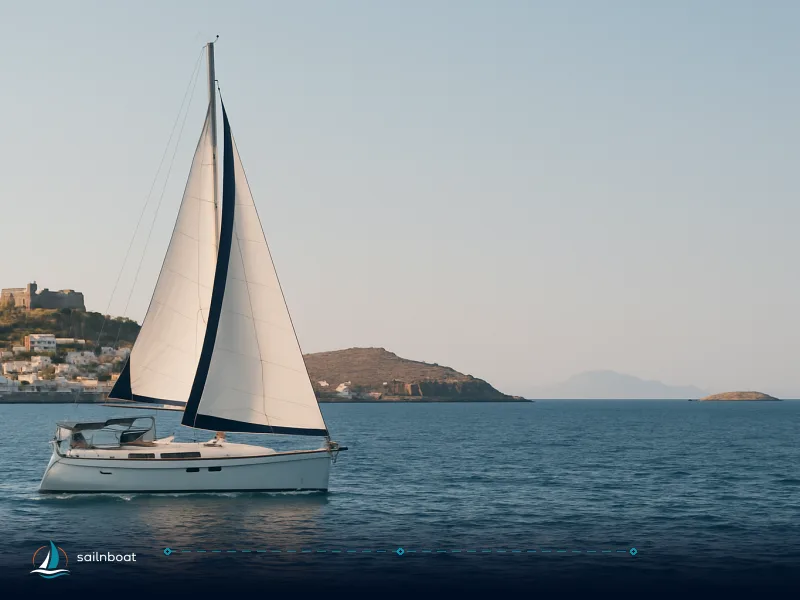
Sailing the Aegean: A Week in the Dodecanese
A practical, one-week sailing plan for the Dodecanese that covers charter choices, realistic cost ranges, Meltemi behaviour, anchorages and the TEPAI cruising tax you'll meet at check-in.

Sailing the Aegean: A Practical Week in the Dodecanese
Route planning for Dodecanese sailing starts and ends with the Meltemi wind. Every operational decision—where you moor, how you provision, what you pay in fees—flows from matching your itinerary to the prevailing conditions. This guide focuses on the practical choices that matter: which charter setup fits your crew, what true costs to expect, how to provision smartly from Rhodes or Kos, and how to handle weather, mooring, and Greek regulations as of 2024.
Yacht Charter Options and Costs in the Dodecanese
Types of Charters
- Bareboat: You skipper the boat, take full responsibility, and need a valid licence (ICC or national equivalent) plus, in many cases, a VHF certificate. Widely available from Rhodes, Kos, and a few smaller bases.
- Skippered: You hire a professional skipper. You still manage provisioning and daily plans. Skipper fees are quoted separately; you provide meals and a cabin.
- Crewed: Full crew handles navigation, meals, and service. You pay a higher base rate plus an APA (Advanced Provisioning Allowance) for running costs.
Trade-off: Bareboat keeps costs down and gives you autonomy, but you handle all navigation and local rules. Skippered or crewed charters add weekly crew costs and reduce your workload, but at a higher total price.
Cost Overview
- Monohulls: ~€2,800–€5,000/week (base rate, 38–45 ft, high season).
- Catamarans: ~€3,500–€6,500/week for similar size and season.
- Extras to budget:
- Security deposit: Often €2,000–€3,500, held on card.
- Skipper: €120–€200/day (~€800–€1,400/week), plus meals/cabin.
- APA (crewed only): Usually 20–30% of charter fee, covers fuel, food, port fees.
- Marina/port fees: See detailed table by island below.
- Fuel: Actual weekly cost varies (see fuel section).
- Provisioning: See detailed section below.
Charter Comparison Table
| Charter type | When to pick it | Typical base weekly cost | Main extras |
|---|---|---|---|
| Bareboat | Crew has valid qualifications | €2,800–€5,000 (mono) | Deposit, fuel, marina, provisions |
| Skippered | Prefer local knowledge, hands-off sailing | Base + €120–€200/day | Skipper meals, fuel, berth fees |
| Crewed | Full-service, less hands-on | Starts higher, APA 20–30% | APA, crew wages, taxes, VAT |
Confirm with your operator exactly what’s included. Prices vary by season and availability.
Quick-Reference: Fees, Documentation & Costs
| Fee/Cost | Who pays | Amount/Range | How/When Paid | Notes |
|---|---|---|---|---|
| TEPAI cruising fee | All yachts >7m | €16/month (7–8m), higher for >12m | Online (eTEPAI portal), before departure | Operator may handle payment; confirm before arrival. Rates per AADE, 2024. |
| Security deposit | Charterer | €2,000–€3,500 (refundable) | At check-in (card hold) | Set by yacht/operator. |
| Skipper | If hired | €120–€200/day | At base or via charter agent | Plus meals and onboard berth. |
| APA (crewed) | Crewed charters | 20–30% of charter fee | Before or at start | Covers fuel, food, port fees, etc. |
| Marina/port fees | Charterer | Varies by island/season; see table below | At each port | Fees vary; confirm with harbormaster/operator. |
| Fuel | Charterer | Actual cost varies by consumption and price/litre | End of charter, at refuel | See fuel section for guidance; prices fluctuate. |
| Provisioning | Charterer | Actual cost varies by crew size and menu | At base/local shops | See next section for details; provision for dietary needs and extra days. |
| DEKPA/Transit Log | Non-Greek flagged yachts | Varies (often included by operator) | At base or port authority | TEPAI is now central; confirm current requirements with your operator. |
Provisioning: Where and What to Buy
Main Bases: Rhodes and Kos
Rhodes (Mandraki/Marina Rhodes):
- Several large supermarkets (Sklavenitis, Lidl, AB) within 2–5 km. Many deliver to the dock if arranged ahead—especially critical in high season.
- Minimarkets and bakeries in Mandraki for last-minute items, fresh bread, and produce.
- Local fish and produce markets most mornings.
- Pharmacies and specialty shops within walking distance in the marina area.
Kos (Kos Marina and Old Port):
- Supermarkets (Carrefour, Discount, AB) within walking distance or a short taxi ride; delivery possible if requested in advance.
- Fresh produce and bakeries in Kos Town center, close to the marina.
- Pharmacies, butchers, and specialty stores nearby.
Provisioning for Dietary Needs and Crew Sizes
- Special diets: If you need gluten-free, lactose-free, vegan, or other specialty products, stock up in Rhodes or Kos—supply is limited or non-existent on smaller islands.
- Large-format bottled water: Plan for 2–3 liters/person/day in summer. Buy in bulk at the base, as smaller islands may only have small bottles or limited stock.
- Vegetarian/vegan: Most supermarkets in Rhodes and Kos have a small selection. On smaller islands, options are limited—bring shelf-stable basics with you.
- Allergies: Read labels carefully. Many Greek products list allergens in Greek only; ask staff if unsure.
What if you run short midweek?
- Large islands like Leros and Kalymnos have supermarkets and fresh produce, but smaller stops (Lipsi, Nisyros, Symi) may only have minimarkets with basic supplies. If you run low, ask the harbormaster or a local for the nearest shop. Fresh bread and fruit are usually available, but specialty items are not.
Practical tip: Provision for at least one extra day beyond your planned route, in case Meltemi or mechanical issues delay your return. Ice is usually available at larger ports but can run out in peak weeks.
Fuel: Typical Consumption and Costs
- Monohull sailboats (38–45 ft): Fuel use depends on motoring hours and conditions. If you primarily sail and only motor for entering/exiting ports and charging batteries, consumption is typically modest—often a few dozen liters per week. Heavy motoring (due to light winds or lay-days) increases this.
- Catamarans: Generally use more fuel than monohulls, especially if running both engines for speed.
- Cost: Fuel prices at Greek marinas fluctuate. Expect to pay a rate typical for the region (often in the €1.50–€2.00/liter range), but actual weekly fuel spend depends entirely on your route and wind conditions. Plan for flexibility in your fuel budget rather than relying on a fixed figure.
- Refueling: Rhodes and Kos have dockside pumps and fuel trucks. On smaller islands, fuel may be delivered by truck or in jerry cans—confirm logistics with your operator before departure.
Marina and Port Fees by Island
| Island/Base | Typical Nightly Fee (40 ft) | Facilities | Notes |
|---|---|---|---|
| Rhodes | Fee varies—confirm locally | Full-service marina | Book well ahead in high season. |
| Kos | Fee varies—confirm locally | Marina, town quay | Water/power extra; busy July–August. |
| Symi | Fee varies—confirm locally | Town quay, limited | Stern-to; water/power sometimes extra. |
| Nisyros | Fee varies—confirm locally | Simple quay | Pay harbormaster on arrival. |
| Leros | Fee varies—confirm locally | Marina/quay | Good shelter; marina generally higher cost. |
| Kalymnos | Fee varies—confirm locally | Quay, marina | Water/power often extra. |
| Patmos | Fee varies—confirm locally | Town quay | Quieter outside peak season. |
Fees can rise in peak season or for larger yachts. Water and electricity may be metered and charged separately. Always check with the harbormaster upon arrival for the most current rates and availability.
Dodecanese Sailing Conditions and Weather Patterns
Best Time to Sail
- Season: May–October. Shoulder months (late May–June, September–early October) offer milder winds, easier mooring, and lower prices. July–August bring the strongest Meltemi winds and busiest anchorages.
- Decision: Shoulder months suit crews looking for flexibility and quieter anchorages. High season offers warmer sea and lively towns, but you must be prepared for crowded ports and robust wind.
Wind Patterns
- Meltemi (Etesian) winds: The Aegean’s defining summer feature, most active June–September, often 20–30+ knots from the north. The Dodecanese generally sees less extreme gusts than the Cyclades, but exposed north-facing anchorages are still risky during peak Meltemi.
- Route planning: Favor leeward anchorages, and be ready to adjust plans if strong Meltemi is forecast. Inexperienced crews should avoid July–August or stick to southern and sheltered routes.
Operational tips:
- Check forecasts daily (local VHF, Windy, Poseidon, or similar apps).
- Carry extra chain (minimum 50–70 m) and a reliable anchor for sand/mud.
- Plan for lay-days: if pinned by weather, use the time to explore ashore, rest, and provision.
Best Anchorages and Mooring Practices
Recommended Anchorages
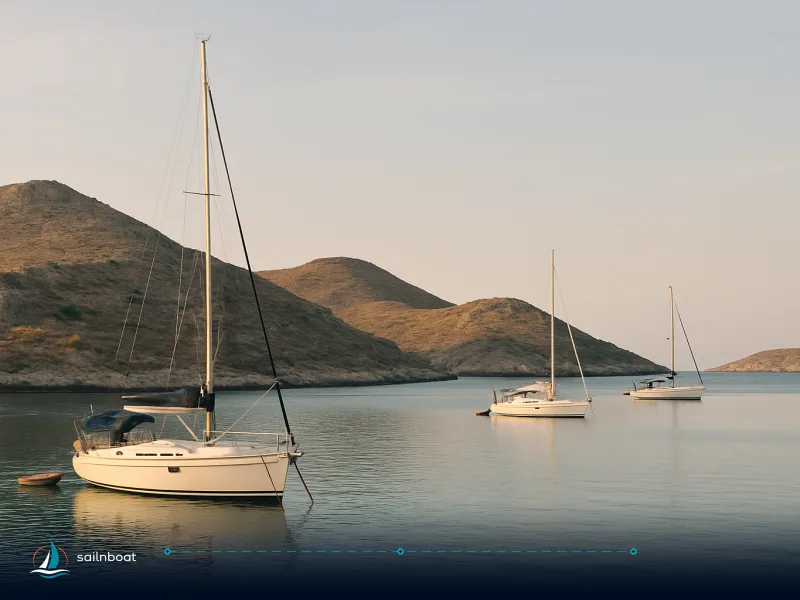
- Grikos (Patmos): Sheltered, sand/mud at 4–8 m, good holding. Ferry wash possible.
- Panormitis (Symi): Well-protected, anchor in 5–8 m, stern-to the quay or use official buoys when available. Restrictions and enforcement can change; check on arrival.
- Lindos Bay (Rhodes): Anchor in sand at 6–8 m; exposed to swell and busy in high season.
- Lakki (Leros): Deep, natural harbour with marina and quay options, good shelter.
- Mandraki (Nisyros): Town quay, anchor in 4–6 m, limited space, busy in peak months.
Always check your charts and latest pilot guides for updates on depths, restrictions, and local rules.
Mooring Techniques
- Mediterranean stern-to: Standard on town quays—drop anchor, back to quay, run stern lines ashore.
- Anchoring: Use sand/mud patches. Avoid Posidonia meadows (see environmental section).
- Mooring buoys: In many marine protected areas (MPAs), especially in parts of Symi, Lipsi, and southern Leros, buoys are installed and are often mandatory or strongly recommended to protect the seabed. Always look for signage or ask the harbormaster.
- Equipment: Minimum 50–70 m chain, long warps, fenders, hook knife. Night watches are wise in crowded anchorages.
Mooring Buoy Rules by Island (Summary Table)
| Island/Area | Buoy Availability | Mandatory/Recommended | Notes |
|---|---|---|---|
| Symi (Panormitis, Pedi) | Installed in parts | Often mandatory in MPAs | Check signage on arrival; enforcement varies. |
| Lipsi | Installed in south | Often mandatory in MPAs | Mooring buoys protect Posidonia. |
| Leros (South) | Some protected bays | Often mandatory in MPAs | Ask local authorities or harbormaster. |
| Patmos | Limited | Recommended in some bays | Anchor on sand if no buoys. |
| Other islands | Limited/none | Anchor as directed | Always avoid Posidonia and follow local guidance. |
Essential Regulations and Fees for Sailing in Greece
Required Documentation
- TEPAI (Greek cruising tax): Payable for all leisure boats over 7 m. For yachts 7–8 m, the fee is €16/month (per AADE, 2024); higher for longer boats. Most operators handle this and provide proof at check-in—always confirm before arrival.
- Transit Log/DEKPA: The TEPAI is now central for most charterers. The older DEKPA (transit permit) has been phased out for most recreational charters, but non-Greek flagged private yachts may still need to handle additional paperwork. Charter operators typically manage all required documents—ask at booking.
- Port authority check-in: At your first Greek port, you may be asked to show documentation and proof of TEPAI payment.
Environmental Regulations
- Posidonia oceanica: This seagrass is protected under EU and Greek law. Anchoring on Posidonia is prohibited in many marine parks and MPAs. Eco-moorings (buoys) are often installed and may be mandatory—especially in Symi, parts of Leros, and around Lipsi.
- Recent enforcement: In 2023, local authorities in Symi and Lipsi issued fines and directed yachts to move when anchored over meadows. Expect more active enforcement each year.
- What to do: Always anchor on sand patches, use buoys if provided, and avoid dragging or resetting over meadows. Fines can be significant and are enforced by port police or marine park wardens.
Emergency Procedures and Contacts
- Medical emergencies: Each main island (Rhodes, Kos, Leros, Kalymnos, Patmos) has a hospital or clinic. The national emergency number is 112 (multi-language, including English).
- Coastguard: Dial 108 for immediate maritime emergencies.
- Local contacts: Your charter base will provide a 24/7 support number—save this. Harbormasters in each port can assist with minor incidents or advice.
- Routine medical needs: Pharmacies are common in main towns; bring key medications with you, especially if you plan to visit smaller islands.
Handling Meltemi Lay-Days
- If pinned in port: Use the time for shore excursions, provisioning, or maintenance. Many towns (Symi, Leros, Patmos) have historic sites, beaches, and local markets within walking distance.
- Contingency planning: Always have an extra day’s provisioning and water on board. If Meltemi is forecast to build, adjust your plan to reach a sheltered harbour before conditions peak.
- Communication: Inform your charter base if severe weather delays your return—they may be able to assist with logistics.
Putting the Week Together — Practical Plan (Sample 7-Day Loop from Rhodes/Kos)
Day 1: Arrive at Rhodes or Kos, complete check-in, provisioning, and TEPAI paperwork. Short sail to Lindos (Rhodes) or a nearby anchorage for the first night.
Day 2: Sail to Chalki or Alimia for a quieter night, well-sheltered from northerlies.
Day 3: Head to Symi (Panormitis or Yialos), tie stern-to or use buoys if available. Dine ashore.
Day 4: North to Nisyros (Mandraki) or Kardamena (Kos), visit volcanic sites if time allows.
Day 5: Continue to Leros (Lakki) or Kalymnos (Vathy), both offer excellent shelter.
Day 6: Sail to Patmos or Lipsi for secluded anchorages and relaxed shore time. If Meltemi is building, shorten the leg and pick a protected bay.
Day 7: Return to base, refuel, close out documentation (TEPAI), and hand back the yacht.
Route trade-offs: This loop keeps sailing legs under 40 nm, focuses on leeward anchorages, and offers alternatives if weather turns. If Meltemi is strong, stay south or shorten legs.
Final Checklist Before You Go
- Confirm with your charter base what is handled (TEPAI, documentation, cleaning) and get all costs in writing.
- Carry sufficient anchor chain and a backup anchor.
- Budget for base rental, skipper (if needed), APA (if crewed), TEPAI, marina/fuel/provisioning, and a 10–15% contingency.
- Save emergency and operator contacts in your phone.
- Plan provisioning for at least one extra day in case of weather delays.
- If you have children or pets, ask your operator about any restrictions or safety equipment—many boats are child-friendly, but not all allow pets.
Frequently Asked Questions
The practical sailing season runs May–October; shoulder months (May–June, September–early October) give gentler winds and lower prices, while July–August are hottest and busiest with the strongest Meltemi northerlies.
Typical weekly base rates are in the ranges €2,800–€5,000 for monohulls and €3,500–€6,500 for catamarans; final cost depends on season, boat age, skipper/crew and extras.
Expect a dry northerly Meltemi from late spring into autumn (June–September), strongest in July–August and often building in the afternoon; weather windows are best in May–June and September.
Look for sheltered coves and fjord-like bays (examples: Grikos, Panormitis, Lindos, Lakki) with typical holding depths around 4–8 m over sand or mixed sand/mud; pick bays protected from northerlies in high season.
You must pay the TEPAI cruising fee for leisure vessels over 7 m (paid via the eTEPAI system); historically a Transit Log/DEKPA existed but procedures have changed—TEPAI payment is central to issuing any required transit documents.
Written by
Sailnboat Editorial
The Sailnboat editorial desk covers yacht and boat chartering worldwide — routes, bases, seasons, boat types, paperwork and the practical costs that decide a trip. We are a charter marketplace, not a boat owner or a local agency: what we sell is judgement and support, so our guides are written to help you make a decision, not to sell you a specific boat. Every guide is checked against live operator and marina data before it goes out.
Fact-checked against live operator and marina data, and published under our editorial standards. Last reviewed: .