Stiniva Bay Anchorage: Safe Approaches and Overnight Options
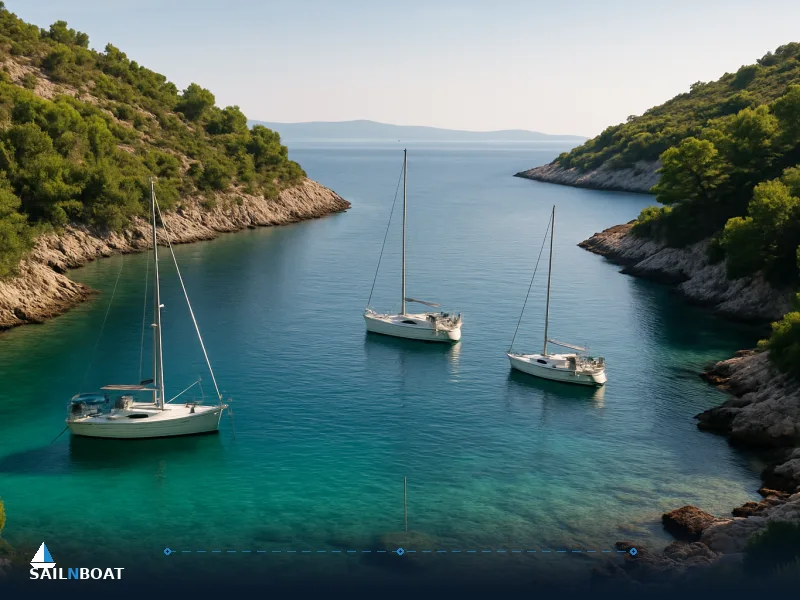
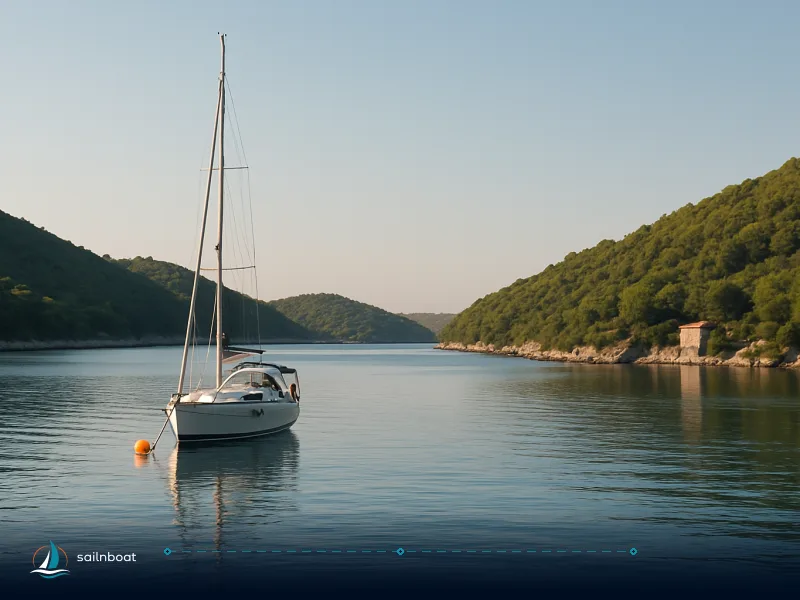
Stiniva Bay’s pinch is too tight for most yachts — plan to stop outside the mouth, anchor in 6–12 m over mixed sand/rock or take a seasonal buoy; Vis and Komiža are the nearest overnight options.

Approaching Stiniva Bay: Navigation and Safety
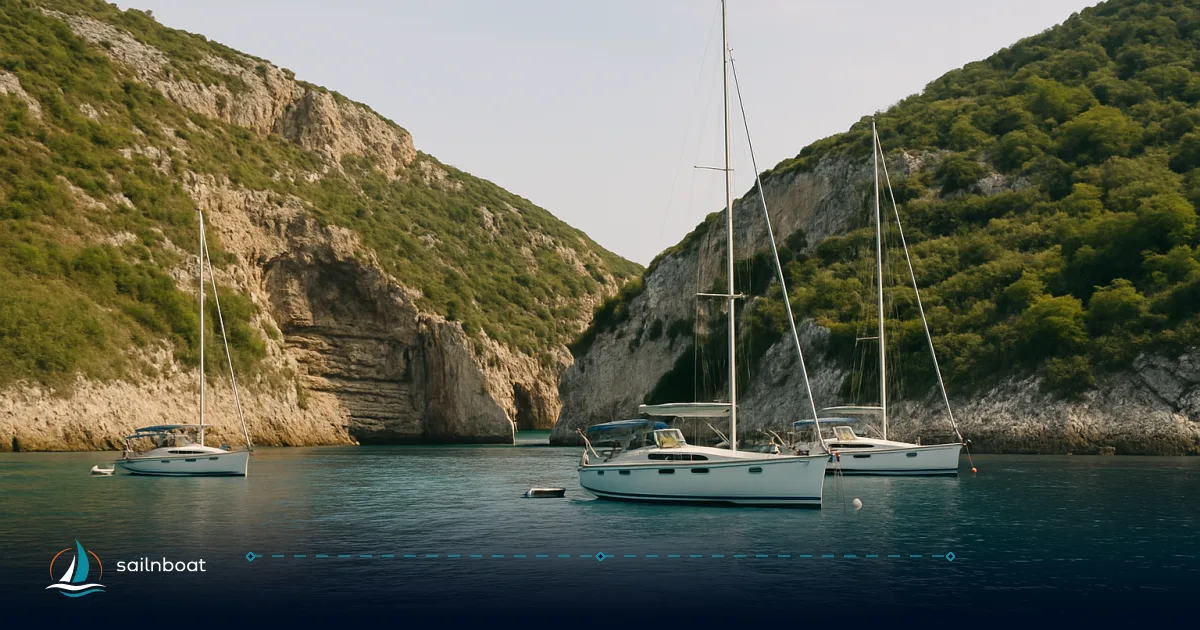
You need to plan your approach to Stiniva well before reaching the last headland. The bay is small, enclosed by limestone cliffs, and the famous beach is invisible until you’re almost at the entrance. In high season, expect dense traffic from day boats and tour operators, often concentrated right at the mouth. Give yourself time to survey, pick your spot, and manoeuvre with care—this is not a place for last-minute course corrections or aggressive turns.
Dimensions and Approach Lines
- Entrance width: Most recent pilot guides and local reports confirm the narrowest point between the cliffs is about 4–5 m. Some older or anecdotal sources mention wider figures, but for any yacht over 3 m beam, treat the slot as non-navigable. For all practical purposes, the entrance is closed to yachts.
- Depths outside the mouth: Expect 6–12 m in the outer basin just seaward of the slot, with the bottom dropping off to deeper water beyond. Sand and mixed bottom patches are present in this depth range, but rock is common.
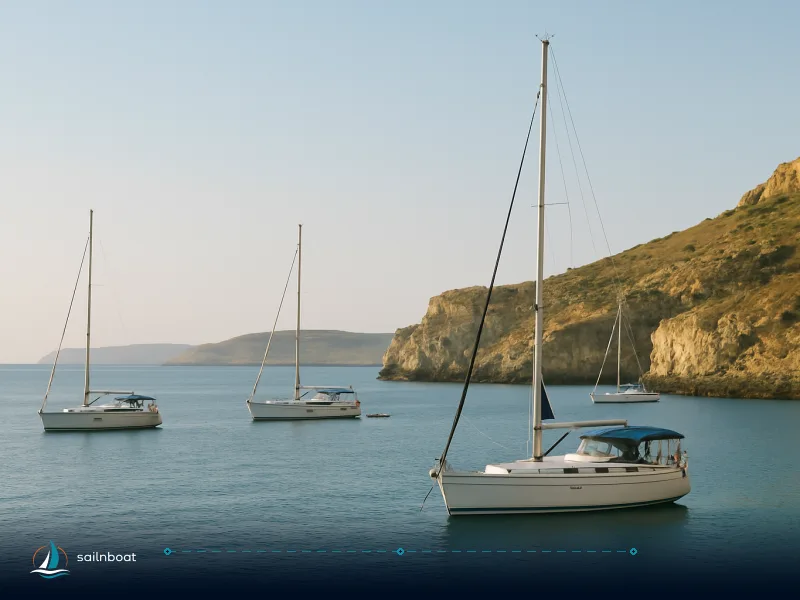
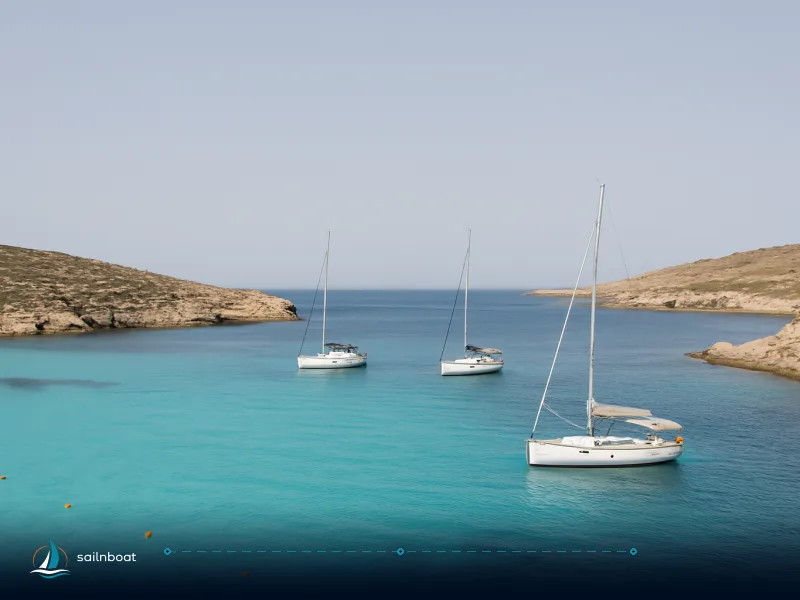
- Approach technique: Come in slowly under power, with fore or aft anchor ready to deploy, and a clear plan for where you’ll lie—outside the slot or on a buoy. Most skippers lie bow-to the swell, engine running, holding outside the pinch in 6–12 m, setting anchor on sand if available. If you want to visit the beach, leave the yacht outside and take a dinghy through the entrance. Many favour a bow-to-swell angle of 30–45° when settling outside, which helps reduce surge.
Anchoring Options in Stiniva Bay
In practice, Stiniva is not an overnight anchorage for most yachts. The bay functions as a day-stop: boats anchor or pick up buoys outside the pinch, and guests swim or dinghy ashore. Regulations and mooring options can change from year to year—sometimes even mid-season—so plan for a flexible approach and always have a backup overnight option ready.
Mooring Buoys and Fees
- Official status: Local spatial plans list sanctioned buoy fields in bays around Vis (Stončica, Rukavac, etc.), but as of the most recent reporting, there is no permanent, concessioned public buoy field inside Stiniva itself. Seasonal or private buoys sometimes appear in summer, but no year-round, officially managed field had been established.
- Typical availability: In peak season (June–September), you may find a handful of temporary or private buoys near the mouth. Availability is unpredictable—never rely on finding a free buoy unless you have a booking or direct confirmation from an operator. Navily and similar apps sometimes list guest buoys, but these change frequently.
- Fees: There is no standard Stiniva buoy tariff. For reference, nearby bays and Komiža’s buoy fields show a range of fees; in the Stiniva area, reported prices for seasonal buoys are often in the €15–30 per night range, but this varies widely by bay, boat size, and season. Always confirm locally.
Anchoring During Crowded Conditions
- Arrival timing: In July and August, arrive before 10:00 to secure a spot outside the mouth. By midday, water taxis and leisure boats pack the area, making anchoring difficult or impossible.
- Depth and swing room: Target sand patches in 6–12 m—these offer better holding and enough scope for an overnight if needed. In crowded conditions, ensure you have clear swing room and set 5:1 to 7:1 scope. Increase scope if wind or swell is forecast.
- Lines ashore: Do not attempt to take lines to the beach—land access is tightly controlled in season, and landing by dinghy is the only practical way ashore.
Seabed Composition and Holding Characteristics
The seabed in the outer basin is a patchwork of sand, pebble, rock, and Posidonia (seagrass) meadows. This produces variable holding:
- Sand/pebble: Good holding where present. Look for smooth, light-coloured patches on your chart or with a depth-sounder sweep, and use these for your primary anchor pick.
- Rock/limestone: Poor holding. If your anchor drags or you see frequent depth changes on the sounder, move until you find sand.
- Posidonia: This protected seagrass is critical habitat. Anchoring on Posidonia is illegal in many Croatian bays, and fines for damage can be severe. If you suspect you’re over seagrass, use a buoy (if available and legal) or move to a different anchorage.
Surge from southerly swell (jugo) can push strongly into the cove, making boats outside the pinch uncomfortable or even hazardous. Gusts from the NE (bura) can also create unpredictable conditions. In summary: holding is workable in settled weather, marginal in off-season swell, and sometimes poor if wind or swell direction is unfavourable.
Alternative Overnight Anchorage Locations
If Stiniva is full, restricted, or exposed to swell, your best overnight options are in nearby bays or harbours. Choose based on wind direction and the level of shore service you want.
| Anchorage | Distance from Stiniva (approx.) | Protection & notes | Depth / Buoys | Best for |
|---|---|---|---|---|
| Komiža (town) | ~8 NM | Sheltered harbour with quay and seasonal buoys; town services, fuel, provisioning. | Visitor buoys and berths; quay tie possible; fees vary by operator. | Full services, shelter from many directions |
| Vis Town (Kut) | ~10–11 NM | Large, sheltered bay with moorings, marinas, and extensive services; busy in high season. | Visitor buoys and marinas; good depth for overnight. | Best for provisioning, fuel, repairs |
| Rukavac | ~2–3 NM | Small buoy field and sheltered bay east of Stiniva; quieter, close, limited services. | Buoys present seasonally; shallow areas to watch. | Quick overnight, near access to Stiniva |
| Stončica / Smokva | 1–6 NM | Series of bays on Vis with good holding and restaurant konobas ashore. | Sand/rock bottoms; buoys in some bays. | Protected alternatives by wind sector |
| Palmižana (Pakleni Is.) | ~9–12 NM | Large marina/anchorage in the Pakleni Islands, north of Hvar; well managed, good services, but busy and exposed to some wind sectors. | Marina berths, mooring buoys, deep water. | Marina services, access to Hvar town |
Choose your alternative by the wind: with S or SW (jugo) in the forecast, surge will make Stiniva uncomfortable—Komiža’s harbour offers much better shelter. For strong NE bura, Vis Town’s inner bay provides the best protection. Always check local forecasts and consult the harbour master if unsure.
Weather Considerations for Stiniva Bay
Stiniva is exposed to the same wind systems that shape sailing on the Dalmatian coast:
- Maestral (NW sea breeze): Dominates summer afternoons at 10–20 kt, building a consistent sea and increasing afternoon swell into south-facing bays. Plan your arrival and departure to avoid peak chop, and reef early if needed.
- Bura (NE): A gusty, cold wind in cooler months. When it funnels through passes, it can create strong gusts and steep, short waves. In exposed bays, relocate quickly to a lee anchorage or port.
- Jugo / Sirocco (S/SW): Brings humid air and heavy swell, pushing surge through Stiniva’s entrance. This is the main reason most skippers avoid overnights here when a jugo is forecast.
Plan your Stiniva stop for calm-sea days. Late spring and early autumn bring fewer crowds and generally milder seas. Always check current wind and swell forecasts before committing to lie off the mouth overnight.
Final Tips for Anchoring in Stiniva Bay
Pre-Arrival Checklist
- Documentation: For visitors on a Croatian charter, the operator typically handles vessel registration and formalities. You and your crew should carry your charter contract, crew list, and valid ID/passports. Private or foreign-flagged vessels must complete arrival formalities — registration in eNautika and payment of fees — at their first Croatian port of entry, sailing there directly after entering Croatian waters.
- Local restrictions: Croatia restricts anchoring near declared bathing beaches in season; distances and enforcement vary by municipality. Always check current local notices (Lokalne Obavijesti) and consult the harbour master before anchoring close in small coves.
- Buoy availability: If you require a buoy, confirm in advance—call Komiža or Vis harbour offices, or check booking apps and platforms. Do not rely on finding a free buoy on arrival, especially in high season.
While Anchored
- Scope: Set ample scope—5:1 to 7:1 is typical for an overnight hold. If conditions are marginal, consider a stern anchor or move to a more secure bay early.
- Monitoring: Use anchor alarms and check your position frequently. If wind or swell builds from the S/SW, be ready to weigh anchor and relocate—conditions can deteriorate quickly.
- Seagrass: Never attempt to anchor in Posidonia. If you cannot find a sand patch, move to another anchorage or a managed buoy. Fines for damaging seagrass are substantial and enforcement is strict.
Plan your Stiniva experience as a tactical day stop: anchor outside the entrance or secure a booked buoy, enjoy a swim or dinghy ashore, and then move on to a regulated, comfortable overnight. The cove is iconic for its scenery, but operationally it is specific—treat it as a calculated stop, not a casual overnight.
Your decisions here—timing, anchoring, and backup planning—make the difference between a relaxed day and a stressful one. Use the numbers, check the notices, and talk to local operators. That's how you get the most out of Stiniva, without risking your boat or your plans.
Frequently Asked Questions
Sources and recent measurements show the cliff pinch at Stiniva is extremely narrow — commonly reported around 4–5 metres at the tightest point, with older or looser measures giving larger numbers; treat it as too narrow for yachts.
Approach slowly, with good lookouts, from outside the mouth and plan to anchor outside rather than try to steer a yacht through the pinch; many skippers lie off the entrance in 6–12 m and use a dinghy or swim to the beach.
There is no consistently established public buoy field granted by local concession as of recent checks; occasional seasonal or private buoys may appear — fees vary widely between operators and bays (expect anything from modest daily rates at nearby bays up to higher prices in peak season).
The seabed outside the pinch is mixed sand, pebble and rock with Posidonia in places; holding is generally fair to good on sand patches but can be poor on rock or Posidonia — avoid anchoring on seagrass where protected.
Closest, reliable overnight options are Komiža (roughly 8 NM) and Vis Town (about 10–11 NM); smaller sheltered bays like Rukavac or Stončica are nearer (a few NM) and useful depending on wind direction.
Written by
Sailnboat Editorial
The Sailnboat editorial desk covers yacht and boat chartering worldwide — routes, bases, seasons, boat types, paperwork and the practical costs that decide a trip. We are a charter marketplace, not a boat owner or a local agency: what we sell is judgement and support, so our guides are written to help you make a decision, not to sell you a specific boat. Every guide is checked against live operator and marina data before it goes out.
Fact-checked against live operator and marina data, and published under our editorial standards. Last reviewed: .