Hidden Coves Near Split: Top Anchoring Spots Revealed
Practical guide to five lesser-known anchorages within easy reach of Split — depth ranges, seabed type, holding quality, facilities and wind protection for planning overnight stops.

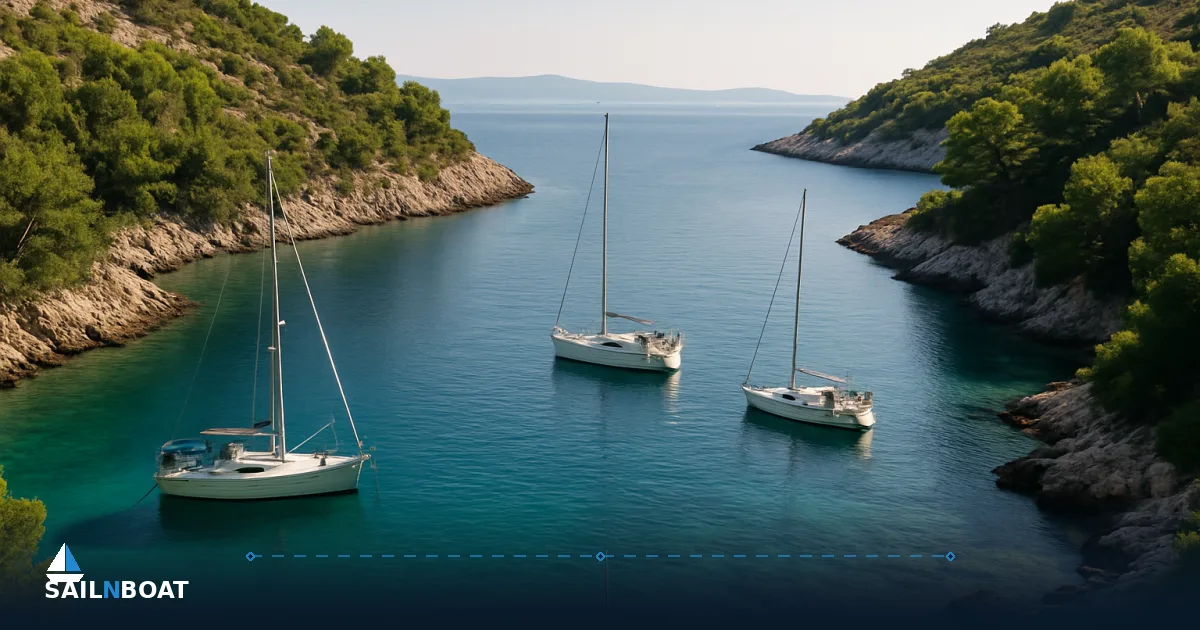
Hidden coves near Split that are genuinely anchorable include Bobovišće (Brač), Nečujam (Šolta), Krknjaši (Drvenik Veli), Dubovica (Hvar) and Stiniva (Vis) — each offers reliable depths, defined seabeds and shelter suitable for daytime stops and overnighting within a short hop of Split.
Overview of Hidden Coves Near Split
The central Dalmatian islands around Split give you many small coves that are quieter than the main harbours but still within a practical sailing day. These coves are typically shallow‑to‑moderate (mostly 4–12 m where yachts anchor), often with mixed bottoms: sand, mud and patches of Posidonia (seagrass), plus rocky fringes near cliffs. Concession mooring buoys are common in attractive bays — they cut down free‑anchoring space and change how you approach overnighting. For planning, assume day‑traffic and beachgoers in July–August; quieter mornings/evenings outside those peak weeks are your best chance at solitude. (splendid.hr## Top Hidden Coves for Anchoring Below are five reliably anchorable coves within a short passage from Split. For each I list typical depth ranges in metres, seabed type, holding quality, on‑shore facilities, wind protection and the months that give the best balance of weather and quiet.
Bobovišće Cove (Brač)
- Typical depth: ~4–10 m along the central mooring area; shoaling to shallower water within 20–40 m of shore.
- Seabed: predominantly sand with patches of Posidonia and occasional rock along the headlands.
- Holding: generally good where sand is present; take care near weed patches where anchors can slip. Use a snorkel to check the bottom if in doubt.
- Facilities: a handful of private mooring buoys, one or two konobas (local taverns) within walking distance and a small village jetty — no full‑service marina. Mooring buoys are often run under seasonal concession, so space for free anchoring can be limited at peak season.
- Wind protection: sheltered from prevailing NW maestral when anchored close to the lee of the island; the bay offers reasonable shelter from westerlies but is more exposed to bura gusts funnelling down the island’s slopes.
- Best months: June–September for water temperature and tavern opening hours; May and September reduce crowds and make finding an anchor spot easier.
Why go: easy approach from Split, quiet evenings ashore with one or two family‑run restaurants and a straightforward anchorage for mid‑size yachts.
Nečujam Bay (Šolta)
- Typical depth: ~4–8 m in the main bay; shallower near the pebble beaches.
- Seabed: mixed sand and mud with extensive Posidonia meadows in places.
- Holding: moderate—sand/mud holds well, but weed beds can reduce bite; choose a sand patch and use extra scope if you suspect weed.
- Facilities: several beach bars and restaurants line the shore; small slipway and limited berthage for local boats; fuel and full marina services are not available in the bay itself.
- Wind protection: good shelter from northwesterly maestral when tucked into the bay; exposed to easterly and southeasterly winds depending on your exact position.
- Best months: July–August for lively beach bars; May–June and September for calmer anchorages and fewer day‑boats.
Why go: shallow water for easy swimming, beach bars convenient for afternoons, and quick access from Split with short passages.
Krknjaši Anchorage (Drvenik Veli)
- Typical depth: ~5–12 m in the anchoring area, with 6–8 m common near the shallower sandy shoal.
- Seabed: primarily sand close to shore; deeper areas may have sparse Posidonia.
- Holding: very good on sand; anchoring in the sand fields gives confidence for overnighting.
- Facilities: no formal marina; a seasonal tavern (Krknjaši Tavern style) operates in summer on the islet or adjacent shore; no fuel or electricity. Expect to dinghy ashore for the tavern.
- Wind protection: well‑protected from most northerly and westerly directions because of the island’s lee; exposed to southerly swells on certain days.
- Best months: June–September; early summer is quieter before peak tourist weeks.
Why go: classic secluded anchorage for an overnight stop with a convivial tavern ashore and good sand holding.
Dubovica Bay (Hvar)
- Typical depth: depths near shore are often moderate, with deeper shelves further out; confirm exact ranges with local charts or by visual inspection.
- Seabed: reportedly mixed, with sand, pebbles and rock; check for suitable sand patches before anchoring as local conditions may vary.
- Holding: generally good where sand and pebbles dominate; avoid anchoring on mixed rock beds.
- Facilities: small beach bar/restaurant, space for a few moored local boats; no full marina services in the immediate bay.
- Wind protection: sheltered from easterly winds when hugging the western side of the bay; provides reasonable shelter from northwesterly maestral if you anchor in the inner berth. More exposed to strong southerly winds.
- Best months: June–September for beach bar service and calm sea conditions; late May and September are quieter.
Why go: attractive shoreline with a restaurant and reliable water quality for swimming; good for a late‑afternoon stop en route to Hvar town.
Stiniva Beach (Vis)
- Typical depth: anchoring is often outside the narrow entrance where depths vary from ~6–18 m; closer in there are shallower shelves around 5–8 m.
- Seabed: rocky near the cliffs with sand pockets close to the small pebble beach; Posidonia is present outside the immediate cove.
- Holding: fair to good in sandy pockets; rocky areas do not offer reliable bite — consider stern lines to shore in calm conditions if permitted and safe.
- Facilities: essentially none — a small beach bar may operate seasonally but do not rely on services; the cove is mostly natural and often busy with day visitors.
- Wind protection: very sheltered from most wind directions once inside the narrow cut; however the approach is exposed to sea swell and a long fetch from the open Adriatic if southeasterly wind is strong.
- Best months: June and September reduce day‑boat congestion; July–August are busy with beachgoers arriving by local boat trips.
Why go: dramatic cliff‑framed beach with a narrow entrance and unique scenery — best for a daytime visit or an overnight only with careful planning.
Facilities and Amenities at Each Cove
- Mooring buoys: common in popular bays (Bobovišće, parts of Dubovica and some coves on Brač/Hvar). Buoys are often seasonal concessions; you can use them for a fee paid on shore or directly to the concession operator if present. Where buoys exist, they reduce the space available for free anchoring.
- Restaurants and bars: present at Nečujam, Dubovica and Bobovišće in summer; Krknjaši and Stiniva may have seasonal or informal beach concessions. Expect no ATMs or provisioning in these coves — stock up in Split, Supetar or Hvar town.
- Fuel and technical services: not available in these coves. The nearest fuel and technical services are at larger marinas: Split city marinas, Supetar (Brač) and Hvar town. Plan fuel legs accordingly.
- Dinghy landings and customs: dinghy landings are informal and generally possible on pebble or concrete strips. If you intend to land ashore, carry sufficient fenders and a line. Customs and formalities are handled in official ports; no immigration or customs offices are present in these small coves.
Best Times to Visit Hidden Coves
- Sailing season: May–September is the practical season for warm water and most services; navigation is straightforward outside winter.
- Peak vs quiet: July–August are busiest with day‑boat traffic; early June and September offer steadier sailing winds (regular maestral) and far fewer tourists. If you want quieter anchorages without sacrificing weather, aim for late May–early June or September.
- Winds: midday maestral (NW) is common and predictable in summer—use it for passages, then tuck into lee anchorages by afternoon. Bura (strong NE gusts) can occur year‑round but is more likely in transitional months; if a bura is forecast expect stronger gusts in exposed bays and consider harsher anchoring arrangements or a move to a well‑protected harbour.
Navigational Tips for Hidden Coves
- Approach: pick the wider approach channel where possible and reduce speed to inspect the seabed visually where depths allow. Narrow entrances (Stiniva) require a daylight approach in calm conditions.
- Avoid seagrass: Posidonia is protected and anchors damage it; where you see extensive Posidonia patches anchor on sand pockets only. If in doubt, snorkel or lower a grapnel hook to check.
- Mooring buoys: do not assume buoys are free — many are concessioned and you may be expected to pay a small fee in cash ashore. Do not remove buoys or tie to private moorings.
- Stern ties: in very narrow or crowded bays consider a stern line ashore to keep your bow into wind and reduce swing; only use existing rings or designated mooring points on shore and avoid damaging stonework or vegetation.
- Depth awareness: carry up‑to‑date electronic charts and local pilot notes. Depths given above are typical ranges; shoaling near shore can occur and sandbars form after storms. Reduce speed in shallow areas and maintain a lookout for submerged rocks near cliffs.
Safety Considerations While Anchoring
- Anchor scope: allow 4:1 to 7:1 scope depending on sea state and holding — more scope for weed or mud bottoms. Use a snubber on chain for comfort through wind shifts and to reduce shock loads.
- Watch the weather: check forecasts for maestral, bura and sirocco trends before committing to a remote cove; many of these anchorages are fine for the predictable maestral but less suitable if a bura is expected.
- Night precautions: if overnighting, check swing room against nearby boats and shoreline, set an anchor alarm or use a track‑based alarm, and re‑check scope after strong gusts.
- Environmental rules: Posidonia beds are protected by Croatian law and municipalities enforce fines; avoid anchoring on seagrass and carry garbage ashore to dispose of properly.
- Emergency services: small coves have limited or no immediate assistance; ensure your EPIRB/VHF and mobile comms work and know the nearest ports with fuel and salvage capability (Split, Supetar, Hvar town).
Plan your itinerary so you can move before a forecast change; the convenience of a secluded cove is valuable, but its safety margin narrows quickly once a strong wind is forecast.
If you want, I can convert these anchor profiles into a one‑day sailing plan from Split with passage times and fuel estimates, or produce printable waypoints and a checklist for each cove tailored to your boat type.
Frequently Asked Questions
Bobovišće (Brač), Nečujam (Šolta), Krknjaši (Drvenik Veli), Dubovica (Hvar) and Stiniva (Vis) — each offers sheltered anchoring close to Split with a mix of sand/wreck/mixed seabeds and small local facilities.
Typical anchoring depths run from ~4–12 m: Bobovišće ~4–10 m (sand/rock), Nečujam ~4–8 m (sand/mud with seagrass patches), Krknjaši ~5–7 m (sandy), Dubovica ~5–8 m (mixed sand/pebble/rock) and Stiniva 6–18 m outside the entrance with mixed rock and sand near anchoring spots.
Holding is generally good where sand or mud dominates (Bobovišće, Krknjaši, parts of Dubovica); areas with weed need extra scope and a stern-to or check with a snorkel.
Facilities range from small taverns and beach bars (Krknjaši, Dubovica, Nečujam) to very limited services (Stiniva) and occasional mooring buoys (Bobovišće/other bays under concession).
Most coves give good shelter from the common summer maestral (NW) and local chop; Krknjaši and Bobovišće are well-protected from westerlies and bura in their lee, while Stiniva is sheltered from many directions but exposed to certain southerly or offshore swells.
May–September is the practical sailing season; June and September are ideal for fewer crowds, reliable maestral winds and warm water.
Written by
Sailnboat Editorial
The Sailnboat editorial desk covers yacht and boat chartering worldwide — routes, bases, seasons, boat types, paperwork and the practical costs that decide a trip. We are a charter marketplace, not a boat owner or a local agency: what we sell is judgement and support, so our guides are written to help you make a decision, not to sell you a specific boat. Every guide is checked against live operator and marina data before it goes out.
Fact-checked against live operator and marina data, and published under our editorial standards. Last reviewed: .