Biševo's Blue Cave: Timing, Tendering, and Visiting Tips
Practical, step‑by‑step advice for charter crews to visit Biševo's Blue Cave (Modra špilja): when to go, how tendering works, what the fees are, and reliable alternatives if it's closed.

Biševo’s Blue Cave (Modra špilja) can be a five‑minute, world‑class light show — or a long queue that eats half a day. If you’re chartering, the single act that makes the visit work is timing: late‑morning on a calm day, arriving early from Vis/Komiža, and accepting that the cave authority controls transfers and tickets.
Optimal Timing for the Blue Cave
The Blue Cave’s colour occurs only when sunlight enters through an underwater opening and reflects off the white cave floor; that geometric condition is reliably best in a late‑morning window. Aim your plan around that window and the crowd patterns that form from tour operators.
Best Visiting Hours
- Target roughly 10:30–13:00 for the strongest blue glow; sources and cave operators consistently give late morning to around midday as the peak window.
- Weekdays reduce the group‑tour waves; July–August weekends are the busiest and queue times spike.
- If you must visit in high season, plan to arrive among the first boats in the cove (earliest practical arrival) rather than relying on a midday run in from Split.
Seasonal Considerations
- High season is defined for ticketing: 20 June–10 September carries the peak adult rate. Outside that bracket the ticket is cheaper and visitor numbers are lower.
- Shoulder months (May, early June, September) are the best compromise: good light, fewer people and a higher probability the cave is open.
Tendering Procedures to the Blue Cave
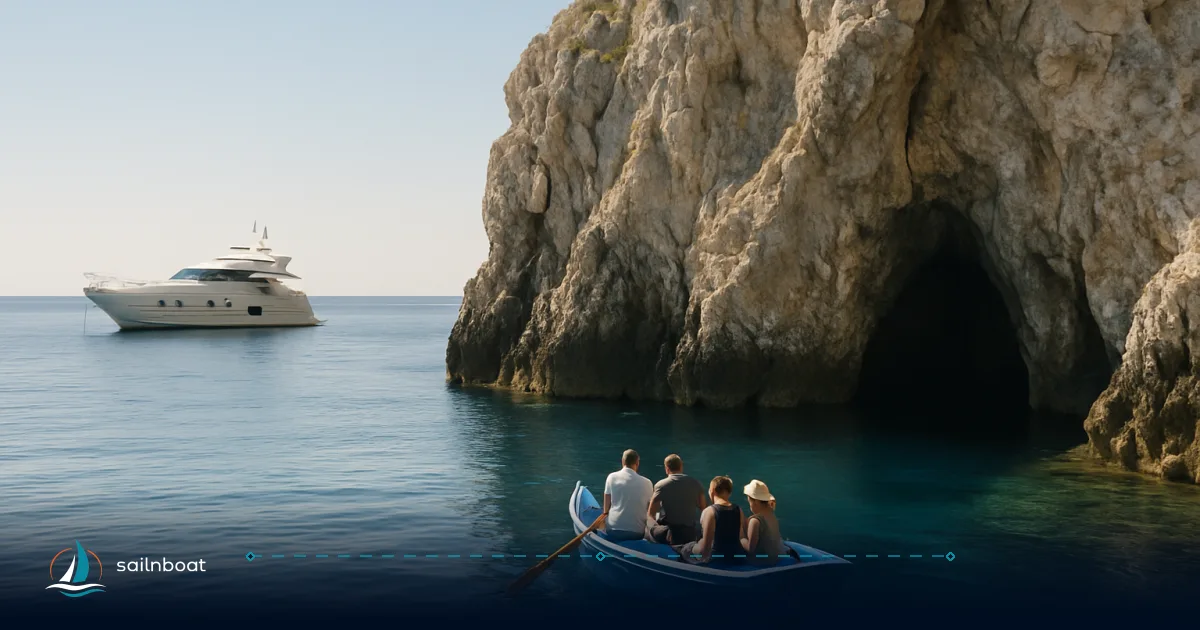
You cannot drive a dinghy straight into the cave or row your guests through the low entrance. The cave access is controlled on shore; every visitor transfers into small, authorised boats that do the actual entry.
Authorized Concessionaires
- Entry is managed by a concession authority based on Biševo; tickets are sold at the Mezuporat (Balun) kiosk and the concession’s small motor boats carry visitors into the cave. Operators and tour pages restate that the cave authority collects the fee and runs the transfers.
- Confirm the current concession operator and their operating hours in your pre‑charter planning — the named operator can change over seasons, and local skippers or your charter base will have the most recent contact.
Navigating the Entrance
- The cave entrance is low and narrow (reported around 1.5 m high and ~2.5 m wide), which is why only the official low tenders go through the hole; regular tour boats cannot enter. That means everyone transfers into those small craft at the Balun/Mezuporat waiting area.
- Practical tender sequence for a charter:
- Moor or anchor at a sensible distance off Mezuporat/Balun — larger yachts avoid crowding the small-boat operation. Many charters prefer to anchor in a nearby bay and send the tender.
- Carry crew/passengers ashore or to the cave kiosk transfer point using your tender; expect an organised queue and numbered boarding on the concession tenders.
- Purchase cave tickets at the desk (cash is commonly required) and board the authorised cave boat when your number is called; transfers into the grotto are supervised and timed.
- After the cave visit (typically 5–15 minutes inside) you rejoin your tender at Mezuporat. Don’t expect to “dock in” the cave — the transfer is the only permitted method.
Safety and operational notes:
- The transfer boats seat small groups and run a continuous flow; lifejackets are used onboard the cave tenders. Follow the crew’s briefing and keep cameras secured — transfer decks can be wet.
- If the sea state prevents safe transfer, the cave authority will close access for safety — in that case the concession staff will not allow boats through.
Entrance Fees and Payment Options
Money and timing are practical blockers if you don’t plan for them. Tickets are handled by the concession and are typically collected on Biševo at Mezuporat.
Fee Structure
- Published adult rates for recent seasons are: €24 in high season (20 June–10 September) and €18 in the shoulder/off season; children pay reduced fares. These are the figures used by the official cave administration and by the main visitor pages.
- The fee structure is seasonal and has been stable in recent years, but it is set by the cave authority and can change between seasons — expect the rate bands above unless you see a new official timetable.
Payment Methods
- Many visitors report that cave tickets are handled in cash on the island; operators commonly advise bringing small euro notes because card terminals/ATMs are not guaranteed on Biševo. That said, some concession points may accept card in certain years — check with your base before departure.
- The concession sells tickets on the spot — prepaid “skip‑the‑line” cave tickets sold by third‑party tour resellers are often misleading; the cave authority controls entry order on the island. If someone promises guaranteed inside time for an additional fee, treat that with healthy scepticism.
Weather Considerations for Visiting
The Blue Cave’s accessibility is as much a sea‑state decision as a solar one. Your charter plan must account for wind, swell and the cave authority’s safety calls.
Wind Conditions
- The cave entrance faces south and is exposed to swell and seas driven by southerly winds (jugo) and south‑westerly swells; when the passage is unsafe the cave is closed by the authority. Several skipper reports and local guides note that jugo/southerly swell is the primary reason for closure.
- Conversely, northerly winds (bura or maestral) typically make the eastern Biševo side calmer and improve the odds for a visit — maestral (NW/sea breeze) in summer and an offshore bura (N) pattern reduce south swell. Use those patterns when you pick a day.
Monitoring Weather
- Check local wind and sea forecasts the evening before and the morning of your planned visit (authoritative marine forecasts and local skipper bulletins give the best short‑term guidance). The cave authority sometimes confirms opening only early on the day.
- Plan a flexible day: if jugo is forecast, use Vis/Komiža as the day and save the Blue Cave for a different day when the forecast is favourable.
Alternative Attractions Near Biševo
If the cave is closed, or you want less queueing and more swim time, these alternatives are commonly suggested, scenic and simple to slip into a charter day, though their use as fallback options may vary by operator.
| Attraction | Why it works for charterers | How it fits into a Blue Cave day |
|---|---|---|
| Green Cave (Ravnik) | Boat can enter through larger openings; you can swim or snorkel inside; vivid green light around midday. | Short detour after or instead of Biševo — less queue risk, good midday stop. |
| Stiniva Cove (Vis) | Dramatic pebble cove with a narrow sea approach and a sheltered swim; popular anchor/stop. | Common pair with Blue Cave day — use as a fallback for longshore lunch and swimming. |
| Budikovac Lagoon | Shallow, turquoise lagoon and good snorkel/swim beaches; easy tendering for guests. | Great post‑cave relaxation stop if cave visit is short or cancelled. |
All three are on the same half‑day/day circuit with Biševo and are often suggested as alternate stops if the cave is not possible, though their use as official fallback options may depend on your charter operator. Local operators run combined itineraries that mix two or more of these stops with Vis or Komiža as base ports.
Overnight Planning for Your Visit
Because the Blue Cave is a short but weather‑dependent stop, basing yourself nearby is the single most effective way to avoid losing a day to queues or closures.
Choosing Your Base
- Komiža (Vis) or Vis Town are the pragmatic bases: Biševo is a short hop (about 15–30 minutes) from Komiža/Vis, while Split is typically a longer fast‑boat run (around 90 minutes+). Basing on Vis reduces transit time, lets you arrive before the daily tour crowd and gives you an easy weather fallback.
- If you are based in Split, start extremely early (pre‑07:30) or accept that you will be in the tour flow; private charters from Split can still work if you commit a full day and set departure to reach Biševo for the late‑morning window.
Sample Itinerary (charter-friendly)
- Night before: Overnight in Komiža (Vis) — provisioning and early breakfast ashore.
- 08:00 — Depart for Mezuporat/Balun and aim to be among the first 5–10 boats in the cove. Purchase tickets and queue for the concession tender.
- 10:30–13:00 — Cave visit window; if the queue is long or cave closed, shift to Green Cave on Ravnik then Budikovac for lunch and swimming.
- Afternoon — Return to Vis/Komiža for dinner ashore or anchor at a quieter bay on Vis if you prefer an evening swim. This flexibility avoids the wasted‑half‑day scenario that comes from a Split morning schedule.
Practical tips:
- If you must be back at base or have a tight schedule, treat the Blue Cave as a potential bonus rather than the linchpin of the day — build the day around Vis and the Green Cave so the weather call doesn’t spoil your charter plan.
Practical tips, common pitfalls and skipper checklist
- Cash and tickets: Bring small euro notes for the concession desk; don’t rely on an ATM on Biševo.
- Time on site: Expect only 5–15 minutes inside the cave once you’re on the small tender; the rest of the time is transfer and queueing.
- Queue length: In peak July/August the queue can be 60–90+ minutes; early arrival or staying on Vis shortens that considerably.
- Tendering etiquette: Keep your yacht out of the small‑boat transfer lane; coordinate a safe pick‑up point with the concession staff and other skippers.
- Weather watch: If the forecast shows any sustained jugo/developing southerly swell, prioritise alternatives that day — the cave authority will close access when the passage is unsafe.
Final decision checklist (quick)
- Did you book an overnight on Vis or Komiža? (Yes = much higher odds.)
- Is the forecast free of southerly swell/jugo for the morning? (If no, pick an alternative.)
- Do you have €24 per adult in cash if visiting in high season? (20 June–10 September)
- Is your plan flexible to use Green Cave / Stiniva / Budikovac if the cave closes? (Often advisable; check with your operator.)
Plan the Blue Cave as a precision insertion into a full day around Vis rather than as a lone destination. If you align timing (late morning), base choices (Vis/Komiža), and expectations (short time inside, concession transfers, cash fee), you can see the blue glow without losing an entire charter day.
Plan your itinerary to include Biševo's Blue Cave and ensure a seamless experience.
Frequently Asked Questions
Visit late‑morning between roughly 10:30 and 13:00 on a weekday and aim to be among the first boats in; shoulder season (May–early June or September) reduces crowds.
Anchor or moor off Mezuporat/Balun, go ashore or transfer to the cave’s authorised low tenders — the cave authority operates the small boats that actually enter the grotto.
Adult tickets are €24 in high season (20 June–10 September) and €18 in the shoulder/off season; children rates are lower and the fee is collected on Biševo.
Southerly swell and the jugo (southerly/SE wind) can make the narrow underwater entrance unsafe and lead to full closure.
Green Cave on Ravnik, Stiniva Cove and the Budikovac lagoon are nearby options that work well as plan‑B stops.
Base on Vis or Komiža (Vis) the night before so you can arrive early and adapt to last‑minute closures without a wasted crossing.
Written by
Sailnboat Editorial
The Sailnboat editorial desk covers yacht and boat chartering worldwide — routes, bases, seasons, boat types, paperwork and the practical costs that decide a trip. We are a charter marketplace, not a boat owner or a local agency: what we sell is judgement and support, so our guides are written to help you make a decision, not to sell you a specific boat. Every guide is checked against live operator and marina data before it goes out.
Fact-checked against live operator and marina data, and published under our editorial standards. Last reviewed: .