Sailing the Pakleni Islands: A Journey from Hvar
A first‑person account and practical guide for Pakleni Islands sailing from Hvar — where to pick up provisions, which coves sleep well, typical buoy fees and how to handle the afternoon maestral.

Quick Reference: Pakleni Islands Charter from Hvar
| Topic | Key Details |
|---|---|
| Distance | 2.2–2.5 NM (Hvar town to Palmižana/buoy fields) |
| Typical Passage Time | 20–30 min at cruising speed |
| Mooring Options | ACI Palmižana marina berths, seasonal buoys, anchoring in sandy patches |
| Buoy Fee (2024) | ~€4/m per night in high season (Vinogradišće, other fields); confirm on arrival |
| Marina Berth Fee | ACI Palmižana: ~€126/night for 12 m yacht in high season (price per meter, varies annually) |
| Fuel | Only at Hvar town fuel dock |
| Water | Hvar marina, ACI Palmižana (fee applies, queues in high season) |
| Waste Disposal | Hvar marina facilities; limited/none on islands |
| VHF (local usage) | Hvar harbour and marina: confirm with base; distress: Ch 16 (standard) |
| Provisioning | Full-service supermarket (Konzum) in Hvar; limited on islands |
| Medical/Emergency | Hvar town: pharmacy, clinic, ambulance; sea rescue: 195; all emergencies: 112 |
| Mobile/Data | Good 4G/LTE coverage in most anchorages; shore power at ACI Palmižana only |
Most sailors leaving Hvar town for the Pakleni Islands are looking for a simple equation: short passage, reliable shelter, and a real choice between sociable marinas, party coves, or quiet anchorages. With just over 2 nautical miles between Hvar and the islands, you have flexibility — but you’ll need to manage weather, mooring, and timing to make it work.
Setting Sail from Hvar Town
You’re only 2.2–2.5 nautical miles from Hvar town to Palmižana or the main Pakleni buoy fields, so it’s a 20–30 minute run at 5–7 knots. This makes the Pakleni Islands the default first or last stop for Hvar-based charters. If your boat is due back that night, or you’re aiming for a stress-free return, check with your charter operator about final-day requirements. Many bases want you on the quay and ready for inspection by 17:00–18:00, so plan your last day with this in mind.
Provisioning in Hvar Town
- Where to shop: The main Konzum supermarket is a short walk from the port, and smaller groceries and bakeries are scattered nearby. The morning produce market is best for fruit, vegetables, and sometimes fish. For technical spares or fuel (gasoline, outboard oil), Hvar is your best bet.
- Priority supplies: Water (2–4 L per person per day in summer), ice or a cool-box, breakfast and lunch food, and basic repair tools. If you’re planning a raft-up or shore barbecue, bring extra fenders and a long stern line.
- Timing: In high season, shop before 09:00 to avoid crowds. Some smaller shops close early or may only accept cash, so carry both card and euros/kuna.
- Shoulder/low season: After September, many shops reduce hours and most island konobas close or limit service to weekends. Always call ahead if you’re counting on a specific restaurant or service.
- Tip: Most island konobas are seasonal and close early outside July–August. Don’t rely on them for daily staples.
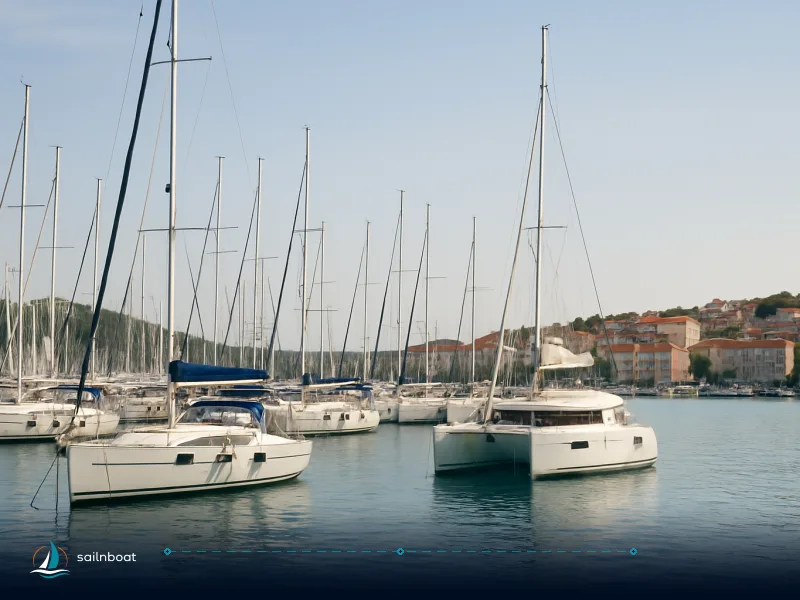
Exploring Vinogradišće Bay and Pakleni Mooring Options
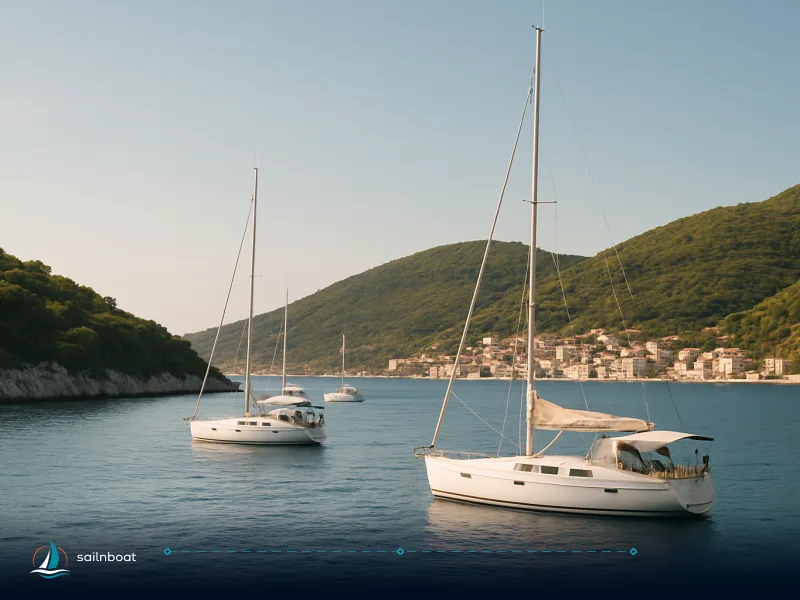
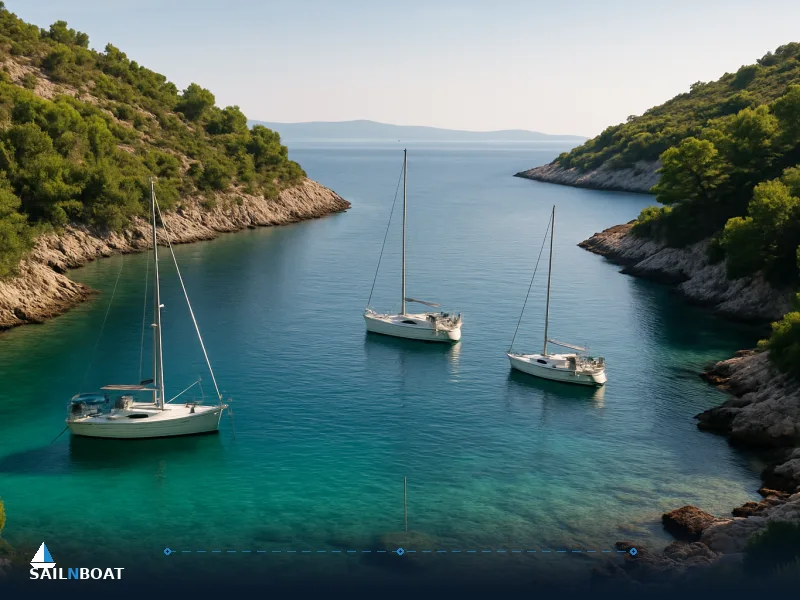
Vinogradišće (Uvala Vinogradišće) on Sveti Klement’s south side is a quieter alternative to Palmižana, with good shelter and options for both anchoring and buoys.
Anchorage Depths, Seabed, and Anchoring Technique
- Depths: Most of Vinogradišće is 3–10 m, with sand in the centre and east, and Posidonia (protected seagrass) elsewhere. Always check depth with your sounder on approach.
- Seabed: Anchor only in sand. Avoid Posidonia; local authorities monitor and fines can apply if you damage seagrass, though enforcement varies.
- Swing room: The bay is tight. Use a conservative scope (6–8:1 in calm), and ensure you have space to swing clear of others. In crowded bays, use a stern line ashore: drop anchor, reverse slowly toward shore, and send a dinghy or swimmer with a line to a rock or tree. This prevents swinging and maximises space.
- Exposure: Vinogradišće is open to S/SW swell. If southerly winds (jugo) are forecast, move to a more sheltered bay.
Vinogradišće suits both monohulls and cats if you pick a sandy patch or managed buoy. Always snorkel to check your anchor if in doubt.
Mooring Buoy Availability and Fees
- Seasonal buoys: Buoys are set from late spring to early autumn, with the highest demand in July–August. Some fields are first-come, others may be bookable via phone or WhatsApp.
- Typical fees: For 2024, expect buoy fees around €4/m per night in Vinogradišće and similar fields. For a 12 m yacht, this is about €48/night in high season. Marina berths at ACI Palmižana are typically charged by length — around €126/night for a 12 m boat, but always confirm the current rate on arrival as pricing may change.
- Booking: Where reservations are possible, use ACI’s booking system for marina berths, or contact local buoy operators directly. In peak months, arriving before lunch is your best chance to secure a spot.
Pakleni Anchorages Comparison Table
| Anchorage | Typical Depth | Seabed | Buoy/Marina Fee (12 m, 2024) | Vibe & Facilities |
|---|---|---|---|---|
| Vinogradišće | 3–10 m (sand) | Sand/Posidonia | ~€48 (buoy, high season) | Quieter, small konoba, limited services |
| Palmižana / ACI Marina | Marina berths | Pontoon | ~€126 (marina, high season) | Social, restaurants, shore power, water |
| Stipanska (Marinkovac) | Variable, deep | Sand/rock | Buoy field, similar pricing | Lively, beach clubs (Carpe Diem) |
| Ždrilca / Borovac | Variable | Sand/rock | Some buoys, limited | Sheltered, quiet, narrow channels |
| Vlaka / outer coves | Deeper, open | Sand/rock | Few buoys; anchor/stern-to | Peaceful, low traffic, minimal facilities |
Weather Patterns: Pakleni Islands Sailing
Two main patterns shape your day:
- Morning calm: Early hours are usually flat and windless — ideal for short passages, provisioning, and easy anchor retrieval.
- Afternoon maestral: The NW thermal builds from late morning, peaking mid-afternoon and fading at sunset. It’s great for sailing but can make anchorages choppy and exposed, especially on the south sides. Jugo (S/SE) brings swell into southern bays, while bura (NE) is unpredictable and gusty.
Plan: Be anchored or moored before the maestral builds. If southerly weather is forecast, have a backup bay in mind.
Planning Your Return to Hvar
Most charter bases expect boats back in Hvar by late afternoon. Allow 1–1.5 hours for the return, considering wind and harbour traffic. In summer, the maestral can speed your passage, but expect fuel dock and quay congestion from 15:00 onwards.
- Return timing: Leave your Pakleni anchorage by 14:00–15:00 to avoid the evening rush and allow time for fuelling and check-in.
- Fuel dock: Hvar town’s fuel station is closest to the ferry quay. Queues are common late afternoon; refuel earlier if you can.
- Final approach: Standard VHF distress is Ch 16; for local marina/port traffic, ask your charter base which channel to monitor, as assignments can vary.
Tip: Keep your documents, crew list, and charter papers accessible for check-in. Most bases do a brief inspection and check your fuel receipt.
Medical and Emergency Access
- Pharmacy: Hvar town has a pharmacy (ljekarna) near the main square, open daily in summer, with reduced hours in low season.
- Clinic: There is a public clinic in Hvar town, capable of handling minor injuries and typical yacht-related issues. For serious cases, transfer to Split hospital is arranged by ambulance or, in emergencies, by helicopter evacuation.
- Sea rescue: Dial 195 (Croatian sea rescue) or 112 for all emergencies. Keep a charged phone and VHF on at all times.
- First aid: Carry a stocked kit on board; most charter boats supply a basic kit, but supplement with extra bandages, seasickness meds, and any personal prescriptions.
Practicalities for Less Experienced Skippers
VHF Channels and Emergency Contacts
- Distress/emergency: Channel 16 is standard across Croatia.
- Local contact: For Hvar port, ACI Palmižana, and buoy operators, confirm the current VHF channels and phone numbers with your charter base or on approach, as assignments may change.
Always keep your VHF on and tuned to the relevant channel when approaching harbours or in unsettled weather.
Fuel, Water, Waste, and Power
- Fuel: Only available at Hvar town. There’s no fuel dock on the Pakleni Islands.
- Water: Refills at Hvar marina and ACI Palmižana (for a fee). Lines can be long in high season.
- Waste: Hvar marina has general and recycling bins. On the islands, facilities are minimal; bring all rubbish back to Hvar. Local regulations prohibit waste disposal at sea and in small island bins.
- Shore power: Available only at ACI Palmižana marina. Buoys and anchorages have no shore power.
Customs and Entry for International Crews
If arriving from abroad, you must clear into Croatia at a designated port of entry before heading to Hvar or the Pakleni Islands. Hvar’s current status as a clearance port is not universally confirmed; Split and Dubrovnik are the largest, most reliable entry points nearby. Carry passports, crew list, boat documents, and proof of payment for cruising permits. Non-EU crews should check the latest requirements and keep documents ready for inspection.
Shoulder and Low Season Notes
- Buoy fields: Many buoys are removed after September; you’ll anchor or use marina berths more often.
- Restaurants/konobas: Most close outside high season or open only weekends. Always call ahead if visiting off-peak.
- Provisioning: Stock is reduced in the off-season; load up in Hvar before departure.
- Weather: Expect less predictable conditions outside June–early September. Plan shorter legs, have backup shelter, and bring warm layers for cool nights.
Mobile/Data Coverage
Most main anchorages and marinas have good 4G/LTE coverage. Signal can drop in remote coves or behind high ridges. ACI Palmižana marina offers Wi-Fi, but speed varies. Don’t rely on island Wi-Fi for weather updates or communications.
Cultural and Historical Insights
Pakleni means “tar” or “resin” in Croatian, after the pine resin once used to seal wooden boats. You’ll spot old stone paths, traditional konobas, and remnants of the islands’ working past. Local food is grounded in what’s fresh and available: grilled fish, lamb, olives, and wine, served without fuss.
Best Anchorages for a Peaceful Overnight Stay
- Vinogradišće: Calms down after day-trippers leave. Pick a sandy patch or managed buoy.
- Vlaka and outer Marinkovac: Fewer boats, extra swing room. Good for stern-to mooring or anchoring with a long line ashore.
- Avoid Hvar town roadstead: Ferry wash and nightlife noise are frequent. Most charter skippers prefer a Pakleni night and a morning return.
Anchoring regulations: Never anchor on Posidonia. Use sandy patches or buoys — local monitoring is common and fines can apply, though not universal.
Adapting to Sudden Weather Changes
- Plan B: Always have a backup anchorage plotted and the marina’s phone number handy.
- Crew roles: Assign helm, fenders, mooring lines before wind builds.
- Move early: Relocate ahead of forecast jugo or bura.
- Switching to marina: If weather deteriorates, move to ACI Palmižana for secure mooring and shore services.
Emergency kit: Anchor alarm, full fuel and water, VHF on, marina/operator contacts at hand.
Medical/Emergency Procedures
- Minor issues: Visit Hvar town pharmacy or clinic.
- Serious illness/injury: Contact emergency services (112). Medevac to Split is coordinated by clinic staff or emergency responders; response time depends on weather and sea state.
- Onboard first aid: Know your kit location and brief the crew on basic procedures.
A Rainy Afternoon Turned Story
One afternoon, with the maestral dying and a squall building from the south, we rafted three boats stern-to at Vinogradišće, ran a line to shore, and shifted the dinghy for shelter. The konoba lit lamps and served hot octopus soup as rain swept in. Instead of splitting up to search for shelter, we shared one table — and the quick seamanship decisions (buoy or anchor, stern line or extra scope, who keeps watch) turned a stressful day into a story worth telling.
When planning your anchorage, think about rain days as well as sunny ones: shelter, short lines to shore, and a local konoba willing to feed a wet crew can matter more than sunset views.
Plan your timing, pick your bay with the prevailing wind in mind, and provision thoroughly in Hvar. The Pakleni Islands reward preparation with memorable sailing, simple shore meals, and pine-scented mornings that remind you why the Adriatic is a sailor’s sea.
FAQs
How far is it from Hvar to the Pakleni Islands? 2.2–2.5 nautical miles to Palmižana; about 20–30 minutes under sail.
What’s the typical mooring fee in the Pakleni Islands? Expect about €4/m per night for a buoy in Vinogradišće; ACI Palmižana marina berths are around €126/night for a 12 m boat in high season. Fees drop outside peak months.
Where can I get fuel and water? Fuel up only in Hvar town; water is available at Hvar marina and ACI Palmižana for a fee.
What VHF channels are used? Distress: Ch 16. For local marinas and port, confirm channels with your charter base as assignments may change.
Are there customs requirements for international crews? Yes — clear in at a Croatian port of entry before heading to Hvar. Hvar’s status as a clearance port is not always confirmed; Split and Dubrovnik are reliable entry points.
Is provisioning possible on the islands? Limited — stock up in Hvar before departure, especially outside July–August.
What changes in the shoulder or low season? Fewer buoys, closed restaurants, reduced provisioning. Plan accordingly.
Where can I find more practical guides? See Sailnboat’s Croatia sailing permits guide and Hvar town guide for deeper planning support.
Frequently Asked Questions
Vinogradišće, Vlaka and the outer Marinkovac coves are the quieter options; Vinogradišće has sand/posidonia bottoms at roughly 3–10 m and managed buoys near the restaurant area. For a social night pick Palmižana or Stipanska, but expect higher buoy fees and crowds.
Stock up in Hvar town — there are supermarkets (Konzum, Studenac) and a small open produce/fish market near the port; buy fresh goods and water before you leave because island shops are limited and seasonal.
Mornings are usually calm. The NW thermal (maestral) builds through late morning and is strongest in the afternoon; bura (NE) and jugo (S/SE) are the other common systems to watch.
The name derives from paklina — pine resin once gathered there to caulk and waterproof wooden ships; the modern mistranslation to 'hell' is linguistic coincidence.
Plan for a calm morning passage, keep an eye on forecasts for maestral, jugo or bura shifts, pick anchorages sheltered from the forecast quadrant and have a plan B marina or deeper bay. Set anchor alarms and carry extra scope.
Fees vary by cove, operator and LOA — recent lists show paid buoys from roughly €30 up to €180 per night in peak months; some buoy fields (Palmižana/Vinogradišće) accept reservations by phone or through the ACI/operator pages — but many remain first‑come, first‑served in shoulder months. Book early in July–August.
Simple konobas on the shore, family‑run restaurants, beach clubs (Stipanska/Carpe Diem) and short taxi rides to Hvar town nightlife; the islands are small, pine‑fringed and historically linked to shipbuilding supplies such as pine resin.
Written by
Sailnboat Editorial
The Sailnboat editorial desk covers yacht and boat chartering worldwide — routes, bases, seasons, boat types, paperwork and the practical costs that decide a trip. We are a charter marketplace, not a boat owner or a local agency: what we sell is judgement and support, so our guides are written to help you make a decision, not to sell you a specific boat. Every guide is checked against live operator and marina data before it goes out.
Fact-checked against live operator and marina data, and published under our editorial standards. Last reviewed: .