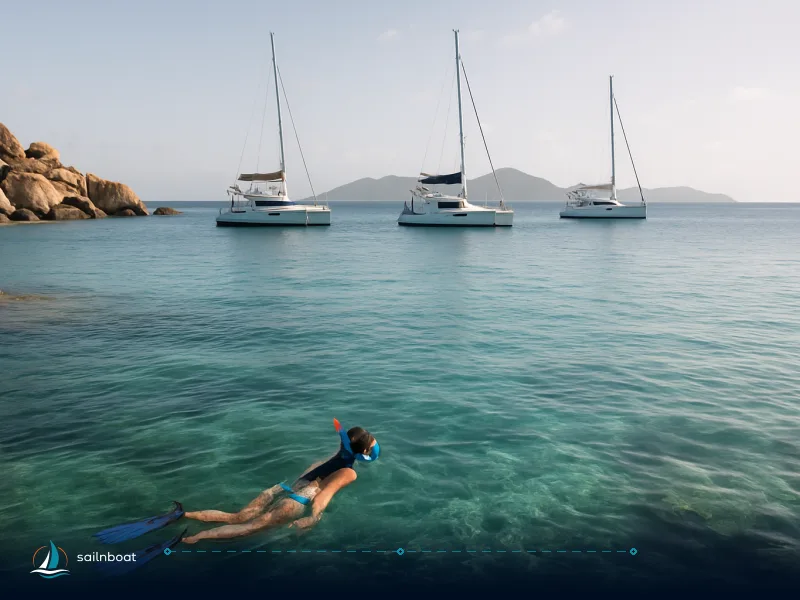
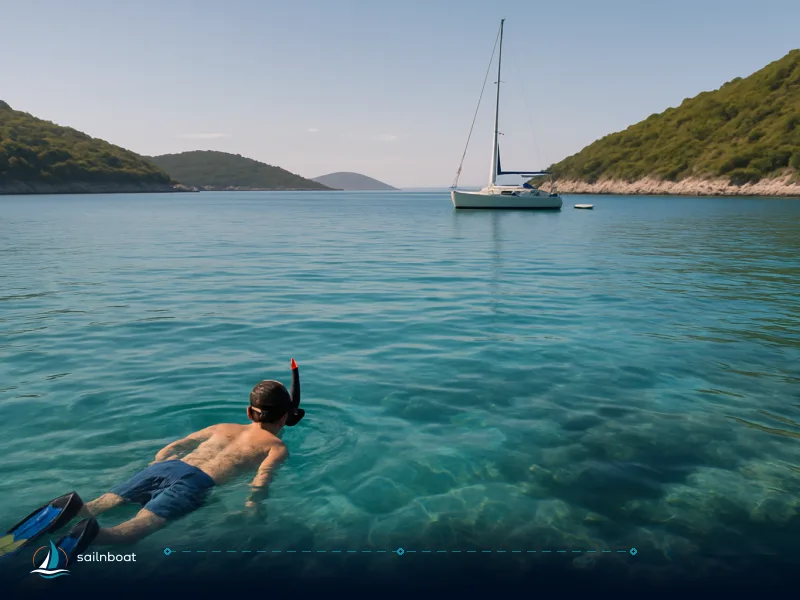
The Indians Anchorage: Essential Guide for Charter Skippers
Practical, step‑by‑step guidance for visiting The Indians off Norman Island: where to pick up a mooring, how much swing room to allow, which coral to avoid at night and the safest snorkel exits.

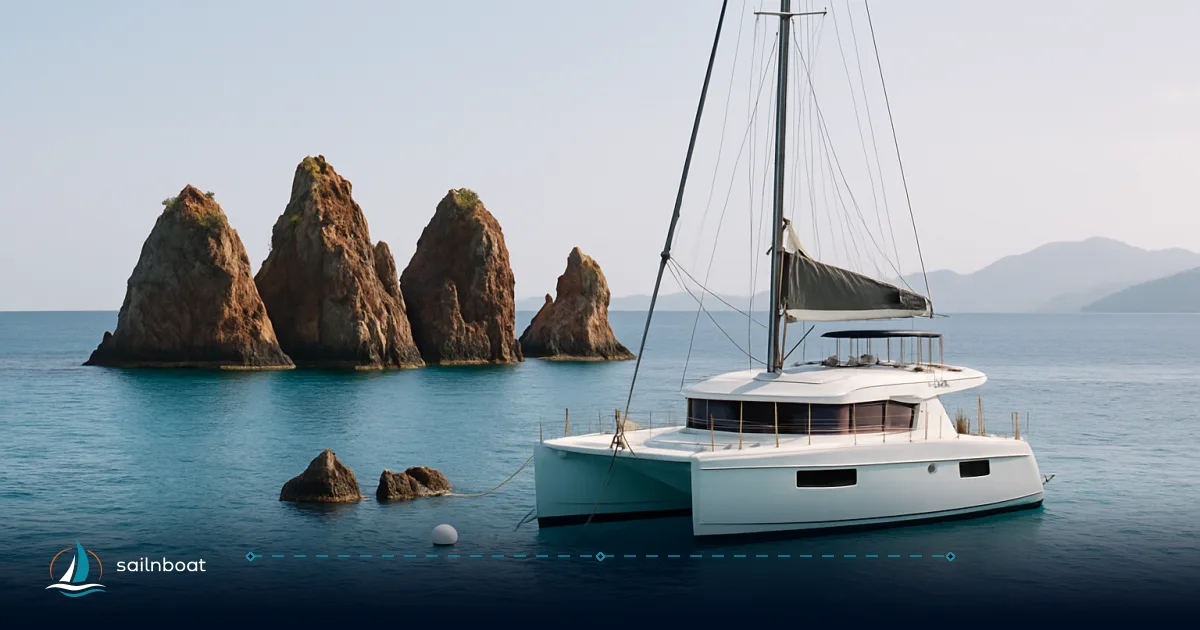
The Indians anchorage is not an overnight anchorage — it’s a National Parks Trust day‑use mooring field off Norman Island, so the practical decision is simple: pick up a park mooring on the sheltered (leeward) side early in the day, don’t attempt to anchor on the pinnacles, and plan to leave by dusk. This guide tells you exactly where to tie up, how to think about swing room (and how to calculate a typical figure for a 15 m yacht), which coral features cause most trouble at night, and the safest snorkel exits to explore the caves and reef without damaging the marine life.
Recommended Anchoring Spots at The Indians
Note first: “anchoring” at The Indians in the conventional sense (dropping your own anchor on the reef) is highly discouraged and, at designated NPT sites, not permitted — the National Parks Trust manages day‑use moorings specifically to prevent anchor and chain damage. Plan around using a mooring ball unless you have an explicit emergency.
Top Anchoring Locations
- Use a National Parks Trust day‑use mooring on the leeward side of the pinnacles (the side shielded from the trade wind). These balls sit where the reef slope gives way to cleaner sand or rubble and place you closest to the best snorkel terrain. Arrive early: day moorings at popular sites like The Indians and The Caves fill quickly in season.
- Depths around the pinnacles vary quickly. Published dive/site guides put the typical snorkel and dive band between roughly 3–15 m (10–50 ft): some shallow saddles and swim‑throughs may be a few metres deep, but most features are in the 3–15 m range. Plan snorkels as short, local circuits rather than long swims across deep water.
- If every NPT ball is occupied, move to a nearby alternative (The Caves or The Bight on Norman Island) and return later — do not drop anchor on the reef. The Bight is a logical overnight choice if you need to stop for the night; it has conventional mooring fields and more room for evening anchoring or mooring.
Practical approach steps:
- Approach slowly into wind/current on motor and reduce steerage to a minimum (idle power) so you can control drift and position.
- Identify the colour/numbering of the ball (NPT balls are managed and labelled; some fields use white/colour codes) and hook carefully with a boat hook. Check the pennant and shackles before transferring your line.
Anchoring Techniques
- For an emergency anchor in a sandy patch away from the pinnacles: set with adequate scope (see Swing Room section). Use a stern anchor only as a last resort and with a plan to haul it before moving the boat; stern anchors and long chains can snare reef and increase damage risk.
- If you are on a mooring ball, avoid stern‑to mooring unless the ball and pennant are rated for it; some balls have maximum vessel size ratings — a heavy catamaran on a small ball risks failure. Run a second line ashore (where permitted) or use a snubber to reduce shock loads.
Table — quick comparison of nearby options
| Location | Typical depth | Use | Notes |
|---|---|---|---|
| The Indians (pinnacles) | ~3–15 m | Day‑use NPT moorings only | Best snorkel topography; moorings fill early. |
| The Caves (Norman Is.) | ~4–15 m | NPT moorings; heavy day use | Famous swim‑throughs; pair with The Indians on same day. |
| The Bight (Norman Is.) | Variable, sheltered | Overnight moorings / anchorage options | Good option for evening/overnight if you cannot stay at The Indians. |
Swing Room Requirements at The Indians
The important decision: you will normally be on a mooring at The Indians and not swinging on an anchor, but you must still understand swing geometry for nearby anchorages or emergencies. Swing room is dominated by rode length (scope), depth, and boat length — not a magic constant.
Calculating Swing Room
- Scope guidance used by established authorities sits between 5:1 (day, calm) and 7:1 (overnight/moderate); use 10:1 only in heavy weather. Scope is the ratio of rode length to the vertical height from bow roller to seabed (so include bow freeboard + depth).
- Worked example (typical BVI shallow stop): for a 15 m (50 ft) yacht in about 4 m depth, a 5:1 scope would require about 20 m of rode; adding half the yacht's length gives an estimated swing radius in the 25–30 m range. Actual swing room needed varies by boat and conditions, so confirm with your operator or use conservative estimates.
- In short: a 15 m yacht commonly needs ~25–35 m of clear radius depending on chosen scope and water depth. If the calculated circle overlaps reefs, other boats, or moorings, do not attempt to anchor — choose another spot.
Preventing Anchor Dragging (and protecting coral)
- Check the wind/current forecast and set scope before settling. Re‑check your position with GPS and a bow/sstern reference at intervals (especially through dusk-to-night transitions).
- Use a snubber or bridle to soak shock loads if on chain or on a mooring pennant; for anchors, a bridle between bow cleats reduces yaw and rolling loads. On moorings, respect published maximum vessel sizes and inspect the pennant first.
Identifying Coral Hazards
Coral hazards in this area are not abstract: they are physical pinnacles, bommies and scattered live reef that rise quickly from deeper water. The damage from anchors and chain is permanent, which is why management enforces moorings.
Common Coral Hazards
- Shallow saddles and pinnacles — these appear as abrupt changes in depth; some saddles are shallow enough for swimmers to stand at low tide, others are only a few metres below the surface. Expect surprising shallows near the rock columns.
- Isolated bommies and coral heads — hard to see in choppy light; they snag anchors and propellers and can tear rudders or keels in a grounding.
- Anchor chain scour — even a well‑set anchor will drag chain across reef as the boat swings; repeated contact shreds living coral and flattens seagrass meadows. For that reason the NPT installs moorings where visitors congregate.
Nighttime Precautions
- Don’t plan to stay at The Indians overnight — National Parks day moorings are for daytime visits and the risk of night navigation near pinnacles is high. Use a sheltered overnight anchorage with conventional overnight moorings instead.
- If you find yourself stationary after dark in reef areas: show an anchor light, station a lookout, reduce scope if swinging into hazard is unavoidable, and if anyone enters the water, mark the descent line with a light or float to prevent propeller strikes. Night snorkeling/diving requires training, surface supervision and proper lights; it is not a casual activity for families.
Best Snorkel Exits from The Indians
The Indians are primarily a snorkel/diving site because the pinnacles and saddles create vertical structure and swim‑throughs. Here’s how to get the most from the site safely.
Accessing Caves and Reefs
- From a park mooring, the usual circuit is: leave the mooring to the leeward saddle between the pinnacles, swim the saddle (shallow and sheltered) and then follow the eastern face of the rock for swim‑throughs and ledges. A notable shallow saddle — described by divers as a ~2 m feature — offers the easiest, shortest swim to abundant fish life.
- For more exploration, use your dinghy to transit between The Indians and the Norman Island Caves (short run) so you can do two distinct snorkel circuits in one outing. The Caves are closer to Norman Island’s lee and provide sheltered swim‑throughs suitable for less confident snorkelers.
Practical snorkel exit advice:
- Always deploy a surface marker buoy (SMB) on return legs and carry a whistle/torch. Currents can set you away from your boat if you drift across a gully.
- Approach swim‑throughs from the leeward side where water is calmer; avoid entering if surge is present or visibility is poor.
- Use the dinghy to ferry inexperienced swimmers or small children between the mooring and the best shallow exits; this reduces long swims and keeps the main boat clear of people in the water.
Safety Tips for Snorkeling
- Buddy system always; flotation aids for weaker swimmers; reef‑safe sunscreen and no touching or standing on coral. Watch for nurse sharks and turtles that commonly rest in ledges — observe but give space.
- Keep propellers stopped when people are in the water; brief everyone on reboarding and carry at least one rescue float on deck.
Regulations and Guidelines for The Indians
- The Indians sit inside NPT‑managed marine park zones; use of National Parks day‑use moorings requires buying a park permit (priced per party) and day‑use balls are explicitly for daytime visits — overnight mooring and private anchoring on the reef are not allowed. Purchase the NPT permit in advance and keep the permit documentation aboard.
- The NPT and local authorities monitor and maintain moorings; users should respect mooring ball ratings and posted limits. Penalties or fines can apply for non‑compliance with park rules.
Operational checklist before you go
- Buy a BVI National Parks day‑use permit covering The Indians and The Caves.
- Brief your crew: everyone knows the plan for hooking the ball, dinghy runs, snorkel buddies and a turnaround time (arrive early; plan to depart well before dusk).
- Inspect the mooring pennant and clip on a snubber. Check that your dinghy fuel and masks are accessible.
- If the moorings are full, have Plan B ready (The Caves or The Bight) — do not attempt to anchor on reef.
If you treat The Indians as a daytime snorkel stop and respect the moorings and reef, the site rewards short visits with high value: complex rock topography, swim‑throughs and productive fish life a short dinghy ride from Norman Island’s other day attractions. The operational trade‑off is simple: arrive early, accept no overnight option at the pinnacles, and move to a conventional overnight mooring if you want to stop for the night.
Planning note from Sailnboat
- Build The Indians into a morning or late‑morning leg on your charter day when the sun is higher and visibility best; pair it with The Caves or a short stop in The Bight for lunch or evening mooring. That routing keeps your crew safe, reduces reef risk and avoids the last‑minute scramble for a crowded day mooring.
Frequently Asked Questions
The Indians is a National Parks Trust mooring field: use the NPT day‑use balls on the leeward (sheltered) side of the rock pinnacles; anchoring the reef and overnight stays are not permitted, so plan to move to The Bight or another overnight mooring for the evening.
Anchoring is not permitted at The Indians, so use moorings. If you must anchor in an emergency elsewhere, calculate swing room from your rode/scope — a 15 m yacht using a 5:1 scope in 4–5 m water commonly needs roughly 25–35 m radius; increase that in stronger conditions.
Look for shallow saddles, coral heads and pinnacles that rise quickly from depth; avoid any spot with visible bommies or broken reef, do not let chain or propeller contact the seabed, and do not anchor on reef bottoms because a single anchor can cause long‑term damage.
From a mooring, swim the leeward saddle between the pinnacles and then head along the east face toward the larger cave systems; use a dinghy to move between The Indians and Norman Island Caves for a longer circuit.
Yes — The Indians is inside an NPT marine park: use day‑use moorings with a National Parks permit, do not anchor on the reef, and follow posted park rules and visitor guidance.
Written by
Sailnboat Editorial
The Sailnboat editorial desk covers yacht and boat chartering worldwide — routes, bases, seasons, boat types, paperwork and the practical costs that decide a trip. We are a charter marketplace, not a boat owner or a local agency: what we sell is judgement and support, so our guides are written to help you make a decision, not to sell you a specific boat. Every guide is checked against live operator and marina data before it goes out.
Fact-checked against live operator and marina data, and published under our editorial standards. Last reviewed: .