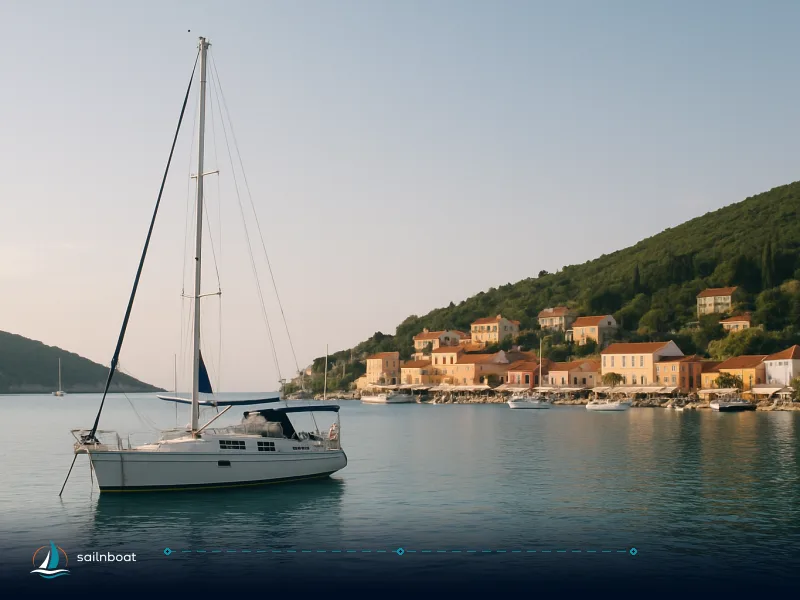
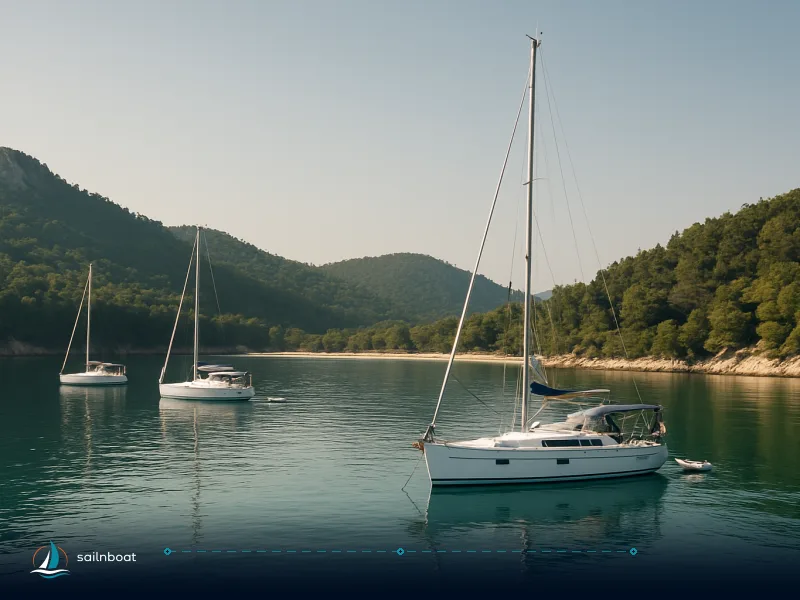
Vlychada, Santorini: Practical Overnight Anchoring & Marina Guide
Vlychada Santorini is the island’s working fishing shelter and the practical overnight alternative to the caldera: alongside berths, water/electric, Wi‑Fi and lift/launch services for modest-sized yachts.

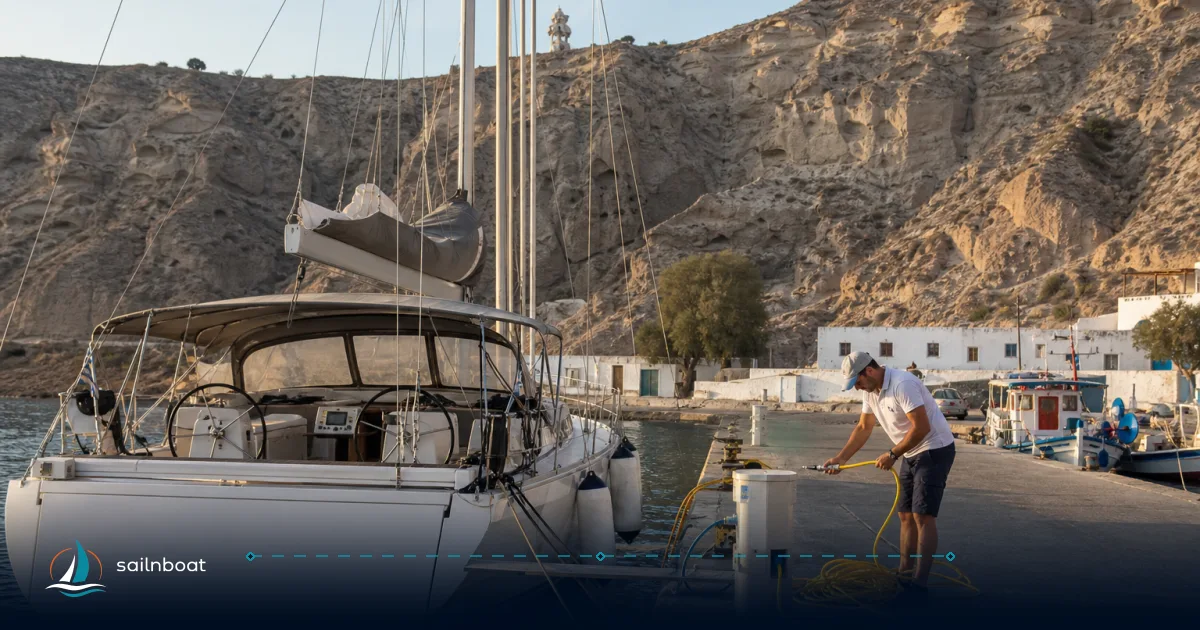
Vlychada Santorini is the island’s practical overnight alternative to anchoring inside the caldera: it offers alongside quay space, shore utilities (water, electricity, toilets, Wi‑Fi) and boat lifting/launching, and the Municipal Port Fund lists capacity for visiting vessels up to about 20 m and roughly 3.0 m draft.
Anchoring Options at Vlychada
Designated Anchorage Areas
- Official status: Vlychada is defined by the Municipal Port Fund of Thira as the island’s fishing shelter and the only well‑protected small‑craft harbour where you can safely leave a boat during a blow. The shelter includes small craft basins and a central mooring basin; beyond the quays there are sand pockets used for conventional anchoring.
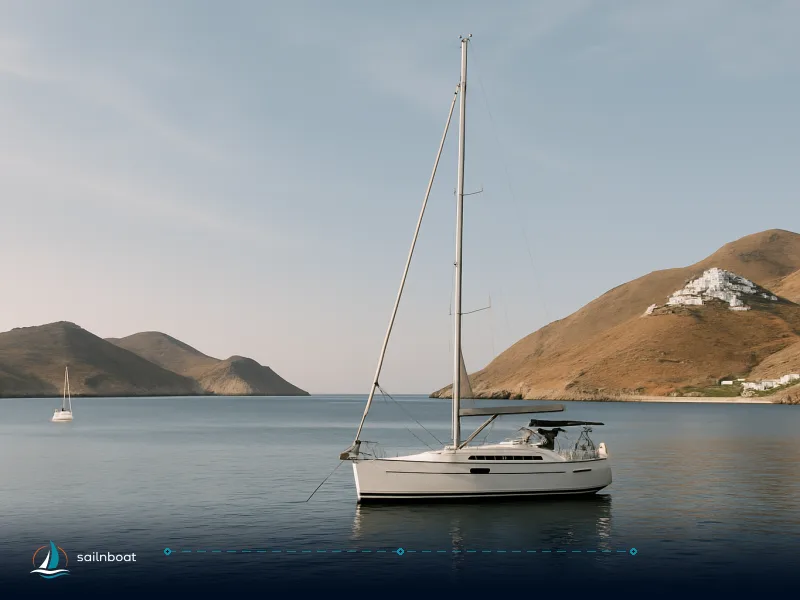
- Where boats actually anchor: visiting yachts either (a) take an alongside berth inside the basin if available, (b) pick up a stern‑to spot on the quay where allowed, or (c) anchor outside the quay in the eastern bays and sandy pockets clear of mooring buoys. The most commonly used anchor depths for independent anchoring are in the 3–6 m range over sand, where holding is normally good. (This reflects harbour descriptions and cruising reports.)
Anchoring Conditions
- Holding: sandy and sandy‑mud pockets give reliable holding; avoid obvious weed/Posidonia and rock patches. Use your depth sounder and visually check the seabed where possible.
- Shelter and exposure: Vlychada shelters vessels from the strong northerly meltemi that dominates mid‑June to mid‑September, making it a preferred overnight spot in northerly blows. It can, however, be more exposed to southerly swells than the caldera; in southerly gales surge and uncomfortable swell are possible.
- Approach cautions: charts and local reports note submerged remnants of old breakwaters and shallow areas at the entrance; come in slowly, keep a good lookout, and contact the harbourmaster on approach. Many skippers prefer to call the port on VHF or by phone before entering and to accept guidance for a stern‑to or alongside position.
Marina Facilities at Vlychada
Available Services
- Core services (Municipal Port Fund listing): alongside berths and quay; water supply; electricity; toilets; free wireless internet; 24‑hour operation. The harbour also supports commercial fishing and local boat traffic, so expect working‑port activity around the quay.
- Practical notes on services: water and shore power are reported as available at berths, but supply pressure and voltage quality may vary seasonally; some yachts report mildly saline tasting tap water. Wi‑Fi is offered but performance will depend on local load (many charter boats use the marina simultaneously in high season). Expect basic utilities rather than marina‑style concierge services.
Lift and Launch Services
- Lifting/launching is available year‑round according to the port authority. The Municipal Port Fund confirms there is provision for lifting and launching boats seven days a week, but I found no single public source confirming an exact travel‑lift tonnage. If you plan haul‑out, request the harbour office’s current lifting capacity and booking procedure ahead of arrival — operators will advise whether your vessel’s weight and dimensions are acceptable.
Depth and Length Restrictions
The Municipal Port Fund of Thira provides the most reliable numbers for Vlychada:
| Location | Typical depth (reported) | Notes |
|---|---|---|
| Basin A (northern/southern parts) | ~1.0 m (N) to ~3.0 m (S) | For small fishing boats and very small craft. |
| Basin B | ~1.5 m (N) to ~3.0 m (S) | Small craft zone. |
| Central mooring basin | ~4.0 m | Berthing for medium vessels. |
| Connector section | ~0.8 m — 4.5 m | Variable; some shallow patches. |
| Practical anchorages outside quay | commonly 3–6 m (sand pockets) | Used by visiting yachts; confirm with chart/sounder. |
- Vessel limits: the port authority states the shelter can accommodate boats up to about 20 m LOA and drafts up to roughly 3.0 m. That is the municipal guideline skippers should use when planning to berth alongside.
- How to use these figures: depths near the quays can change with dredging, seasonal sediment and maintenance; treat the municipal numbers as current guidance but check the harbourmaster on VHF/phone for up‑to‑date berth availability and draught advice before committing to enter.
Dinghy Access to Nearby Beaches
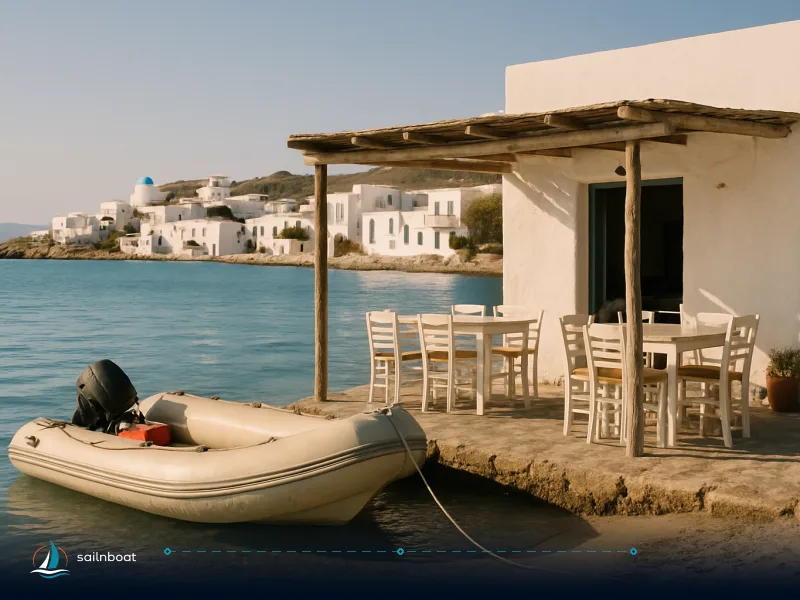
- Vlychada Beach: the quay sits adjacent to Vlychada’s black‑sand beach — you can land a dinghy ashore here (expect a short carry if the shore has pebbles). This is the most convenient tender access point for crew wanting the beach or local tavernas.
- Red Beach & Akrotiri: along the south coast from Vlychada, Red Beach and the Akrotiri archaeological site are a short coastal tender hop. Distances along the shore are typically in the single‑digit kilometres; expect short tender crossings rather than multi‑hour runs. Tender time depends on your track and speed, but plan 10–30 minutes for each leg in usual conditions — slower in a heavy swell. Bring fenders: some landing spots are rocky.
- Practical tender tips: secure the tender stern‑to in calmer waters or use a stern line and the engine off when landing on the sand; watch for boat traffic from day‑trip catamarans and maintain a proper look‑out when transiting to Red Beach, which can be busy with tourists.
Timing Considerations for Overnight Stays
Weather patterns that affect the choice
- Meltemi behaviour: the central Aegean’s northerly meltemi builds from mid‑June and typically peaks in July–August. It commonly freshens through late morning into the afternoon and may reach Force 5–7 (higher during strong spells). The caldera can be gusty and turbulent under a mature meltemi because of the cliffs; Vlychada on the south coast is often a safer overnight choice during northerlies.
- Southerly risk: outside the meltemi season, southerly winds or storms are possible in spring and autumn and can bring swell into the south coast; when a southerly gale is forecast, Vlychada’s exposure to swell becomes a planning factor.
Seasonal traffic and operations
- High season (July–August): expect heavy day‑boat and charter traffic; many charter catamarans gather and depart mid‑afternoon. Arrive earlier in the day to secure alongside berths or a preferred anchoring spot.
- Shoulder season (May–June, September): calmer winds are more likely and the harbour is far less crowded; this is the easiest time to use Vlychada for overnight stays.
- Operational timing: the harbour operates 24 hours, but many harbour offices are busiest daytime; if you plan to arrive late, call ahead to confirm berth procedures and any night‑time instructions.
Practical Checklist and Risks
- Before approaching: contact the Municipal Port Fund of Thira by phone or email (see contacts below) or hail harbour control on VHF for berth assignment and real‑time depth/entry advice. Expect working‑port movements.
- Anchoring gear: carry sufficient rode for a 3–6 m anchorage and set a stern line if anchoring near quays used by day trips; use chain in sandy pockets for reliable holding.
- Local rules: the caldera has defined mooring/anchoring zones and visitor buoys; port rules change — if the caldera is restricted or you’re told to relocate ashore, Vlychada is the recognised alternative.
- Safety: never assume depths near the entrance are unchanged — submerged old breakwaters and reef patches exist; navigate slowly on arrival and use your sounder.
Contact Information for Vlychada Marina
- Booking and harbour office (Municipal Port Fund of Thira): phone +30 22860 28362 (and extension 21876); fax +30 22860 25878; e‑mail: [email protected]. The municipal site provides a berth reservation form and live ship‑traffic feed; the harbour operates 24 hours.
- Practical approach advice: call before you enter if arriving after mid‑afternoon during high season; the harbourmaster will advise berth availability and preferred approach.
Quick comparison table: Anchor vs Marina at Vlychada
| Criteria | Anchor (outside quay) | Alongside/Quay (marina) |
|---|---|---|
| Typical depth | 3–6 m over sand | Variable; central basin ~4 m, shallow sections 0.8–3 m |
| Holding | Good in sand pockets | Secure alongside — no anchor needed |
| Services ashore | Dinghy to beach | Water, electricity, toilets, Wi‑Fi, lifting/launch |
| Max practical vessel | Depends on swing circle; restrict if crowded | Municipal limit ~20 m LOA, ~3.0 m draft |
| Best use | When quay full, quiet night, or prefer stern swinging | When you need shore utilities, servicing or secure long‑term berth |
Plan to choose the option that matches your vessel size, crew comfort and the forecast: when in doubt during a northerly meltemi, favour alongside berthing in Vlychada if space is available.
If you need help selecting a base or checking berth availability for your dates, tell us your boat LOA and draft and we’ll advise the best approach and the harbour contacts to call.
Frequently Asked Questions
Vlychada's sheltered fishing basin and adjacent eastern bay are the practical anchoring zones; skippers commonly anchor in sandy pockets 3–6 m deep east of the harbour, while alongside berths are available inside the basin.
The Municipal Port Fund lists water, electricity, toilets, free Wi‑Fi, and lifting/launching services; the harbour operates 24 hours and has quay space for visiting yachts.
The Municipal Port Fund states the shelter can accommodate boats up to about 20 m in length and up to roughly 3.0 m draft; depths in individual basins vary (see depth breakdown).
Dinghies can land at the shore adjacent to Vlychada Beach; Red Beach and the Akrotiri archaeological site are a short tender hop along the south coast (distances below).
Use Vlychada when the caldera is rough, subject to access restrictions, or crowded — and during strong northerly meltemi spells when the caldera’s lee conditions become gusty and less safe for night stays.
Written by
Sailnboat Editorial
The Sailnboat editorial desk covers yacht and boat chartering worldwide — routes, bases, seasons, boat types, paperwork and the practical costs that decide a trip. We are a charter marketplace, not a boat owner or a local agency: what we sell is judgement and support, so our guides are written to help you make a decision, not to sell you a specific boat. Every guide is checked against live operator and marina data before it goes out.
Fact-checked against live operator and marina data, and published under our editorial standards. Last reviewed: .