Yacht Chartering in the Azores: A Complete Guide
Everything an experienced skipper needs to plan an azores yacht charter: best season, which marinas to use, prevailing winds, island distances and practical permit and provisioning notes.

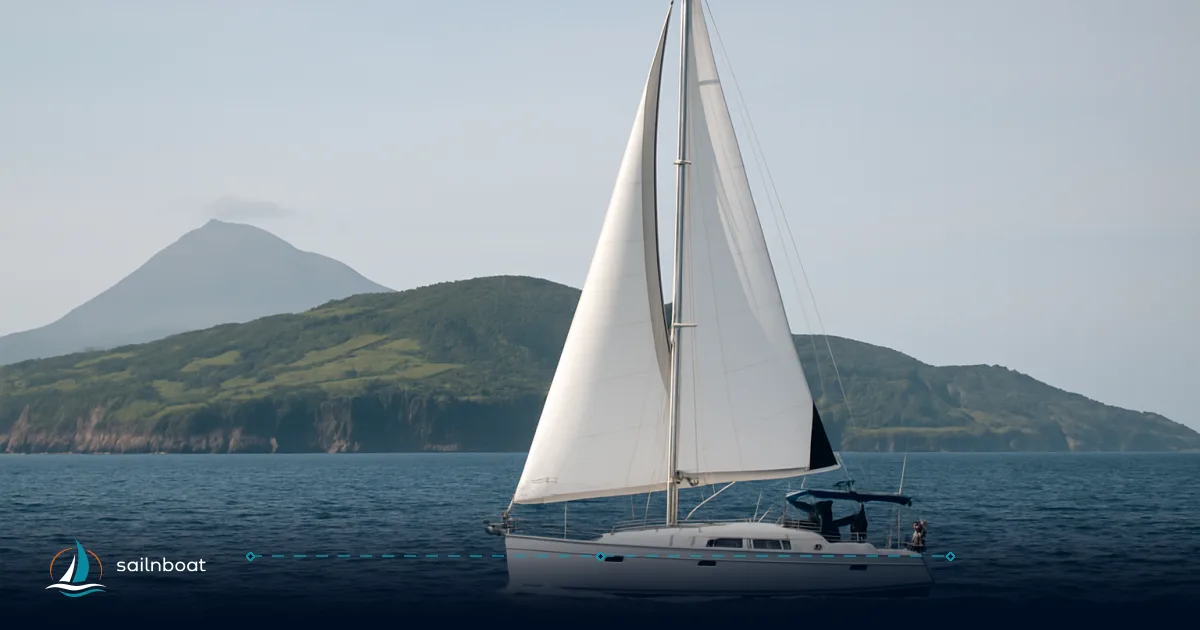
Plan an azores yacht charter from Ponta Delgada or Horta and you get two practical advantages: the shortest local island hops are in the central group and both harbours offer full-service marinas and port authorities that handle formalities. This guide puts the numbers, seasonal windows, marina facts and route options you need to choose a base, size your passages and understand licensing and costs before you book.
Optimal Sailing Seasons and Weather Patterns
Sailing the Azores is fundamentally about working with the Azores High and the trade-wind belt — the islands sit in a transition zone where tropical and polar air masses meet. That gives you a generally mild climate, but also variability; pick your season for the trade-off you want between wind, sea state and crowding.
Best Times to Visit
- Peak sailing window: late spring through early autumn. June–September is the most reliable period for calmer weather and the warmest sea temperatures; June and September often balance good seas with fewer visitors than high July–August weeks.
- Shoulder months: May and October give milder traffic and often acceptable conditions but expect more variable wind and more frequent frontal systems than in high summer. Plan a weather buffer day (or two) for longer island hops.
- Winter: passages are possible year-round, but short-lived Atlantic lows can bring high winds and heavy seas; winter is for experienced ocean sailors only.
Prevailing Weather Patterns
- Summer pattern: the Azores High pushes north and trades (E/NE component) settle over the islands; winds are often steady but can vary with local diurnal effects and sea breezes. Typical summer wind speeds are commonly in the low-to-mid teens (knots) offshore, with frequent lighter periods close to the high.
- Autumn/winter: frequent Atlantic depressions bring stronger westerly or NW winds and higher seas — expect larger swell and a need for passage planning around synoptic lows.
- Tides & currents: tidal range is modest (average ~1.2–1.5 m) and the Azores Current commonly flows south or southeast at under 0.5 knots inside the archipelago; currents can be locally stronger near narrow channels (e.g., Faial–Pico channel). Carry tide and local-current tables aboard.
Practical weather tip: use synoptic charts and local forecasts (Windguru, MeteoBlue, IPMA) and plan offshore legs for windows when a stable high-pressure area is predicted.
Recommended Departure Points and Marinas
Two bases dominate charter and cruising logistics: Ponta Delgada on São Miguel (east/central gateway) and Horta on Faial (central hub for crews and transatlantic visitors). Both are operated/managed by Portos dos Açores and provide the services charter skippers expect.
Key Marinas in the Azores
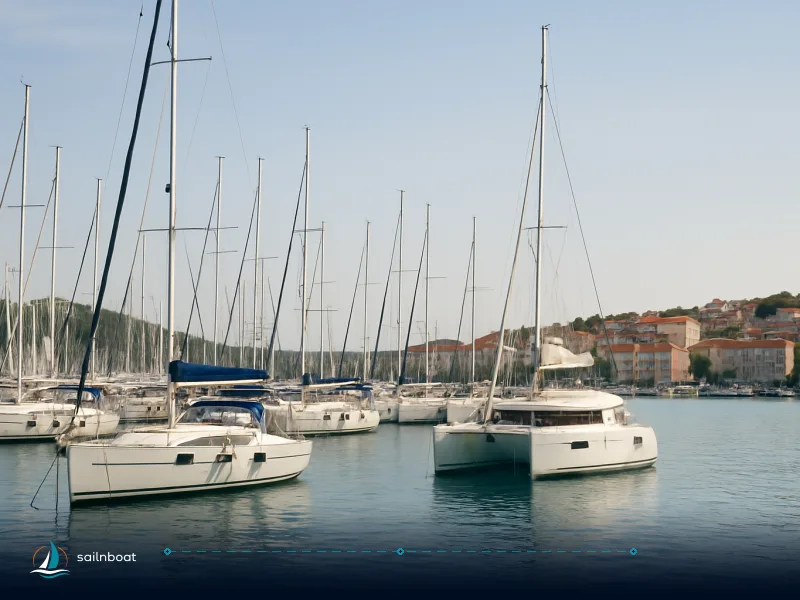
- Marina de Ponta Delgada (São Miguel): 640 berths, entry depth ~3.5 m, travel lift capacity ~35 t, VHF monitoring and fuel/water services; marina office hours vary by season. It sits 500 m from Ponta Delgada town centre and is the main commercial/port hub for São Miguel.
- Marina da Horta (Faial): approximately 240 berths, entry depth ~4.0 m and a 25 t travel lift; Horta is the Azores’ most internationally famous marina for visiting yachts and has all basic services and agent support for international formalities. The Faial–Pico passage is short (see distances section).
Other Notable Ports and Facilities
- Marina da Vila (Vila Franca do Campo, São Miguel) — municipal marina with ~120 permanent berths; useful as a southern São Miguel gateway for shorter hops to nearby anchorages.
- Marina de Vila do Porto (Santa Maria) — c.124 berths; Santa Maria is the southeastern-most island and useful as an eastern staging point.
- Marina Angra do Heroísmo (Terceira) — smaller marina servicing Terceira with visiting-boat facilities, provisioning and access to Angra’s services and UNESCO centre. Practicalities for customs/clearance are handled at Angra.
- Porto Pim (Faial) — beach and sheltered bay close to Horta; a daytime anchorage and beach access point on the south side of Horta harbour (note local anchoring rules may apply near cable zones).
Compare the main marinas at a glance:
| Marina | Island | Approx. permanent berths | Entry depth (m) | Travel lift | Practical note |
|---|---|---|---|---|---|
| Marina de Ponta Delgada | São Miguel | 640 | 3.5 m | 35 t | Full services; main port for international formalities. |
| Marina da Horta | Faial | 240 | 4.0 m | 25 t | Premier visiting-yacht marina; vibrant yacht wall tradition. |
| Marina da Vila (Vila Franca) | São Miguel | ~120 | (local harbor depth) | local hoist | Municipal, useful for southern São Miguel hops. |
| Marina de Vila do Porto | Santa Maria | ~124 | (local harbor depth) | onsite facilities | Gateway to Santa Maria; fuel and provisioning available. |
| Marina Angra do Heroísmo | Terceira | visiting berths (small) | variable (local) | travel-lift capacity reported locally | Good provisioning and port services; UNESCO town ashore. |
Berthing tariffs and precise berth availability are set and published by Portos dos Açores; tariffs vary by vessel class and season and are announced annually. See the Portos dos Açores tariff regulation for current rates and rules.
Key Destinations and Attractions Accessible by Yacht
The Azores rewards island-hopping with distinct landscapes on each landfall — plan multi-night stays at chosen islands rather than trying to "tick them all" in a single week.
Island Highlights
- São Miguel (Ponta Delgada): best provisioning, mechanical support, and paperwork; island attractions include Furnas hot springs and Terra Nostra gardens, Sete Cidades and Lagoa do Fogo — ideal for a base-to-day-trip model.
- Faial (Horta): the marina, the Peter Café Sport tradition and quick crossings to Pico; good base for whale-watching charters and supply runs.
- Pico: UNESCO Vineyard Culture and Mount Pico (2,351 m); the island pairs naturally with Faial for short crossings and shared provisioning. Whale- and dolphin-watching excursions commonly run from Pico.
- Terceira (Angra do Heroísmo): historic centre with UNESCO listing — a logical stop for provisioning, repairs and culture.
- Santa Maria, São Jorge, Graciosa, Flores & Corvo: each island offers different anchorages, hiking and local culture — Flores and Corvo are remote and best visited with extra range planning.
Activities and Sightseeing from the Water
- Whale- and dolphin-watching: the Azores are one of Europe’s most reliable whale-watching regions; operators run excursions from multiple islands — book through local operators for guided small-boat experiences.
- Diving and snorkeling: summer months provide the best visibility and warmer water; verify local dive-operator schedules and shore/boat options before planning.
- Shore hikes and crater visits: most islands have day-hikes accessible from main towns — plan transport and time ashore into your itinerary.
Practical Considerations for Yacht Charters
This section covers the operational details you need to make booking and passages frictionless: services, distances and licensing.
Marina Facilities and Services
- Fuel & water: most Portos dos Açores marinas provide diesel/gasoline and potable water; confirm fuel pump availability and opening hours before arrival. Ponta Delgada and Horta list filling stations and power/water at pontoons.
- Repairs & travel lifts: main marinas have travel-lift or haul-out facilities (Ponta Delgada ~35 t; Horta ~25 t; Angra reports hoist capacity locally); for major works allow time for scheduling with the marina yard.
- Communications & VHF: marinas publish VHF working channels (Ponta Delgada: VHF 16 & 62; Horta: 10–16); carry a working VHF and check local call procedures on approach.
- Berthing fees & tariffs: Portos dos Açores publishes a Marina Tariff Regulation and updates tariffs annually; fees depend on vessel class, length and duration (overnight, seasonal, dry storage). Check the current Regimento de Tarifas before final budgeting.
Operational checklist for check-in at a charter base:
- Bring ID/passports for all crew and the vessel’s documentation (flag papers, insurance, registration). Expect to present them at the marina/port authority.
- Plan to allocate time (often a morning) for final briefing, safety checks, fuel/water topping and provisioning. Ponta Delgada and Horta have offices and predictable opening hours by season.
Distances and Typical Routes
Use up-to-date charts for precise harbour-to-harbour distances; the archipelago is wide and legs vary from short to substantial ocean passages. The academic inter-island distance table (direct distances in kilometres) summarises the scale: convert kilometres to nautical miles by dividing by 1.852. Selected direct distances (rounded):
| Leg | Approx. km | Approx. nautical miles (NM) |
|---|---|---|
| São Miguel ↔ Terceira | 170 km | ~92 NM. |
| São Miguel ↔ Pico | 260 km | ~141 NM. |
| São Miguel ↔ Faial | 280 km | ~151 NM. |
| Faial (Horta) ↔ Pico (Madalena) — harbour crossing | ~9 km (local crossings) | ~5 NM (short ferry route / local run). |
| Pico ↔ São Jorge | ~20 km | ~11 NM (short central-group hop). |
- Practical note: the annex distances are island-centre direct distances; harbour-to-harbour legs (e.g., Horta–Madalena) can be much shorter than centroid numbers suggest — verify your planned route’s distance from your exact berth to exact destination.
Passage planning examples:
- Short central-group circuit (Faial–Pico–São Jorge–Graciosa or Terceira): good for 7–10 day cruises with multiple day-legs and time ashore at each island.
- São Miguel to Faial/Pico: plan as an overnight/long passage (~140–150 NM) with watch rotations, fuel planning and at least one weather-window day; do not attempt it without an offshore weather window and an experienced crew.
Cruising-speed assumptions for planning:
- Typical sailing monohull passage speed: 6–8 kt; catamarans commonly cruise ~8–10 kt; motor yachts considerably faster. Use your vessel’s realistic SOG, add a safety margin for adverse current, and plan fuel/consumption accordingly.
Licensing Requirements
- EU/Portuguese licences: recreational licences issued by EU member states are widely recognised in Portugal; holders of EU licences generally do not need a separate Portuguese certificate for recreational navigation. Regional administration (RIAC) provides equivalence procedures for third-country certificates and charges administrative fees for recognition.
- Third-country certificates: many charter companies insist on an internationally recognised competence document (ICC/RYA or equivalent) and a VHF operator certificate (SRC) for bareboat carriage; rules are not uniform — operators and port authorities have different operational checks. Expect to produce an ID, a skipper’s licence and a VHF certificate at check-in.
- Law vs charter practice: legal recognition by maritime authorities is distinct from what a charter company requires at handover. A licence that’s legally valid may still be supplemented by a charter company’s requirements (experience, sea-time, demonstration sail). State recognition and operator policy both matter — clarify both early in booking.
Paperwork & operator checklist:
- Passports for all crew, vessel registration, proof of insurance, skipper’s licence (EU or recognised equivalent), VHF operator certificate; have photocopies and PDFs ready. Check whether the charter operator wants translations or apostilles for non-EU documents (regional rules can require a Portuguese translation or a recognized equivalence).
Money, Deposits and APA (chartered/crewed)
- Crewed charters: expect an APA (Advance Provisioning Allowance) — a working float for fuel, food, port fees and extras — typically in the 20–35% range of the base charter fee on many yachts; the captain reconciles receipts and returns any unspent balance. APA levels vary by yacht type and itinerary.
- Bareboat security deposit: charter operators typically take a refundable security deposit (credit-card imprint or hold) sized to the vessel and operator risk profile — amounts vary significantly by operator and by boat size. Ask your broker/operator for the exact figure before booking.
- Port & marina fees: Portos dos Açores sets marina tariffs which are published (and updated) annually; multi-night stays, visitor fees and dry-storage charges are subject to these tariffs. Budget for nightly berthing, water/electric hook-up and waste-disposal fees.
Practical money tip: request a full “what’s included / not included” list from the charter company so you can budget APA, security deposit, fuel allowances and likely port fees for your planned itinerary.
Final operational advice and risk management
- Always file a passage plan and keep a weather window: longer crossings (≥50 NM) deserve conservative routing, an up-to-date GRIB/synoptic forecast and at least two alternates. Use IPMA, Windy/Windguru and official Admiralty charts.
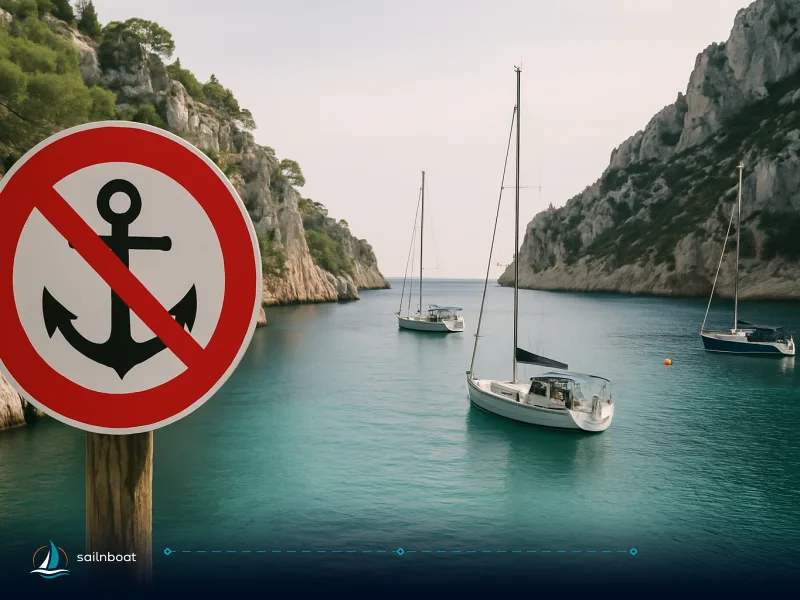
- Harbour approach & local restrictions: some anchorages or bays (e.g., Porto Pim) have local anchor restrictions for environmental or cable-protection reasons — check local notices to mariners before bunker/anchor.
- Formalities & port of entry: Ponta Delgada and Horta are the most common entry/clearance points with customs and port authority services; smaller marinas may require you make initial entry at the main port before using municipal marinas. Confirm formalities with your operator.
- Repairs and contingencies: for significant mechanical work allow extra days for haul-out and parts; Ponta Delgada has the broadest service network, Horta and Angra have competent local yards for routine repairs.
Plan your azores yacht charter around a realistic mix of weather windows, passage times and a clear understanding of what your charter operator requires on licences and deposits. The islands reward the patient skipper: pick fewer stops, allow shore days, and keep one extra day in hand where weather could change.
Frequently Asked Questions
The most reliable conditions are in summer: aim for June–September (June and September are often the sweet spot for fewer crowds and good wildlife).
Base your charter from Ponta Delgada (São Miguel) or Horta (Faial): both are full-service marinas serving charter fleets and international transits.
Winds are influenced by the Azores High and the Atlantic trade-wind belt — summer typically has E/NE trades (moderate, often ~10 knots) and occasional calm spells; autumn/winter bring stronger, more changeable systems.
Island-to-island distances vary: short central-group hops (Faial–Pico) can be under 10 nm; São Miguel to Faial is a long passage (~150 nm); consult up-to-date charts and plan overnight passages accordingly.
Portuguese (DGRM) and many local charter companies accept EU recreational licences; third-country certificates are not universally automatic but can be recognised through regional procedures—confirm with the charter company and the regional port authority.
Written by
Sailnboat Editorial
The Sailnboat editorial desk covers yacht and boat chartering worldwide — routes, bases, seasons, boat types, paperwork and the practical costs that decide a trip. We are a charter marketplace, not a boat owner or a local agency: what we sell is judgement and support, so our guides are written to help you make a decision, not to sell you a specific boat. Every guide is checked against live operator and marina data before it goes out.
Fact-checked against live operator and marina data, and published under our editorial standards. Last reviewed: .