Yacht Chartering in Turkey: A Complete Guide
Practical, decision-ready advice for chartering a yacht in Turkey: when to go, which bases to choose, route options from Gökova to the Lycian Coast, yacht types and license rules.

Yacht Chartering in Turkey: A Complete Guide
Picking your Turkish charter base and timing is the real decision: it locks in your route, your marina costs, and what kind of weather and crowds your crew will face. Turkey is workable from late April into October, with June through September as the primary charter window. July and August bring the strongest Meltemi winds—often 15–30+ knots by afternoon—and the highest marina rates. If you want sheltered anchorages, lower prices, and quieter evenings, late May, June, or September usually work better.
Quick-Reference: Key Costs & Requirements
| Item | Typical Range / Notes |
|---|---|
| Marina Fees (12m/15m, high season) | €70–140/€110–200 most bases; Yalıkavak, Bodrum: €200–350 (12m), €300–450+ (15m) |
| VAT on Charter | 18% |
| Refundable Deposit | €2,000–4,000 (bareboat), released 1–7 days after check-out |
| Skipper Fee | €120–200/day (if required, plus provisioning) |
| Provisioning | €250–400/week (groceries for 6–8), alcohol extra |
| Fuel (12–13m sailboat) | €280–420/week (approx. 20–30L/day @ €2/L) |
| Airport Transfer | €40–120/car (Dalaman, Milas-Bodrum) |
| Bareboat Licence | ICC, RYA Day Skipper, IYT Bareboat, or national equivalent + VHF/SRC (see bareboat licence Turkey) |
| Insurance | Third-party liability and hull damage included; optional damage waiver and personal cover available |
| Cross-Border Fees | €100–300 (agency, customs, port) for Turkey–Greece return trip |
Optimal Sailing Seasons in Turkey
The Turkish coast is workable from late April through October, sometimes into early November if the weather holds. The month you pick will shape wind, prices, and how crowded the anchorages are.
- Season window: April/May–October is the practical range for charters. Water is swimmable from mid-May.
- Peak (July–August): Strong Meltemi winds, marinas fill early, highest prices. You’ll need to plan berths and anchorages in advance.
- Shoulder (May–June, September–October): Lighter winds, easier mooring, more space. Many experienced skippers prefer late May or September.
- Trade-off: Less experienced crews and families usually find May/June or September more forgiving, but nightlife and shore services are fullest mid-summer.
Key Departure Bases for Yacht Charters
Your base sets your transfer logistics, route options, and prevailing wind exposure.
| Base | Marina Options | Airport (transfer time) | Route Highlights | Typical Marina Fees (12m/15m, high season) |
|---|---|---|---|---|
| Bodrum | Milta, Yalıkavak, Turgutreis (D‑Marin) | Milas-Bodrum (35–60 min) | Gulf of Gökova, Datça, Kos | €90–140/€110–200 most; Yalıkavak: €200–350 (12m), €300–450+ (15m) |
| Göcek | D‑Marin, Club Marina, Marinturk, Skopea, Port Göcek | Dalaman (30–45 min) | Göcek Bays, Fethiye, short passages | €70–140/€110–200 |
| Fethiye | Ece Marina | Dalaman (50–70 min) | Lycian Coast, Butterfly Valley | €60–110/€90–140 |
| Marmaris | Netsel, Albatros | Dalaman (90–120 min) | Bozburun, Datça, one-way options | €80–130/€110–170 |
What the base checks at handover:
- Safety gear (lifejackets, flares, fire extinguishers)
- Engine hours, bilge, anchor/chain, windlass
- Dinghy, outboard, navigation equipment
- Galley and inventory check
- Fuel and water tanks (usually full to full)
- Deposit pre-authorisation or cash
- Technical briefing (45–90 minutes typical; longer for larger yachts). Always confirm your operator’s process.
Popular Sailing Routes Along Turkey's Coast
Gulf of Gökova (Bodrum / Gökova axis)
- Route: Bodrum → Orak Island → Yedi Adalar → Değirmen Bükü → Karacasöğüt → Sedir Island → return
- Legs: 10–20 NM/day, 3–4 hours underway
- Anchoring depths: 5–12 meters; mostly mud/sand, check for rocks
- Highlights: Orak Island (10m sand), Sedir Island (5–8m, busy), English Harbour (7–10m, sheltered)
Lycian Coast (Fethiye–Göcek)
- Route: Göcek → Tomb Bay → Sarsala → Ekincik (Dalyan) → Cleopatra Bay → return
- Legs: Short, rarely over 15 NM
- Anchoring depths: 6–14 meters, mud/sand, some deep close-in
- Highlights: Rock tombs, ancient ruins, sheltered swimming bays
Marmaris, Bozburun and Datça
- Route: Marmaris → Orhaniye → Selimiye → Bozburun → Datça → return
- Legs: 10–25 NM/day, longer if stretching to Knidos or Symi
- Anchoring depths: Orhaniye/Selimiye 6–12m, Bozburun 8–15m (weed patches)
- Highlights: Sheltered gulfs, quiet villages, strong local cuisine
Types of Yachts Available for Charter
| Type | Operation | Best for | Cruise Speed | Notes on Turkey Availability |
|---|---|---|---|---|
| Gulet (wooden) | Crewed only | Groups, all-inclusive | 6–10 knots | Built locally, many options |
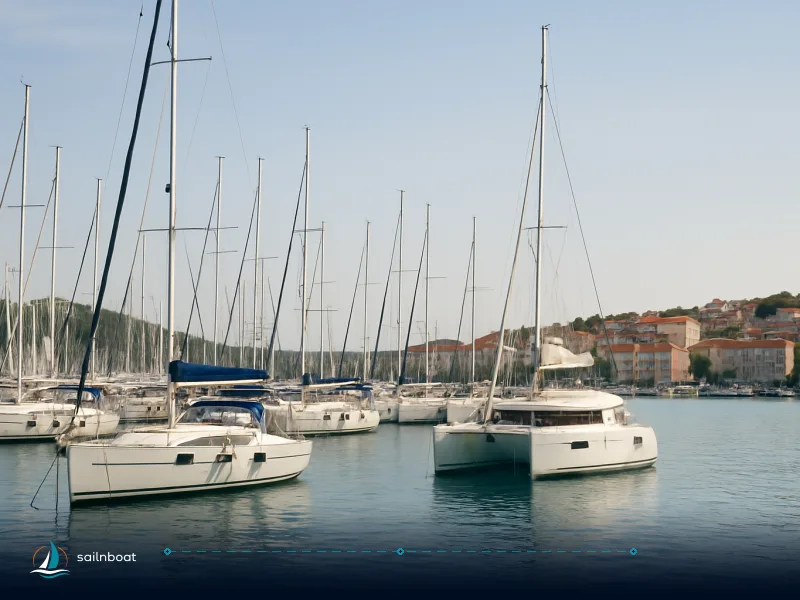
| Catamaran (modern) | Bareboat/skippered | Families, space | 8–10 knots | Popular in Göcek/Fethiye, shallow draft |
| Monohull sailing | Bareboat/skippered | Sailing feel, value | 6–8 knots | Available at all major bases |
| Motor yacht | Crewed/skippered | Speed, luxury | 12–25+ knots | Higher APA/fuel, premium segment |
Trade-offs:
- Gulets: Social, all-in, but slow and only crewed.
- Catamarans: Stable, roomy, higher marina fees (charged by beam), can be tricky in crosswinds.
- Monohulls: Classic sailing, lower cost, more sensitive to swell.
- Motor yachts: Fast, luxurious, but fuel/APA can double the weekly cost.
Licensing Requirements for Bareboat Charters
Charter requirements in Turkey blend national law and operator policy.
- What’s usually required: Most bases want a recognised certificate (ICC, RYA Day Skipper, IYT Bareboat, or national equivalent) and, for VHF-equipped yachts, a VHF/SRC certificate. Originals are expected. Bring a sailing CV showing experience with similar vessel size.
- ICC: Widely accepted but not a legal “universal passport.” Some operators accept RYA/ASA/IYT; others may ask for a Turkish or additional local certificate.
- Checklist: Originals of competence/VHF certificates, passport, sailing CV, insurance. Documents are usually scanned or photographed at check-in.
- If you fall short: Most operators can provide a local skipper (€120–200/day, plus provisioning/accommodation), but this must be arranged in advance.
See bareboat licence Turkey for more detail.
Insurance: What’s Included and What to Consider
Most Turkish charters include basic third-party liability insurance and hull damage cover, but limits and excesses vary.
- Third-Party Liability: Covers damage to other boats or property. Minimum coverage is standard, but check the policy limit (often €2–5 million).
- Hull Damage: Covers damage to the charter yacht itself. You are liable up to the deposit amount unless you buy an additional waiver.
- Damage Waiver: Many operators offer a non-refundable damage waiver (sometimes €150–350/week) that reduces or replaces the deposit. Always check what’s covered and the exclusions.
- Personal Accident/Medical: Not always included. You are responsible for your own travel and medical insurance. Crew accident insurance is sometimes available as an add-on.
- The trade-off: Lower deposit means higher waiver cost; higher deposit means more risk if anything goes wrong. Missing required qualifications can affect how an insurance claim is assessed and shift liability.
- What’s not covered: Gross negligence, sailing outside permitted zones, unapproved crew substitutions, and deliberate rule violations are typically excluded. Always read the policy and clarify with your operator.
Planning Your Yacht Charter in Turkey — Practical Operations & Costs
APA, VAT and Local Taxes
- Advance Provisioning Allowance (APA): On crewed gulets/motor yachts, the APA covers fuel, food, moorings, port fees, and extras. Typically 20–40% of base charter fee (gulets 20–25%, motor yachts 30–40%). Unused APA is refunded after the charter.
- VAT: The standard rate is 18%. Some operators quote prices VAT-inclusive, others add it on top. Confirm how your quote is structured.
Marina and Restaurant Mooring Fees
- Marina berths: For a 12m yacht in most bases, expect €70–140/night in high season. Premium marinas (Yalıkavak, Bodrum) are substantially higher—€200–350/night for 12m, €300–450+ for 15m. Shoulder season is typically 20–40% less.
- Restaurant quays: Many bays offer free or low-fee mooring if you dine at the restaurant (expect to spend €20–40 per person). Depth at the quay is often 3–5m; use a stern line to shore.
- Anchoring: Most anchorages are free, with depths of 6–14 meters. Holding is usually mud or sand; some bays (Sarsala, Orhaniye) offer very secure mud, but always check local charts.
Deposit Amounts and Refund Methods
- Deposit: Bareboat charters typically require a refundable deposit of €2,000–4,000 (for a 12–15m yacht), held by card pre-authorization or cash. Amount scales with yacht size and value.
- Refund: Deposits are released after technical inspection at check-out, typically within 1–7 days if no damage is found.
Provisioning Logistics: Where, How and What It Costs
- Supermarkets: All major bases (Bodrum, Göcek, Fethiye, Marmaris) have large supermarkets (Migros, Carrefour, Şok, local markets) within 5–20 minutes’ walk or a short taxi ride from the marina.
- Delivery services: Most marinas work with provisioning services that deliver to your yacht for a 10–15% service fee.
- Typical cost: For 6–8 crew, budget €250–400 for basic groceries, water and snacks (excluding alcohol/dining ashore). Add €100–200 for wine/beer/spirits.
- Pre-stocking: Many operators offer online pre-order forms. Always check expiry dates and quantities on delivery.
- Freshwater: Marinas and many restaurant quays offer water fill-ups (sometimes for a small fee). Plan water use if anchoring out all week; gulets often have larger tanks.
Waste Disposal and Pump-Out Locations
- Waste management: Marinas provide bins for garbage and recycling. Pump-out stations for blackwater are available at most large marinas (Bodrum, Göcek, Marmaris, Fethiye) and some restaurant quays. Fines for illegal discharge are enforced, especially in busy areas.
- Holding tanks: Charter yachts are typically equipped with holding tanks, but confirm with your operator—older or smaller vessels may vary. Plan to use pump-outs every 2–3 days if you’re in sheltered bays, or as needed.
Check-In/Check-Out and Logistics
- Check-in: Most bases operate 12:00–18:00. Early arrivals can usually store bags and provision while waiting.
- Check-out: Return to base by evening (often 17:00) the day before disembarkation. Final check-out and deposit release are processed the next morning.
- Airport transfers: Dalaman serves Göcek, Fethiye, Marmaris; Milas-Bodrum serves Bodrum. Book transfers (€40–120 per car) in advance.
Weather Windows and the Meltemi
- Meltemi: In July–August, expect 20–30+ knots by afternoon in open water. Sail in the morning, anchor or moor by early afternoon.
- Forecasts: Use Windy, Poseidon, or the Turkish State Meteorological Service for updates. Adjust routes for shelter if needed.
Emergency Contacts, VHF Channels, and Local Rules
- Coast Guard: Turkish Coast Guard emergency: 158 (landline), VHF Channel 16.
- Marina VHF: Most marinas monitor VHF 73 or 72; confirm on arrival.
- Medical: Major marinas can arrange medical assistance. Carry crew health info and travel insurance policy numbers.
- Fishing: Recreational line fishing is allowed, but spearfishing, shellfish collection, and netting are regulated or restricted. Ask before fishing in protected areas.
- Drones: Drone use is regulated. Inquire locally, especially near archaeological sites or military zones.
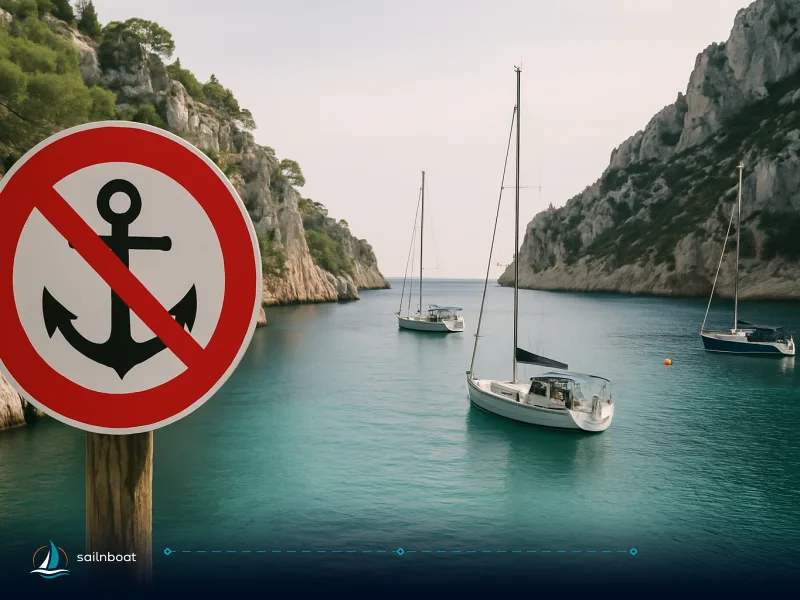
- Protected areas: Some bays and islands are environmentally protected—anchoring, fishing, or swimming may be restricted. Always check signage or ask marina staff.
Local Customs and Language
- Language: Turkish is the main language, but marina staff and many restaurant owners speak English. Basic Turkish greetings are appreciated.
- Customs: Shoes off on board is standard. Tipping (5–10%) is customary at restaurants and for marina staff.
Sample Cost Breakdown for a 7-Day Charter (12–13m Monohull, High Season)
| Item | Typical Cost (EUR) |
|---|---|
| Bareboat base rate | €2,800–4,200 |
| VAT (18%) | €504–756 |
| Refundable deposit | €2,500–3,000 |
| Marina fees (2 nights) | €180–280 |
| Restaurant mooring (2 nights, with dinner) | €160–250 |
| Provisioning (groceries) | €300–400 |
| Fuel (20–30L/day @ €2/L) | €280–420 |
| Airport transfer (return, up to 6 pax) | €80–160 |
| Optional skipper | €1,050–1,400 |
| Total (excluding deposit/skipper) | €4,300–5,800+ |
| Add APA (20–40%) if booking a crewed gulet or motor yacht. |
Cross-Border Formalities: Turkey–Greece
Sailing to Greek islands (Kos, Rhodes, Symi) is possible but requires clearing out of Turkey and into Greece, and vice versa.
- Process: Complete exit formalities with Turkish customs/harbourmaster, then enter Greece at a designated port. Reverse on return.
- Documents: Passports for all on board, yacht registration, insurance, crew list, transit log.
- Fees: Clearance costs vary; budget €100–300 for agency handling, customs, and port fees for a return trip. Confirm with your operator, as fees and process can change.
- Timing: Allow several hours for paperwork each way. Some operators require advance notice—notify at booking.
- Schengen: Greece is Schengen. Ensure all crew meet entry requirements.
Final Checklist Before You Book
- Decide on timing—balance wind, crowds, and price.
- Choose your base for the route you want (Bodrum = range; Göcek = sheltered; Fethiye = Lycian; Marmaris = infrastructure).
- Confirm licensing (ICC/RYA/IYT, VHF certificate) and bring originals.
- Clarify VAT, APA, deposit, refund method, and what’s included in your quote.
- Ask about marina fees, provisioning options, and check-in/check-out timing.
- Pre-book airport transfers and allow a buffer for delays.
- Plan provisioning—decide if you’ll shop yourself, pre-order, or use delivery service.
- If planning cross-border, notify your operator early and confirm formalities and fees.
- Review insurance options: liability, damage waiver, and personal accident cover.
The base rate is only the starting point—marina bills, APA, provisioning, and transfers can shift the total by €1,000 or more. For a tailored shortlist of yachts and bases with transparent budgets, Sailnboat can walk you through the options.
Frequently Asked Questions
The practical season runs from late April or May through October; the connoisseur months are May, June and September for warm water, lighter winds and thinner crowds, while July–August is the busiest window when the Meltemi is strongest.
Choose Bodrum for range and nightlife, Göcek for sheltered bays and multiple marinas, Fethiye for access to the Lycian Coast, and Marmaris for strong infrastructure and flexible itineraries.
Classic options are the Gulf of Gökova (Bodrum area), the Bodrum–Datça–Knidos corridor, and the Lycian Coast (Fethiye–Göcek), plus short sheltered hops around Marmaris and Bozburun.
You’ll find four common choices: crewed gulets (traditional wooden boats), catamarans (stable, roomy), monohull sailing yachts (bareboat or skippered) and motor yachts (faster, luxury).
Charter operators and port authorities commonly ask for a recognised certificate (ICC, RYA, IYT or national equivalent) plus VHF competence; exact acceptance and paperwork vary by operator and base.
Written by
Sailnboat Editorial
The Sailnboat editorial desk covers yacht and boat chartering worldwide — routes, bases, seasons, boat types, paperwork and the practical costs that decide a trip. We are a charter marketplace, not a boat owner or a local agency: what we sell is judgement and support, so our guides are written to help you make a decision, not to sell you a specific boat. Every guide is checked against live operator and marina data before it goes out.
Fact-checked against live operator and marina data, and published under our editorial standards. Last reviewed: .