A Week in Norman Island's Bight: Caves, The Indians, and Mooring
A practical seven‑day bareboat log focused on The Bight at Norman Island: how the mooring field behaves, where to snorkel The Caves and The Indians, and what to do when moorings are full.

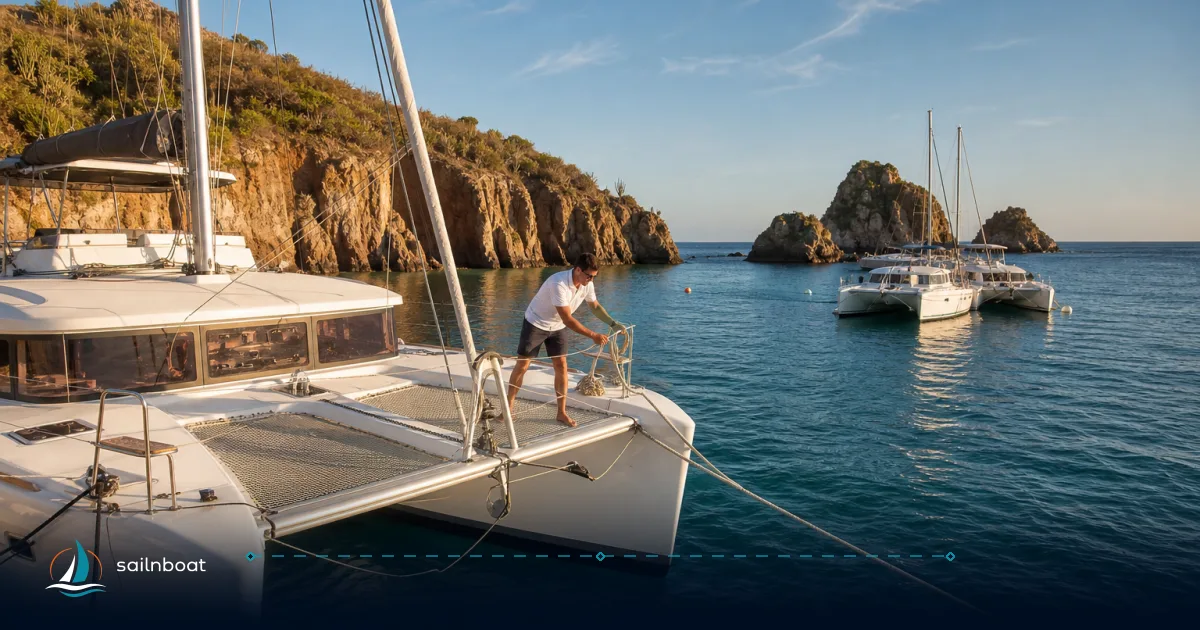
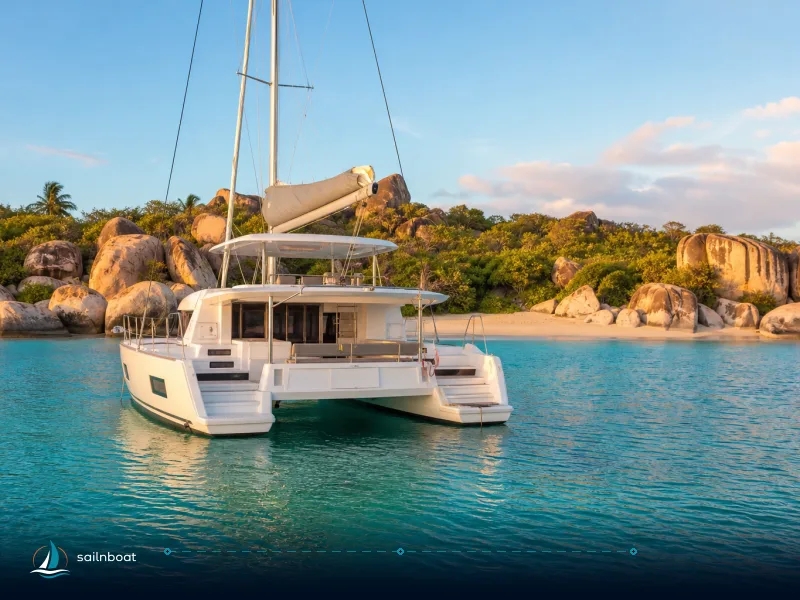
Norman Island BVI sits near the middle of the classic Tortola loop — and The Bight behaves like a very popular port of call: mooring balls grab fast, day boats arrive mid‑morning, and the best snorkel windows are deliberately early. If you want a National Parks Trust mooring for an overnight in The Bight, plan to be there well before mid‑morning on busy days and treat the field as first‑come first‑served; the island’s caves and the Indians are best tackled at first light with your mask and a plan for when the field is full.
Mooring Field Dynamics at The Bight
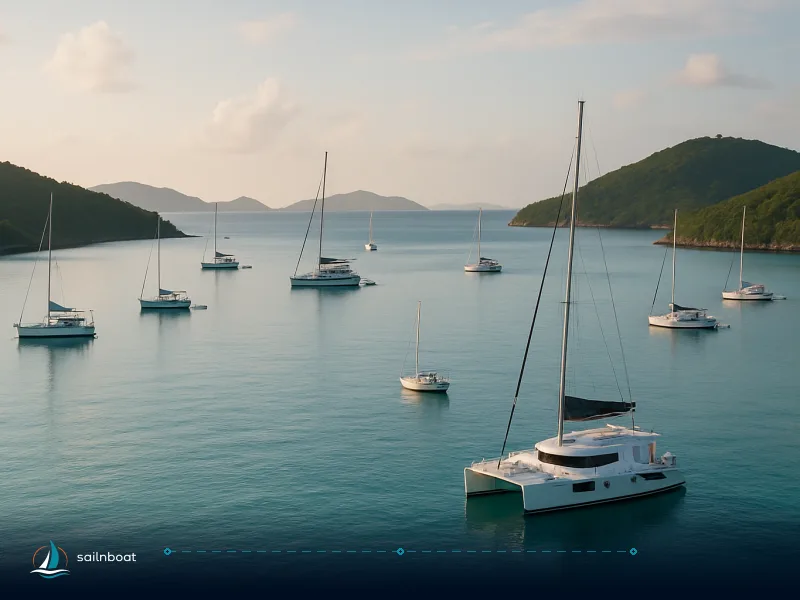
Arriving early matters. On busy charter weeks The Bight fills with day‑boats and charter yachts; many operators and recent guides report a very large mooring field (estimates in public guides range from roughly 70–100+ balls) and the supply is effectively first‑come. Plan your arrival to beat the mid‑morning day‑boat rush if you want a choice of balls.
Mooring Field Capacity and Regulations
- Capacity: public sources and cruising guides list The Bight as having dozens to more than a hundred moorings — different counts appear in different updates, so treat any single number as approximate and use the range 70–100+ to judge how crowded it can be in high season.
- Who runs the balls: many moorings inside The Bight are National Parks Trust moorings (white balls) or privately maintained first‑come balls; the Trust maintains an official list of approved mooring sites.
- Fees & permits: the National Parks Trust requires a mooring permit or fee for use of trust buoys; in practice fees are usually collected by a mooring attendant in a dinghy shortly after you pick up a ball (cash is commonly requested, though some attendants accept cards). Typical reported night fees sit in a band that many operators describe as modest (commonly quoted in guides as roughly US$25–40 per night, with local variation by season). Expect separate day‑trip rates from commercial tour operators.
- Etiquette and rules: approach slowly with engine in neutral reverse when taking a ball, keep the boat clear of the mooring anchor/chain, limit your stern-to-boat activity that could foul the ball, and accept that many balls are strictly first‑come — do not rely on reservations unless the operator or a specific BoatyBall provisioning shows up (The Bight is not listed as a BoatyBall reservable field in some recent registries).
Quick comparison: mooring vs anchoring in The Bight
| Option | Typical availability | Cost/permit | Pro | Con |
|---|---|---|---|---|
| National Parks Trust mooring ball | First‑come, high demand (70–100+ balls reported) | Night fee collected locally; permit applies | Easy, protects seabed, quick dinghy to shore | May be full mid‑morning; day‑boat congestion |
| Anchor (sand) | Widely possible in suitable spots | No Trust fee but you must follow park rules | More control of position; possible after balls full | Requires good scope, careful holding check, more work |
| Private/limited mooring (Kelly’s Cove, Privateer) | Few balls — quieter pockets | Local attendant or private owner fee | Quieter, protected | Very limited supply; arrive early |
(Values and counts are from recent cruising guides — use the range to plan rather than a single fixed number).
Snorkeling Excursions to The Caves
The Caves are the short swim/dinghy hop from the main mooring field and why many charterers plan a morning around Norman Island.
Best Times for Snorkeling
- Go early: arriving before 09:00–10:00 gives you the dual advantage of fewer boats and the best light through the cave mouths for photographs; day‑boats boost activity from mid‑morning onward. Plan The Caves as a first stop after leaving the base or immediately after breakfast.
- Conditions: visibility is very site‑dependent — in settled trade‑wind weather you commonly see 6–20 m (20–65 ft) at Norman Island sites; winds above ~15–20 knots or recent heavy rain will cut that considerably. The cave light effects are strongest when the sun is lower in the sky but clear — early morning and late afternoon each have trade‑offs (crowds vs. light).
Marine Life at The Caves
- What you’ll see: the caves and adjacent reef attract reef fish (sergeant majors, snapper species, parrotfish), sponges and gorgonians, and frequent turtle sightings in the grass/shelf areas nearby; occasional rays and small nurse sharks are reported by divers. The caves themselves are shallow in parts (a few feet inside) but drop away nearby — stick to the lit areas unless you’re an experienced diver.
- Practical tips: tie your dinghy to a designated ball or to the marked dinghy dock where provided, carry a surface marker buoy if you plan to drift between cave mouths, and avoid entering narrow, dark passages if you or a guest are not comfortable in confined water.
Exploring The Indians
The Indians are a swift afternoon or morning run from The Bight and pair cleanly with a visit to the caves.
Snorkeling Conditions
- Depths: the pinnacles and walls around The Indians commonly range from roughly 3–15 m (10–50 ft); the top of the pinnacles can be snorkel‑friendly while the walls drop into deeper water for divers. Visibility in settled conditions is often in the higher end of the local range.
- Tide and swell: The Indians are exposed to swell and wind chop from the open Sir Francis Drake Channel; calm mornings give the best surface clarity. If the forecast shows northerly or northeasterly winds above 15–20 knots, expect reduced surface conditions and consider moving the stop to a more sheltered slot.
Unique Features
- Structure: the four pinnacles create swim‑throughs and arches that diversify the snorkel experience — good subject matter for underwater photography because natural light reaches much of the shallow structure.
- Crowds: compared with The Caves, The Indians can feel less crowded if you time the visit early or late, though both sites are popular on shared charters and tour runs.
Challenges of Full Mooring Fields
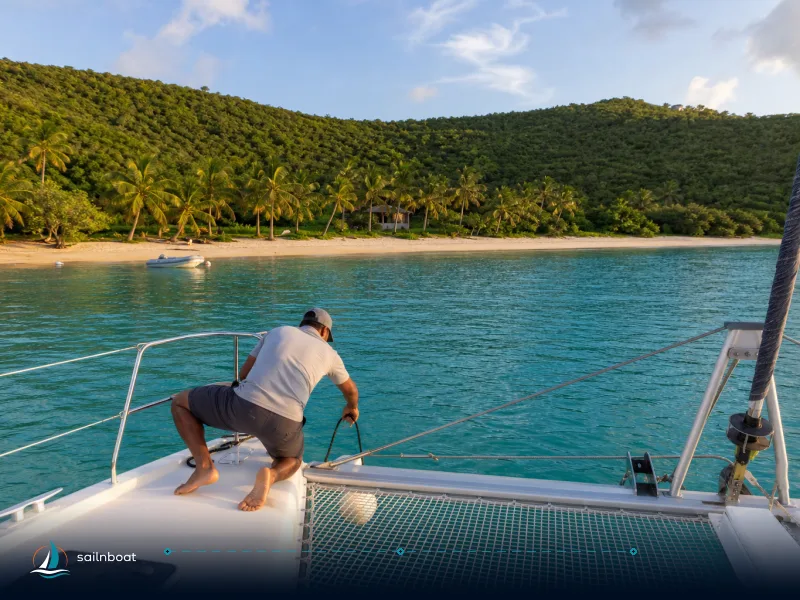
Every experienced skipper keeps a Plan B for a crowded Bight. Your two practical options are to anchor with correct technique or run to a nearby smaller cove or the next mooring field.
Procedures When Mooring is Full
- Watch and listen: use VHF to monitor local chatter (the BVI commonly uses VHF Channel 16 for hailing and local bases often operate working channels from there). The mooring collector will usually circle the field late afternoon; if you’re on the hook, expect them to collect fees by dinghy.
- Have pre‑identified alternatives: nearby spots with a handful of balls include Kelly’s Cove and Privateer Bay (both have very limited moorings); Money Bay and quieter coves on Norman’s south shore are other options but may require stern‑to shore or secure anchoring. Sailing guides and local reports recommend naming at least one alternate before you leave the previous day’s anchorage.
Safety Tips for Anchoring
- Depth & holding: pick a sandy bottom in roughly 4–12 m of water for practical overnight holding near Norman Island, adjusting for your vessel’s bow height at high water and room to swing. Use a conservative scope: plan on 5:1 minimum and 7:1 or more overnight or in building winds. These are standard seamanship recommendations used by major sailing authorities.
- Set and test: back down on the anchor until the rode is taut and confirm the boat holds by applying gentle power astern; check transits or landmarks for dragging and re‑set if you see movement. Give yourself adequate swing room to avoid other boats — a crowded field narrows safe swing arcs.
- Night fallback: if dusk arrives and you have not secured either a ball or a good overnight anchor, consider moving to a larger, less crowded field (or to the nearest sheltered harbor on Tortola) rather than risking an improvised stern‑tie or an exposed anchor spot.
Dining Options at Norman Island
A night ashore at The Bight is part of the Norman Island experience — here’s how to handle logistics.
Pirate's Bight Restaurant
- Practicalities: Pirate’s Bight is the main beachside restaurant; it takes reservations and is a reliable choice for a group dinner after a day on the water. Many guides publish the restaurant phone and note that the beach bar uses VHF 16 for short calls/arrangements. Reserve ahead in high season or when you expect to arrive after the day‑boat crowds.
- Expect: local seafood, grill items and a lively bar area on the sand; seating capacity is substantial but service slows when multiple charters arrive at once — plan a reservation or stagger your shore visit.
Willy T Floating Bar
- Reality check: Willy T is legendary and has had a complicated recent history — the original was beached in Hurricane Irma (2017), a replacement was built and operated at Peter Island and at times returned near The Bight; sources and guides differ on the Willy T’s exact berth in recent seasons. Treat any Willy T mention as subject to change and use local VHF/phone inquiry on arrival for the current location and operating hours.
- Tip: if the Willy T is operating where you want to visit, expect a casual, party‑bar atmosphere rather than a formal dining experience; plan to dinghy across or swim.
Practical Tips for Your Trip
Essential Gear and Supplies
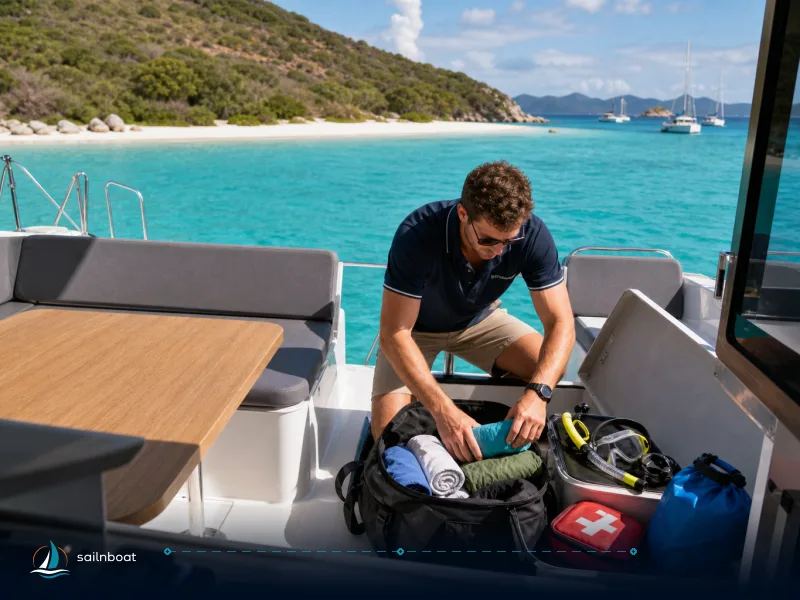
- Do this before you leave base: check your dinghy pump and outboard, confirm the anchor/rode condition and confirm how your charter company handles National Parks fees (many collect it at handover or tell you how the mooring attendants are paid). Carry snorkel vests and at least one SMB (surface marker buoy) for in‑water party members.
- Communication: VHF (Channel 16 to hail) and a charged mobile phone with local roaming enabled are useful; local provisioning and contact numbers are typically given at check‑out.
Local Regulations and Safety
- Mooring permits and park rules: the BVI National Parks Trust governs moorings in protected sites (including The Caves); fees and rules vary by site and season and are enforced by attendants or Trust staff. Many charter firms include instruction on which balls are trust buoys and how fees are collected.
- Weather windows: the trades dominate; calm mornings, building afternoon winds and choppier afternoons are typical in winter months — plan your open‑water legs for the quieter part of the day and avoid pushing a long reach toward dusk.
Final practical checklist for your seven‑day loop from Tortola:
- Day 1: pick up boat, provision, short hop to The Bight (arrive early if you want a choice of moorings).
- Day 2: first light – The Caves; mid‑day – relax in The Bight or run to The Indians; reserve Pirate’s Bight for dinner.
- Mid‑week: move east to Cooper or Jost Van Dyke then return west — keep The Bight as a flexible anchor/ball option.
- Last night: don’t rely on finding a ball at dusk; plan your final night in Road Town or a known, reservable marina if you must be in port for an early base return.
If you run into a full field, you’ll be fine as long as you have already practised confident anchoring and assigned watch duties: drop in a quiet cove, set at least 5:1 scope (7:1 overnight), confirm the set with power astern and keep an eye on the forecast. The Bight gives you options — good moorings, great snorkels and a busy beach scene — but it rewards crews who arrive early, keep simple contingency plans and treat mooring balls as first‑come infrastructure rather than a guaranteed berth.
Plan your charter with those decision points in hand and you’ll spend less time hunting for a ball and more time snorkelling the caves and the pinnacles.
Frequently Asked Questions
The Bight uses many first‑come National Parks Trust moorings; a permit/fee applies for use of trust buoys and fees are normally collected by mooring attendants in a dinghy (day vs overnight rates vary by season and operator).
Permits/permission for National Parks moorings are issued by the BVI National Parks Trust; in practice most charter companies handle the paperwork and fees, or a mooring collector will take payment on arrival.
Early morning before the day‑boat traffic (ideally before 10:00) gives the best combination of light and fewer people; visibility commonly ranges 6–20 m in settled weather.
Have a plan B: anchor in nearby sand (pick 4–12 m depth where holding is good), move to smaller coves with spare moorings (Kelly’s Cove, Privateer Bay), or continue to the next sheltered field—don’t attempt to stern‑tie at night without local knowledge.
Pirate’s Bight is the main beach restaurant and recommends reservations (phone and VHF 16 are commonly used); the Willy T floating bar has had several relocations since 2017, so expect mixed reports about its current berth.
Written by
Sailnboat Editorial
The Sailnboat editorial desk covers yacht and boat chartering worldwide — routes, bases, seasons, boat types, paperwork and the practical costs that decide a trip. We are a charter marketplace, not a boat owner or a local agency: what we sell is judgement and support, so our guides are written to help you make a decision, not to sell you a specific boat. Every guide is checked against live operator and marina data before it goes out.
Fact-checked against live operator and marina data, and published under our editorial standards. Last reviewed: .