Chios to Oinousses: Your Detailed Sailing Itinerary
A practical 7-day Chios sailing itinerary that keeps you off the Cyclades radar: coastal legs, sheltered anchorages, provisioning stops and one memorable family-run taverna. Now includes repositioning legs from the nearest charter bases in Mykonos.

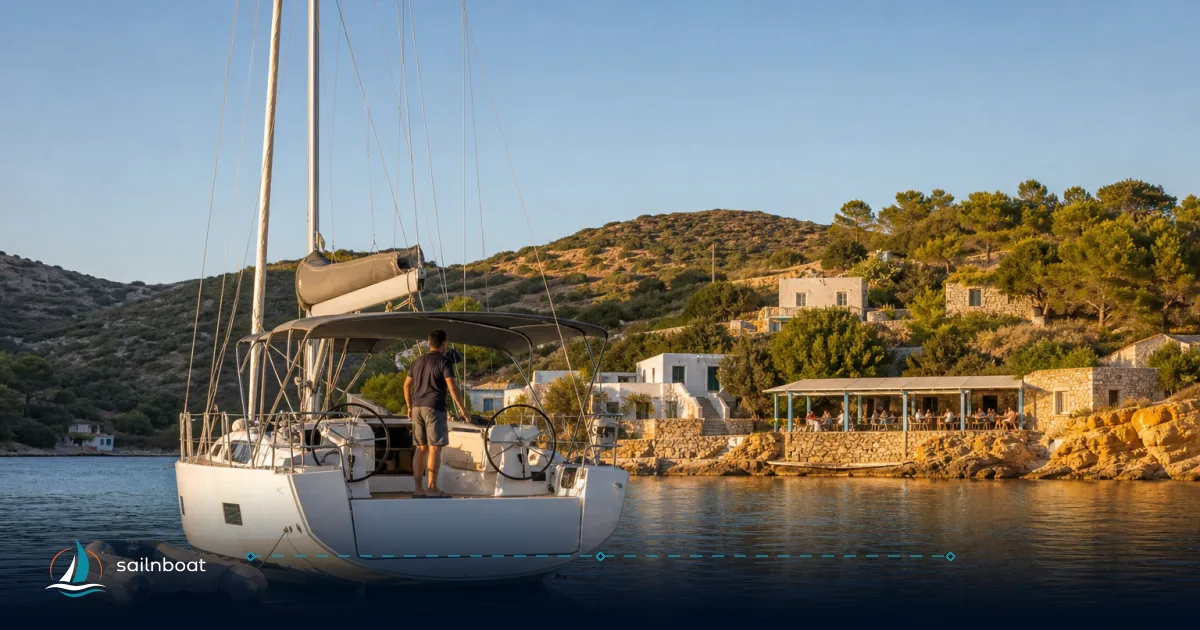
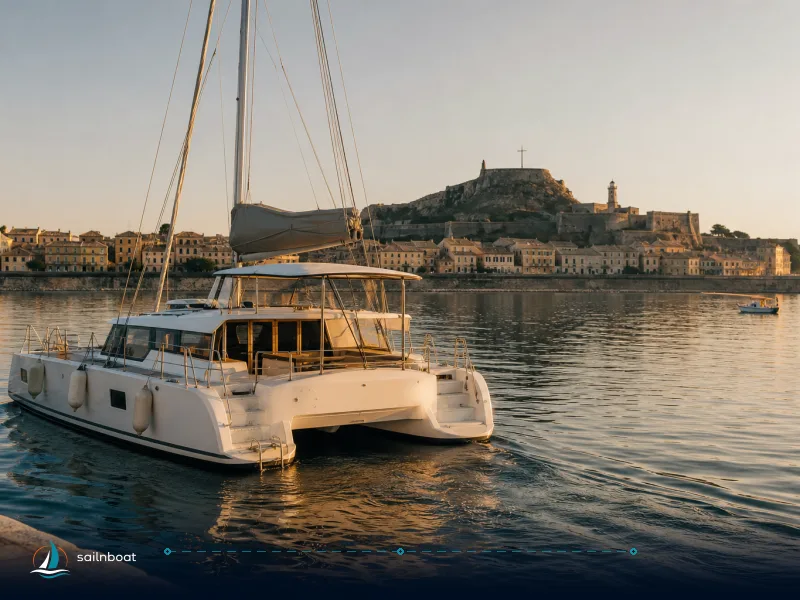
Expect short coastal hops (often under 15 NM, though actual distances between anchorages may vary), exposed passages where the Meltemi can make the going rough, and a handful of tiny harbours and family tavernas that supply fresh food and island character. Important: Chios is not a charter base. You will need to reposition your yacht from the nearest charter base in Mykonos (Tourlos Marina, Port of Mykonos, Ornos Bay, or Agia Anna Paraga) to Chios Town to start this itinerary, and return your boat to the same base at the end.
Day-by-Day Sailing Plan
Overview of the itinerary
- Structure: 7 days, a clockwise loop that mixes south/coastal detours with the north coast and the Oinousses group.
- Rough total: plan on roughly 55–65 nautical miles for the Chios loop itself (exact total depends on your route and inshore detours). You’ll need to add the repositioning legs from and back to Mykonos — expect a straight-line distance of about 67–70 NM one way between Mykonos and Chios Town (actual sailing distance will be longer due to routing around land and prevailing winds).
Itinerary Structure
Repositioning Legs
- Day 0 — Mykonos Charter Base → Chios Town: Allow a full day for this passage. The straight-line distance from Tourlos Marina (Mykonos) to Chios Town is about 67 NM. Most crews will want to plan a weather window and possibly break the trip with a stop in Ikaria or another midway island if conditions are challenging.
- Day 7/8 — Chios Town → Mykonos Charter Base: After completing the Chios loop, you’ll need to return the yacht to your charter base in Mykonos. Plan for another 67 NM passage, again allowing for weather and conditions.
Planned Daily Legs (Chios Loop, straight-line approximations; plan route on your chart)
- Day 1 — Chios Town → Mavra Volia (Emporeios): ~12 NM. This is your first coastal hop after repositioning; Mavra Volia (the black‑pebble beach) sits near Emporeios on the south side of Chios and is a quiet overnight with tavernas nearby.
- Day 2 — Mavra Volia → Lithi: ~9–10 NM. Cross the south-to-west sector and pick Lithi for its sandy shore and small fishing harbour.
- Day 3 — Lithi → Nagos / Giosonas: ~13–15 NM. Work north along the west/northwest side to reach the coves and long pebble beach at Giosonas and nearby Nagos.
- Day 4 — Nagos → Marmaro (Kardamyla): ~3–4 NM. Marmaro (the lower part of Kardamyla) has a town pier and the services you’ll want after a few nights at anchor.
- Day 5 — Marmaro → Oinousses: ~5–6 NM. Oinousses lies a few miles off Chios’s northeast coast; the crossing is short but can feel exposed in a northerly Meltemi.
- Day 6 — Oinousses: Local cruising, explore the islets, visit the maritime museum, reprovision if needed and overnight.
- Day 7 — Oinousses → Chios Town (return): ~9 NM. Complete your Chios loop and prepare for the repositioning passage back to Mykonos.
Note: If you are chartering from Mykonos, the actual trip will be longer than a standard “week” due to the required repositioning. Many crews plan 9–10 days for the full circuit.
Table — quick comparison for planning
| Day | Route | Approx. NM (straight-line) | Typical est. time (mono 6–7 kt / cat 7–9 kt) | Overnight option |
|---|---|---|---|---|
| 0 | Mykonos (Tourlos/Port/Ornos) → Chios Town | 67 NM | 10–12 h / 8–10 h | Chios Town marina or quay |
| 1 | Chios Town → Mavra Volia | 12 NM | 2–2.5 h / 1.5–2 h | Emporeios anchorage / beach |
| 2 | Mavra Volia → Lithi | 9.5 NM | 1.5–2 h / 1.0–1.5 h | Lithi harbour / beach |
| 3 | Lithi → Nagos/Giosonas | 14 NM | 2–2.5 h / 1.5–2 h | Nagos / Giosonas anchorages |
| 4 | Nagos → Marmaro (Kardamyla) | 3–4 NM | 0.5–1 h / 0.5 h | Marmaro town pier |
| 5 | Marmaro → Oinousses | 5–6 NM | 1 h / 0.5–1 h | Oinousses harbour |
| 6 | Oinousses local cruising | 3–6 NM | Variable | Oinousses |
| 7 | Oinousses → Chios Town | 9 NM | 1.5–2 h / 1–1.5 h | Chios Town marina or quay |
| 8 | Chios Town → Mykonos (Tourlos/Port/Ornos) | 67 NM | 10–12 h / 8–10 h | End of charter |
Notes on the table:
- Distances are straight‑line approximations between the named places; your sailing distance will be longer if you skirt headlands or detour for protection. Use official charts and your plotter when finalising each day’s route.
- Estimated times use common cruise speeds (example: 6–7 knots for a typical cruising monohull, 7–9 knots for a cruising catamaran); adjust for your boat’s performance and conditions.
- The repositioning legs (Day 0 and Day 8) may require careful planning around weather windows, especially with the Meltemi.
Weather Patterns and Sailing Conditions
Summer weather insights
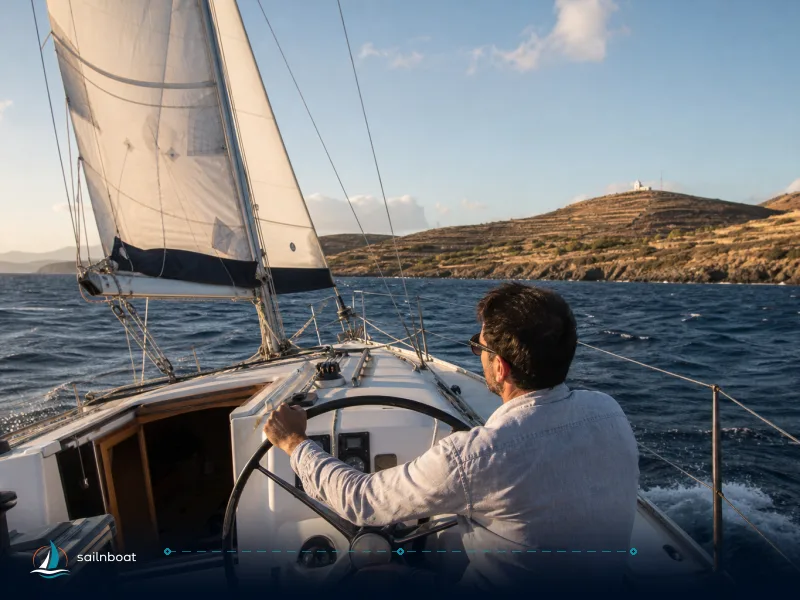
- The dominant summer feature in the Aegean is the Meltemi (Etesian) — a large‑scale northerly wind system that commonly affects the Northeast Aegean from late spring through early autumn and peaks in July–August. On many summer days it is the single-most important planning factor for passage-making.
- Temperatures ashore are typically in the mid‑20s to low‑30s °C in summer; sea temperatures are comfortably warm for swims.
Historical weather data and operational guidance
- Typical wind speeds during the Meltemi’s main months are often in the mid‑teens of knots and can average higher on exposed days; many practical sources report regular 15–25 kt days in July–August, with locally higher gusts in channels and headlands. Open‑sea wave heights can rise to 1–2 m or more when the Meltemi is established. Plan shorter legs and lee anchorages on northerly days.
- Local effects matter: the lee of headlands can cut the wind and provide sheltered water, while channelled winds between islands can spike and create confused short-period seas — pick anchorages that have a clear lee from the forecast wind vector.
Practical weather workflow for the skipper
- Check a synoptic forecast the night before and again first thing in the morning; set your departure time to exploit a weather window (many crews leave early to get the best angle into a lee). When the forecast calls for sustained >20–25 kt northerlies, favour protected harbours (Kardamyla/Marmaro, Lithi) over exposed beaches.
- Watch the sea state, cloud and barometer — Meltemi often builds during the morning and eases overnight in some seasons, but patterns vary year to year.
Provisioning Stops Along the Route
Where to stock up
- Chios Town is your main provisioning hub: there is a municipal/central market and several fishmongers, supermarkets and specialist shops in the port quarter — pick up your fresh fish, local cheeses, olives and bottles of regional wine here before you head off. The municipal market building is a convenient first stop after check‑out.
- Kardamyla (Marmaro) has small supermarkets and fish shops suitable for top‑ups and is a logical reprovisioning stop mid‑week, and you can usually find a fishmonger near the pier who will sell whole fish ready to clean; if you need diesel or large quantities of water, plan to fill up in Chios Town before you head north because fuel availability on the smaller quays is limited and may depend on local suppliers.
Other provisioning options
- Kardamyla (Marmaro) — small supermarkets, a bakery and fish shops; useful for fresh bread, milk and last‑minute vegetables. Many of these shops open most mornings and close in the early afternoon, with reduced hours on national holidays and some Sundays.
- Village shops at Lithi and Nagos — limited selection but good for eggs, cheese, olives and chilled produce sourced that morning; bring cash as some places accept only cash or prefer it for small purchases.
- Oinousses — a small port with a couple of shops and tavern suppliers; suitable for top‑ups and for buying local wine and sweets if you want to bring island produce home.
Provisioning checklist (what to buy in Chios before you leave)
- Fresh fish and shellfish (for the first two days unless you plan to use chill-boxes frequently).
- Sufficient potable water to cover at least 2 days if you cannot refuel at a marina.
- Ice packs and dry goods (pasta, tinned beans, olive oil) to reduce dependency on small shops.
- Spares and consumables: engine oil, impeller, fuses, and a basic first‑aid resupply — small islands often lack marine suppliers.
Secluded Anchorages and Mooring Options
Recommended anchorages — quick reference
| Anchorage | Typical depth range (m) | Shelter from | Quay/marina options |
|---|---|---|---|
| Mavra Volia / Emporeios | Depths vary; confirm with local charts (anchoring near beach) | North winds (lee when wind is northerly) | No visitor marina; dinghy to shore |
| Lithi | Depths vary; check with up-to-date charts (sandy bottom) | North/NW winds when anchored close-in | Small working harbour with limited visitor stern-to spots |
| Nagos / Giosonas | 3–5 m (pebble/sand) | Good lee from northerlies if tucked into the eastern side | Free anchoring; no formal berths |
| Marmaro (Kardamyla) | 4–8 m near approaches; shallows by quay | Sheltered from northerlies by the headland | Town pier with limited visitor berths; some marina services possible |
| Oinousses harbour | Depths vary; confirm with official harbour info or charts (protected harbour) | Exposed to strong northerlies outside harbour | Small visitor quay; tie alongside or anchor in harbour basin |
Practical notes on anchoring and mooring
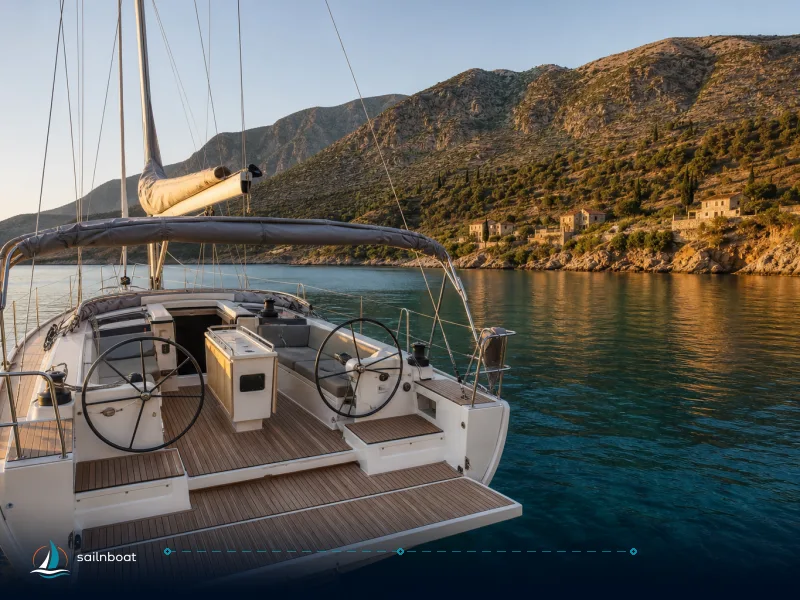
- Bottom type: many of these bays feature sand or coarse sand with pebbles; set in sand when possible for reliable holding. Scope 4:1 is a good minimum in calm conditions; increase to 5:1–6:1 if northerlies build overnight.
- Mooring at quays: most small town quays accept visiting yachts but space is limited; arrive before sunset and be prepared to raft or stern‑to if the quay is occupied by local fishing craft. Mooring lines ashore should be long and elastic if possible to absorb surge.
- Fees: many bays are free anchorages; small town piers sometimes charge a modest fee that varies by municipality and season — expect small, locally set charges rather than fixed marina rates. Some harbours operate on a first‑come basis with a local harbourmaster collecting fees in cash.
When to arrive
- For villages with limited mooring (Lithi, Marmaro), aim to arrive before 17:00 in high season to secure a spot; local boats often return late afternoon and claim spaces alongside the quay.
Emergency berths and services
- Kardamyla (Marmaro) is the best place to find basic mechanical help, spare parts or a small chandlery on short notice. Chios Town remains the only reliable location for full refuelling, engine spares and formal marina services.
Dining Experience: A Local Family Taverna
How we found it
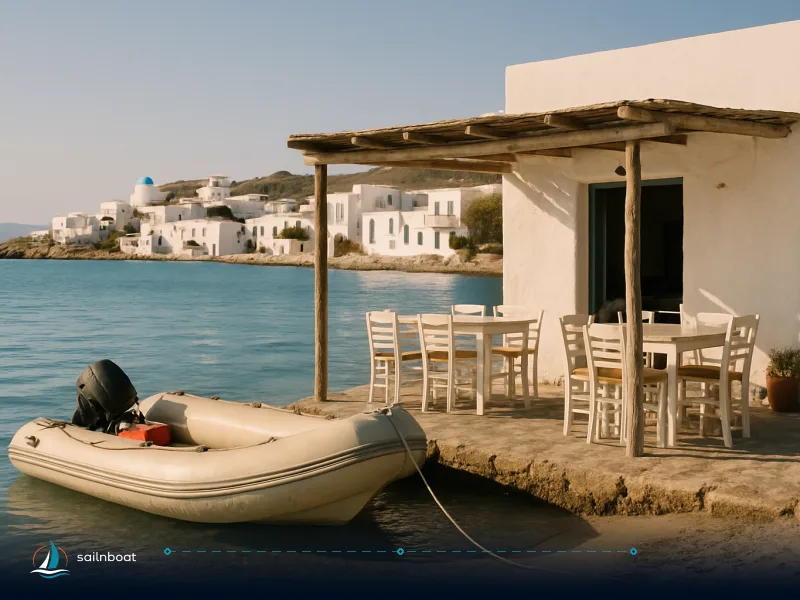
- The taverna is a small family operation reached by a 10–15 minute walk from the eastern end of Lithi’s shore path (you can leave the dinghy on the nearest pebble spit). It’s the sort of place where the owner opens when the day’s catch arrives and the menu is written on a board.
Ambiance and service
- Expect a low, shaded terrace, tables close to the kitchen and a small group of regulars (fishermen and islanders). Service is unhurried; dishes arrive as they’re ready rather than on a strict sequence. Cash is accepted everywhere; some tavernas take cards but many prefer cash for small bills.
Standout dishes
- Grilled octopus, charcoal‑seared with olive oil and lemon, prepared simply and served with fresh tomato and cucumber salad — the octopus was tender because it had been lightly simmered before the grill, a local technique that softens the meat while keeping the char flavour.
- Freshly caught fish of the day, filleted and prepared whole; portions are generous and priced in line with small-island tavernas. A shared mixed meze with local cheeses, olives and a regional wine bottle will feed a crew economically — expect prices typical of small-island tavernas, but confirm current menu prices locally.
- House specialties: simple baked vegetables and a slow‑cooked lamb dish (occasionally available) that rewards an early booking if you want it on a specific night.
Practical dining tips
- Tell the taverna what time you plan to arrive and whether you’ll come by dinghy — many owners prefer a short heads‑up so they can time the fresh seafood.
- Expect straightforward local hospitality rather than tourist service; tipping is appreciated but not expected.
Navigating the Northeast Coast of Chios
Key safety considerations
- Exposure to northerlies: the northeast coast is exposed to the Meltemi; when north or northeasterly winds reach 20–25 kt, offshore waves and a short, steep chop can form in open water. Prefer sheltered bays with a clear north lee when winds are from the north.
- Rocky outcrops and shoals: headlands and underwater rock shelves are common. Always cross‑check your chartplotter with paper charts and use the depth sounder when approaching unfamiliar anchorages. Many hazard areas are close to shore — don’t shortcut too near the rocks to save time.
- Local traffic: ferries and fast passenger services operate between Chios, Oinousses and other nearby ports; maintain a watch, especially at dawn and dusk when schedules are busier.
Recommended navigation practices
- Approach anchorages on a daylight approach whenever possible to identify the best holding ground and hazards. If you must arrive after dark, use radar and AIS and call the local harbourmaster on VHF to ask for berthing guidance.
- Leave early on passage days to take advantage of calmer morning conditions before the Meltemi commonly builds. Conversely, if a northerly is forecast to strengthen, consider staying put and running short local trips on a lee shore rather than attempting open crossings.
- Anchor set check: after setting anchor, motor slowly astern with moderate revs to confirm the anchor is dug in, then check position after 10–15 minutes and again before nightfall.
Navigation aids and charts
- Carry up‑to‑date electronic charts for the area and a recent paper chart of the Chios–Oinousses sector. Chart updates for shoals and new harbour works are issued periodically; make chart correction checks part of your pre-departure routine.
Contingency planning
- If the Meltemi strengthens unexpectedly and you’re in an exposed anchorage, have an escape plan to move to the nearest protected harbour (Kardamyla/Marmaro or Chios Town). Maintain 25–30% fuel reserve above your planned consumption for any day’s passages to allow for diversions.
Final trade-offs and how to choose your route
- The trade-off for this itinerary is between scenic, sheltered bays (shorter, more inshore legs and more anchoring) versus a faster, simpler route with fewer stops that keeps you closer to full services and safer harbours. If your crew prefers predictable overnight berths and easy reprovisioning, skew the plan toward Kardamyla and Chios Town stops; if you value solitude and local tavernas, use Mavra Volia, Lithi and Nagos as your main nights and accept that you’ll be anchoring more and carrying extra water/fuel.
Plan your trip This Chios sailing itinerary is compact and requires a skipper who is comfortable with short exposed passages and making anchoring decisions based on the day’s wind. Use the day‑by‑day legs above to sketch your week, prioritise provisioning in Chios Town, and keep the Meltemi on your weather board when routing between coves. If you want help choosing the right base or a boat type for this loop — monohull, performance cruiser or catamaran — we can advise on which will suit your crew’s tolerance for wind, anchoring preference and need for on‑shore services.
If you are starting from Mykonos, factor in the extra days for repositioning and keep a close eye on the forecast before each long passage.
Frequently Asked Questions
A sensible loop is Chios Town → Mavra Volia (Emporeios) → Lithi → Nagos/Giosonas → Kardamyla (Marmaro) → Oinousses, then back to Chios; daily legs are short (most 7–15 NM) so you can avoid long open-water passages and pick sheltered bays when the Meltemi builds. Note: you will need to reposition your yacht from a charter base in Mykonos to Chios before starting this loop.
The summer Meltemi (Etesian) is the defining pattern: it typically builds from May and peaks in July–August with many days of 15–25+ knots and seas that can reach 1–2 m or higher in open water, so plan shorter hops and use lee anchorages on northerly days.
Chios Town’s municipal market is the primary provisioning stop for fresh fish, cheese and produce; smaller village shops and fish tavern suppliers are available at Kardamyla/Marmaro and at Emporeios near Mavra Volia.
Look for Lithi (sandy beach with a small working harbour), Nagos/Giosonas (northern coves) and Marmaro/Kardamyla (town pier and limited visitor berths); many bays are free anchorages with limited quay space.
Chart the coastal shoals carefully and use the depth sounder; the north/NE coasts can be exposed to a building Meltemi with steep swell — pick anchorages with lee from the north and avoid exposed bays when winds exceed 25 knots.
Written by
Sailnboat Editorial
The Sailnboat editorial desk covers yacht and boat chartering worldwide — routes, bases, seasons, boat types, paperwork and the practical costs that decide a trip. We are a charter marketplace, not a boat owner or a local agency: what we sell is judgement and support, so our guides are written to help you make a decision, not to sell you a specific boat. Every guide is checked against live operator and marina data before it goes out.
Fact-checked against live operator and marina data, and published under our editorial standards. Last reviewed: .