Kea & Kythnos in a Week: Your Sailing Itinerary from Athens
A practical, day‑by‑day seven‑day sailing plan from Lavrion or Alimos that covers passages, anchorages in Kea and Kythnos (depths/seabed), berth choices and skipper decisions for handling the Meltemi.

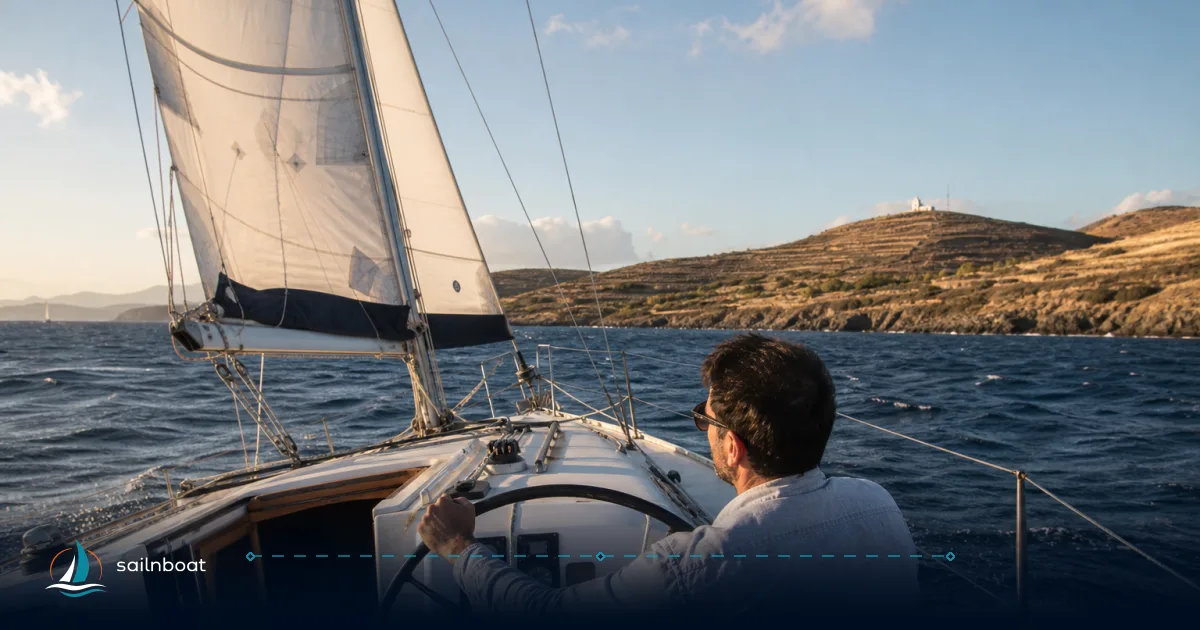
Kea Kythnos sailing itinerary — short answer: from Lavrion you can reach Kea in a short day‑passage (~15–17 NM); from Alimos expect a much longer first leg (~35 NM). Plan each day conservatively (monohull ~6–7 kn, catamaran ~7–9 kn), keep alternate harbours handy, and aim to arrive at anchor by early afternoon before the Meltemi builds.
Day 1: Setting Sail from Lavrion or Alimos
Intro decision: choose Lavrion if you want the shortest first day to Kea and an easier first evening; choose Alimos if airport access and city logistics matter more but be ready for a long first passage.
Departure Details
- Distances and times (working assumptions): Lavrion → Kea (Vourkari/Korissia) ~15–17 nautical miles; allow ~2.5–3.0 hours for a monohull cruising at ~6.5 kn, ~2.0–2.5 hours for a typical charter catamaran. Alimos → Kea is substantially longer: commonly cited at ~35–38 nm, so budget ~4.5–6 hours (monohull) depending on your boat and winds. These values are the practical planning figures used by charter operators out of Athens.
- Timing: leave early. The northerly Meltemi tends to build late morning/afternoon from June–August; an early departure puts you past Sounion and through the Kea channel before gusts peak. Use local forecasts (Hellenic forecasts and a reliable routing brief at breakfast).
- Fuel & provisioning: top up at the base — Lavrion has fuel facilities and larger provisioning options; Alimos has full service but limited visitor berths on busy turnover days. Factor a fuel margin of at least 10–15% above the planned consumption for the day.
Mooring Options
- Lavrion (Olympic Marine / main port): comfortable facilities, technical support and easy provisioning — but expect private‑marina pricing for berths and a larger security deposit for bareboat check‑out. Many charters use Olympic Marine precisely because it shortens the Cyclades run.
- Alimos Marina: the largest charter cluster; excellent for airport transfers and last‑minute provisioning, but the trip to Kea is longer and you must plan daylight. Berth availability for visiting yachts can be tight on Saturdays (turnaround day).
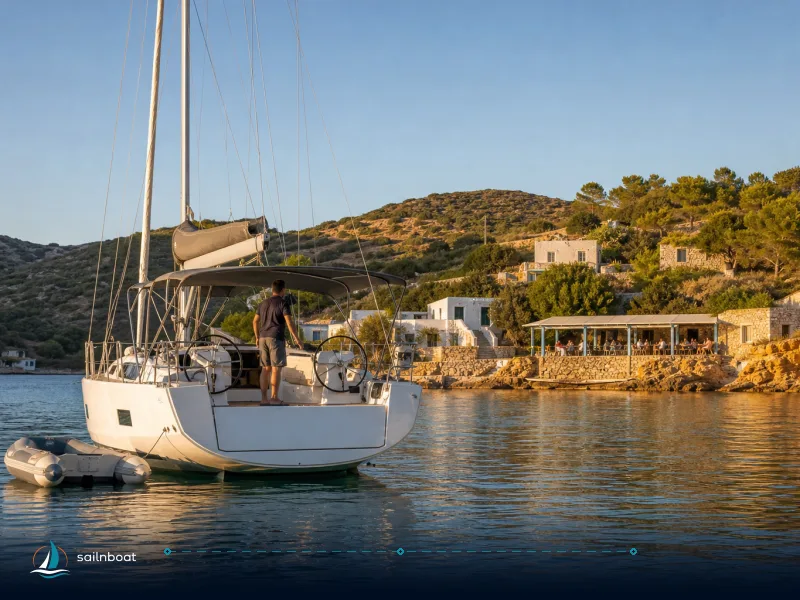
- On arrival at Kea: Vourkari (Agios Nikolaos bay) is the usual first‑night berth — stern‑to the quay where available or anchor in the bay with long scope; the seabed here is mixed mud/weed and crews frequently set long scope and check the hook.
Day 2: Exploring Kea Island
You’ll spend a full day exploring Kea’s north bays and the village life of Vourkari or Korissia. Keep the day flexible for weather.
Anchorages in Kea
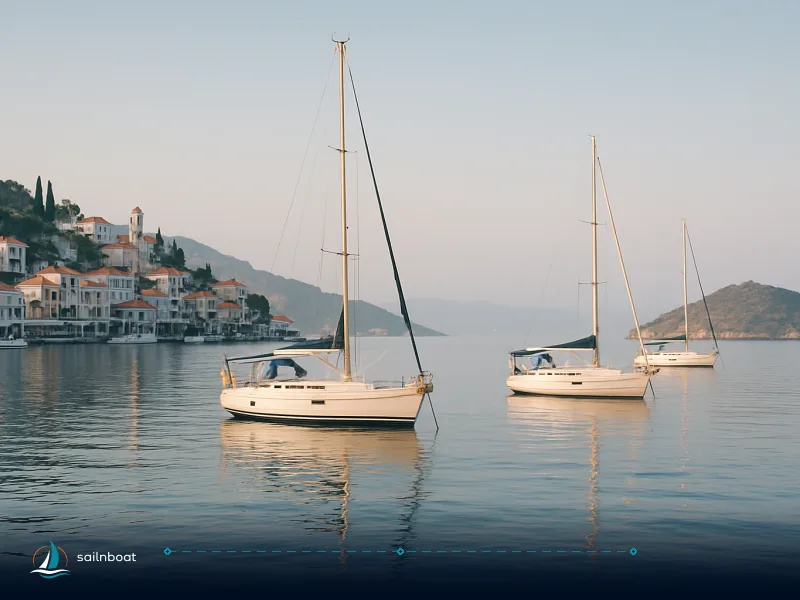
- Vourkari (Agios Nikolaos bay): the harbour is deep and well sheltered from northerlies; many yachts moor stern‑to the quay or anchor off. Holding varies (mud/weed); plan to run extra chain (many crews use 30–40 m). Arrive early — the quay fills fast on summer weekends.
- Typical small bay options (Aghios Stefanos, Aghios Ioannis on other coasts): in sheltered afternoons you will generally find 4–10 m depths and sand or mixed sand/weed bottoms — good holding where sand patches exist but verify with depth sounder and a short dive if unsure. Local pilot notes and cruising guides list these coves as suitable in settled conditions.
Local Insights
- Town & provisioning: Vourkari has tavernas, a mini‑market and some marine services; Korissia (Livadi) is the ferry town and has larger provisioning options. Plan your big provisioning day here if you skipped Lavrion/Alimos.
- Hikes & timing: Kea’s inland trails (e.g., to the ruins of Karthea) are best tackled mid‑morning before any afternoon wind picks up. Expect rough island roads — leave a car hire or scheduled taxi if you need to be back early.
Day 3: Sailing to Kythnos
A short, pleasant passage if you’re based in Lavrion; longer from Alimos.
Route Details
- Kea → Kythnos distance: commonly shown in cruising plans as roughly 16–20 nautical miles depending on your start/finish points on each island; plan 3–4 hours conservatively for a monohull at average cruising speed, slightly less for a catamaran. Shorter crossings (mid‑teens) are frequently quoted; allow fuel and daylight margin.
- Passage planning: steer a route that keeps you within visual reference to islands when the Meltemi is forecast; the Kea–Kythnos channel can funnel winds — don’t commit to a late afternoon crossing when northerlies are forecast to strengthen.
Mooring in Kythnos
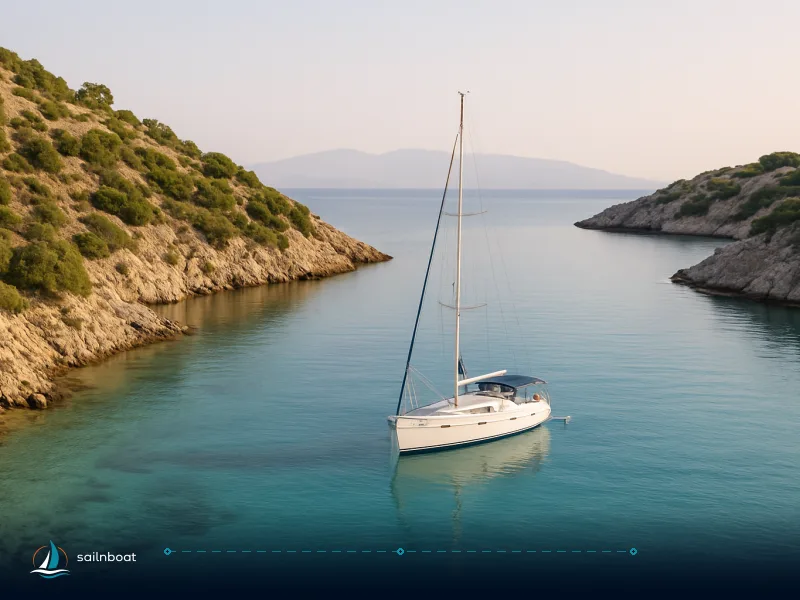
- Kolona Bay (sand‑spit / sandbar): depths vary 3–10 m with sandy patches and weed — excellent swimming and scenic overnighting in settled weather. The spit can roll under strong northerlies; expect swell wrap‑around on north winds and be ready to move if gusts rise.
- Loutra Marina (NE coast): small but useful — average depths around 2–6 m near the quay, water, power and limited berths; Loutra is a practical alternative if service or hot springs are on your list. Merichas (west) is the island’s main port with more berths and fuel.
Day 4: Enjoying Kythnos' Beaches
Spend the day between Kolona, Episkopi and Apokrousis; pick the bay that matches the wind.
Recommended Beaches
- Kolona (the sand isthmus): best on calm to moderate conditions for swimming and beaching the dinghy; anchor in sandy patches at ~4–6 m for comfort and hold. In stronger northerlies you will notice swell and should prefer Loutra or Merichas for shelter.
- Episkopi & Apokrousis: quieter options with good sand holding in mid‑depths (4–8 m) in calm weather; approach charts carefully — charts and real depths may differ and local soundings are often the ground truth.
Local Regulations & Practicalities
- Mooring restrictions: many small bays have seasonal buoys for day visitors — private companies or the municipality may restrict overnight buoy use in peak months. Municipal quay tariffs (where they apply) are generally modest in Cyclades town harbours; private marinas or tourist berths cost more. Carry cash and a plan B.
Day 5: Cultural Exploration of Kythnos
Use a relaxed day to visit Chora, Panagia Kanala and Merichas.
Cultural Sites
- Panagia Kanala (church and icon): a short taxi ride from Merichas or a longer walk from Loutra/Chora — go at midday for quieter hours and combine with lunch ashore. Local chapels and museums in Chora and Dryopida offer a compact cultural loop reachable from any port.
Dining & Practicalities
- Merichas has the best selection of tavernas and provisioning options; Loutra has relaxed seaside tavernas and the hot springs. Mooring cards or small marina offices usually handle water/electric credits. Plan your water/refill day here if you used anchorages the previous nights.
Day 6: Return to Kea
Retrace your route or take an alternative Kea anchorage for a final night afloat.
Sailing Back
- Distance Kythnos → Kea: same as outbound (we use a planning figure of 16–20 nm). Allocate 3–4 hours conservatively for a monohull; arrive by early afternoon to secure Vourkari quay or a protected anchor position.
Final Anchorages in Kea
- Apokrousis Bay and Episkopi Bay are good choices when you want quieter anchorages away from the busiest quay. Typical anchoring depths here are often 5–10 m with sand/weed bottoms; use a stern‑to or pick a protected sand patch close to shore if the Meltemi forecast is for northerlies. Local reports emphasise checking chartplotter depths — many visitor accounts note chart discrepancies, so confirm with your own sounder.
Day 7: Return to Lavrion or Alimos
Finish with a planned, conservative leg back to base and allow time for check‑out.
Final Leg Details
- Distances (planning figures): Kea → Lavrion ~15–17 nm; Kea → Alimos ~35–38 nm. Plan your return so that you reach the marina in daylight and with enough time for refuelling and the base’s check‑in procedure. Total weekly distance (approximate sums using mid‑range figures):
- If starting from Lavrion: ~68 nm total (Lavrion→Kea 16 + Kea→Kythnos 18 + Kythnos→Kea 18 + Kea→Lavrion 16).
- If starting from Alimos: ~106 nm total (Alimos→Kea 35 + Kea→Kythnos 18 + Kythnos→Kea 18 + Kea→Alimos 35).
Post‑Sailing Considerations
- Cleaning & fuel: allow the afternoon before checkout to refill fuel and top up water. Bases usually expect the boat returned with gross cleanliness; many operators charge a cleaning fee or deduct from the security deposit if not. Typical extra charges and deposit levels vary widely by operator.
- Debrief: note down any equipment issues and shore up receipts for marina fees or provisioning — it saves disputes on checkout.
Practical comparison table — legs, distances and estimated times
| Leg | Distance (nm) — Lavrion start | Distance (nm) — Alimos start | Est time (monohull 6.5 kn) | Mooring options |
|---|---|---|---|---|
| Day 1 — Base → Kea (Vourkari) | 16 | 35 | 2.5 h (Lavrion) / 5.5 h (Alimos) | Vourkari quay/anchor (mud/weed) — early arrival advised. |
| Day 3 — Kea → Kythnos | 18 (planning mid) | 18 | ~2.8 h | Kolona (anchor), Loutra (marina), Merichas (port). |
| Day 6 — Kythnos → Kea | 18 | 18 | ~2.8 h | Apokrousis / Episkopi / Vourkari quay. |
| Day 7 — Kea → Base | 16 | 35 | 2.5 h (Lavrion) / 5.5 h (Alimos) | Olympic Marine Lavrion or Alimos Marina; allow time for check‑out. |
(Notes: distances are planning figures used by charter bases and cruising guides; choose conservative cruising speeds for time estimates. If you plan to tack or motor against wind, add extra time.)
Skipper's decisions & Meltemi strategy
- Forecast routine: check the full synoptic and the Hellenic forecast each morning; use GRIBs and the 06:00 POSEIDON / Hellenic Centre for Marine Research brief where available. The Meltemi is strongest June–August, typically F4–6 in the Cyclades with occasional stronger gusts; plan passages for the morning and aim to shelter by early afternoon.
- When the Meltemi builds: move to the most sheltered harbour you can reach early (Vourkari on Kea, Merichas or Loutra on Kythnos). Use stern‑to quay berths where available — in many Cycladic ports stern‑to with a bow anchor is the routine response to strong northerlies.
- Anchoring discipline: carry at least 40 m of chain for exposed bays, check holding visually/with a diver if allowed, and set a second anchor or a trip line ashore where available. Keep watches for scope change if gusts exceed forecast. Local cruising reports emphasise that charted depths can be optimistic — always confirm with your sounder.
Mooring fees, local rules and amenities
- Fee structure: many Cycladic municipal quays work from an official tariff that results in modest nightly fees (single‑digit euros per metre for many small island harbours). Private marinas and tourist berths, especially near Athens, can be €40–80+ per night for a 12–14 m yacht in high season. Always ask whether power/water are extra and have cash for small island harbours.
- Loutra & Merichas specifics: Loutra’s small marina has quay depths typically in the 2–6 m range and basic shore services; Merichas is the main port with more berths, fuel and provisioning, with depths often reported around 3–4 m alongside (check your draft). Kolona anchoring is free but watch for limited holding patches and wind exposure.
- Paperwork: Greece separates legal regulations (flag, customs, cruising taxes such as TEPAI for extended stays) from charter company requirements (skipper licences, id). Many charter companies ask for a VHF certificate and proof of experience; the ICC is widely recognised but not universally mandatory — follow your operator’s checklist. (Regulatory specifics differ by country and operator.)
Lessons learned — real skipper notes
- Lesson 1: arrive early to secure Vourkari quay. On one August charter we arrived after 16:00 and had to raft out two boats and run extra scope — it’s noisy and makes for a poor first night. Plan to be in the bay by early afternoon. (Operational experience.)
- Lesson 2: respect Kolona’s limitations and plan alternatives. It’s perfect in calm conditions, but when a north swell appears the sand spit can roll; have Loutra or Merichas as a contingency plan and don’t commit to a late arrival in marginal forecasts.
- Lesson 3: stern‑to practice pays. Many small quays in this area expect stern‑to mooring. Practice the manoeuvre at your base; you will use it more than once on this itinerary.
- Lesson 4: check depth sounder continuously. Several cruising reports note chart inaccuracies in the Kea–Kythnos channel and around smaller coves — rely on your instruments and local depth checks rather than assuming chart exactness.
Plan your provisioning, charge cards, marina contacts and a simple alternate harbour list before casting off — that preparation is what separates a relaxed week from a hurried sprint.
Plan your sailing trip to Kea and Kythnos today.
Frequently Asked Questions
A practical loop is Lavrion or Alimos → Kea (Vourkari/Korissia) → Kythnos (Loutra/Kolona/Merichas) → back to Kea → return to Lavrion or Alimos; pace the legs so no single day exceeds ~6 hours under conservative speeds.
Vourkari (Agios Nikolaos bay) on Kea and Merichas or Loutra on Kythnos are the safest first choices for northerly Meltemi winds; Kolona gives lee depending on wind angle but can roll in strong northerlies.
Read forecasts each morning, sail early before the afternoon Meltemi builds, pick reachable alternates (Loutra, Merichas, Kea quay), and be ready to take stern‑to lines ashore or re‑anchor with longer scope.
Municipal quay tariffs in many Cycladic ports are low (official nightly schedules often amount to single‑digit euros per metre for small boats); private marinas and tourist berths near Athens can be €40–80+/night for a 12–14 m boat in high season.
Arrive early to grab quay space; carry at least 40 m of chain for exposed bays; practice stern‑to mooring; know how to run a second anchor or trip line ashore; and load provisioning at Lavrion or Alimos to avoid island shortages.
Written by
Sailnboat Editorial
The Sailnboat editorial desk covers yacht and boat chartering worldwide — routes, bases, seasons, boat types, paperwork and the practical costs that decide a trip. We are a charter marketplace, not a boat owner or a local agency: what we sell is judgement and support, so our guides are written to help you make a decision, not to sell you a specific boat. Every guide is checked against live operator and marina data before it goes out.
Fact-checked against live operator and marina data, and published under our editorial standards. Last reviewed: .