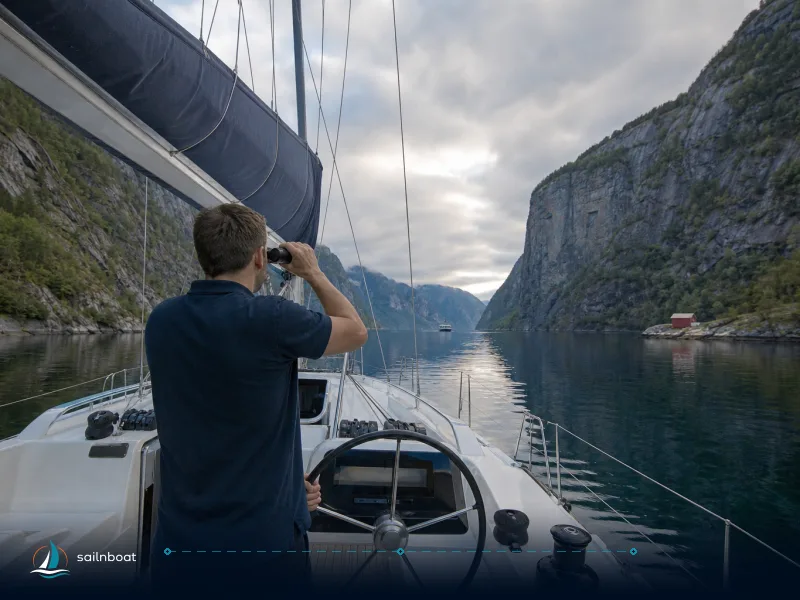
Geiranger Anchorage: Practical Guide for Skippers
Practical, operational advice for skippers visiting the Geiranger anchorage: wind management, anchoring depths and bottom type, shore‑line rules, cruise‑wake mitigation and tender coordination.

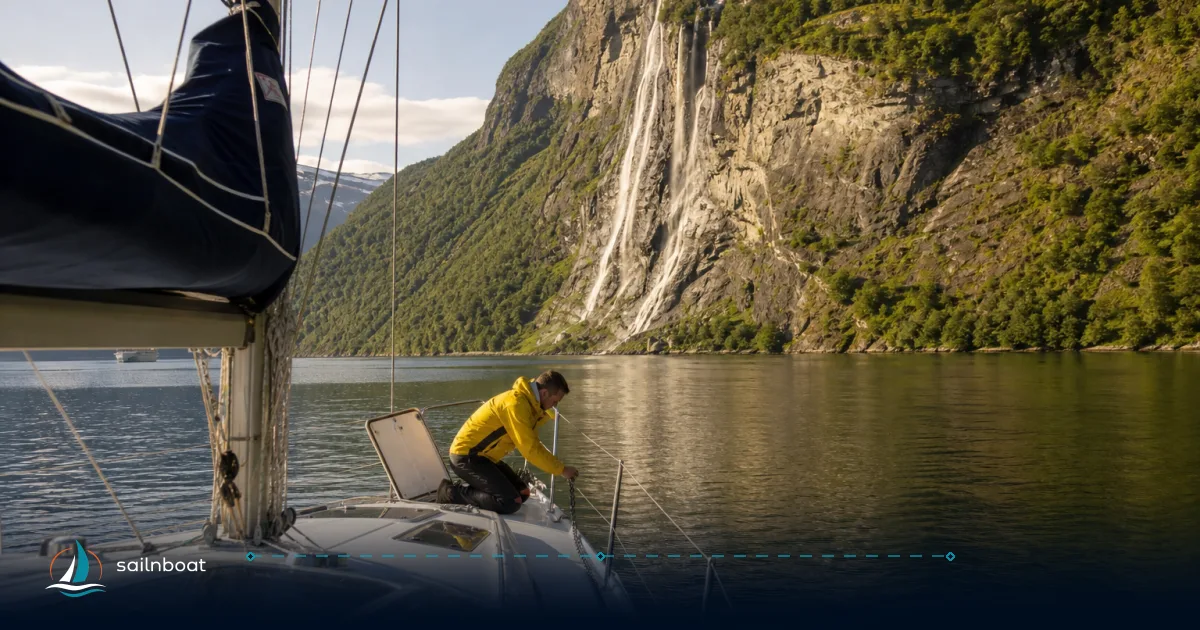
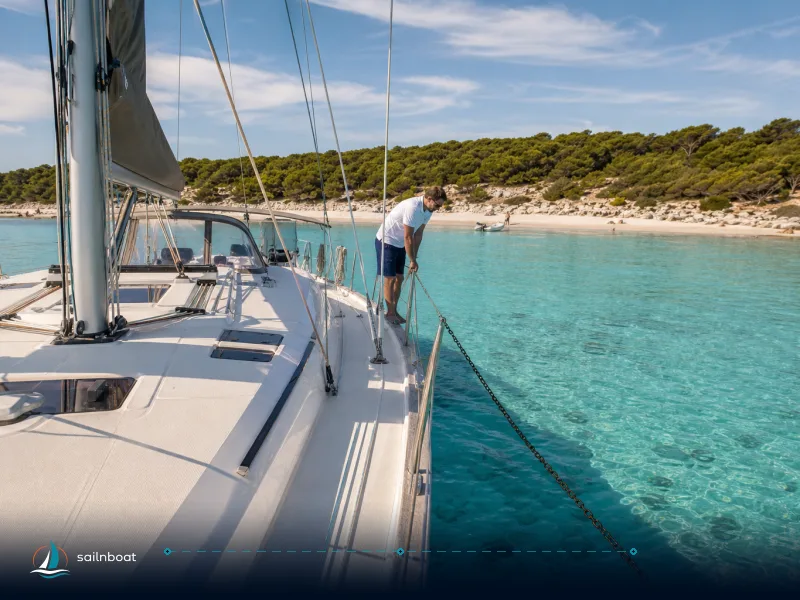
Geiranger anchorage is operated as a managed, assigned anchorage where you should expect to bow‑anchor and run stern lines ashore; depths at the fjord head are typically 5–30 m on glacial silt and holding is generally excellent.
Understanding Katabatic Winds in Geirangerfjord
The fjord geometry — near‑vertical walls up to ~1,700 m — creates strong local drainage winds (katabatic or valley drainage flows) that can accelerate rapidly when cold air descends the slopes. Skipper and pilot reports describe short, high‑energy gusts that form after sunset or in cool conditions; these can be far stronger in the confined channel than synoptic forecasts suggest.
Wind Patterns and Their Impact
- Why it matters: the walls channel cold, dense air so a calm sea‑state can turn into a brief, forceful wind episode — the effect is very local and depends on diurnal cooling and snow/ice cover on the slopes.
- Typical intensity: some local guides report gust events in the strong gale range on occasion; operational planning should assume gusts capable of imposing severe snubbing loads on docklines and anchors.
Strategies for Wind Management
- Use the port’s ankerplan: Kystverket assigns anchoring positions and enforces listening on VHF channels 13 and 16; give the one‑hour notice required and follow the assigned spot. That assignment exists precisely to manage wind, traffic and wake interactions.
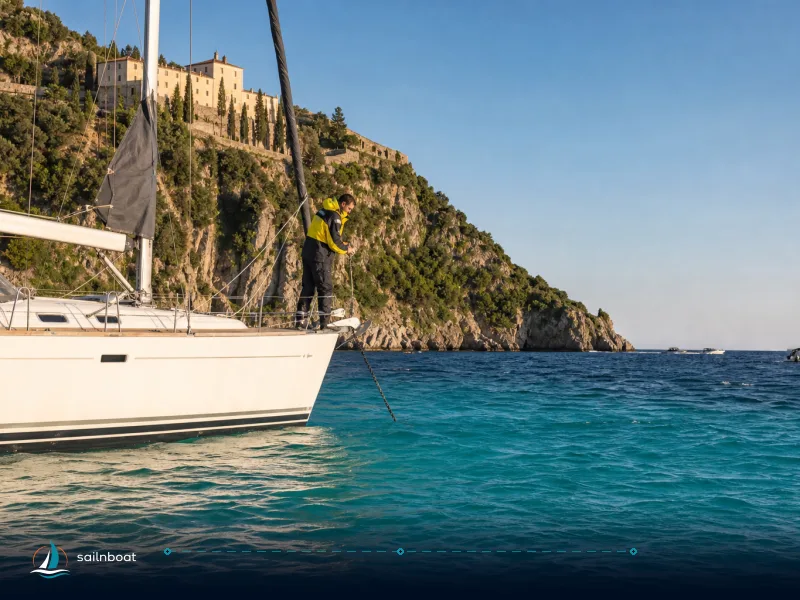
- Shore‑lines as primary defence: plan to set a bow anchor then run a minimum of two stern lines ashore where permitted (ring bolts/pullertes at Fonnaneset/Lausneset are identified in the port plan). Add one or two spring lines to control fore/aft movement.
- Elasticity and redundancy: use a mix of chain and nylon (or a shock‑absorbing pennant) on stern lines to reduce peak loads. Double lines are standard practice where cruise ship wakes or katabatic gusts are possible.
- Watch and react: keep machinery and steering immediately available if assigned by pilot or port authority to move the vessel; Kystverket can deny entry if conditions are unsafe.
Anchoring Depths and Bottom Conditions
Typical Depths for Safe Anchorage
- Depth range at the fjord head: commonly about 5–30 m for the usable anchoring shelves near Geiranger village and the waterfall head; shallower pockets (5–8 m) occur close to waterfalls and deltas, but the channel drops steeply to much greater depths a short distance away.
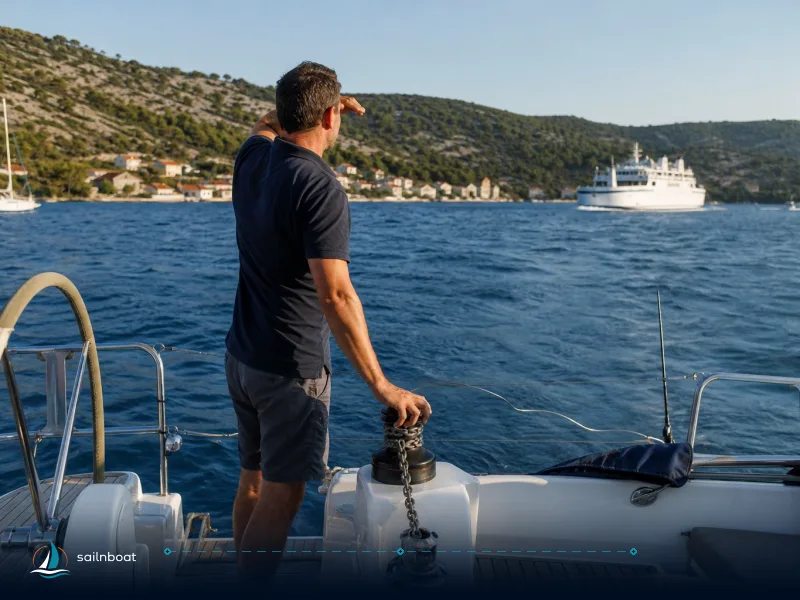
- Holding: the head of the fjord generally has deep glacial silt/mud that offers excellent holding for modern fluke and scoop anchors when set on good scope. Prepare to increase scope if the wind or wakes arrive.
Checking Local Conditions
- Use the Kystverket ankerplan and your chartplotter: Kystverket publishes the anchoring plan and depth contours for Geiranger — consult the plan before arrival and re‑check depths with your echo sounder while approaching.
- Be wary of deltas and waterfall run‑out areas: anywhere directly under a waterfall or river mouth can hide rock debris or shoals — maintain a safe offset (the local guidance highlights shallower water and rock near some waterfalls).
Shore‑line Requirements for Overnight Anchorage
Regulations for Overnight Anchoring
- Assigned positions and radio watch: under the regulation and Kystverket’s ankerplan, vessels must take the assigned anchoring positions; vessels must listen continuously on VHF Ch. 13 and 16 and give one hour’s notice before arrival. Speed limits (8 knots in the farer) and other local rules apply.
- Shore‑lines: in the narrow fjord head the accepted overnight technique is bow‑anchor plus stern lines ashore; some shore bolts and 200‑ton pullerter are available (Fonnaneset, Lausneset) as specified in the port plan.
Communication with Local Authorities
- Contact and watch channels: port contact/fortøyningsbåt monitors VHF 13 and 16; the contact phone listed in the port plan is +47 99 10 20 79 — call or hail one hour before arrival as the plan requires.
- Compliance: follow the port’s allocation: Kystverket may refuse entry if the weather, traffic or an assigned plan make an arrival unsafe.
Managing Cruise Ship Wakes
Cruise ships anchored mid‑fjord generate repeated wakes and long‑period swell that are a primary operational nuisance and can load moorings continuously. Skipper reports describe wake energy arriving at short, repeating intervals — practical mooring setups must absorb that energy.
Impact of Cruise Ship Wakes
- Pattern and frequency: crews operating in Geiranger report wakes that arrive as cyclic energy pulses; this can cause steady rolling and repeated snubbing on fixed stern lines. Observational guides note short‑period repeated wakes which, operationally, behave like pulses arriving at intervals during a cruise ship’s engine/propeller operation.
Mitigation Strategies
- Double your lines: use at least two independent stern lines and consider a secondary chafe‑protected line; include a spring line to stabilise fore/aft movement.
- Set additional scope and pick an angle: add scope to the bow anchor and aim the vessel so wakes approach across the stern at the gentlest angle; where possible choose an assignment edge of the anchorage that reduces exposure to the main ship traffic lane.
Comparison: anchoring methods (quick reference)
| Method | Where to use it | Main benefit | Drawbacks / trade‑offs |
|---|---|---|---|
| Bow anchor + stern lines ashore (recommended) | Fjord head, assigned positions | Best control of swing, absorbs wakes and katabatic loads | Requires shore bolts or suitable shoreline and careful line management |
| Bow anchor alone | Daytime visits, when shore access not possible | Simple, quick | Vulnerable to gusts and repeated cruise wakes; increased scope needed |
| Stern‑to (stern lines to shore with bow anchor as backup) | When shore rings/pullerter available and permitted | Very stable in directional wakes | More complex to set; needs shore infrastructure and crew ashore |
Zero‑Emission Zone Regulations
Norway’s political decision for the World Heritage fjords set strict emission targets that came into force in phases around 2026 — passenger ships below a certain size must operate without direct CO2/CH4 emissions while in the World Heritage fjords; transitional rules and exemptions exist and large vessel requirements are phased. Operators and masters should check the Norwegian Maritime Authority guidance and the port’s operational rules for permitted generator use and fuel options before planning a visit.
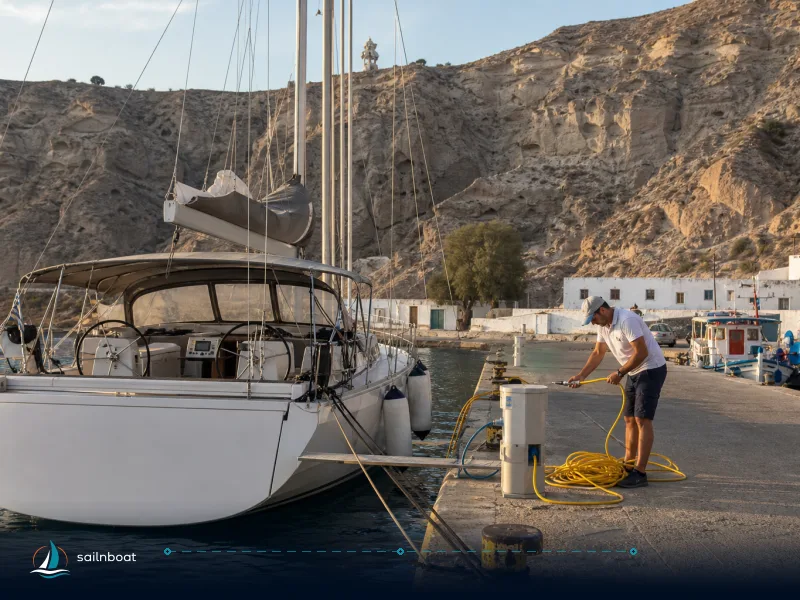
Practical note for charters: if you rely on diesel generators to power hotel loads while alongside or at anchor, verify whether that use is permitted for your vessel or whether shore power / battery/hybrid solutions or restricted pilot fuels apply on the date of your call. Regulatory detail and exemptions have evolved and differ by vessel type and tonnage.
Coordinating Tender Operations
Tender Operations Overview
- SeaWalk and pier use: the SeaWalk floating pier typically allows one ship per day to walk passengers ashore; on multi‑ship days one vessel is allocated SeaWalk and others must tender. The port’s operational documents set allocation and wind limits for Seawalk usage.
- Tender boats: when SeaWalk is unavailable the ship must operate ship’s tenders; tender runs are short (typically a few minutes to the tender pier) but require precise timing to maintain shore‑time windows.
Scheduling and Communication
- Book early and build margins: confirm SeaWalk allocation or tender plans with the ship’s agent and the port well before arrival (Kystverket requests a one‑hour notice and assigns positions). Build a firm passenger transfer schedule and allow extra time for transfers when cruise traffic or wind are present.
- Safety brief and equipment: brief guests before boarding tenders, require lifejackets, and have a dedicated crew member supervising boarding; suspend tendering promptly if the ship or port requests it due to wind/thruster‑use risk. The Seawalk procedures specifically advise low thresholds for suspending tender operations if thruster use or wind create risk.
Practical tender checklist for skippers and charter managers
- Confirm SeaWalk allocation (typically one ship/day) or tender plan with port/agent at booking.
- Hail port/pulløyningsbåt on VHF 13/16 one hour before arrival and keep watch.
- Load passenger manifest, briefing script and safety kit into tender staging; plan a firm last‑call and return buffer.
Practical passage & safety summary (pre‑arrival checklist)
- Read and download the Kystverket Geiranger ankerplan and SeaWalk operating procedures; note assigned positions and wind limits.
- Hail port/fortøyningsbåt on VHF 13/16 and give one‑hour notice; have the phone contact ready (+47 99 10 20 79 appears in the port plan).
- Prepare bow anchor with 6:1–7:1 minimum scope where depth allows, and rig at least two independent stern lines with shock pennants and a spring line. (Adjust scope for conditions and wakes.)
- Keep engines and steering ready; a pilot or Kystverket may require immediate manoeuvring or order you to leave if conditions are unsafe.
- Confirm generator/shore‑power policy for your vessel under the 2026 zero‑emission rules before arrival.
Keep in mind: local conditions change quickly in Geiranger. The port operates an assigned anchoring plan to manage traffic, wind and environmental protection — use it and have contingency plans for moving to an alternative anchorage or heading to Hellesylt if the pilot or port declines your approach.
Plan your anchorage strategy now so your charter runs to schedule: check the Kystverket ankerplan, confirm tender arrangements, brief your crew on stern‑line procedures and monitor VHF 13/16 continuously while approaching and at anchor.
Frequently Asked Questions
Depths at the head of Geirangerfjord commonly range from about 5–30 metres with glacial silt/mud giving very good holding; closer to waterfalls you can find 5–8 m but always check your echo sounder and the anchoring plan.
Treat katabatic bursts as local and short‑lived but strong: use a bow anchor plus at least two stern lines to the shore or shore bolts, add spring lines, and arrange doubled/elastic mooring to absorb snubbing loads.
Shore‑lines are commonly required at the fjord head—Kystverket assigns anchoring positions and expects vessels to follow the ankerplan; maintain the ferry approach lane and listen on VHF 13/16 while in the area.
Cruise vessels anchored mid‑fjord generate frequent rolling wakes that can repeat at short intervals; mitigate by doubling lines, using spring lines and holding more scope, and by stern‑to shore mooring where permitted.
Norway implemented zero‑emission requirements for passenger ships in the World Heritage fjords from 2026 for smaller passenger ships and is phasing rules for larger vessels; generator use and exemptions vary — confirm the latest guidance with the Norwegian Maritime Authority and port authorities before arrival.
Book tender slots with the port/agent early, use SeaWalk only if allocated (one ship per day), keep a strict passenger timing plan, and brief crew on boarding safety and buoyant PPE for all transfers.
Local ferry and sightseeing traffic is busiest in daylight hours (summer peak sees frequent crossings); the ferry approach lane through the quay must be kept clear, so plan your anchoring and tendering around scheduled ferry movements.
Written by
Sailnboat Editorial
The Sailnboat editorial desk covers yacht and boat chartering worldwide — routes, bases, seasons, boat types, paperwork and the practical costs that decide a trip. We are a charter marketplace, not a boat owner or a local agency: what we sell is judgement and support, so our guides are written to help you make a decision, not to sell you a specific boat. Every guide is checked against live operator and marina data before it goes out.
Fact-checked against live operator and marina data, and published under our editorial standards. Last reviewed: .