Palaiokastritsa Anchorage: Safe Cove Selection in Corfu
Decide which cove to pick in Palaiokastritsa with concrete depth, bottom and shelter information for Agia Triada, Liapades and the coves beneath the Theotokos Monastery, plus step‑by‑step overnight anchoring safety under NW winds.

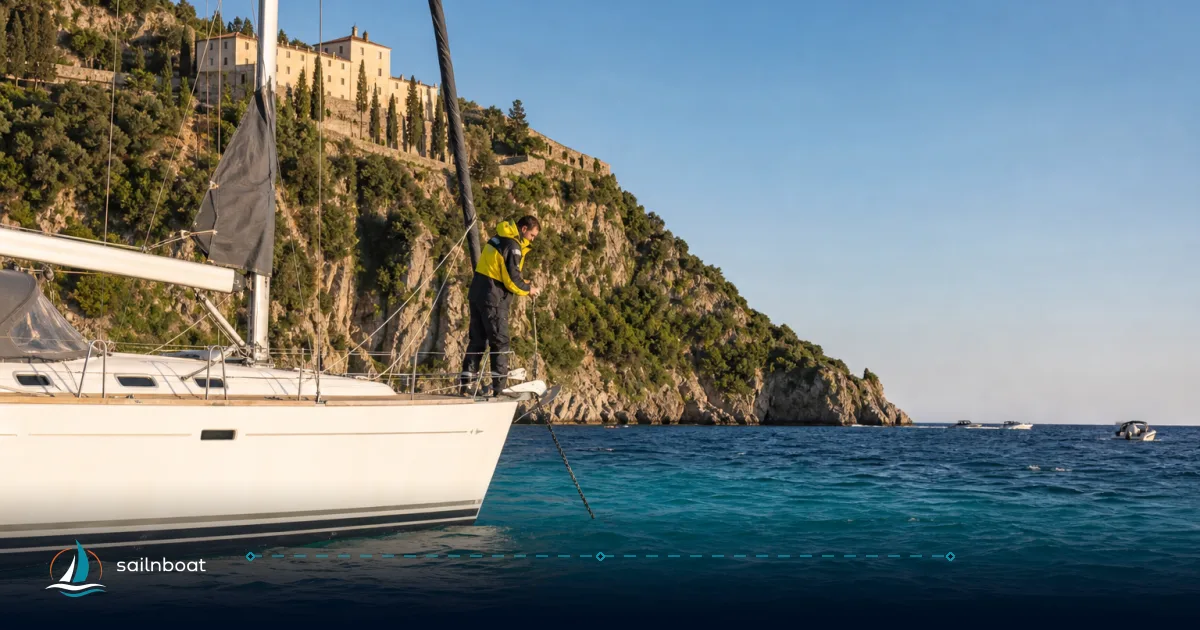
Palaiokastritsa anchorage: for overnight stays prioritise east‑facing, sand‑bottom coves (not the wide main bay) — Liapades and the little coves beneath the Theotokos Monastery are the most reliable choices when northwest winds are forecast.
Overview of Palaiokastritsa Anchorage
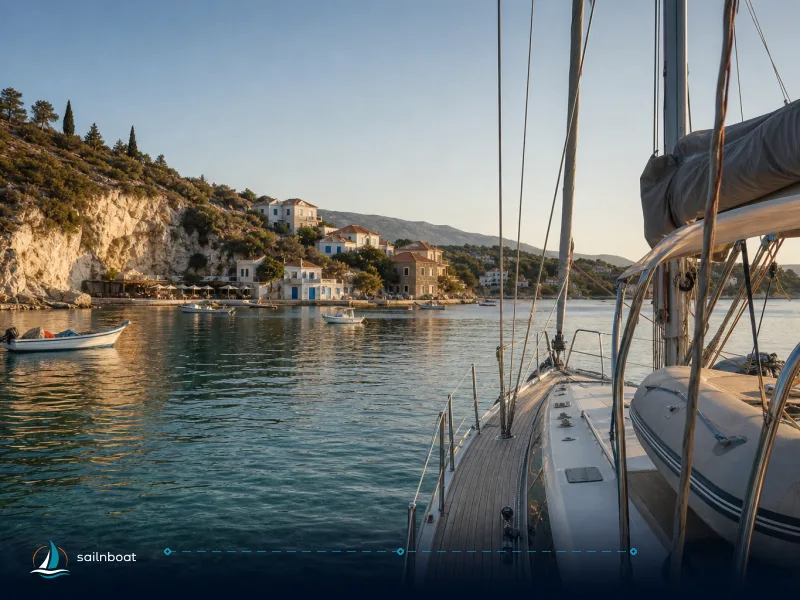
Palaiokastritsa is a cluster of small bays on Corfu’s northwest coast beneath the Theotokos Monastery and cliffs. The coast is carved into several named coves and swim spots (the main sandy beach, Agia Triada, the monastery cove and neighbouring Liapades/Alipa coves), each with slightly different depths, seabed and exposure; charts and local guides consistently describe mainly sand bottoms with frequent rock patches and seagrass in places. Because the headland pattern creates small, confined coves, swing room and local gusts are the principal operational concerns.
What that means for your decision:
- If a fresh NW is forecast, favour coves that face east/south‑east or pockets that lie sheltered inshore; avoid the main bay which opens toward the NW/W.
- Expect shallow‑to‑medium depths (generally 4–15 m across the group); approach slowly and confirm depth visually and on the sounder.
Cove-by-Cove Anchoring Recommendations
Below are the practical, decision‑grade details for the three coves most charter skippers ask about: Agia Triada, Liapades and the cove beneath the Theotokos Monastery. The depth ranges and seabed types are the typical values reported by current cruising guides and anchorage databases for Palaiokastritsa; local variation exists so treat these as working planning numbers and re‑check on approach.
| Cove | Typical depth (m) | Seabed | Holding | Shelter from NW | Practical notes |
|---|---|---|---|---|---|
| Agia Triada | ~5–10 m | Sand with occasional mud | Good on sand; watch for weed/rocks near headlands | Moderate — partially exposed to NW gusts across the headland | Good for single‑night stop; pay careful attention to swing room and approach lines. |
| Liapades (Ormos Liapades) | ~6–12 m | Sand / mixed rock patches | Fair to good where sand patches are found; mixed elsewhere | Better sheltered from NW than main bay — a preferred option if NW is forecast | Some areas have lines ashore and limited space; avoid close in to visible rocks. |
| Theotokos Monastery cove | ~4–8 m | Sand with some weed and rocky patches | Generally good on sand close to beach; patches of weed reduce bite in places | Decent protection when anchored east of the promontory; avoid exposed edges | Popular for day visits — take care with tourists and tenders at anchor. |
Short explanation of the sources and how to read them:
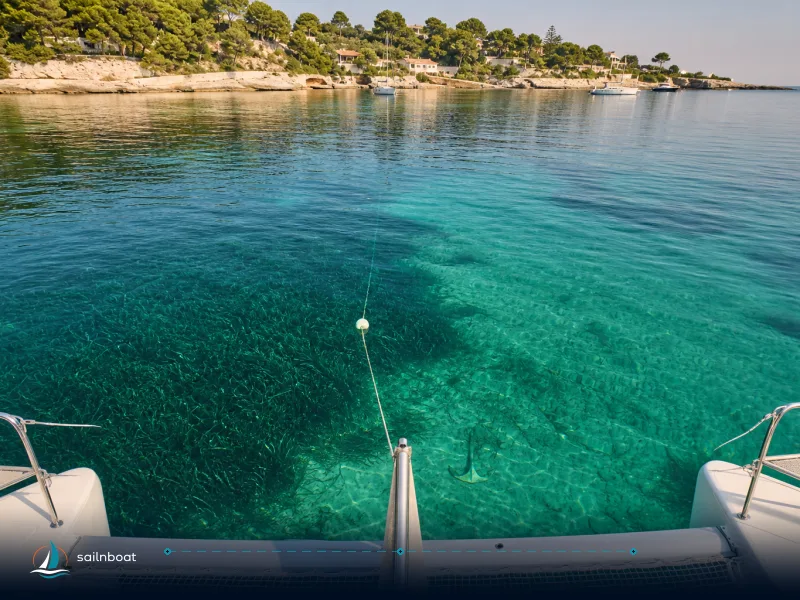
- Depth ranges above are the commonly reported planning range across the coves; individual soundings on your depth sounder are authoritative. The presence of rock, weed and submerged reefs is frequently noted around headlands and cave features — keep margin inshore and mark those hazards on your chartplotter.
Approach and placement (step‑by‑step)
- Plan approach on the chart — identify rocks, reefs and shoal contours shown on the chart. These bays are commonly shown on nautical charts and referenced in cruising guides as anchorages.
- Enter slowly on reduced throttle with good lookout; assign crewmembers to sounder and lookouts for swimmers/tenders.
- Select sand patch close enough to shore for shelter but with enough swing room — typically in the 4–10 m depth band for most charter yachts. Confirm bottom by sounding as you approach.
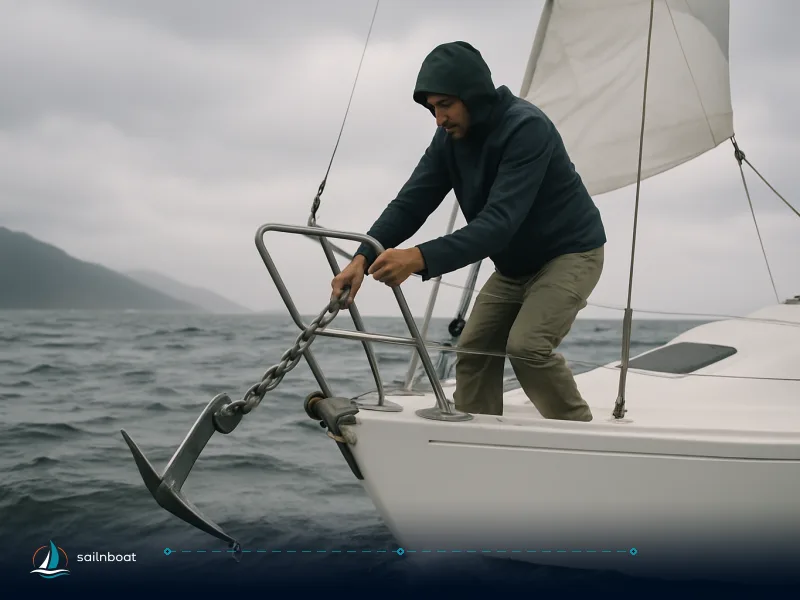
- Set the anchor under power (power‑set technique), back down steadily to place load on the chain and confirm the anchor is holding before paying out your final scope.
Safety Measures for Overnight Anchoring
You’ll make or break an overnight stop on how you set and monitor the ground tackle. Use these specific, practical measures for Palaiokastritsa.
Recommended safety protocols
- Anchor scope: plan 5:1 as a baseline for calm conditions; increase to 7:1 (or higher) for overnight or when NW wind is forecast or gusting. Published guidance varies; experienced skippers commonly use 7:1 overnight to reduce the chance of dragging. Adjust for rope vs all‑chain rode as your roster requires.
- Anchor alarm radius: many anchorage guides and skipper accounts use alarm radii from about 40–80 m depending on boat length and swing room; in the confined coves of Palaiokastritsa a practical baseline is around 50 m but choose a longer radius if you expect broad swing or gusts. The Paleokastritsa entries in anchorage databases illustrate alarm radii in that range.
- Stern lines: where available, stern lines ashore significantly reduce swing and exposure — Liapades and some small coves have mooring lines or the possibility to take a stern line ashore (note local restrictions in summer). Use a stern line to a fixed point ashore only if the shore is suitable and allowed; lines ashore can be a safe choice in gusty NW conditions.
- Redundant checks: after setting, run a reverse check (motor in reverse at low RPM) and mark GPS position. Recheck position after 10–15 minutes and before leaving the cockpit at night. Keep a watch or set two people on periodic checks if conditions are marginal.
Gear and monitoring
- Put the windlass in line with the snubber/bridle and a second holding device (snubber or nylon snub) to avoid sudden loads on the windlass.
- Use two anchor alarms (phone + chartplotter) where possible and set audible alerts for small movement during night watches. Real‑time monitoring is inexpensive and effective.
Navigating Northwest Winds
Northwest winds are the dominant operational threat for Palaiokastritsa anchorages because they can come with gusts funneling off the interior hills.
Why the main bay is risky in NW
Cruising guides and anchorage databases consistently note the main bay’s exposure to N–NW–W directions; in a fresh NW the swell and fetch increase and the bay becomes uncomfortable and more likely to generate anchor dragging. For that reason, many seasoned skippers recommend avoiding the main open bay when NW is forecast.
Better choices when NW is forecast
- Liapades: more confined orientation and a sand bottom make it a better refuge for NW than the main bay. Check for local mooring lines and give rock patches a wide berth.
- East‑facing monastery coves: anchor east of the headland where possible — you’ll get lee from the immediate headland and reduced fetch; still avoid the rocky promontories and steep cliffs right at the face.
If you expect NW gusts above comfortable limits for your crew or boat, prefer a marina or a sheltered harbour (Alipa/nearby small harbours) rather than anchoring.
Comparative Analysis of Holding Quality
Use the table below as a quick decision tool when selecting a cove based on holding and exposure.
| Cove | Holding quality | Exposure notes |
|---|---|---|
| Agia Triada | Good where sand dominates; watch for weed | Moderate exposure; not the first choice in a fresh NW. |
| Liapades | Fair to good on sand patches; better shelter from NW | Preferred in NW conditions for shelter; limited space and occasional moorings. |
| Theotokos Monastery cove | Good near shore on sand; variable where rock/weed appears | Decent protection when tucked into the eastern pocket; tourist boat traffic can increase daytime congestion. |
Trade‑offs:
- Shelter vs swing room: the best‑sheltered pockets are also the smallest — you may need to accept less swing room and deploy stern lines or more scope.
- Holding vs hazards: sand gives good bite; patches of rock/weed reduce bite and increase risk of a late‑night walk of the anchor. Always pick a clear sand patch and confirm by sounder.
Final Considerations for Charter Skippers
- Plan for NW in advance: if the forecast shows a sustained NW, aim for Liapades or east‑facing pockets and plan a marina option if gusts look high.
- Set your scope and alarms proactively: use at least a 5:1 baseline, bump to 7:1 overnight or if you expect gusts, and set alarm radii appropriate to your swing room (many guides indicate 40–80 m; ~50 m is a practical starting point in the coves).
- Stern lines are a force multiplier: where lines ashore exist and local rules permit, a stern line can prevent dangerous close contacts and dramatically reduce anchor drag risk. Confirm access to a suitable pickup point ashore before committing.
Plan your anchorage with contingency: brief the crew, mark an escape route (a short engine run to open water), and agree a night watch routine so a gust‑induced move is noticed early.
Frequently Asked Questions
Depths typically run from about 4–15 m across the cluster. Agia Triada is roughly 5–10 m on sand/mud, Liapades around 6–12 m on mixed sand and rock, and the cove beneath the Theotokos Monastery about 4–8 m with sand and isolated weed or rock patches. These ranges vary locally, so check your depth sounder on approach and consult the chart.
Holding is generally fair to good on sand but can be patchy where rock or weed occurs. Liapades and the coves east of the monastery tend to have more reliable sand and better shelter from NW winds, while the main bay has mixed holding with rock patches in places.
Liapades and the smaller east‑facing coves under the Theotokos Monastery offer the best shelter when a NW is forecast; the open main bay is exposed to NW and W winds and is the least desirable in those conditions.
Set a conservative scope (commonly 5:1 in calm conditions, increase to 7:1 or more when NW wind is forecast), power‑set and back down to confirm, use an anchor alarm sized to your expected swing (many guides show 40–80 m; ~50 m is a practical starting point in tight coves), and deploy stern lines ashore where available to limit swing.
If NW winds are forecast, avoid the main open bay; choose smaller east/south‑east facing coves with sand holding, pay extra chain (7:1 scope commonly used overnight in stronger conditions), watch for gusts funneling through valleys, and consider a stern line ashore or a second anchor if swing room is limited.
Written by
Sailnboat Editorial
The Sailnboat editorial desk covers yacht and boat chartering worldwide — routes, bases, seasons, boat types, paperwork and the practical costs that decide a trip. We are a charter marketplace, not a boat owner or a local agency: what we sell is judgement and support, so our guides are written to help you make a decision, not to sell you a specific boat. Every guide is checked against live operator and marina data before it goes out.
Fact-checked against live operator and marina data, and published under our editorial standards. Last reviewed: .