Brbinj Anchorage: A Skipper's Guide to Provisioning and Ferry Wash
Concrete, actionable guidance for skippers visiting Brbinj, Dugi Otok: where to drop the hook, how to deal with ferry wash, what to buy ashore and which permits and rules matter.

Brbinj anchorage gives you a practical, last‑stop harbour on Dugi Otok for fuel, a supermarket and a handful of restaurants before you head to Sakarun or Telašćica; the hook holds well in 2–10 m (mud and sand) but you must plan for the Zadar–Brbinj ferry’s wash and the local rules (eNautička vignette, quay fees, 150 m beach exclusions). Read on for exact anchoring zones, step‑by‑step techniques for ferry wash, provisioning detail and the regulations you need to sail there confidently.
Anchoring Zones and Depths at Brbinj
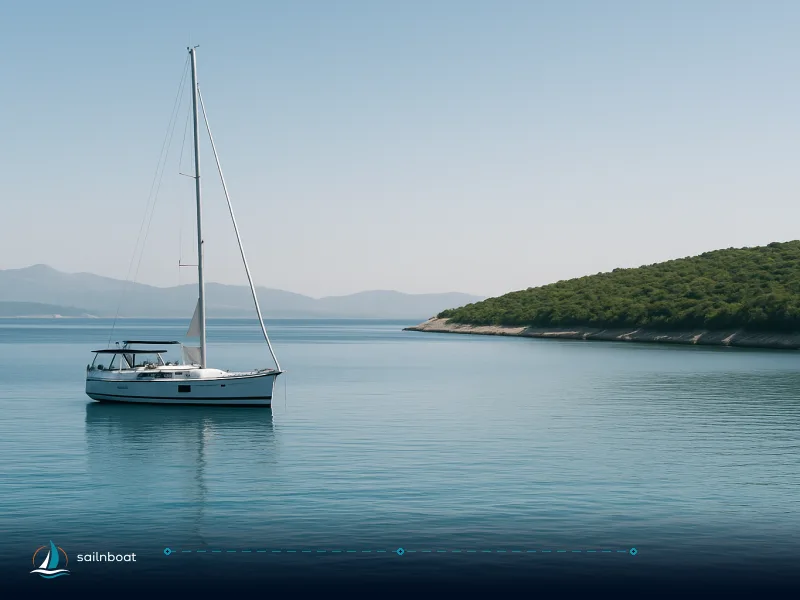
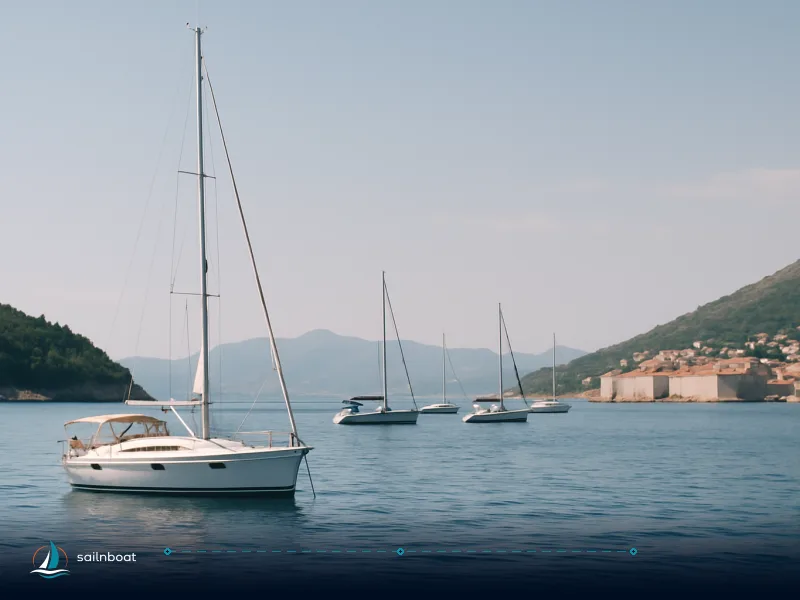
Brbinj has two practical anchoring areas used by visiting yachts: the open Harbour Bay and a smaller Inner Bay close to the quay. Both are the working harbour for Dugi Otok and are primarily used for provisioning stops rather than overnight resorting.
Harbour Bay
- Typical depths: 4–10 m.
- Bottom: mixed mud and sand, generally good holding.
- Best for: boats that want easy access to the quay but prefer a quieter swing area further from the shore.
- Exposure: sheltered from NE Bura but exposed to W and NW winds; avoid during strong W/NW conditions.
Inner Bay
- Typical depths: 2–5 m.
- Bottom: mainly mud with good holding.
- Best for: short stern‑to layups or alongside the quay (space and local traffic permitting). Better comfort when a Mistral or NW chop develops.
Anchoring zone comparison
| Feature | Harbour Bay | Inner Bay |
|---|---|---|
| Depth | 4–10 m | 2–5 m |
| Bottom | Mud & sand | Mud |
| Holding | Good | Good |
| Best use | Open anchoring, provisioning | Stern‑to / alongside quay |
| Exposure | W / NW | Less exposed, still W |
Practical anchor setup
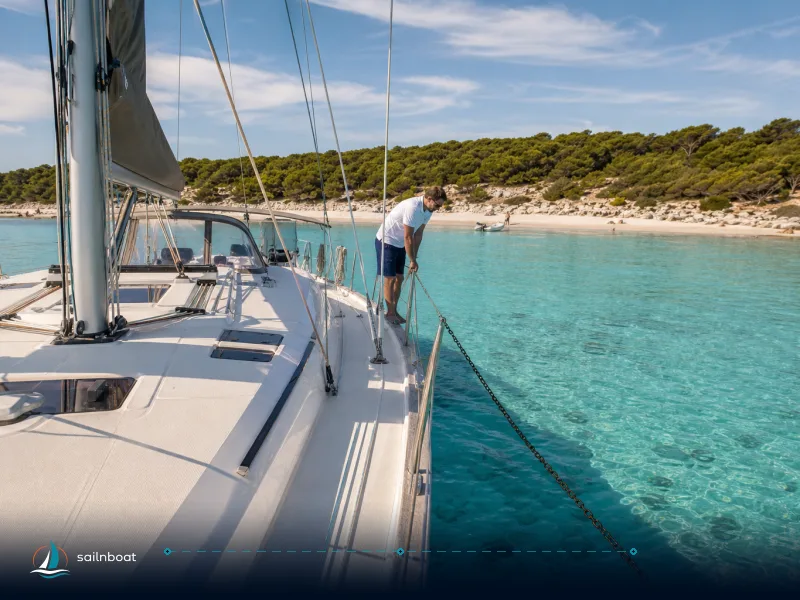
- Scope: guides for Brbinj recommend a long scope — Safety Anchor Alarm notes a 7:1 example for the deeper end of the harbour; use a snubber and check the set by backing down.
- Check for Posidonia: anchor where you can see sand patches; avoid holding in dense seagrass (protected). Snorkel the anchor if in doubt.
Managing Ferry Wash at Brbinj
The single greatest operational annoyance in Brbinj is wash from the scheduled ferries serving Zadar; plan for it, and you’ll sleep well.
Understanding Ferry Impact
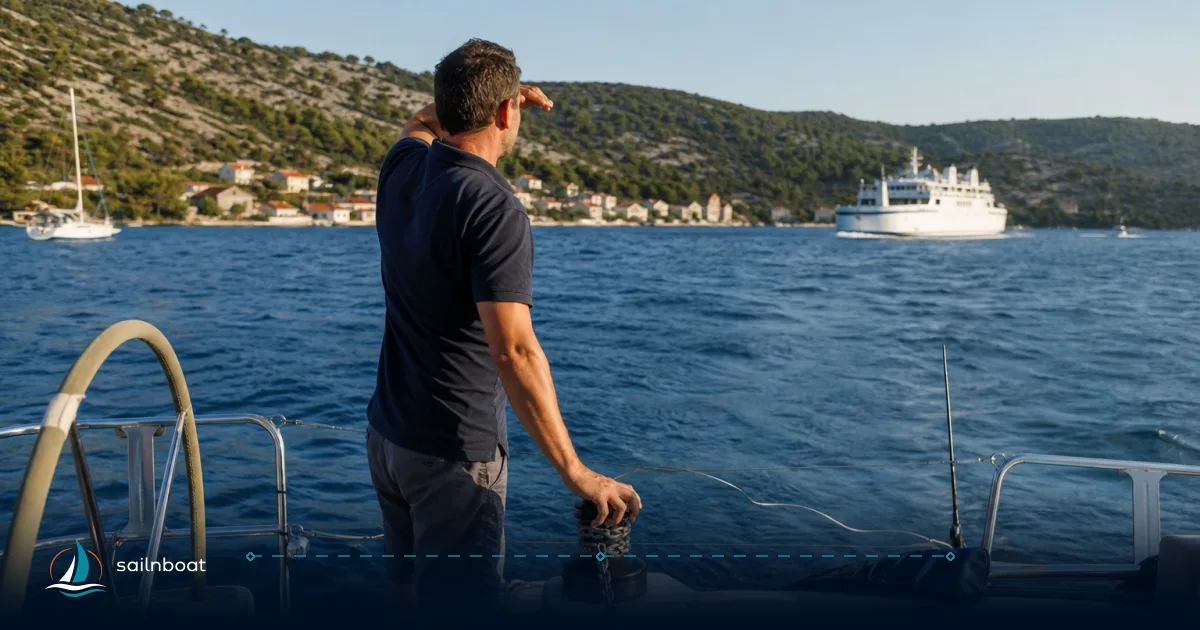
- Service: Jadrolinija runs the Zadar–Brbinj ferry line (regular daily sailings); ferries are frequent in the season and create a noticeable wash upon approach and passage. The ferry lane crossing the harbour is the key source of wave energy.
- Behaviour: expect the boat to roll and the stern to kick when a ferry passes — this is normal and predictable in Brbinj’s harbour geometry.
Stern‑to and other techniques
- Positioning: if you want maximum comfort, lie in the Inner Bay and stern‑to the quay (if space and local traffic allow) — the quay breaks much of the ferry’s wake. Safety Anchor Alarm specifically lists the Inner Bay as the place to consider stern‑to.
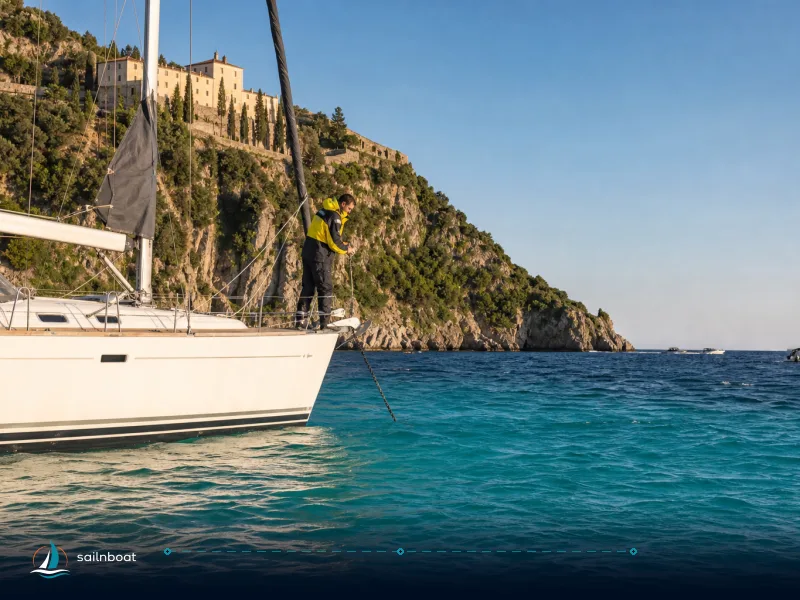
- Primary anchor + snubber: set the primary anchor with a long scope, then fit a snubber to take load off the windlass; this smooths shock loads from passing wakes. Use a heavy chain catenary where feasible.
- Secondary measures: consider a stern line to shore (if permitted) or a bow‑to stern‑to combination if local rules and quay traffic allow; keep a watch and be ready to weigh if wash becomes unsafe. In busier months, the ferry may arrive with vehicles and local traffic — don’t obstruct the fuel quay or ferry operations.
- Anchor alarm radius: Safety Anchor Alarm suggests a wider alarm radius when in the open Harbour Bay (examples given: ~70 m) and a shorter one when stern‑to (example ~40–45 m) — adapt to your vessel length and expected swing.
Skipper checklist for ferry wash
- Anchor early and test the set before the ferry timetable windows.
- Position west of the ferry lane to reduce direct wake.
- Use snubbers and warps; consider stern‑to if the quay is available and you can land a line.
Provisioning Facilities in Brbinj
If you are stocking up before Sakarun or Telašćica, Brbinj is the reliable last stop.
Fuel station
- There is a fuel facility in Brbinj for refuelling before heading to more remote anchorages; plan to top up here, especially before Telašćica or Molat where fuel is scarce. Fuel operating hours may be seasonal; call ahead if the timetable is critical.
Supermarket and shops
- Expect a small supermarket suitable for basics (bread, dairy, canned goods, limited fresh produce). For larger or specialty provisions plan for Zadar or a scheduled resupply. Brbinj’s shop hours are seasonal and often close earlier than mainland stores.
Restaurants and local services
- Several small konobas and restaurants operate in the village; Restoran Antonio is a named local option listed in the island’s tourist information. Opening is seasonal — in peak months you’ll have good evening options; off‑season the choice narrows.
Practical provisioning tip
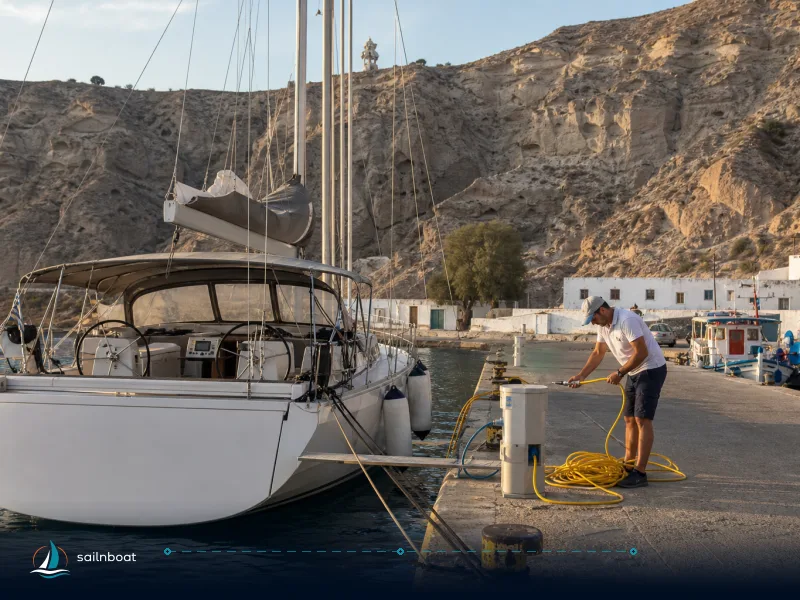
- If you rely on Sakarun (no reliable shops) or Telašćica (park restrictions), fill fuel and buy main provisions in Brbinj. Time your shore errands to avoid the immediate post‑ferry rush when locals and day‑trippers are ashore.
Navigational Hazards and Safety Considerations
Know the local hazards — they’re mostly predictable and manageable.
Ferry lane awareness
- Keep clear of the ferry approach and its buoyed/marked lane; the ferry has priority and its wash is the main traffic hazard in the bay. Do not anchor where your swing circle could cross the lane.
Outer harbour approaches
- The outer approaches to Brbinj are exposed to W and NW winds; these can make the open harbour choppy and uncomfortable. When a strong W/NW wind is forecast, favour the Inner Bay or move to a more protected harbour.
Weather and charts
- Always consult your up‑to‑date HHI chart and local Navtex/VHF for temporary restrictions or hazards. The harbour master can advise on short‑term changes (e.g., works, buoy fields, local bans). Safety Anchor Alarm and PredictWind list the local depth ranges and note that local conditions (storms, dredging) can alter suitability.
Regulations and Fees for Anchoring and Mooring
Permit and registration
- Croatian eNautička/e‑vignette: foreign yachts must register and pay the navigation safety fee through Croatia’s eNautička/e‑vignette system or at the harbour master on first entry; follow the eNautička process for the season and have vessel and crew documentation aboard. The eNautička process is the standard route to obtain the cruising vignette and record arrivals.
Fees and what is free
- Natural anchorages are generally free by law; quays, concession buoys and marina berths are chargeable and tariffed by the concessionaire or port authority. If you plan to use the quay you should be prepared to pay a harbour fee. Xplor and other national‑law summaries explain how natural anchorages differ from concessioned moorings.
Stay limits and beach exclusion
- Many local guides and harbour information reference a practical maximum stay of 3 days in popular bays and port anchorages (common practice in busy island anchorages to limit long‑term occupation). Additionally, Croatia’s rules prohibit anchoring within 150 m of declared natural beaches or buoys (the 150 m exclusion between June 15 and September 15 is actively enforced in popular bathing bays). Treat any beach with heavy bathing use as a 150 m exclusion unless local notices say otherwise.
Harbour master and enforcement
- The lučka kapetanija (harbour master) enforces local bans, quay concessions and park rules; a harbour master check in peak season is common. Keep evidence of your eNautička/vignette and tourist tax payment aboard — spot checks do occur.
Quick practical checklist (what to do before you arrive)
- Buy or confirm your Croatian eNautička/e‑vignette for the season and carry the confirmation aboard.
- Top up fuel at the Brbinj fuel station before heading to Sakarun or Telašćica.
- Plan provisioning: supermarket for basics; larger supplies in Zadar if needed.
- Anchor west of the ferry lane; set a long scope and fit a snubber; test the set before the ferry time window.
- Keep 150 m clear of beaches used by bathers in June 15–September 15 and respect quay/park fees if you use paid berths.
Plan your Brbinj stop with those steps and you’ll leave with full tanks, fresh bread, and a short run to Sakarun (commonly quoted at roughly 14 nm) or an easy hop to Telašćica — but leave time for the ferry windows and local checks.
Plan your anchorage at Brbinj and ensure a smooth sailing experience.
Frequently Asked Questions
Harbour Bay is typically 4–10 m over mud and sand (good holding); the Inner Bay is shallower at about 2–5 m with mainly mud bottom and is better for stern-to or alongside the quay.
Set the anchor strongly (a long scope is recommended), place the boat west of the ferry lane, expect rolling when the Zadar–Brbinj ferry passes, and use stern-to in the inner bay or a snubber and extra warps to reduce motion.
Brbinj has a fuel station, a small supermarket for basics and several seasonal restaurants — Restoran Antonio is a reliably listed option in the village.
Main hazards are the ferry lane (keep clear), ferry wash, and exposure in the outer harbour approaches to W/NW winds; consult charts and the harbour master for temporary bans or local hazards.
Natural anchoring is free by law, but quay berths and concession buoys can carry fees; foreign yachts must register through Croatia’s eNautička/e‑vignette system and observe the 150 m beach exclusion in high season.
Written by
Sailnboat Editorial
The Sailnboat editorial desk covers yacht and boat chartering worldwide — routes, bases, seasons, boat types, paperwork and the practical costs that decide a trip. We are a charter marketplace, not a boat owner or a local agency: what we sell is judgement and support, so our guides are written to help you make a decision, not to sell you a specific boat. Every guide is checked against live operator and marina data before it goes out.
Fact-checked against live operator and marina data, and published under our editorial standards. Last reviewed: .