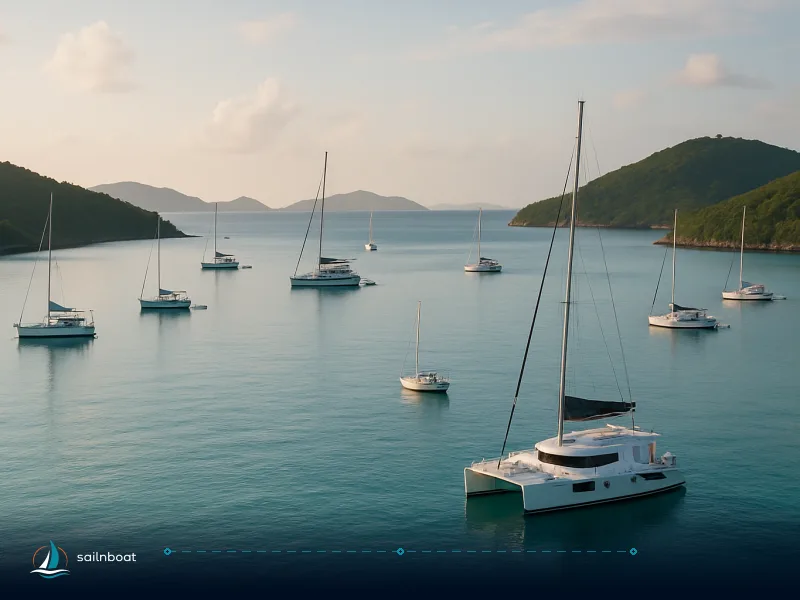
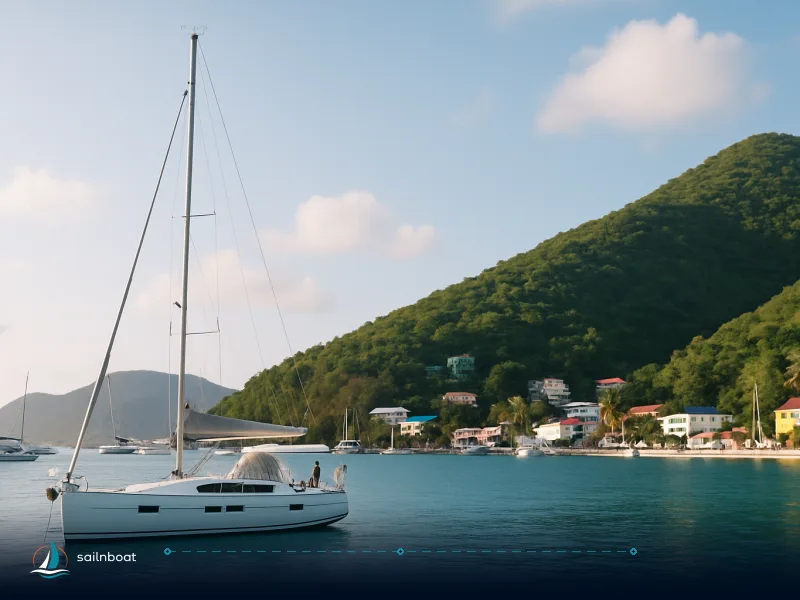
Little Harbour, Jost Van Dyke: Definitive Anchorage Guide
A captain-level, action-first guide to anchoring and taking a mooring in Little Harbour, Jost Van Dyke — shelter, seabed, mooring logistics, dinghy landings and local services.

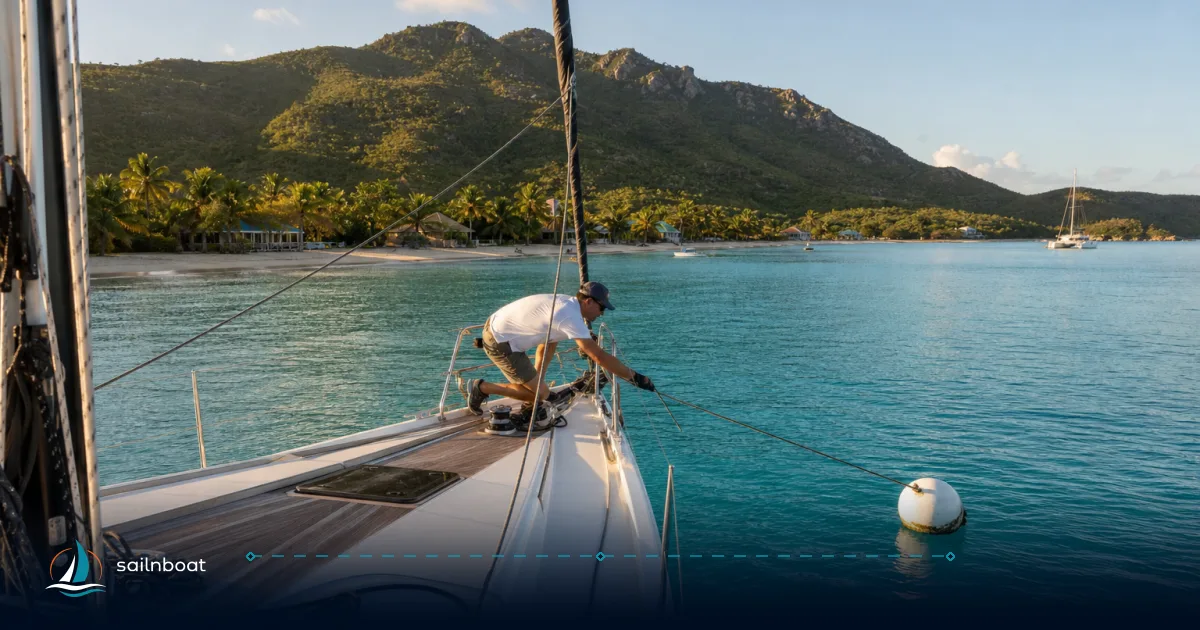
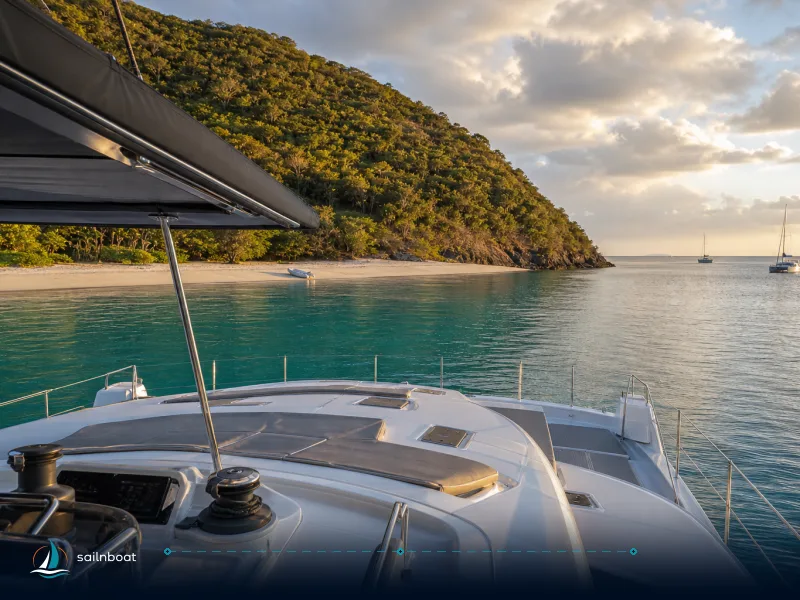
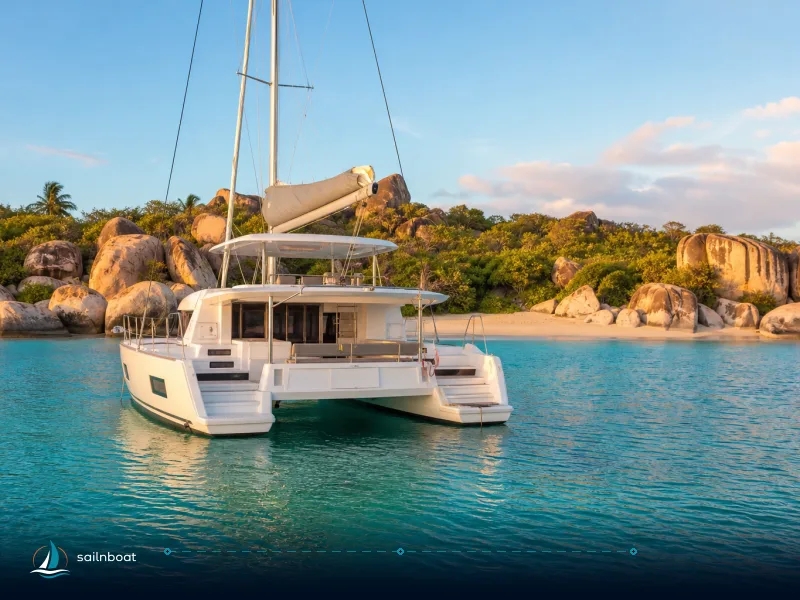
Little Harbour on Jost Van Dyke is a compact, well‑protected stop that gives you a quieter alternative to Great Harbour with reservable BoatyBall moorings and short dinghy runs to a handful of local restaurants — useful when you want a calm provisioning night rather than a party anchorage. This guide tells you exactly what to expect for shelter, seabed and depths, mooring logistics and dinghy access so you can decide whether to take a ball, anchor or run to the small marina.
Shelter and Seabed Conditions
Little Harbour is small and inward‑facing; that geometry is what gives its protection. For planning: the harbour reliably shades you from the northeast trades but can admit east-to-east‑southeasterly swell on rougher days — if you’re cruising from Tortola or heading east, expect markedly calmer conditions inside than outside the headlands.
Wind and Swell Directions
- Prevailing trades: northeast quadrant — Little Harbour is generally sheltered from those winds because the harbour opens to the east and is flanked by higher ground. Expect comfortable conditions for mooring or anchoring with NE winds.
- Swell: easterly swell can work into the bay when seas are up; if the fetch from the east is long you may notice a roll or choppy surface near the entrance and head. Factor swell into your comfort and crew plans — protection from wind does not guarantee zero swell.
Seabed Composition
- Composition: a mix of sand and coral/reef patches; holding is generally good where sand dominates but you must avoid dropping on coral, especially inside protected marine park areas. Little Harbour has a mix of sand and coral/reef patches; anchoring on coral is discouraged and you should always use sand patches for anchors. Confirm local anchoring rules with your operator or updated BVI regulations. Use sand patches for anchors.
- Depths: charts and pilot notes vary by reference point. Admiralty and regional pilot notes list depths of about 8 fathoms (≈14.6 m) inside the entrance, while local cruising notes commonly reference shallower water as you approach the head; other guides report inner depths closer to 8–10 m nearer the head. Treat these as working ranges, check your chart datum and rely on your echo sounder when manoeuvring.
Practical action: approach slowly, take soundings continuously, and pick sandy ground well clear of reef patches. If you must anchor, keep plenty of scope and be prepared to re‑set if the wind or swell shifts.
Mooring Management and Fees
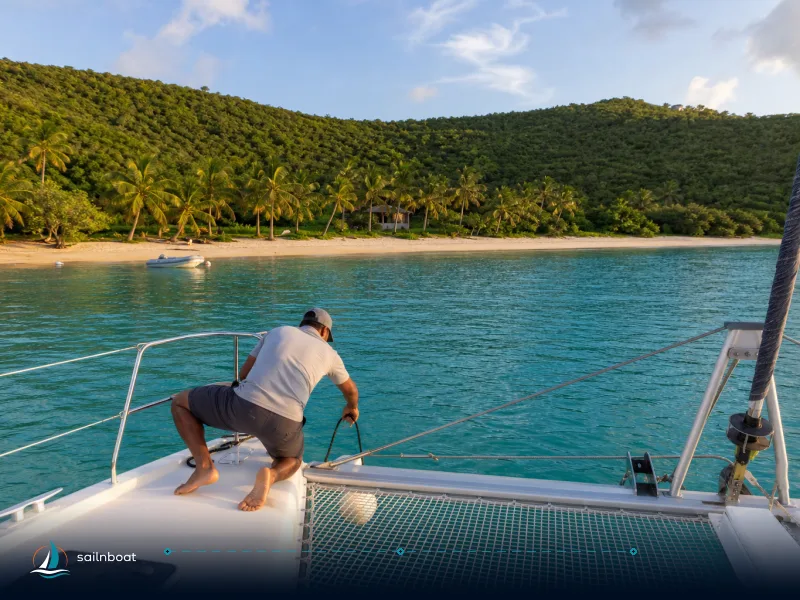
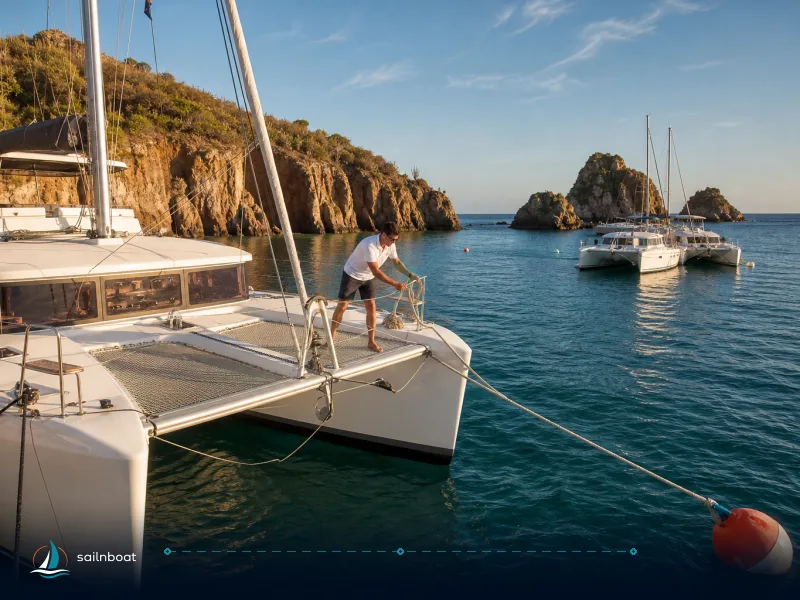
If you prefer not to anchor, Little Harbour has an established mooring field operated both first‑come and via the BoatyBall reservation platform — this is the normal way most charter crews use the bay.
Mooring Ball Availability
- Quantity: published mooring inventories list multiple balls in Little Harbour; aggregated counts for Jost Van Dyke show several dozen moorings split between Great Harbour, Little Harbour and Diamond Cay, and one public inventory lists around 36 BoatyBall moorings specifically assigned to Little Harbour. Availability can still vary day‑to‑day and seasonally.
- First‑come vs reservable: you will find both white/blue first‑come balls and orange BoatyBall‑managed balls in many BVI anchorages; Little Harbour participates in the BoatyBall system. If you want certainty on a busy day, use BoatyBall.
Fees and Reservation Procedures
- Typical fee range: mooring charges in the BVI commonly run roughly $40–$55 USD per night in recent practice — BoatyBall and local operators publish charges in the same band, with slight differences between first‑come and guaranteed BoatyBall reservations. Expect nightly fees in that range rather than a euro price; the BVI uses USD commonly.
- Booking: BoatyBall opens its reservation window each morning (local time) — plan to book at 07:00 if you need a guaranteed ball, or arrive early for first‑come options. Some local restaurants and operators manage groups of buoys and collect fees (Abe’s, Harris’ Place are the local touchpoints).
Operational tip: assign one crew member to the BoatyBall app at 06:55 and be ready; if you can’t get a ball in Little Harbour, Great Harbour and Little Jost are the nearest alternatives.
Dinghy Access and Shoreside Services
Little Harbour’s shoreline is low and approachable by inflatable tender; services are small, local and oriented to visiting sailors.
Dinghy Landing Points
- Primary landings: Harris’ Place and Abe’s by the Sea have small dinghy piers/landing spots and are the usual places crews come ashore; Sidney’s (Sydney’s/Sidney’s) Peace & Love is also a common shore stop. Each spot is informal — expect basic steps or a short beach run rather than full marina walkways.
- Dinghy security: leave engines up and locked when you explore; reports of opportunistic theft in the region mean an attended or secured dinghy is safer, especially at night.
Available Shoreside Facilities
- Food and small supplies: Harris’ Place, Abe’s by the Sea and Sidney’s Peace & Love serve meals (lobster and seafood are local specials) and will sell limited provisions and ice. Don’t rely on comprehensive provisioning — major groceries/fuel are on Tortola.
- Fuel and water: expect no regular fuel station in Little Harbour; plan fuel stops at main marinas (Tortola/Spanish Town) or a major service point before you arrive. Water refill may be possible by arrangement at commercial piers but is not guaranteed.
Practical plan: arrive with full fuel and adequate water for the night; use shore visits for meals and top‑up items only.
Navigational Considerations and Swing Room
Little Harbour’s compact dimensions make approach and swing management the crucial operational tasks.
Navigational Hazards
- Reefs and coral heads: the approaches and some inner parts are fringed with coral or shallow ledges — charted hazards include shallow bars between Little Jost and Jost Van Dyke and isolated rocky features in the general area. Give those shoal areas a wide berth.
- Local rocks/marks: Mercurius Rock and nearby rocky features are noted in pilotage material for the general area — keep to well‑chartered channels and monitor depth continuously.
Swing Room Limitations
- Density: when the mooring field is busy your swing room is constrained by neighbouring boats — a single boat on a ball has limited radius before other moorings or reefs sit within reach. Expect to manage stern lines, tender positions and generators to limit needless swinging.
- Anchoring vs ball: if you anchor instead of taking a ball, position in sand patches well clear of the mooring field and reef; set conservative scope (longer scope for forecast winds) and check set after you leave the engine at low RPM in reverse. Wind shifts overnight can reduce effective swing room. (Anchoring technique here is standard practice; use your chartplotter and echo sounder for exact placement.)
Quick checklist before committing to a spot:
- Sound continuously on approach.
- Confirm that the ball is managed by a local operator (pay at the restaurant or by BoatyBall).
- If anchoring, pick sand away from coral and keep a watch for swinging neighbours.
Local Attractions and Activities
Little Harbour is small, but it connects you to a few local highlights without the crowds of White Bay.
Nearby Attractions
- Diamond Cay National Park: a tiny protected islet near the eastern end of Jost Van Dyke noted for bird nesting and protected marine habitat — it’s an easy snorkel or short dinghy hop (respect park rules and no‑anchor zones).
- Local restaurants: Harris’ Place, Abe’s by the Sea and Sidney’s Peace & Love are the practical reasons to come ashore here — good for lobster, casual dining and the local welcome. These businesses also typically collect mooring fees for the buoys adjacent to their locations.
Recommended Activities
- Evening provisioning and a relaxed meal ashore — ideal when you want a quieter night than Great Harbour.
- Short hikes: a few informal paths and ridgelines give quick viewpoints over the harbour; approach on foot with good shoes and water. Check local tide/shore conditions before landing.
Quick comparison: mooring, anchoring and the small marina
| Option | Pros | Cons | Typical cost / note |
|---|---|---|---|
| BoatyBall reservable mooring | Guaranteed spot when booked; no anchor/rode fuss | Requires booking at 07:00 or payment ashore; limited swing room in fields | Expect ~$40–$55 USD/night; book via BoatyBall. |
| First‑come mooring / restaurant‑managed buoys | Easy walk ashore, pay locally | Not guaranteed during high season; ball may be claimed | Pay ashore at Harris’ or Abe’s; amounts similar to BoatyBall. |
| Anchoring (sand patches) | Flexible placement, usually cheaper | Must avoid coral, variable holding, swing room limited near fields | No fee to anchor, but follow marine park rules and set long scope; use echo sounder/charts. |
| Small marina (limited dockage) | Hard‑side access if available | Very limited berths; may be private | Limited public info — use only if you have confirmed space. |
Final practical skipper notes
- Confirm mooring availability with BoatyBall (opens 07:00 local) if you need a guaranteed ball; assign one crew member to the app.
- Use charts and the echo sounder — pilot notes vary; NOAA lists depths of about 8 fathoms near the entrance, local guides report shallower inner depths. Treat depth numbers as a range and take continuous soundings during approach.
- Fuel and major provisioning are on Tortola — don’t plan Little Harbour as your last refuel. Shore restaurants will cover meals and small items.
Plan your next night here if you want a quieter, convenient provisioning stop with easy dinghy access — just come with full tanks, a charged tender, a BoatyBall account if you want a guaranteed mooring and a watchful eye on charts and soundings.
Plan your next anchorage at Little Harbour for a peaceful stop.
Frequently Asked Questions
Little Harbour generally sits sheltered from the prevailing northeast trade winds but can feel east or east‑southeasterly swell; expect protection from NE winds but some easterly swell penetration on choppier days.
The seabed is a mix of sand and coral; charts and on-the-water soundings show deeper water at the entrance and shallower toward the head—use your echo sounder and avoid anchoring on coral.
There are multiple BoatyBall moorings in Little Harbour (lists indicate around three dozen balls across Little Harbour fields); mooring fees in the BVI commonly run about $40–$55 USD per night, with BoatyBall reservations handled through the app at 07:00 local time.
Dinghies commonly land at small piers and beach points near Harris’ Place, Abe’s by the Sea and Sidney’s Peace & Love; these offer food and limited provisions, but fuel and large stores are not guaranteed.
Coral heads and shallow ledges are present near the approaches and around Little Jost; when mooring fields are full, available swing room is limited — keep conservative scope, monitor wind shifts and steer clear of reef patches.
Written by
Sailnboat Editorial
The Sailnboat editorial desk covers yacht and boat chartering worldwide — routes, bases, seasons, boat types, paperwork and the practical costs that decide a trip. We are a charter marketplace, not a boat owner or a local agency: what we sell is judgement and support, so our guides are written to help you make a decision, not to sell you a specific boat. Every guide is checked against live operator and marina data before it goes out.
Fact-checked against live operator and marina data, and published under our editorial standards. Last reviewed: .