Rope in the Propeller: Safe Recovery and Prevention Tips
Clear a rope in the propeller safely: immediate actions, deck‑based removal techniques, when to call a diver, pre‑start engine checks and practical prevention measures.

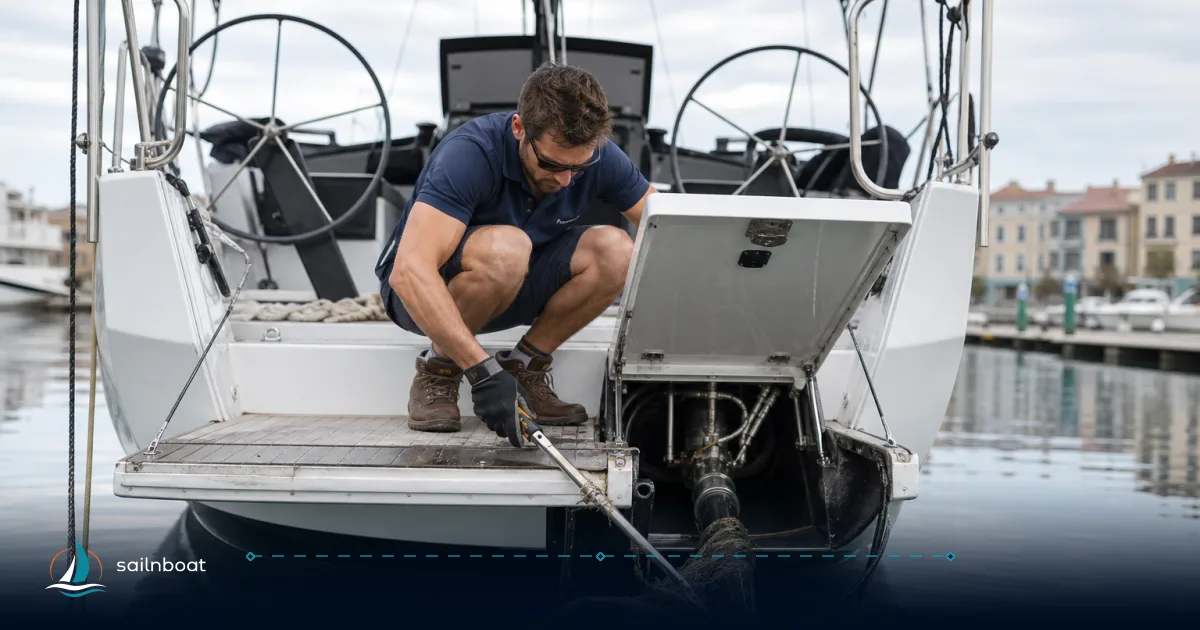
If you feel a sudden loss of propulsion or notice unusual vibration, treat it as rope in the propeller: stop the engine immediately, put the gearbox in neutral and keep crew clear of the stern while you assess the situation from the cockpit. That single sequence—stop, neutral, crew clear—protects the drive, the gearbox and people and lets you decide whether you can remove the line from deck or need professional help.
Immediate Actions for Propeller Entanglement
Initial Response
- Stop the engine at once. Do not try to muscle through the loss of revs — allowing the propeller to continue turning can tighten wraps and damage blades, shafts and the gearbox.
- Put the gearbox in neutral and leave it there while you evaluate. If the engine has an emergency stop or fuel‑cut, use it.
- Keep all crew off the transom and away from the waterline. Secure any loose clothing, halyards or long hair that could become an entanglement hazard. IMCA records show entanglement with rotating machinery is a serious injury risk; treat the prop as a live hazard even when the engine is off.
Safety Considerations
- Brief the crew immediately: name one person to observe the propeller from the stern (topsides only), another person to act as communicator, and one to prepare tools. Don’t allow anyone to enter the water unless you have a trained diver and appropriate surface tending.
- If you are drifting toward danger (shoal, rocks, other boats), deploy an anchor carefully or hail nearby assistance on VHF 16 — do not attempt to run the engine until the entanglement is cleared and the drive checked.
Safe Retrieval Techniques
Start with recovery techniques you can do from deck or the dinghy; these are lower risk and usually avoid the expense and risk of a diver operation.
Deck‑Based Retrieval Methods
- Slow, controlled extraction from the cockpit:
- Approach the stern in calm conditions or, when safe, motor forward slowly under tight control to take slack out of the line without turning the prop. Stop the engine again once slack is reduced. (Only do this if the boat is comfortably manoeuvrable and you won’t tighten wraps.)
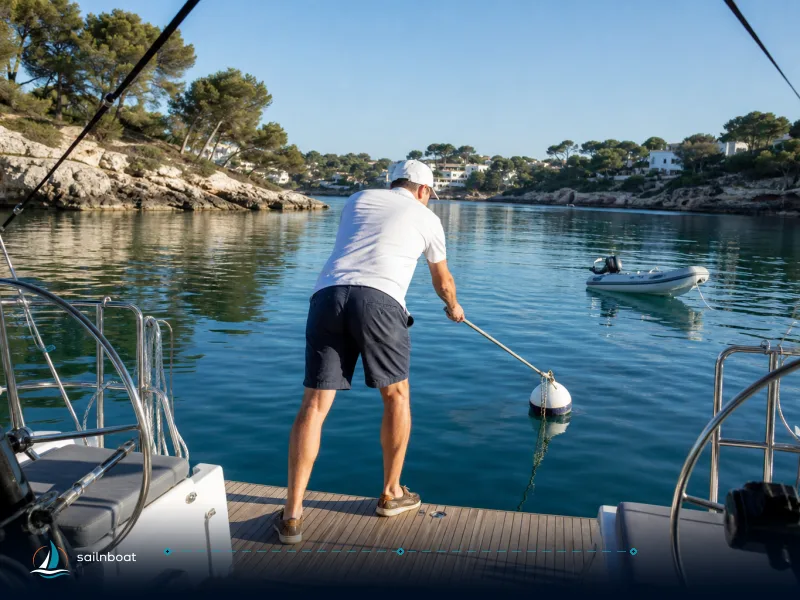
- Use a boathook or long pole to pull the line toward the stern and off the tips of the propeller. A pole with a hooked, serrated blade increases purchase on the rope.
- Cutting from topside:
- If a length of rope is accessible and not under tension, a serrated knife or line cutter on a pole can cut it free. Take care not to cut a line attached to your own gear (anchor rode, dinghy painter) unless you can recover the item.
- Controlled shaft turning:
- Where you can access and safely turn the prop shaft (lazarette or through a coupling) hand‑turn the shaft in the direction that will free, not tighten, the wrap. Only do this when the engine is mechanically isolated and you are 100% certain the engine can't be started inadvertently. Many engine manuals list "turnable by hand" checks as part of fault finding.
Deck methods are normally quicker and cheaper than a diver job, but they require calm water and that the rope is accessible topside. Use the table below to compare options at a glance.
| Method | When to use | Pros | Cons / Safety notes |
|---|---|---|---|
| Boathook / pole cutting | Rope visible and within reach from stern or dinghy | Fast, low cost, no diver required | Can fail if rope is tightly wrapped or under tension |
| Hand‑turning shaft / jacking | Shaft accessible, engine isolated | Can free wraps without cutting | Risk if engine not isolated; may not work on saildrive units |
| Rope‑cutter on shaft / revving carefully | Vessel fitted with cutter and wrap is external | Can cut rope while the engine is running at low power and the vessel is fitted with a rope cutter, but only if the manufacturer's procedures allow this and the wrap is external | Only applicable if cutter fitted; incorrect use can damage gearbox — use caution. |
| Diver assistance | Rope inaccessible from deck, deep wrap, gearbox damage suspected | Safest for complex wraps and inspection of seals/prop | Higher cost, requires qualified diver, sea state/depth limits; IMCA diving safety rules apply. |
When to Use Diver Assistance
Call a professional diver if any of the following apply:
-
The rope cannot be reached or controlled from deck or a dinghy.
-
The line runs under the hull or is wrapped through the skeg, strut, or around the shaft in multiple turns.
-
You suspect damage to the prop, shaft, cutless bearing or stern gland (leaks seen, odd noises, heavy vibration).
-
Sea state, depth or temperature make surface swimming unsafe. IMCA guidance and ship‑husbandry procedures describe strict controls for diver interventions and emphasise using suitably qualified contractors; commercial dive teams inspect blades, the shaft area and seals and can cut and recover the rope properly. Expect the diver team to ask you for location, water depth, boat type and whether engines will remain isolated.
-
Practical note: local on‑water assistance services (memberships like SeaHelp in parts of Europe or regional commercial divers/towboats in the US) will often attend to cut and recover lines; availability and fees vary greatly by region and operator. SeaHelp reports many calls for buoy lines and shows the potential for prop and zinc anode damage if an entanglement is not handled correctly.
Pre‑Start Engine Checks After Recovery
Never restart the engine until you’ve done a methodical inspection. Manufacturer and operator manuals emphasise cooling, oil pressure and drive condition checks after a fouling event.
Visual Inspection (topsides and accessible spaces)
- Confirm there is no remaining rope or debris around the prop, shaft, skeg, rudder stock or strut. Even short tails left behind can re‑wrap. Use a torch to inspect recesses.
- Check the stern gland / shaft seal area for fresh water ingress or oil leaks. Any weeps or loose packing may indicate damage.
- Inspect blades for nicks, bends or missing pieces and the hub for signs of overheating (discoloured metal or melted rope residue). A damaged blade creates vibration and stresses the gearbox.
Functional Checks (engine room)
- Cooling flow: With the engine running at low idle and the exhaust clear of people, confirm a steady stream of cooling water from the exhaust (or check the seawater flow indicator/strainer). If flow is weak or absent, stop immediately — blocked seawater passages or a shredded impeller are common after fouling.
- Oil pressure and gauges: Check oil pressure and temperature at idle. Any warning lamps or low readings require investigation before proceeding to higher revs. Manufacturer manuals list these checks as part of safe restart procedure.
- Idle run and vibration test: Run the engine at idle, then short bursts to low cruising revs while a crew member watches for unusual vibration, noise or smoke. If vibration is present, shut down and reassess — an unbalanced or bent propeller will transmit heavy loads to the gearbox.
If any sign of gearbox oil contamination, persistent vibration, cooling failure, or seal leakage appears, stop and seek professional assistance: continued running risks major engine/gearbox failure.
Preventive Measures to Avoid Propeller Fouling
Prevention beats an expensive diver call. The right combination of habit, gear and choices reduces your odds of picking up rope significantly.
Anchoring and Trip Lines
- Rig a trip line on the anchor crown before you drop anchor if the seabed has ledges, tangles or lots of debris — the trip line lets you lift the anchor crown‑first when fouled. However, trip lines can themselves foul other boats or your own prop if used improperly; fit a small float and route the line clear of the prop area when retrieving. Guidance from cruising and boating organisations recommends a disciplined trip‑line technique and situational judgement.
Onboard stowage and routine checks
- Stow loose lines, painters and stern fenders when motoring in open water or when approaching ports. Keep deck‑lead lines secured and tidy; this small habit prevents many fouling events.
- Inspect the prop and shaft at every haul‑out and during periodic checks through a small diving inspection or with an underwater camera where practical.
Hardware options
- Rope cutters and skeg guards: Some yachts are fitted with shaft‑mounted cutters or sacrificial skeg guards that reduce the chance of a long wrap. These devices are effective in some scenarios but only where properly specified and maintained — they are not a catch‑all. Consider fitting them during a scheduled refit if you operate where lost gear and pot lines are common.
- Propeller guards and anti‑fouling: Guards protect against light entanglements but degrade hydrodynamics and can increase fuel burn. Anti‑fouling on the prop and regular hull cleaning reduce marine growth that can trap debris. Choose measures that match your cruising area and vessel type.
Common Questions About Propeller Entanglement
What should I NOT do?
- Do not let someone swim under the hull to clear a wrap from the propeller unless that person is a qualified, tended diver and the engines and propeller are physically secured and isolated. Live‑boating or free swimming around a stern with a shaft below is hazardous. IMCA cautions and diving safety literature stress the high risk of entanglement and injury.
Can I restart and try to cut the line by revving?
- Only in very specific circumstances: some boats fitted with rope cutters can be safely engaged to sever an external line while the engine is running at low power. If your boat does not have such a system, restarting in an attempt to ‘cut through’ the rope risks gearbox damage and further wrapping — prefer mechanical removal or a diver.
How much will a diver or recovery service cost?
- Fees vary hugely by region, urgency and operator. Expect a wide range — local commercial dive teams or tow services will quote a call‑out fee plus time on site and materials; membership organisations (in some regions) may include free recoveries. Ask the attending service for a clear estimate before work starts. SeaHelp and regional towing services commonly field these calls but terms differ by country.
Follow these steps: stop the engine immediately, assess from topside, attempt safe deck‑based removal where possible, escalate to a professional diver for inaccessible or complex wraps, and only restart after a disciplined visual and functional check of cooling, oil and drive condition. These procedures protect the boat, your gearbox and your crew — and prevent a small snag turning into a costly casualty.
Frequently Asked Questions
Stop the engine, put the gearbox in neutral, keep everyone clear of the stern, and assess from the cockpit whether the rope can be cleared safely from deck.
Attempt deck‑based methods first—boathook, poles with serrated cutters, or careful hand‑turning of the shaft where accessible—then request professional diver help if the rope is wrapped tightly or under the hull.
Call a diver when the rope cannot be reached from deck, when water depth or sea state makes a swim unsafe, or when you suspect damage to the shaft, seals or gearbox.
Perform a visual inspection for remaining debris and blade damage, check shaft seals and stern tube area for leaks, confirm cooling water flow and oil pressure, then run the engine at low revs and check for vibration.
Adopt careful anchoring practice (use trip lines only where appropriate), stow loose lines and fenders, fit skeg guards or rope cutters if suitable, and inspect prop and rudder at regular intervals.
Written by
Sailnboat Editorial
The Sailnboat editorial desk covers yacht and boat chartering worldwide — routes, bases, seasons, boat types, paperwork and the practical costs that decide a trip. We are a charter marketplace, not a boat owner or a local agency: what we sell is judgement and support, so our guides are written to help you make a decision, not to sell you a specific boat. Every guide is checked against live operator and marina data before it goes out.
Fact-checked against live operator and marina data, and published under our editorial standards. Last reviewed: .