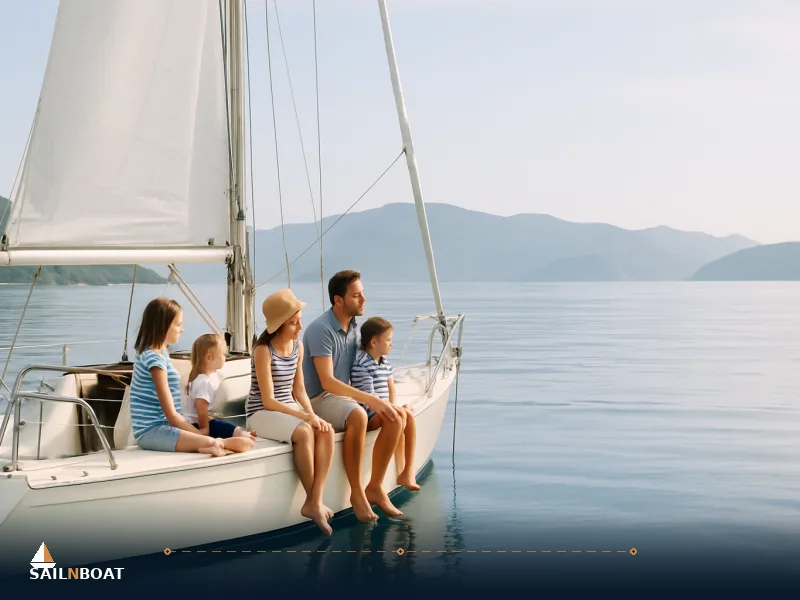
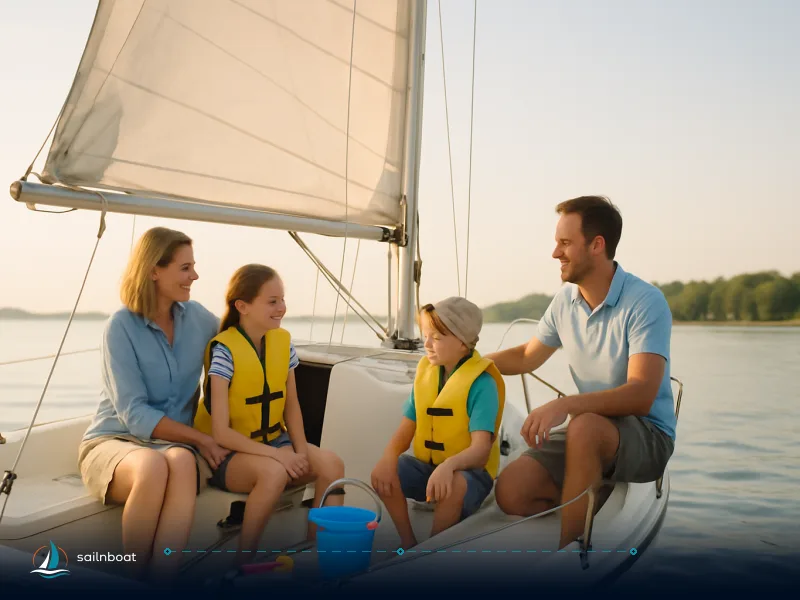
A Family's First Sailing Experience in the Ionian Islands
A practical, experience-driven account for families taking their first sailing trip in the Ionian Islands—what to pick, how to plan each day, safety with kids, and how to leave the sea as you found it.

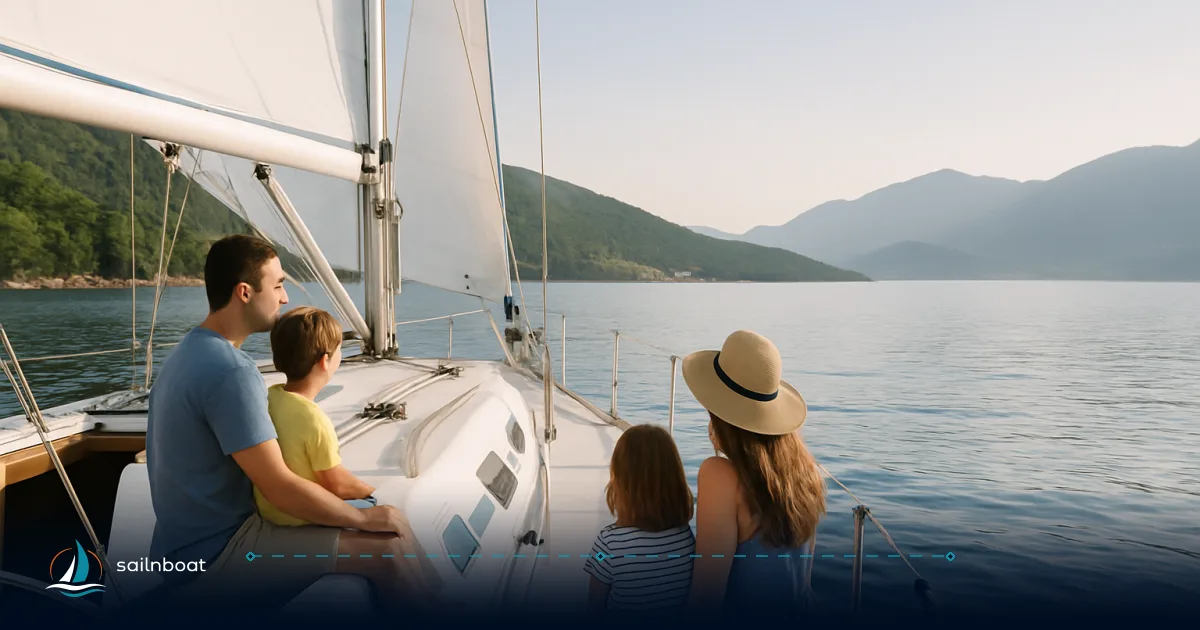
You can introduce children to sailing in the Ionian Islands with confidence: sheltered water, short island hops and a reliable afternoon Maistros breeze turn most first family charters into calm, manageable days.
Preparing for Your Family's Sailing Adventure
This section covers two decisions that make or break a family cruise: the hull you choose and the itinerary you plan. Both influence comfort, safety and how often you visit a taverna ashore.
Choosing the Right Boat
For a first family charter in the Ionian you’ll see three sensible options: monohull sailing yachts, cruising catamarans, and (less commonly for family bareboat weeks) motor yachts. The trade-offs are straightforward: cats give space and shallow draft; monos are narrower at the dock and usually cheaper to charter; motors save time if your priority is seeing far more in a week.
Comparison table (practical, decision-focused)
| Type | Stability & motion | Typical draft (charter sizes) | Cruise pace (typical) | Family suitability |
|---|---|---|---|---|
| Catamaran | Very little heel, very stable for cooking/playing | typically ~1.0–1.4 m. | Cruising speeds under sail or motor vary widely by catamaran model and conditions; many charter cats make moderate passage speeds. | Best for families wanting space, easy anchoring and shallow bays. |
| Monohull | Heels under sail (more 'motion') but better upwind performance | typically ~1.6–2.4 m on common charter models. | Cruising speeds under sail for monohulls vary by model and conditions; many charter monohulls make moderate passage speeds. | Good if you prefer traditional sailing feel and usually lower charter rates. |
| Motor yacht | Minimal sailing motion; fast transfers | typically 1.8 m+ (varies by class) | Cruising speeds for motor yachts vary widely by model and sea state; many planing yachts are capable of higher speeds, but actual charter speeds may be lower. | Strong choice only if you need speed and budget for higher fuel costs. |
Key selection points for families
- Sleep and play space: pick a three- or four-cabin layout with a forward or aft owner cabin plus separate cabins for children. A catamaran typically provides the largest saloon and cockpit play area.
- Shallow anchorages: if you want afternoons ashore or private bays, shallow draft (cat) is an advantage. Expect to use two anchors in breezy anchorages or bay with rolling fetch.
- Docking and entourage: a wider catamaran may cost more per-night in marinas (charged by beam in some ports). Factor this into marina-night planning.
Planning Your Itinerary
A family-friendly Ionian plan prioritises short hops, predictable wind windows and at least two nights in the same spot so kids have a routine.
- Typical leg lengths: many popular legs in the Inner Ionian are short — often 5–20 nautical miles — making single-day hops realistic without long hours at sea. Plan no more than one 15–20 nm leg in a day with young children.
- Base choice: Lefkas (Lefkada) and Corfu work well for family starts — they both have marinas, easy provisioning and short first sails into protected waters. Lefkas Town specifically has a largely pedestrianised main shopping street and a convenient marina for provisioning and evening strolls.
- Pacing: schedule a morning sail (calm conditions), an extended swim/anchor-stop midday, and a late-afternoon town quay or short anchorage arrival to settle before dinner. Leave at least one “no-sail” day in the week for a full beach and shore exploration.
Daily Sailing Routine for Families
A repeatable daily template keeps the week calm and predictable for kids and adults.
Establishing a Daily Schedule
- Morning window: depart early (08:00–10:00) when winds are usually light and waters glassy; on many days the thermal Maistros builds after late morning. Use morning hours for passage legs.
- Midday anchorage: plan for a swim, lunch, shade time and short naps. Anchor in 6–15 m where visibility is good and the bottom holds well (sandy or mixed sand). If the bay has a mooring buoy, use it to avoid anchor damage.
- Late afternoon: short reposition or mooring in town by late afternoon—this avoids arriving into the main Maistros gust window and gives time to secure lines and enjoy an evening ashore.
Simple onboard routine to keep kids engaged
- Assign small tasks: lookout, rope coiling, dinghy skipper (age‑appropriate) — tasks build confidence and reduce boredom.
- Create a “port book”: a simple printed sheet for each stop with one kid activity (beach scavenger hunt, taverna bingo, local wildlife checklist).
- Screen & power rules: set one hour of device time after lunch; run the generator only if needed to charge devices—this conserves fuel and keeps noise low.
Engaging Children Onboard
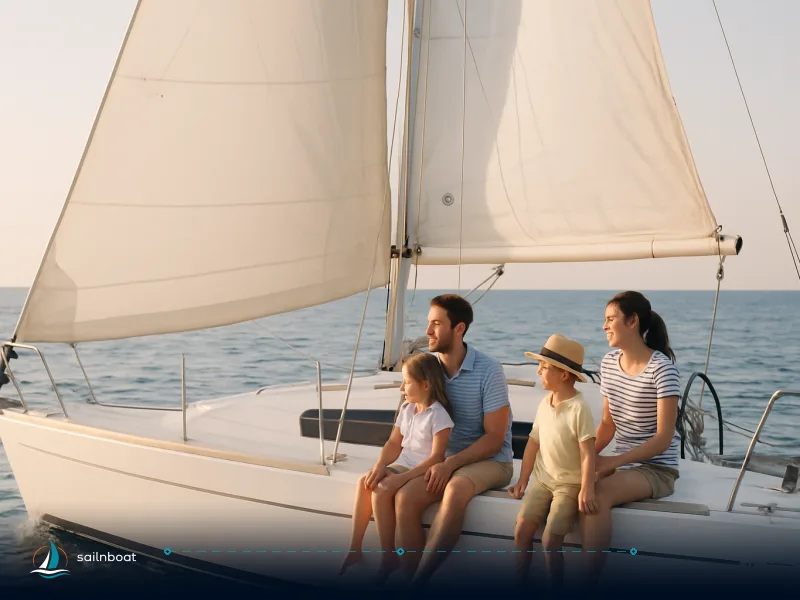
- Learning through doing: older children can learn to steer on calm, short legs under supervision; younger kids can help with lines from the cockpit when safely harnessed.
- Water play: plan snorkel toys, a SUP or small family kayak. Many bays in the Ionian have shallow water close to shore safe for supervised play.
Safety Measures for Sailing with Children
Safety is non-negotiable. These are practical steps that make your week smoother.
Essential Safety Gear
- Personal flotation: all children should wear a correctly sized lifejacket whenever on deck or in the dinghy; have a spare for guests. Keep vests unzipped in the cockpit but secured when underway.
- Fixed jacklines and harnesses: fit full‑length jacklines fore‑aft and brief older children on when to clip on.
- First‑aid and meds: a well-stocked first‑aid kit, seasickness remedies, and a small dental kit for minor incidents. Keep the kit in a dedicated, labelled locker.
- Communication: a working VHF with DSC, and at least one charged mobile with local SIM (signal varies). Many charter companies also offer satellite options for remote days.
Navigating Safely
- Watch the Maistros: the Maistros often builds from the northwest around midday and tends to reach Force 3–5 in the afternoon; plan northerly or longer transits for the morning and work with the breeze in the afternoon. When approaching anchorages, allow extra time for mooring lines because gusts can arrive with short notice.
- Choose protected anchorages: prefer bays with lee from the prevailing NW in the afternoon; sandy bottoms usually offer reliable holding. In exposed coves consider using two anchors or a stern line to shore where permitted.
- Night runs: avoid night passages with children aboard unless essential and you have a professional skipper. If you must run after dark, brief the crew, set watch rotations, and reduce speed.
Cultural and Recreational Activities for Kids
Keep shore time playful and local.
Family-Friendly Destinations
- Paleokastritsa (Corfu): a cluster of shallow coves, sea‑cave boat trips and family-friendly tavernas — good for a full beach day and water sports.
- Agios Georgios (Corfu region) and other sheltered long beaches: sandy stretches where kids can play and there are simple facilities and restaurants.
- Lefkas Town: evening stroll, gelato and short provisioning runs make it easy on families. The pedestrianised main street gives safe walking and a town square for quiet dinners.
Unique Experiences
- Navagio (Zakynthos): viewing Navagio (Shipwreck Beach) from a boat is an iconic day trip — note that cliff instability has led to periodic closures and local restrictions, so check status before planning a landing. If the beach is closed, the boat viewpoint still offers dramatic scenery.
- Short cave and grotto boat trips: many operators run 30–60 minute excursions from safe harbours — a controlled, exciting experience for children who are comfortable in the water.
Sustainable Sailing Practices in the Ionian
Protecting seagrass beds and local communities keeps the islands healthy for family trips in future seasons.
Using Mooring Buoys
- Prefer mooring buoys where they exist — they prevent anchor damage to Posidonia (seagrass) meadows. Buoy availability varies by bay and season, and many marine authorities encourage their use.
- If no buoy exists, anchor in sandy patches away from visible seagrass, apply gentle scope (5:1 in calm conditions), and avoid re‑anchoring repeatedly in the same spot.
Supporting Local Communities
- Buy from local markets and tavernas—fruit, bread, cheese and fish bought ashore keeps money in the small harbours you visit. Many small shops close for a short siesta in high summer; plan provisioning stops accordingly.
- Waste and fuel discipline: use shore pump‑outs where provided, limit generator hours, and store all rubbish securely until you can dispose of it on land. The Ionian Environment Foundation provides a practical sustainable sailing checklist relevant to the area.
Understanding Ionian Sailing Conditions
This section gathers the operational facts you will use when planning days, provisioning and mooring.
Weather Patterns
- Seasonality: the practical season runs from late April through October for warm temperatures, predictable winds and open services; May, June and September often offer quieter marinas and comfortable conditions.
- The Maistros wind: expect a reliable north‑westerly thermal that generally builds in late morning, peaks mid/late afternoon (often around Force 3–5) and eases toward sunset — plan passage timing and anchoring with that cycle in mind.
Mooring Fees and Availability
- Marina choice and cost: fees vary by marina, season and boat beam; Lefkas Town and other popular marinas have full services but charge more in high season. Expect availability pressures in July–August—book marina nights in popular bases in advance or plan to anchor nearby.
- Peak season crowding: August is busiest—anchorages and buoys fill earlier in the day. If you need a quay berth for provisioning or a shore evening, aim to arrive mid‑afternoon rather than late evening.
Final practical checklist before you go
- Choose a boat with enough cabin and cockpit space for naps and toys; for most families that’s a catamaran or a generous monohull.
- Plan most sailing for early mornings and short hops; leave long crossings for calm days with an experienced helm.
- Pack sun protection, a small medical kit, familiar snacks and a lightweight shore library for kids—these small comforts preserve patience on board.
Plan your family's sailing adventure in the Ionian Islands today. Start with a base that matches your flight logistics and the type of week you want (quiet bays vs. town evenings), then book a boat sized for your family’s routines rather than the maximum number of passengers.
If you want help matching your family to the right base and boat, our team can propose routes that keep passages short, nights calm, and experiences child‑friendly.
Frequently Asked Questions
Summers are generally calm with predictable thermal winds: mornings are light, the Maistros (north‑westerly) often builds around midday to Force 3–5 and eases by sunset, making afternoon reaching sails common and nights quiet.
Use harnesses and lifejackets on deck, fit fixed jacklines, brief children on rules, pick shallow, sheltered anchorages with sandy bottoms or protected marinas, and keep a stocked first‑aid kit and VHF close at hand.
Lefkas Town is an excellent base with a marina and a largely pedestrianised main street; popular family anchorages include Paleokastritsa (Corfu), Agios Georgios (Corfu region), and sheltered bays around Meganisi and Ithaca.
Children enjoy beach time and shallow-water swimming, easy kayak or dinghy trips to sea caves, short boat transfers to view Navagio Beach (Zakynthos) from the water, and casual village festivals or taverna meals with local food.
Use established mooring buoys when available, avoid anchoring on seagrass meadows, buy produce and fish from local sellers, limit generator use, and dispose of waste at shore facilities.
Written by
Sailnboat Editorial
The Sailnboat editorial desk covers yacht and boat chartering worldwide — routes, bases, seasons, boat types, paperwork and the practical costs that decide a trip. We are a charter marketplace, not a boat owner or a local agency: what we sell is judgement and support, so our guides are written to help you make a decision, not to sell you a specific boat. Every guide is checked against live operator and marina data before it goes out.
Fact-checked against live operator and marina data, and published under our editorial standards. Last reviewed: .