Sailing with Children: Tips for an Enjoyable Experience
Practical, decision-ready guidance for families planning a yacht charter: safety rules, the right boat and destination, packing lists, entertainment and seasickness prevention.

Intro paragraph (2–4 sentences) Sailing with children works when you structure the trip around stability, short passages and consistent safety routines: pick a stable boat, insist on properly fitted child life jackets and plan plenty of swim and beach time. This article answers the practical questions you need to decide — which boat to choose, what safety gear to insist on, how to prevent seasickness and what to pack — so you can turn a family charter into a well‑managed holiday rather than a logistics test.
Safety Measures for Children on Board
A clear safety-first approach reduces stress and increases enjoyment for everyone. Your brief at embarkation and daily repetition of the basics are the single best investments.
Life Jackets and Safety Equipment
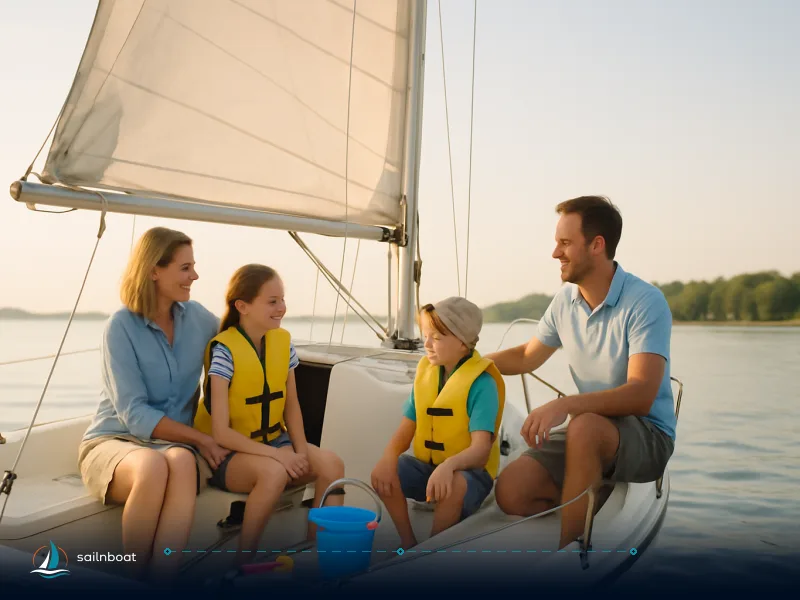
- Insist on properly fitted life jackets for every child whenever they are on deck. The RYA emphasises that children’s lifejackets are available and recommended and that correct fit is critical.
- Many charter companies supply child-sized lifejackets, but availability and model vary by base and vessel; request sizes and numbers when you book and bring your child’s familiar jacket if that will improve compliance. Several charter operator FAQs and charter guides recommend bringing your own if your child resists the bulkier options supplied.
- Safety netting (lifeline netting) is a practical addition when you have toddlers or very active youngsters; many bases can fit removable netting if asked in advance. Netting styles and fit vary with boat design.
- For rough conditions or overnight passages, have harnesses and short tethers available for children who must go on deck. The RYA guidance for group activity and training highlights harness use and the importance of a manifest of who is afloat.
Establishing Safety Rules
- Conduct a 10‑minute family safety briefing at embarkation and a 3‑minute refresh each morning: where the lifejackets are, how to summon help, who is the adult on “deck watch”, and the “no‑go” zones (bow, transom steps) for kids.
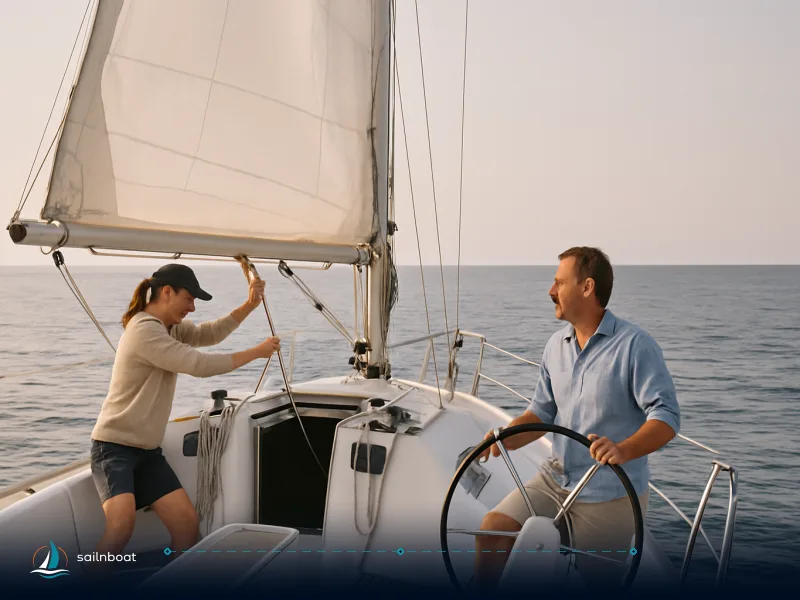
- Create simple, enforceable rules: life jackets on when the boat is underway for young children, one child on deck at a time without an adult, closed hatches at sea, and no running. Use a visual cue (a coloured wristband or small flag) to show when kids are allowed on deck.
- Practice a calm man‑overboard drill in a protected anchorage using a fender as the “victim” so everyone knows the steps before a real emergency — simple rehearsal builds confidence.
Choosing the Right Boat and Destination
Choosing boat type and cruising ground shapes everything: stability, swimming access, provisioning and how long your crew tolerates a day on the water.
Boat Selection
- For most family charters, a cruising catamaran is the pragmatic choice: the twin‑hull design gives high initial stability at anchor and at sea, more living space (cockpit and saloon level) and a shallower draft for anchoring closer to shore in calm coves. Technical comparisons show cats typically cruise faster on reaches, have shallower drafts and sit flat at anchor — all helpful with children aboard.
- Trade‑offs: catamarans are often pricier to charter, can be slower upwind and do not self‑right in a capsize the way a ballasted monohull would. For families prioritising motion comfort and easy swim access, the trade is usually worth it.
| Feature | Catamaran (family benefits) | Monohull (family trade-offs) |
|---|---|---|
| Typical cruising speed | 8–10 kn on reaches (comfortable cruising). | 6.5–7.5 kn typical for comparable length. |
| Typical draft | ~1.0–1.3 m (better shallow anchoring). | Often ~2.0 m (deeper, less beach access). |
| Stability at anchor | Very low heel — easier cooking and sleeping. | More roll and yaw at anchor in swell and gusts — livelier motion for some children compared with a catamaran’s flatter ride. |
| Space (saloon/cockpit) | More living area; separate hull cabins. | Less communal space; often narrower cockpit. |
| Trade-off | Slower to windward; different handling; often higher charter rate. | Better windward performance; self‑righting; sometimes simpler systems. |
Sources for speeds and drafts are manufacturer and charter comparisons and reflect typical modern cruising models.
Family-Friendly Destinations
- Pick sheltered waters with short island hops, sandy beaches and predictable weather windows. The Ionian Islands (Greece), the British Virgin Islands (BVI) and Croatia’s Dalmatian coast commonly top family lists because passages are short, anchorages are protected and there are many beaches and shallow bays for swimmer confidence.
- Match your route to the children’s ages: for toddlers choose short hops between beaches and sheltered anchorages; for school‑age children you can stretch to slightly longer days with planned snorkel stops. Practical itineraries for the Ionian and the southern Dalmatian islands emphasize short daily legs and late‑afternoon anchoring to preserve routine.
Engaging Children in Sailing Activities
An involved child is usually a happy child. Structure participation so tasks are safe, short and repeatable.
Sailing Tasks for Kids
- Age 3–5: simple, supervised tasks — handing a fender, helping hold a line while seated, spotting markers from the bow with an adult.
- Age 6–10: steering in calm conditions, pulling small sheets under supervision, helping plot a simple course on a laminated chart.
- Age 11+: navigation basics, watch‑keeping (paired with an adult), helming on longer stretches and assisting with anchoring.
- Reward participation with responsibility‑based privileges (e.g., choose the swim spot) and keep tasks short — repetition builds confidence faster than long, complex chores. The RYA family tips encourage getting children involved through safe, structured tasks.
Fun Water Activities
- Schedule at least one long swim/snorkel stop per day — the promise of a beach or a snorkel keeps younger children motivated through short sails. Many family itineraries recommend daily swims and often suggest anchoring in the late afternoon so kids can play and still keep to a bedtime routine.
- Pack child snorkels/masks sized correctly, pool noodles and a small inflatable towable for supervised play. Teach basic snorkel safety and practise in shallow water first. Rotate adult supervision in short shifts so every adult gets a break.
Packing Essentials for a Family Sailing Trip
Packing for a child on a boat is about redundancy and compactness: duplicate critical items and make them easy to access.
Safety and Comfort Items
- Child‑sized life jacket(s): bring one properly fitted lifejacket for each child, regardless of swimming ability, and consider bringing your own if you expect shore play or if your child is particular about fit. Many charter companies supply PFDs, but models and fit vary, so request sizes or bring your own.
- Non‑slip deck shoes for every child and at least one set of closed shoes for uneven shore landings.
- Child‑friendly first aid kit: adhesive plasters, antiseptic wipes, sting relief, thermometer, bandages, oral rehydration sachets and any prescribed medications labelled with dosing instructions. For medications (including anti‑emetics/antihistamines), consult your pediatrician before travelling; do not improvise doses aboard.
- Harnesses/tethers for children if you plan to be on passage or in busy waters.
Sun Protection and Entertainment
- Sun kit: SPF 50+ sunscreen (reef‑safe where required), long‑sleeve UPF swim shirts, wide‑brim hats and sunglasses with straps. Apply sunscreen frequently and treat UV shirts as primary protection for long swims.
- Entertainment: a compact “quiet bag” for each child — sticker books, cards, small LEGO sets, a preloaded tablet for offline movies (keep charging options ready), and a small sketchbook. Rotate toys to keep variety.
- Pack a small water‑proof camera or a GoPro for kids — giving them a simple task (document the day) creates engagement and reduces boredom.
Managing Daily Routines and Seasickness Prevention
A predictable daily rhythm and conservative passage planning keep stress low and enjoyment high.
Daily Schedules
- Hold a 5‑minute morning meeting: outline the day’s route, weather expectations, who is on watch and planned swim/beach stops. Predictability manages expectations (and prevents whiny surprise meltdowns).
- Meal and nap routines matter: stagger naps for younger children so at least one parent is rested; keep mealtimes familiar and carbohydrate‑rich before sailing to reduce nausea risk. Anchor for lunch and a longer swim whenever possible — it breaks up the day naturally.
Seasickness Tips
- Hydration and small, frequent carbohydrate snacks are the frontline defence; an empty or overly full stomach both increase the risk of sickness. The UK NHS recommends distraction, ginger (tea, biscuits or tablet form) and says acupressure bands can help some children.
- Start any preventive medication before symptoms begin if you are using over‑the‑counter remedies — consult your child’s doctor for suitable products and age‑appropriate dosages. Results vary by child; don’t wait for vomiting to start a treatment.
- Keep outings short at first: many family guides suggest planning short daily legs and passages for younger children, with frequent swim breaks; older kids may tolerate slightly longer legs if there are planned breaks. Adjust to your child’s tolerance on the first day and be conservative.
Practical checklists and final trade-offs
- Before you book: confirm child life jacket availability and sizes, ask whether the base can fit safety netting, and request a boat with shaded cockpit/saloon options. Many bases have check‑in and check‑out times in the late afternoon and early morning on charter changeover days, but exact times vary by operator — confirm with your charter company and build travel plans accordingly.
- Packing checklist (condensed): child life jacket(s), UPF clothing and SPF 50+ sunscreen, non‑slip shoes, child first‑aid kit and prescribed meds, seasickness remedies (per pediatric advice), compact entertainment kit, snorkel gear sized to child.
- Trade‑offs: a catamaran buys you space and comfort at the cost of some upwind performance and usually a higher charter price; a monohull is often a better sailing teacher and can handle rough conditions differently. Pick the trade that fits your family tolerance for motion and desire for swim‑friendly anchorages.
Plan the day so kids see regular anchors down and swim time; make safety equipment visible and routine; and keep expectations modest on the first two days — the best family charters are paced, not rushed.
Plan your family sailing adventure today and make the practical checks above before you book so your first day aboard is about settling in, not troubleshooting.
Frequently Asked Questions
Children commonly start sailing in small, supervised steps from about age 5, but readiness depends on temperament and the trip type; very young toddlers can sail but require stricter controls, short days and careful planning.
Keep kids hydrated and lightly fed, start remedies (ginger or over‑the‑counter medicines) before symptoms appear if advised by your pediatrician, and try acupressure wrist bands as an adjunct—results vary.
Well‑fitting child life jackets (appropriate buoyancy rating), safety netting where needed, tether/harness for rough conditions, and a child‑focused first aid kit are essential.
Assign simple sailing tasks, rotate short on‑deck duty with an adult, plan frequent swim/snorkel stops and beach explorations, and bring compact toys, books and offline media for calm times.
Sun protection (wide‑brim hats, SPF 50+, UV clothing), non‑slip deck shoes, child life jackets or confirmation they’re provided, a child first‑aid kit, seasickness remedies and layered clothing for evenings.
Run a short safety briefing at embarkation, enforce 'life jacket on when boat is moving' for younger children, use a buddy system for water, set predictable meal/nap times and hold a brief daily plan meeting each morning.
Written by
Sailnboat Editorial
The Sailnboat editorial desk covers yacht and boat chartering worldwide — routes, bases, seasons, boat types, paperwork and the practical costs that decide a trip. We are a charter marketplace, not a boat owner or a local agency: what we sell is judgement and support, so our guides are written to help you make a decision, not to sell you a specific boat. Every guide is checked against live operator and marina data before it goes out.
Fact-checked against live operator and marina data, and published under our editorial standards. Last reviewed: .