Gan Anchorage in Addu Atoll: A Comprehensive Guide
Two reliable anchor spots in Gan — the north-side sand at ~15 m and Turtle Point at 8–12 m — each with specific hazards, currents and permission steps you must follow.

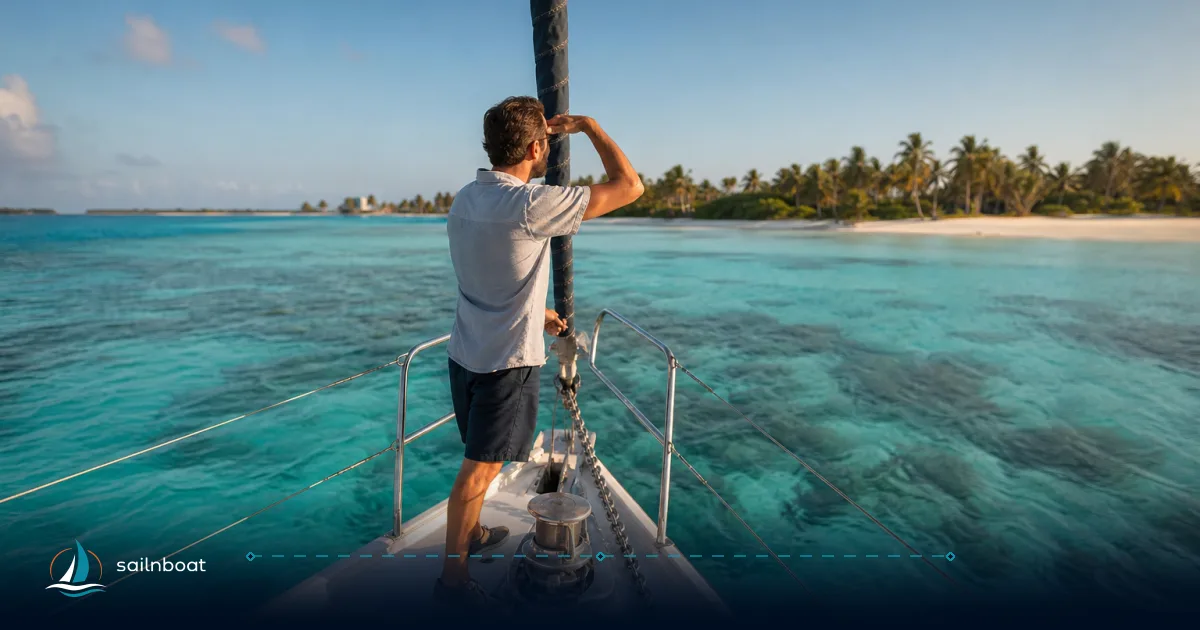
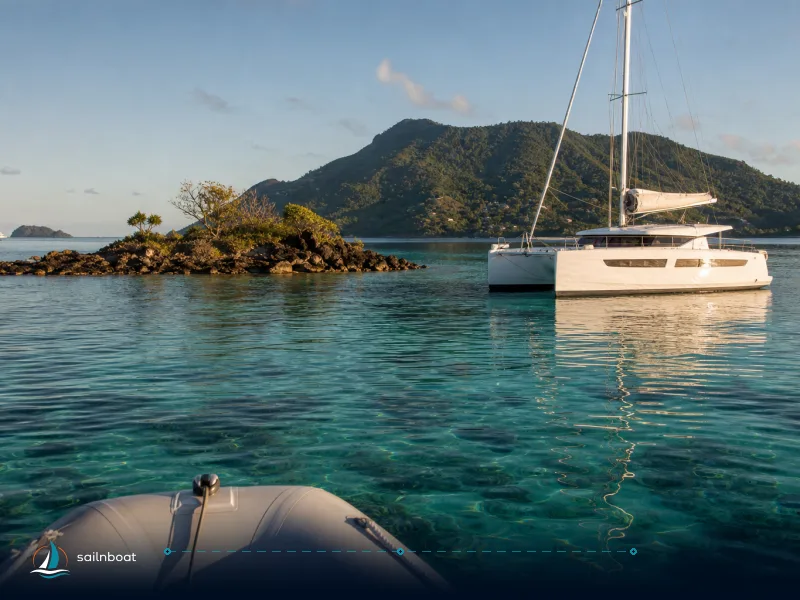
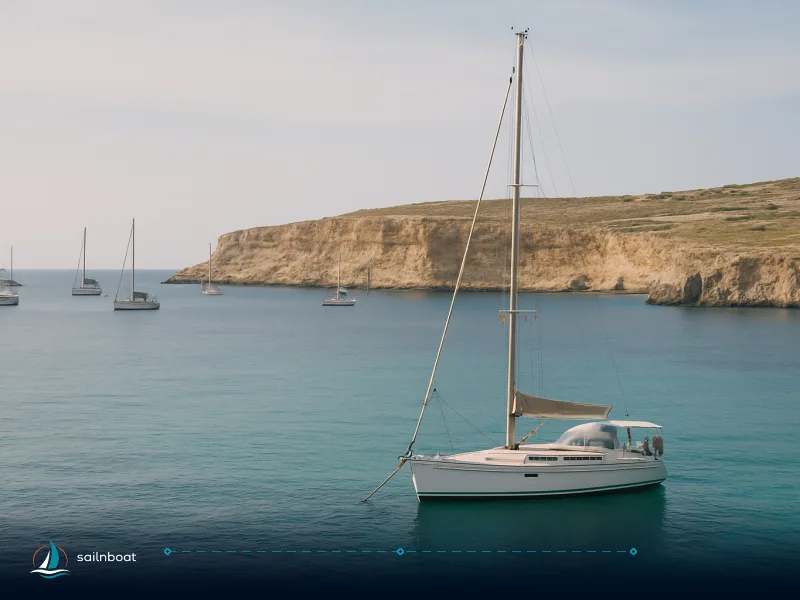
Gan anchorage Addu has two practical options for visiting yachts: the north side of the atoll (0°36.872’S 73°9.249’E) where you’ll find sandy holding at about 15 m, and Turtle Point (0°40.408’S 73°7.869’E) where sand holding sits in roughly 8–12 m but coral bommies are present. These two spots cover most practical needs — holding, dinghy access and clearance — but they demand discipline on anchor checks, local permission for nearby harbours, and respect for strong currents at nearby dive channels.
Recommended Anchorage Locations in Gan
The two recommended anchorages are the north side of the atoll (deep sand) and Turtle Point (shallower sand with coral features).
North Side of the Atoll
- Coordinates: 0°36.872’S 73°9.249’E.
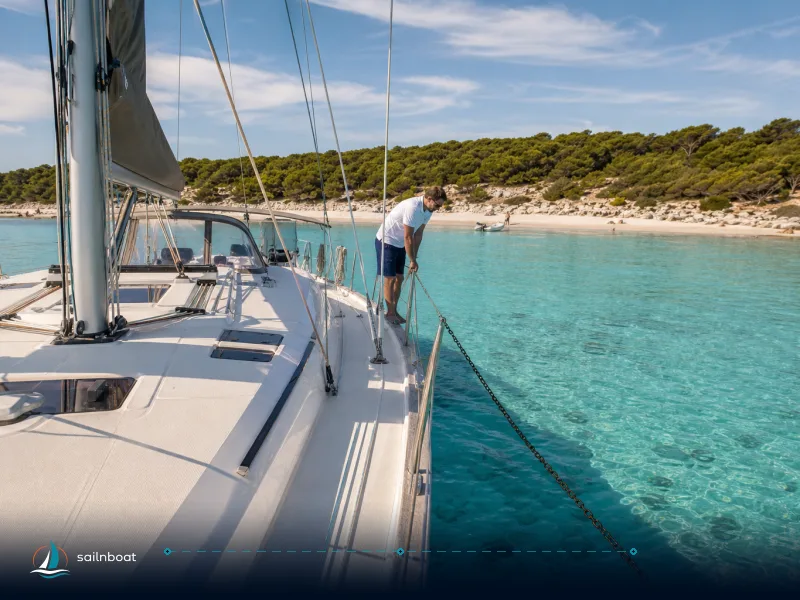
- Typical depth and bottom: around 15 m over sand — good holding for a standard plow or Rocna if you deploy correctly.
- Suitability: best when you want deeper, cleaner holding and are staying offshore rather than going ashore immediately. Note that swimming from this spot is discouraged when the nearby channels run strong.
Turtle Point
- Coordinates: 0°40.408’S 73°7.869’E.
- Typical depth and bottom: ranges roughly 8–12 m with sand patches and good holding in sand.
- Suitability: preferred if you want easier dinghy access to Feydhoo/Maradhoo and a shallower anchor plan; watch coral bommies and your swing circle.
| Anchorage | Coordinates | Depth (typical) | Bottom | Primary advantage | Primary hazard |
|---|---|---|---|---|---|
| North side | 0°36.872’S 73°9.249’E | ~15 m | Sand | Cleaner holding, deeper overnight comfort | Strong nearby channel currents; swimming discouraged when set |
| Turtle Point | 0°40.408’S 73°7.869’E | 8–12 m | Sand with coral bommies nearby | Easier dinghy access to Feydhoo/Maradhoo | Coral bommies — check anchor perimeter carefully |
Practical note: those coordinates and depth bands are the cruising community’s standard references for Gan; use them as your starting plan and always confirm depth on arrival with your echo sounder while approaching slowly.
Identifying Coral Hazards
Turtle Point has at least one coral bommie close enough to affect your anchor perimeter; scanning and a cautious circle-back while laying out is mandatory.
How to approach this safely:
- Approach slowly and use your depth sounder to pick the sandy patch; don’t rely on visual alone at dusk.
- Lay out to your intended scope while easing gently astern to straighten the rode, then snub and increase reverse to working/back-down RPM to set. If you initially set at short scope, pay out to final scope and set again to confirm holding.
- Before leaving the cockpit, do a full 360° check of the anchor perimeter (use binoculars from the helm or a crew member on the bow): ensure the anchor rode will not chafe on bommies and that your swing circle will remain in sand.
- If coral is within your safety swing, move until you have a clear sand circle — coral not only risks gear but is a protected habitat in many Maldivian areas. The Addu region designates several marine protected sites and wrecks — treat coral with the same caution you would other protected resources.
Tide and Current Considerations
Currents near the channels and cleaning stations (notably Manta Point / Maa Kandu) are frequently strong and make swimming or casual water work hazardous at times. Plan movements with local advice.
Operational guidance:
- Expect channel/cleaning-station currents to peak between slacks (often around mid-tide, strongest on springs) and to be weakest at the turn (slack water); these are the same currents that create the manta cleaning stations. Dive operators describe them as suitable for drift diving — that implies persistent flow.
- For anchoring: set a conservative scope. In moderate conditions, aim for at least 5:1; in exposed or uncertain conditions increase toward 7:1. (This is standard bluewater practice and a practical starting point — adjust for wind, tide and expected swing.)
- Time approaches and dinghy runs near slack water where possible. If you must work in the water, get a local briefing from a dive operator or harbour authority — currents at Manta Point can make swimming unsafe.
Local Regulations for Visiting Yachts
Gan is a recognised port of entry; arriving yachts should carry out immigration and customs procedures and follow the harbour authority’s instructions, which commonly include moving to a designated inner-harbour anchorage for clearance. Permission is required to enter and use the harbours at Feydhoo and Maradhoo.
What you should do:
- Call on VHF channel 16 or the local working channel (the port often uses VHF Ch 10) before entering the harbour or inner anchorage and follow directions. Expect customs/immigration to visit the vessel.
- Harbour-use permits for Addu harbours are administered locally and can be applied for through government portals or via a local agent; if you plan to go ashore in Feydhoo/Maradhoo, obtain permission first.
- Use a clearance agent if you’re unfamiliar with the paperwork — agents in Gan commonly handle cruising permits, harbour payments and fuel requests. Noonsite and local reports advise appointing an agent on your first entry.
Provisioning and Marine Services in Gan
Gan offers basic provisioning and diesel delivery to visiting yachts; several supermarkets and produce stalls cover everyday needs, while diesel is normally delivered by road tanker when requested through an agent.
Practical logistics:
- Fuel: you will typically order diesel through a local agent or fuel station; they will arrange a truck to fill the boat alongside (bring fuel receipts and expect slightly higher local prices). Plan lead time — deliveries are not always immediate.
- Provisions: several small supermarkets, bakeries and vegetable stalls on Gan supply canned goods, bread and fresh produce. For specialised spares or big items, pre-order or bring them from Malé or your last major port.
- Repairs and spares: Gan has small marine businesses but limited heavy engineering — for major projects either plan for a longer lead time or consider routing to a larger centre. Use a local agent to source mechanics and to liaise with port authorities.
Anchor-handling & shore-run checklist (practical)
- Confirm anchor coordinate visually and with GPS, then slow approach while checking depth.
- Pay out rode to the planned scope while easing astern, then snub and increase to firm reverse to set at final scope. If you must set initially on short scope, pay out to final scope and re-set under power.
- Inspect swing circle for coral bommies — do a manual 360° on deck and re-anchor if any hard structure is within the swing.
- Display an all-round white anchor light at night (and a black anchor ball by day) and keep an anchor watch when currents are predicted to change; tag your log with times of predicted slack. Consult local agents or the harbour for predicted currents if you cannot obtain tidal tables.
- To go ashore in Feydhoo/Maradhoo: obtain harbour permission first and have ID onboard for customs. Expect brief formalities for clearance/harbour fees.
Historical Context of Gan
Gan grew as a strategic British air base and later became a civilian airport — today Gan International Airport sits on the old RAF station site. The island’s role as a military staging post shaped the build of causeways and infrastructure across the western chain of Addu.
Key points for a visiting skipper:
- RAF history: Gan was developed as a military airfield in the mid 20th century (known as RAF Gan) and the airfield later became Gan International Airport (IATA: GAN). Some wartime structures and the island’s layout reflect that past.
- Causeways: Gan is linked by causeways to Feydhoo, Maradhoo and Hithadhoo (part of the Addu Link Road), making shore transport between these islands straightforward and quick by road. That connectivity is useful when you plan provisioning runs or crew transfers.
- Local heritage: the British Loyalty wreck and marine protected areas around Addu are part of the region’s dive and conservation story; respect protected-area rules and local regulations when planning dives or visits. The British Loyalty wreck sits at about 33 m and is a protected feature within the Addu Nature Park.
If something feels unclear on arrival
- Call the harbour authority on VHF (Ch 16/10) and ask for the harbour master’s instructions; they’ll direct you to the correct anchorage and inform you of any temporary hazards or restrictions.
Plan your visit
- Use the north-side coordinate for a straightforward deep-water stop where holding is cleaner, or Turtle Point if you need closer access ashore — but always confirm local conditions on arrival and get harbour/use permission before entering Feydhoo or Maradhoo. If you want diesel or help clearing paperwork, arrange an agent before you arrive; they routinely handle diesel delivery and clearance.
Plan your next anchorage in Gan, Addu Atoll with confidence — check the coordinates above, respect coral and protected areas, set a conservative scope, and get local permission for harbour use before you go ashore.
Frequently Asked Questions
The two commonly used anchorages are the north side of the atoll at 0°36.872’S 73°9.249’E (about 15 m sand) and Turtle Point at 0°40.408’S 73°7.869’E (8–12 m, sand with coral bommies).
The north-side anchorage is typically around 15 m on sand; Turtle Point ranges from roughly 8–12 m with good sandy patches.
Yes — Turtle Point has coral bommies close to the recommended anchoring area; always confirm a clear swing circle before committing your anchor.
Channels around Addu, particularly Manta Point, can have strong currents and drift; swimming from the north-side anchorage is not recommended during sets of strong current.
Yes — entry and use of Addu harbors (including Feydhoo and Maradhoo) require harbour-use permission; arrange this before entering and expect formalities at clearance. Contact local ports on arrival by VHF.
Gan offers diesel (delivered by truck to the boat if arranged), small supermarkets and local produce stalls; for mechanical work or large spares you should arrange an agent in advance.
Written by
Sailnboat Editorial
The Sailnboat editorial desk covers yacht and boat chartering worldwide — routes, bases, seasons, boat types, paperwork and the practical costs that decide a trip. We are a charter marketplace, not a boat owner or a local agency: what we sell is judgement and support, so our guides are written to help you make a decision, not to sell you a specific boat. Every guide is checked against live operator and marina data before it goes out.
Fact-checked against live operator and marina data, and published under our editorial standards. Last reviewed: .