Maldives Cruising Permits: Essential Guide for Charterers and Agents
A practical, step‑by‑step guide to Maldives cruising permits, passenger licences, fees, timelines and what a Maldivian authorised agent must do for your charter.

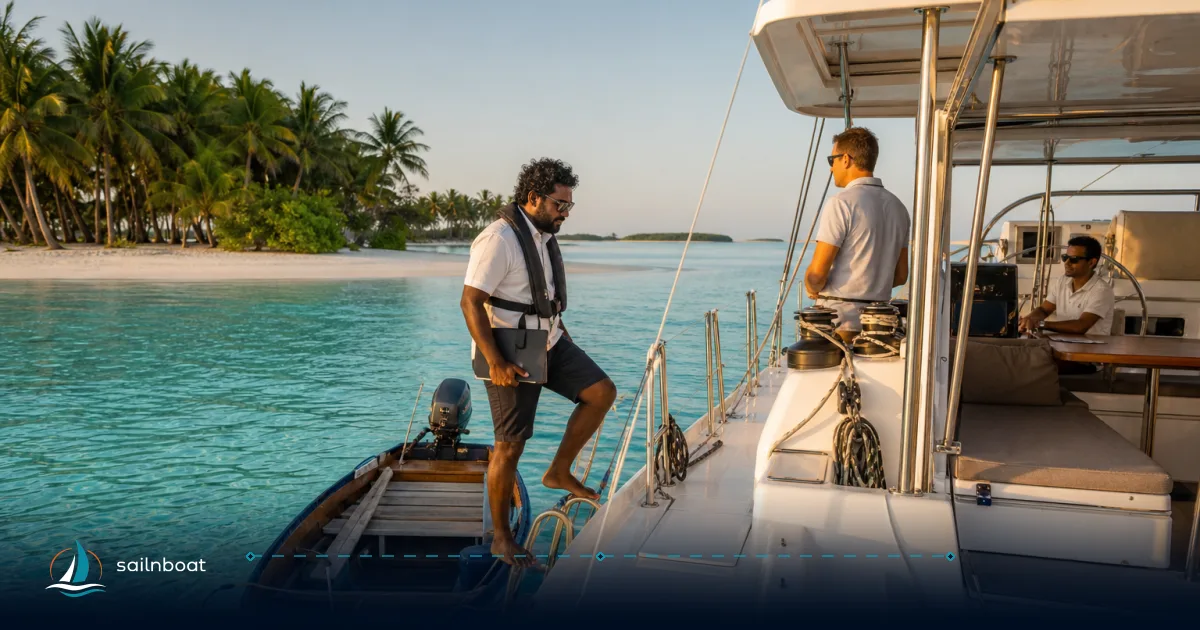
Maldives cruising permits are mandatory for foreign tourist vessels and must be processed through the Ministry of Tourism with an authorised local agent; passenger (charter) licences and daily fees apply separately and can substantially change charter operating costs.
Overview of Maldives Cruising Permit Requirements
What the permit covers
- The “cruising and harbouring” permission (often called the cruising permit) allows a foreign tourist vessel to enter, cruise and harbour in Maldivian waters for a defined period and is issued by the Ministry of Tourism. The permit will be tied to your inward clearance by Maldives Customs and must be applied for using the Ministry’s application form.
Who must apply
- Every foreign-flagged vessel intending to cruise or harbour in the Maldives as a tourist vessel must hold the permit. If you will carry or embark passengers (commercial or private guests beyond crew), you also require a passenger licence / charter licence issued under the vessel’s local agent.
Key documentation needed
- Completed Ministry of Tourism application form (the official “Application for permit for Foreign Tourist Vessels to cruise and harbour in the Maldives”).
- Vessel registration (certificate of registry).
- Proof of P&I or hull & machinery / third‑party insurance covering the vessel in Maldivian waters.
- Crew list and passports; if embarking/disembarking crew by air there are online formalities to complete.
- Passenger manifest or proposed passenger numbers (if you will carry guests).
- Proposed itinerary (atoll list / cruising plan).
- Name and details of an authorised local agent (see section on agents).
Practical note on terms
- The regulation refers to “Foreign Tourist Vessel”, “Cruising permit / permission to cruise and harbour” and “Charter/Passenger License” (the passenger licence authorises carrying guests). Keep those three concepts separate in your contract and logistics planning.
Fee Structure for Cruising Permits
How fees are structured (two separate sets)
- There are two distinct fee streams to budget for: 1) the cruising / permit / tax regime managed via the Maldives Inland Revenue Authority (MIRA) and the Ministry regulation (length/GRT and duration‑based), and 2) the passenger (charter) licence daily fee schedule which uses vessel‑length bands plus a per‑passenger charge. These are applied in combination depending on the vessel’s size and whether you carry passengers.
Summary table — quick comparison
| Item | Basis | Typical charge shown in the regulation |
|---|---|---|
| Cruising permit initial fee (large vessels) | Vessels ≥100 GRT | USD 1,000 (cruising permit fee). |
| Post‑90‑day daily fee (≥100 GRT) | Daily until day 275 | USD 100/day. |
| Post‑90‑day daily fee (<100 GRT) | Daily until day 275 | USD 50/day. |
| Passenger licence — up to 20 m | Daily passenger licence | USD 100/day (length band per regulation). |
| Passenger licence — 21–35 m | Daily passenger licence | USD 250/day (length band per regulation). |
| Passenger per‑person per‑day charge | Per passenger on board | USD 5 per passenger per day. |
| Long‑stay extension (after 365 days) | One‑off extension | USD 3,500 + applicable daily fees (regulation schedule). |
Costs explained and calibration
-
Cruising permit vs GRT: the cruising permit / tax regime in the updated regulation uses a 100 GRT breakpoint: vessels 100 GRT and above face the initial cruising permit fee and higher daily charges after the 90‑day grace period; vessels under 100 GRT have a more favourable free 90‑day window and lower daily rates thereafter. If your vessel’s commercial paperwork quotes length rather than GRT, ask your agent to confirm the GRT categorisation — the regulation’s fees reference GRT thresholds.
-
Passenger licence (charter licence) is charged by length bands (not GRT) and levies a separate per‑passenger per‑day fee (currently USD 5 per person/day in the regulation). That can make small, passenger‑heavy yachts significantly more expensive per day than their baseline cruising fee alone. Budget the passenger licence and the per‑passenger fee as recurring daily costs for any charter operation.
-
Extensions: after the initial 90‑day permission a daily levy applies until specified cut‑offs (regulation defines limits up to day 275 and a higher one‑off extension after 365 days). If you plan a long seasonal basing in Maldives plan the extension cost and how the passenger licence window interacts with the cruising permit — vessels operating on an ongoing passenger licence are treated differently for extensions.
Factors that make the cost vary
- Whether you are counted by GRT or by length band, passenger count, seasonality, and the exact charter activity (private guests, commercial liveaboard etc.) will change totals; local taxes and MIRA tax/GST interpretations can also affect the final invoice. Your agent handles payments to MIRA and the Ministry and will quote a full breakdown.
Application Process for Cruising Permits
Timeline for application — formal vs practical
- Formal windows in the rules: the Ministry’s regulation sets the legal framework (including a requirement that the permit be obtained promptly after inward clearance). Separate government guidance pages advise submitting pre‑arrival applications where possible. OneGov/MoT guidance states applications can be submitted in advance (guidelines recommend submitting at least several days prior), while the regulation also includes provisions about timing relative to inward clearance. For operational reliability, plan to submit the application pre‑arrival (ideally several working days before) and confirm inward‑clearance filings with your agent immediately on arrival.
Recommended lead times (practical)
- Aim to have the cruising permit application and any passenger licence paperwork submitted 3–10 working days before arrival when you have passengers or complex logistics. If you must arrive with short notice, the regulation allows prompt processing around inward clearance, but short notice increases operational risk (boarding officials, port calls, or island visits may be delayed). Your agent can advise a realistic lead time for the port(s) you plan to visit.
Step‑by‑step: how the application flows
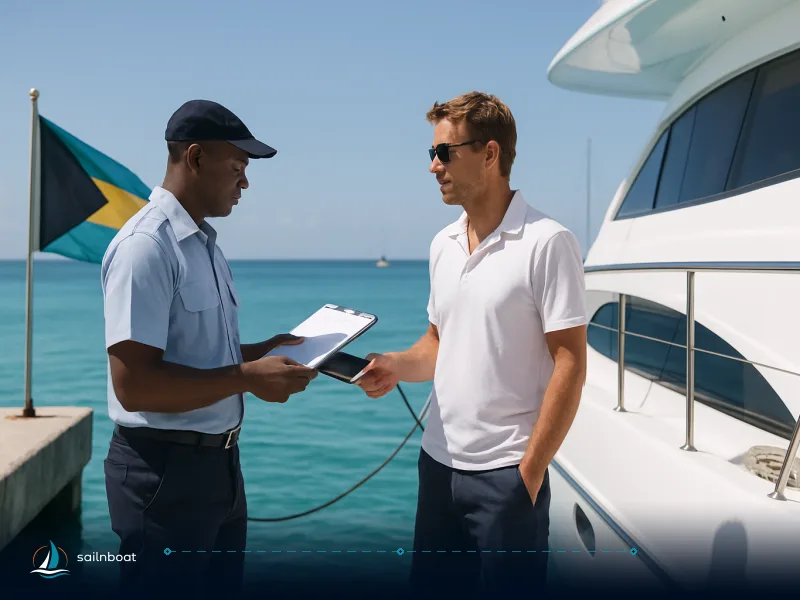
- Nominate and contract a Maldives‑authorised local agent (agent details are required on the application).
- Prepare the paperwork: registry, insurance, crew passports, passenger list (if any), proposed itinerary and vessel particulars (GRT/LOA, callsign).
- Agent files the “Application for permit for Foreign Tourist Vessels to cruise and harbour” with the Ministry of Tourism and pays the administrative fee (the regulation specifies a Ministry application fee in MRF for the initial permission).
- If carrying passengers, agent applies for the passenger (charter) licence and prepares the tax sheet for MIRA; the passenger licence is issued in the name of the agent.
- Payments: the agent pays MIRA / Ministry fees and any bed tax / passenger per‑day levy; payment receipts and tax sheets are furnished to the authorities. Keep scanned receipts on board.
How to submit the paperwork
- The Ministry maintains application forms and some services can be initiated through Maldives government e‑services (OneGov) or directly via the Ministry of Tourism; in practice most foreign vessels use an authorised local agent to submit and track the application and manage payments. Agents also coordinate inward/outward clearance with Maldives Customs Service.
Role of Local Agents in Permit Management
Why you must appoint a local agent
- The regulation requires that the vessel appoint a local agent authorised by Maldives Customs Service to handle clearance, tax sheets and the passenger licence. The agent legally represents the vessel for all Ministry/MIRA matters and is responsible for filings and payments. Choose an agent with proven experience in cruise charters and inter‑atoll logistics.
How to appoint an authorised agent
- The agent must be named on the permit application; only agents authorised by Maldives Customs Service may act as an agent of foreign tourist vessels. Confirm the agent’s Customs authorisation and ask for proof of authorisation and recent references. Agents will normally require a standard agency agreement and a letter of authorisation from the vessel owner/operator.
Agent responsibilities — clear, non‑negotiable tasks
- File the permit and passenger licence applications with the Ministry of Tourism.
- Submit tax sheets and pay MIRA fees (cruise tax, passenger per‑day fees, bed tax or any applicable GST).
- Carry out inward and outward customs clearance, arrange for officials to board if needed and coordinate transport for inspections.
- Maintain records and receipts (these are needed for departure clearance).
- Act on your behalf when penalties, discrepancies or audits arise and ensure monthly reporting where required.
Trade‑offs when you rely on an agent
- Speed vs cost: experienced agents charge a premium but reduce clearance time and operational risk.
- Transparency: request a clear invoice that separates Ministry/MIRA fees from agency fees and third‑party charges (transport of officials, port authority fees). Agents usually add a service charge on top of government fees.
Recent Regulatory Changes Affecting Cruising Permits
What changed most recently (high level)
- The Maldives updated its Foreign Tourist Vessel regulation in 2024 (Regulation No. 2024/R‑90) with substantive amendments to fees, passenger licence rules and the administrative framework; subsequent guidance and amendments have clarified fee schedules and introduced or confirmed passenger‑per‑day levies and extension charges. Those changes restructured how GRT, length bands and passenger fees interact.
Specific practical impacts you should know
- Newer rules reinforce the 90‑day free cruising window for many smaller vessels and set daily fees for exceedances, plus a notable cruising‑permit fee tier for larger (≥100 GRT) vessels. Passenger licence daily fees and the USD 5 per‑passenger per‑day charge were added/clarified in recent amendments; these two combined materially change the daily cost of operating a passenger charter.
How this affects planning
- If you plan seasonal basing, repositioning or multi‑week liveaboards, re‑run your cost model with passenger licence and per‑passenger levies in mind. If you are near the 100 GRT breakpoint ask your agent to confirm the GRT calculation and expected daily fees for any planned extended stay.
Penalties for Non‑Compliance
What can go wrong
- Unpaid taxes and late or missing tax sheets attract direct penalties. The regulation specifies fines for non‑payment of tax that fall on the vessel’s agent (for example a fine denominated in MRF per tourist bed) and the Ministry can withhold future cruising permissions for vessels under an agent’s name until outstanding amounts are cleared. Persistent non‑submission of required tax sheets may expose the agent to larger administrative fines.
Concrete examples from the regulation
- The regulation includes a fine formula that penalises the agent for unpaid tax (the agent may be fined MRF 1,000 per tourist bed in some provisions) and allows the Ministry to suspend permissions for vessels under that agent until the debt is settled. There are also provisions that permit higher administrative fines in cases of persistent non‑compliance. These fines fall primarily on the agent but operationally affect the vessel (clearing, movement, passenger operations).
Operational consequences
- Expect immediate operational consequences from non‑compliance: denied permission to cruise or park in particular harbours, delayed clearances, and reputational fallout with local authorities — all of which can cause charter cancellations and additional costs. For that reason agents will usually require up‑front payment for anticipated tax sheets and passenger licence days.
Practical checklist and templates for skippers and agents
Pre‑arrival checklist for the skipper (minimum)
- Confirm agent appointment and request their Customs authorisation proof.
- Supply current vessel registration, certificate of insurance, crew passport copies and latest crew list.
- Provide proposed itinerary (list of atolls/ports) and expected passenger numbers and embark/disembark points.
- Confirm whether the vessel is above or below 100 GRT and request the agent’s fee estimate that separates government fees from agency fees and local port charges.
Agent operations checklist
- File the Ministry application and passenger licence (if applicable) and pay the Ministry/MIRA fees into the appropriate MIRA account referenced in the regulation. Keep digital receipts.
- Submit monthly or movement tax sheets as required and reconcile any discrepancies promptly (the regulation gives a period for correction).
- Report incidents to the Ministry as required (the regulation or government guidance defines short reporting windows for specific events).
Common pitfalls (and how to avoid them)
- Confusing GRT and length: confirm which metric the authority will use for fee calculation.
- Late payments: agents can be fined and your vessel’s future permissions can be withheld — pay government fees promptly.
- Under‑quoting passenger costs: include the per‑passenger per‑day fee when you price charters.
Final practical advice for charter operators
- Plan for the agent cost and government fee lines separately when you quote charters; passenger licence and per‑passenger fees materially affect daily operating cost.
- Book and confirm your authorised agent well before arrival; experienced agents are worth the additional fee because they manage customs boarding logistics, tax sheets and speed up permissions.
- If your vessel sits close to the regulatory breakpoints (100 GRT or a length band), ask the agent for the regulation clause or printed schedule used to calculate the fee so you can budget properly.
If you need direct help
- If you want a direct permit‑management quote or an agent recommendation, contact us — we arrange vetted agents, review quotes so the government fees are separated from agency fees, and help you model passenger licence cost into your charter pricing.
Frequently Asked Questions
You need a completed application to the Ministry of Tourism, vessel registration, insurance, crew list, passenger manifest (if applicable), proposed itinerary and an authorised local agent; submit pre‑arrival where possible and secure the permit either before arrival or promptly after inward clearance.
Cruising permit and extension fees are set by GRT and duration (see article). Passenger licence daily charges use length bands (e.g. up to 20 m versus 21–35 m); passenger per‑day and extension fees also apply—refer to the schedule in the regulation or your agent for the exact current amounts.
Daily fees after the initial 90‑day free period apply by GRT bands; passenger licence daily charges for vessels up to 20 m are listed in the regulation—agents normally quote the exact daily total including per‑passenger charges.
Choose an agent authorised by Maldives Customs Service; the agent must be named on the permit application and handles inward/outward clearance, tax sheets and payments on your behalf.
Penalties include fines for unpaid tax (agents can be fined per tourist bed), withholding of future permissions until outstanding amounts are paid, and other administrative fines described in the regulation.
Written by
Sailnboat Editorial
The Sailnboat editorial desk covers yacht and boat chartering worldwide — routes, bases, seasons, boat types, paperwork and the practical costs that decide a trip. We are a charter marketplace, not a boat owner or a local agency: what we sell is judgement and support, so our guides are written to help you make a decision, not to sell you a specific boat. Every guide is checked against live operator and marina data before it goes out.
Fact-checked against live operator and marina data, and published under our editorial standards. Last reviewed: .