Sailing from Dubrovnik to Montenegro: Border Procedures & Routes
A step‑by‑step, practical guide for yacht crews extending a Croatian charter into Montenegro: where to check in/out, what papers to carry, which ports accept you and sensible routes into the Bay of Kotor.

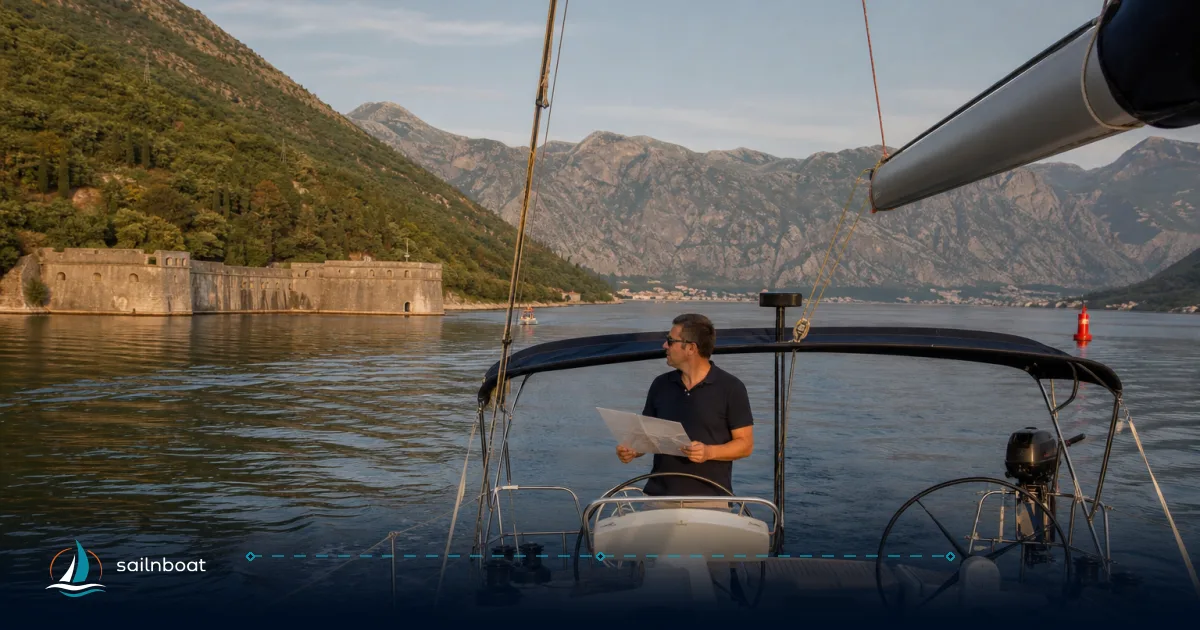
You can sail from Dubrovnik to Montenegro, but it changes the paperwork and the plan: you must clear out of Croatia at an authorised Croatian port, then go straight to a Montenegrin port of entry to complete immigration, customs and the harbour‑master vignette process before cruising the Bay of Kotor. This guide tells you which Montenegrin ports accept yachts, the step‑by‑step formalities at both ends, which documents and licences to have aboard, practical route options into Kotor and timing tactics to minimise delays.
Authorized Ports of Entry for Yacht Border Crossing
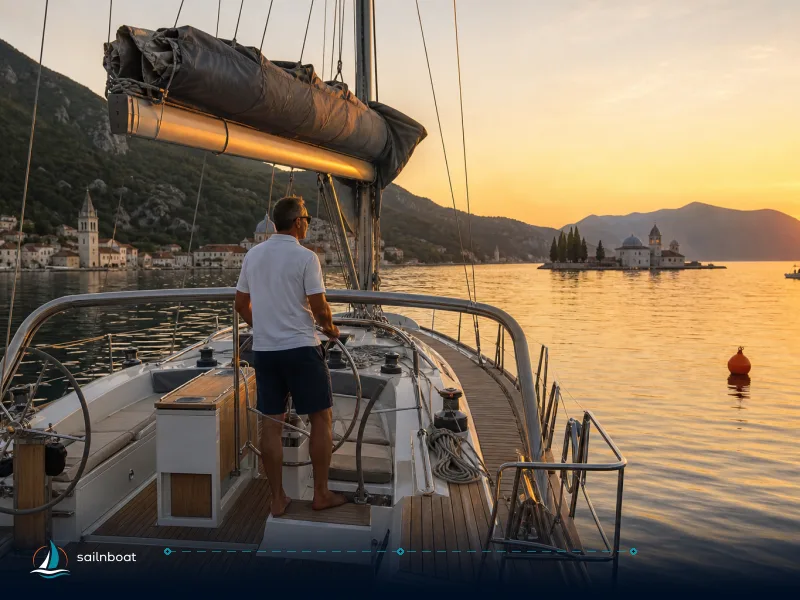
The legal rule is simple: when you approach Montenegro from foreign waters you must go directly to a port officially open for international traffic and complete border formalities there. Montenegro lists a set of international ports of entry for maritime traffic — examples that commonly accept visiting yachts are Zelenika (Herceg Novi area), Kotor, Tivat/Porto Montenegro, Budva (seasonal) and Bar. Porto Montenegro operates as an international port with on‑site immigration and customs facilities during posted hours; always confirm opening times before arrival, as procedures may change in peak season or on public holidays.
How to choose the port
- Zelenika / Herceg Novi: the closest practical call from Cavtat/Dubrovnik for many yachts — useful if you want the shortest offshore leg. Note: Herceg Novi itself is not a charter base; if you are arriving on a charter, you will need to start from a listed base such as Aci Marina Dubrovnik, and your first Montenegrin stop for clearance must be Zelenika or another official port of entry.
- Porto Montenegro (Tivat): modern marina with facilities and an on‑site clearance process; a good option if you need berth services or provisioning on arrival. This is a listed Sailnboat charter base, so direct charters to or from Porto Montenegro are possible.
- Kotor: the historic destination in the bay; expected to handle formalities but can be busy when cruise ships are in. Kotor is not a Sailnboat-listed charter base, so if you wish to start or end your charter here, you will need to arrange the yacht's pick-up or return in Tivat (Porto Montenegro).
Practical note: which Croatian port to leave from
- Cavtat and Dubrovnik (Gruž) are the usual Croatian clearance points for an onward trip to Montenegro; Cavtat is the most common southern clearance port but availability and opening seasons vary so check ahead. Clearing out at an authorised Croatian port is mandatory before you enter Montenegro. Aci Marina Dubrovnik is a listed charter base and the main starting point for charters heading south.
Step‑by‑Step Border Crossing Procedures
You must complete a small but specific choreography of harbour‑master / police / customs checks at both ends. Below is the sequence many charter crews follow; follow the order and carry originals.
Clearing out of Croatia (typical sequence)
- Harbour Master (Lučka kapetanija): present vessel papers, crew and passenger list; the harbour master will certify your exit/transit documentation. Many Croatian ports issue a transit stamp or cancel the transit log. Plan to do this before you cast off.
- Border Police (granična policija): passport control for the crew and passengers; non‑EU nationals will have exit records stamped.
- Customs (Carina): if you are carrying dutiable goods (or if customs require it) complete customs formalities; usually brief for private yachts but can include a visit to the customs office or an inspection.
Clearing into Montenegro (typical sequence on arrival at a Montenegrin port of entry)
- Proceed directly to the stated international port of entry (shortest customary route) — do not stop to swim or call at another anchorage before check‑in. Montenegro law and local practice require direct arrival at the port of entry for clearance.
- Harbour Master / Port Authority: present the original vessel certificate of registry, crew and passenger list (often in writable electronic form as well), proof of insurance, skipper’s qualification and the charter contract (if applicable). The harbour master issues the vignette (vessel permit) and stamps the crew list. The vignette is typically mandatory for foreign yachts intending to cruise Montenegrin waters. The harbour master will advise whether you should go to the customs dock or to a marina berth while checks occur.
- Border Police (Immigration): passport control for everyone on board; passports will be checked and stamped.
- Customs: customs may inspect the vessel or documents; the vessel is sometimes held on the customs quay until the formalities finish. Expect the possibility of a short delay if customs want to inspect stores or the boat.
How long it takes
- Processing times at each end can vary widely depending on season, traffic, and port staffing. Outside peak season, clearance is often completed within a couple of hours, but in July and August, or if a cruise ship or a big yacht is being processed, it may take significantly longer. Confirm expected timing with the relevant port authorities or your charter operator. Actual waiting times can vary widely; for the fastest transit, call the port in advance, arrive early, and consider using a local clearance agent or marina 'yacht assist' service.
Operational tips for check‑in/check‑out
- Do the Croatian check‑out early (first office hour) so you can arrive in Montenegro well before midday; avoid arriving at a POE between 11:00–14:00 when tourist traffic peaks.
- Keep digital copies of all documents (PDFs of registration, insurance and the crew list) and a printed crew list with passport numbers — some offices will ask for both.
- If your boat is chartered, get written permission from the owner/operator to cross the border; some contracts prohibit international crossings or require extra insurance/APAs. Ask at booking.
Documentation and Licensing Requirements
Carry originals and make simple, clearly labelled copies. Montenegrin harbour masters and customs routinely ask to see the same set of documents that Croatian authorities do.
Required documents (what you should have aboard)
- Passports for everyone on board (valid for the intended stay).
- Crew & passenger list with passport numbers and nationalities — presented to both harbour master and police; changes must be reported to the harbour master. Electronic and Excel versions are commonly accepted but keep a printed copy.
- Boat’s Certificate of Registry / Title (original) and proof of ownership or the charter contract for a bareboat.
- Valid third‑party/third‑party‑liability insurance for the yacht (policy details often required to issue the vignette).
- Radio licence / VHF operator certificate (SRC) if the vessel carries radio equipment — marinas and authorities often check this.
Licensing for bareboat crews
- The Montenegrin law requires evidence of certificates of competence for the skipper and crew when issuing a vignette. Many charter companies and marinas accept an ICC, RYA Day Skipper/Yachtmaster or equivalent national licence as practical proof, but acceptance is ultimately operator‑ and harbour‑master dependent. If you plan to helm the boat yourself, secure written confirmation from the charter operator that your exact licence will be accepted.
Practical licensing advice
- If you don’t hold an internationally recognised skipper certificate, or the charter operator will not accept yours, book a skippered charter or hire a local skipper for the Montenegro leg — this removes uncertainty. Many day‑boat rentals advertise “no licence needed” for short leisure hires, but that usually means a local skipper is supplied.
Optimal Routes and Timing Tips for Entering the Bay of Kotor
Starting from a Real Charter Base: Dubrovnik (ACI Marina) or Porto Montenegro
For a legal and practical charter passage, your route must start and end at a Sailnboat-listed charter base. The two main options for this cross-border passage are:
- ACI Marina Dubrovnik (Croatia): The principal charter base for departures towards Montenegro. From here, you must clear out at Dubrovnik (Gruž) or Cavtat, then proceed directly to your chosen Montenegrin port of entry (typically Zelenika or Porto Montenegro).
- Porto Montenegro (Tivat, Montenegro): The principal Montenegrin charter base, and a port of entry with on-site clearance. If your itinerary starts or ends here, you can arrange a direct handover.
Example Route: ACI Marina Dubrovnik → Porto Montenegro (Tivat)
This is the most common route for charters crossing the Croatia–Montenegro border.
- Leg 1: ACI Marina Dubrovnik → Cavtat (clear out of Croatia; ≈10 nm by sea, allow 1–2 hours including paperwork).
- Leg 2: Cavtat → Zelenika (Montenegro, port of entry; ≈15 nm, 2–3 hours under sail at 6–7 kt, shorter by motor).
- Leg 3: Zelenika → Porto Montenegro (Tivat, charter base; ≈8–10 nm, 1–2 hours under sail or 30–60 minutes by motor).
After clearing in at Zelenika, you can proceed to Porto Montenegro for a berth, or continue into the Bay of Kotor for further cruising.
Alternative: Porto Montenegro → ACI Marina Dubrovnik
Reverse the above, ensuring you clear out of Montenegro at an authorised exit POE (such as Zelenika or Porto Montenegro itself) and re-enter Croatia at Cavtat or Dubrovnik (Gruž). Each border crossing requires full formalities and time for checks.
Table: Sample Passage Times and Distances (Charter Base to Charter Base)
| From (Charter Base) | To (POE/Charter Base) | Distance (nm) | Sail yacht time @6–7 kt | Motor yacht time @8–14 kt | Notes |
|---|---|---|---|---|---|
| ACI Marina Dubrovnik | Cavtat (Croatia POE) | 10 | ~1.5–2 hrs | ~45–60 mins | Croatian exit formalities. |
| Cavtat | Zelenika (Montenegro) | 15 | ~2–3 hrs | ~1–1.5 hrs | Direct border crossing. |
| Zelenika | Porto Montenegro | 8–10 | ~1–2 hrs | ~30–60 mins | Entry formalities can also be completed at Porto Montenegro if arriving direct. |
| Porto Montenegro | Kotor | 5–8 | ~1–1.5 hrs | ~25–45 mins | Not a charter base; day trip only. |
| Porto Montenegro | Perast | 8–10 | ~1.5–2 hrs | ~40–60 mins | Anchorage or quay space limited. |
Note: If your itinerary includes a port that is not a listed charter base (such as Kotor or Perast), ensure you plan for the return passage to Porto Montenegro for yacht handover or return.
Timing strategies to avoid delays
- Arrive at the Montenegrin POE as early as possible, ideally during the first opening hour; many harbour‑master offices are busiest mid‑morning. Booking an appointment or calling ahead reduces queue risk.
- Avoid arriving at peak tourist times (late morning between 10:30–14:00 and weekends in July–August). If your itinerary is inflexible, budget extra time for clearance.
- Use local clearance or marina 'yacht assist' services: they can meet you alongside, pre‑check documents and often shorten the time spent waiting at police/customs. Porto Montenegro and private agents advertise these services.
Practical cruising‑speed guidance (calibration)
- Typical cruising speeds to estimate times: a 12–14 m sailing yacht under power often averages ~6–8 kt; a coastal motor yacht commonly averages ~12–18 kt. Use those figures to estimate passage times and add margin for reduced speed under sail, currents and manoeuvring. (These are typical ranges; your boat’s real performance will vary by design and load.)
Day‑Trip Itineraries within the Bay of Kotor (from Porto Montenegro)
Once cleared in at Porto Montenegro (Tivat), you can plan day trips within the Bay of Kotor. Each leg below starts and ends at or returns to Porto Montenegro, the Sailnboat-listed charter base.
| From (Charter Base) | To | Distance (nm) | Sail yacht time @6–7 kt | Motor yacht time @8–14 kt | Notes |
|---|---|---|---|---|---|
| Porto Montenegro | Kotor | 5–8 | ~1–1.5 hrs | ~25–45 mins | Full marina services at Porto Montenegro; Kotor is a historic port but not a charter base. |
| Porto Montenegro | Perast | 8–10 | ~1.5–2 hrs | ~40–60 mins | Perast quays are small — book ahead in high season or anchor outside. |
| Porto Montenegro | Rose Bay (Luštica) | 10–12 | ~2 hrs | ~45–60 mins | Anchorage outside the Verige Strait. |
| Porto Montenegro | Budva (via Luštica) | 16–20 | ~3–4 hrs | ~1.5–2.5 hrs | Day trip out of the bay and along the coast. |
Note: If you wish to start or end your charter at Kotor, Perast, or any port not listed as a charter base, you must arrange pick-up or return at Porto Montenegro and plan the necessary passage accordingly.
Mooring Fees and Regulations in Montenegrin Ports
Fees vary sharply by facility and season. Below are practical ranges and operational notes to help you budget; always request a written quote from the marina or port office before committing.
What to expect (typical ranges)
- Town quays and municipal berths (Kotor, Perast, Herceg Novi): generally modest and priced per metre/overnight; smaller yachts can expect lower nightly fees than premier marinas in high season.
- Porto Montenegro and similar premium marinas: premium per‑metre or footprint pricing; day or transient rates are often quoted on request rather than posted and can be materially higher in high season. Industry guides report daily transit/overnight rates for mid‑size yachts commonly starting in the low tens of euros in low season and rising substantially in peak season at top marinas.
Examples and calibration
- Porto Montenegro: a full marina offering with a booking desk and yacht‑assist; they publish berth facilities but typically provide bespoke quotes for high season rates and larger yachts. Expect to request a quote rather than use a flat public rate card.
- Smaller ports (Herceg Novi, Perast): lower rates than Porto Montenegro but limited space in summer; Perast quay space is very limited and often fills early.
Payment & practicalities
- Montenegro uses the euro, so you pay marina and town quay fees in EUR; marinas accept cards in most tourist areas but carry some cash for small ports/ancillary fees.
- Marina invoices may include additional fees (electricity, water, security, tourist tax) — check the final invoice before assuming a flat berth price.
Regulations Regarding Anchoring and Overnight Stays in the Bay of Kotor
Anchoring realities in the Bay of Kotor
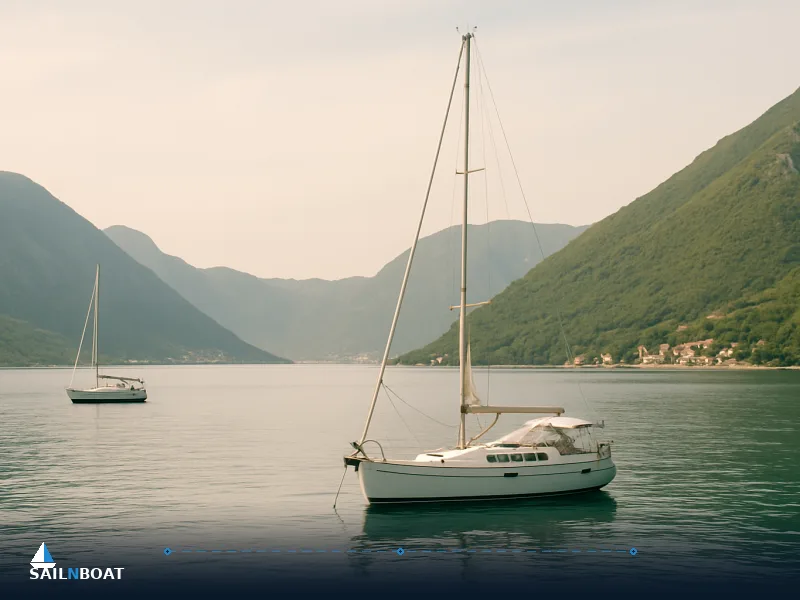
- The bay is a drowned river canyon with steep sides; much of it is deep, which reduces the number of good, shallow anchorages. Practical anchor spots tend to be limited and can fill quickly in high season. This means many visiting yachts use town quays, municipal berths or marinas rather than relying on free anchorages in the inner bay.
Protected and restricted areas
- Certain heritage and sensitive sites (for example near old city walls, specific islets and archaeological sites) have local restrictions: the harbour master or local signage may prohibit anchoring or motor traffic close to monuments. Follow harbour‑master directions and pay attention to marked no‑go or no‑anchor zones.
Reporting and overnight rules
- Report any changes to the crew/passenger list to the harbour master. Overnight stays in port are handled through the harbour master or marina and may be priced differently from daytime visitor fees. Some anchoring bays are tolerated for nights outside the main towns but depth and holding may be poor.
Safety and environmental points
- Because the bay exchanges water slowly, swimming and water clarity inside the bay are not the same as on the open Adriatic; avoid leaving greywater or trash in anchorages and use shore facilities for garbage disposal. Respect local speed‑limit and no‑wake zones (several narrow stretches have 6‑kt or similar guidance).
How to Avoid Delays and Practical Final Checks
Short checklist before you leave Dubrovnik/Cavtat
- Confirm which Croatian port you will clear out from and the opening hours; some clearance posts are seasonal. Arrive early enough for paperwork.
- Phone the Montenegrin POE you intend to use (Zelenika, Porto Montenegro, Kotor) to advise ETA and ask if they can pre‑register your crew list or recommend a berth. Porto Montenegro and private agents can often pre‑register paperwork.
- Have digital and paper copies of: passports, crew list, vessel registry, insurance policy, charter contract and skipper/VHF certificates. Name the files clearly (e.g., “Vessel_Reg_ABC_2026.pdf”).
If time is money: hire a clearance agent
- Using a local agent or the marina’s ‘yacht assist’ service costs extra but commonly reduces time spent waiting and prevents errors (they know exactly which office, which form and can physically meet you). For one‑day turnarounds in high season this is usually good value.
Final operational warnings
- Some charter operators do not permit a bareboat to cross into Montenegro — confirm this before you book. If the operator allows the crossing, ask for written permission and any extra insurance/APAs required.
- Remember: Croatia is in the Schengen area (passport/exit rules apply) while Montenegro is not; that changes immigration handling and, for some nationalities, the visa picture. Allow time for immigration stamps and any EES/EES‑related checks on exit from the EU/Schengen zone.
A Dubrovnik → Montenegro extension is straightforward if you plan the paperwork, pick the right ports and allow time for checks. If you prioritise speed, clear out early in Croatia, call the Montenegrin port of entry in advance and use a local clearance service; if you prioritise convenience and marina services, aim for Porto Montenegro or book a berth at Kotor with the harbour master’s help. Either way, carry the right documents, expect to show skipper and VHF certificates, and factor in 1–3 hours for formalities each way in high season.
Plan your next step
Frequently Asked Questions
Montenegrin international ports of entry include Zelenika (Herceg Novi area), Kotor, Tivat (Porto Montenegro), Budva (seasonal) and Bar; you must arrive at one of these designated international ports to complete check‑in and receive the vessel vignette.
Clear out of Croatia first (harbour master → border police → customs), then proceed directly to a Montenegrin port of entry; on arrival contact the harbour master, present passports/crew list/boat papers, obtain the vignette and complete police and customs checks — the boat can be held on the customs quay until clearance.
Carry passports for everyone, an up‑to‑date crew/passenger list, vessel registration (original), proof of third‑party insurance, the charter contract (for bareboat), and skipper & radio operator certificates; operators commonly accept ICC/RYA or equivalent but acceptance varies by operator and harbour master.
Typical short legs: Porto Montenegro (Tivat) → Kotor ~5–8 nm (1–1.5 hours under sail at 6–7 kt, shorter by motor); Kotor ↔ Perast ≈3–5 nm; Dubrovnik (ACI Marina) → Porto Montenegro ~28–30 nm as a cross-border leg. Exact times depend on boat type and weather.
Arrive early (first opening slot), call the harbour master or marina before arrival, book a local clearance agent or 'yacht assist' service and avoid weekends/late afternoons when tourist traffic peaks.
Mooring in Montenegro ranges widely: expect modest town‑quay rates and free anchoring in some bays, while high‑end marinas (Porto Montenegro, Lustica Bay) charge premium rates per metre; typical overnight transit/day rates for mid‑size yachts commonly fall within a broad band — plan on checking current marina rate cards or requesting quotes in advance.
Yes — anchoring is constrained by depth and protected heritage areas; some bays have designated anchorages and local no‑anchoring/no‑motor rules (around heritage sites and narrow narrows). Always follow the harbour master’s guidance and any local signage.
Written by
Sailnboat Editorial
The Sailnboat editorial desk covers yacht and boat chartering worldwide — routes, bases, seasons, boat types, paperwork and the practical costs that decide a trip. We are a charter marketplace, not a boat owner or a local agency: what we sell is judgement and support, so our guides are written to help you make a decision, not to sell you a specific boat. Every guide is checked against live operator and marina data before it goes out.
Fact-checked against live operator and marina data, and published under our editorial standards. Last reviewed: .