Svalbard Sailing: A Practical Charterer's Guide to Arctic Planning
A compact, operational guide for experienced charterers planning a Svalbard voyage: season windows, required kit, guide and permit rules, wildlife distances and SAR planning.

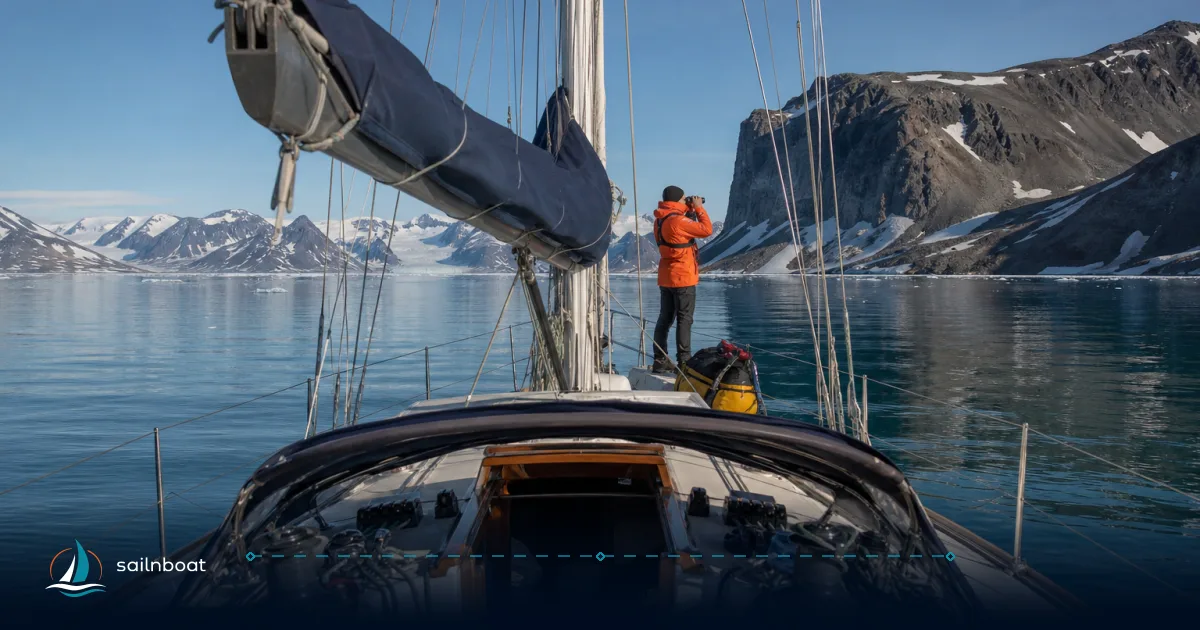
Svalbard sailing is a specialist operation: plan for May–September as the cruising season, stage your charter from Longyearbyen, and treat permits, wildlife distances and guide requirements as operational constraints, not optional extras. This guide lays out the months you’ll choose, the kit you must carry, the permits and guide‑approval timeline, the mandatory wildlife limits, and the search‑and‑rescue arrangements you’ll rely on if things go wrong.
Optimal Sailing Periods and Weather Windows
Intro answer: the practical sailing season for most charter operations runs from May through September; within that window each month delivers a different risk–reward mix for ice, landings and wildlife. Plan the season to match the purpose of the voyage (ice‑edge exploration, bird cliffs, hiking or whale watching).
Sailing Season Overview
- Season window: May–September is the operational season for most expedition and charter activity; operators concentrate departures in June–August. Use May if you want pack‑ice and classic polar imagery; choose August–September for circumnavigation options and whales. These month‑level differences materially change what landings are possible and how far north you can go.
- Daylight: Longyearbyen experiences continuous daylight (midnight sun) roughly from late April through late August — that daylight makes navigation and shore activity easier, but fatigue management for crew is an operational factor.
- Typical temperatures: summer surface air temperatures commonly run from near freezing up to single digits Celsius in sheltered fjords; expect wind chill and rapidly changing conditions. Local forecasts and daily weather windows govern decisions on landings and route choices.
Trade-off: earlier in the season you get more ice and more likelihood of polar bears on the ice; later in the season you get easier landings and wider geographic range but fewer seabirds. Choose dates around the priorities of your clients and accept that operators frequently adjust itineraries to follow ice and weather conditions.
Weather Patterns and Considerations
- Sudden changes: weather on Svalbard can change quickly — low pressure systems bring strong winds, fog and snow even in summer. Build in spare days for leg slippage and allow the charter master discretion to cancel a landing when conditions are marginal.
- Planning inputs: consult ice charts and the Norwegian Ice Service, and incorporate daily ice/sea‑state reports into the vessel’s voyage plan; have contingency berths and shelter fjords identified before departure.
- Fuel and range: legs are short compared to ocean passages, but diversion options are limited; carry conservative fuel margins and check your vessel’s polar performance (propulsion heating, anti‑icing) if you will operate near ice.
Required Equipment for Arctic Sailing
Short answer: equip the yacht to a polar standard — personal immersion protection, polar‑rated survival capacity, reliable two‑way long‑range comms, and navigation tools that work where charting and ice conditions change fast. The Polar Code and AECO guidance set the tone for what expedition operators expect.
Mandatory Gear List
Below is a practical checklist you should expect to meet or exceed when bareboat or chartering for Svalbard:
| Item | Why you need it | Practical note |
|---|---|---|
| Full‑body immersion suits / thermal protective aids | Rapid hypothermia risk if someone ends in cold water; Polar Code insists on polar‑rated survival capacity for ships operating in polar waters. | For small yachts adopt the same intent: suits or high‑quality thermal systems for all on board. |
| Life raft sized for all persons with polar survival pack | 5‑day survival provisioning is the benchmark for polar operations. | Raft must be serviced to polar‑spec standards where possible. |
| 406 MHz EPIRB and handheld PLBs with Cospas‑Sarsat polar coverage | Primary distress alert to SAR authorities. | Register each device to the vessel and user. |
| Two‑way satellite communications (Iridium/other) + satellite phone | Coastal VHF loses range outside fjords; two‑way sat‑comm is essential for operational coordination and medevac. | At minimum: a sat phone and an Iridium‑capable data link. |
| MF/HF or long‑range radio capability (where practicable) | Useful for SAR coordination and listening to search updates; HF infrastructure in Svalbard has been updated in recent years. | Treat as a redundancy, not a replacement for satellite comms. |
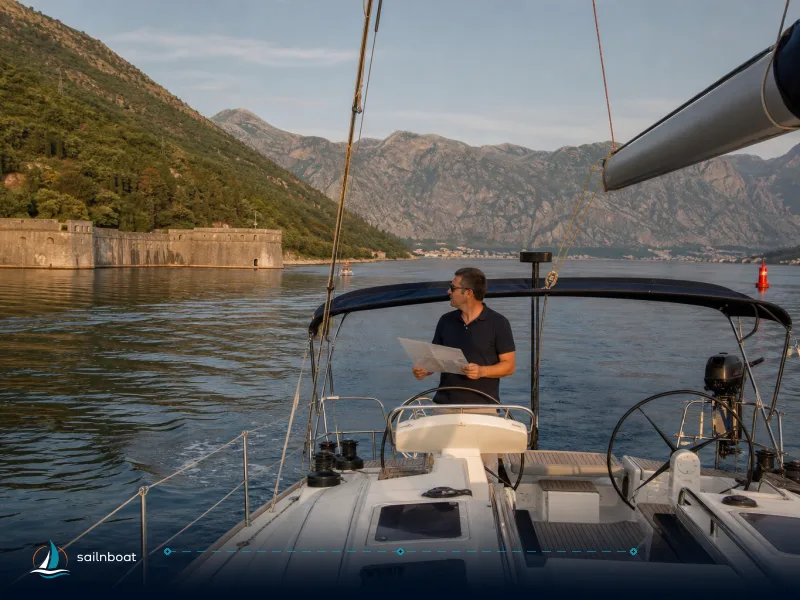
| ECDIS with up‑to‑date polar charts, radar and AIS | Safe navigation among islands, tide races and iceberg‑prone waters. | Use official ENC/large‑scale charts for fjord approaches; plan paper backups. |
| Arctic‑rated spare parts and tools | Cold failures happen fast; spares for pumps, fuel systems and steering are necessary. | Keep critical spares in a dry, warm locker. |
| Medical kit and trauma supplies + trained medic (recommended) | Evacuation to mainland hospitals can be a multi‑hour operation; initial care must stabilise casualties. | Consider a trained expedition medic or RYA/IMCA‑equivalent qualification for crew. |
| Polar wildlife deterrents where required | For shore activity beyond settlements a deterrent plan is required by the Governor and guides carry them. | Rifles are controlled — operators usually provide trained polar‑bear watch teams. |
Safety Equipment
- Lifejackets: modern 150 N or higher for open‑boat operations; ensure spray‑hoods, crotch straps and PLB pockets.
- First aid: a medical kit for trauma and cold injuries; include a hypothermia management kit (blankets, hot packs, insulated shelters).
- Life‑raft and immersion checks: service intervals shorten in cold climates; check next service date before departure.
- Training: conduct on‑board drills for abandon‑ship, man‑overboard in cold water, and hypothermia treatment prior to leaving Longyearbyen.
Calibrated note: some items — especially the exact immersion‑suit specification — depend on the vessel type and whether SOLAS/Polar Code formally applies; match the operational standard used by experienced expedition operators rather than the minimal leisure‑cruising kit.
Guide Certification and Permit Requirements
Key point: new Field Operation Safety Regulations reworked travel rules, introduced an approval scheme for Svalbard guides and made permits mandatory for many camping and tourist landings; commercial operators and organised tourist activities must follow the Governor’s permit and guide‑approval process.
Guide Certification
- Regulatory timeline: the Field Operation Safety Regulations entered into force 1 January 2026; specific sections establishing guide approval and the requirement to use approved Svalbard guides enter into force 1 July 2027. Transitional exemptions are available for experienced guides who can document sufficient recent hours.
- What “approved Svalbard guide” means: the Governor has published a three‑part approval scheme — digital/theoretical learning, practical courses, and a field assessment — designed to ensure knowledge of safety, the environment and polar‑specific skills. Course providers may be pre‑approved.
- Operator responsibilities: tourist and field operators must present certificates of approval for all employees and associated persons engaged in guide activities when working outside inhabited areas. The Governor will set course content and the approval portal handles registration.
Trade-off and practical advice: if you are organising a charter that includes shore landings outside Longyearbyen after 1 July 2027, either contract locally approved Svalbard guides or work with a recognised expedition operator; do not assume a mainland guide will be accepted. Ask for guide approval documentation when contracting.
Obtaining Polar Permits
- Who issues permits: the Governor of Svalbard (Sysselmesteren) administers landing permits, camping permits and travel registrations for trips outside inhabited areas and in protected areas. The landing regulation maps permitted landing sites and ties many landings to guide‑led visits.
- Timelines and obligations: for camping, applications must usually be submitted at least four weeks before planned activity; private travel outside the defined travel area similarly has a minimum application period and insurance obligations. The Field Operation Safety Regulations set application deadlines and insurance minimums for different zones.
- Practical steps:
- Decide your intended landing sites and whether the trip is commercial or private.
- Check the Governor’s landing‑site map and the protected‑areas appendices.
- If the trip is a tourist/field activity, engage an approved guide (post‑July 2027 requirement) or ensure your operator holds the necessary permits.
- Submit the Governor’s application forms through the published portal within the stated deadlines.
Cost note: the Governor determines fees for processing applications and certificates; amounts vary and are published with the application forms.
Wildlife and Cultural Restrictions
Short answer: wildlife‑distance rules and landing limits are now statutory — you must plan route and on‑shore activities to meet the legal minima for polar bears, walrus and bird cliffs and to respect cultural heritage. Non‑compliance carries fines.
Wildlife Interaction Guidelines
- Polar bears: legal minimum distance is 300 m for most of the year and 500 m in the vulnerable spring period 1 March–30 June; if a bear is closer you are obliged to retreat. This applies throughout Svalbard outside settlements and is enforced.
- Walrus: keep at least 150 m from haul‑out sites; if you drive inside 300 m of a haul‑out you must not exceed 5 knots. That speed restriction for walrus and bird cliffs is codified in the motor traffic regulations.
- Bird cliffs: seasonal speed limits apply when within distances shown on the attached map to the regulations (typically a 5‑knot limit within specified meters during the breeding season).
- AECO and operator practice: industry guidelines advise conservative standoff distances beyond the legal minimum when possible and strict no‑landing rules for sensitive areas; expedition operators treat wildlife protection as a primary constraint on landings.
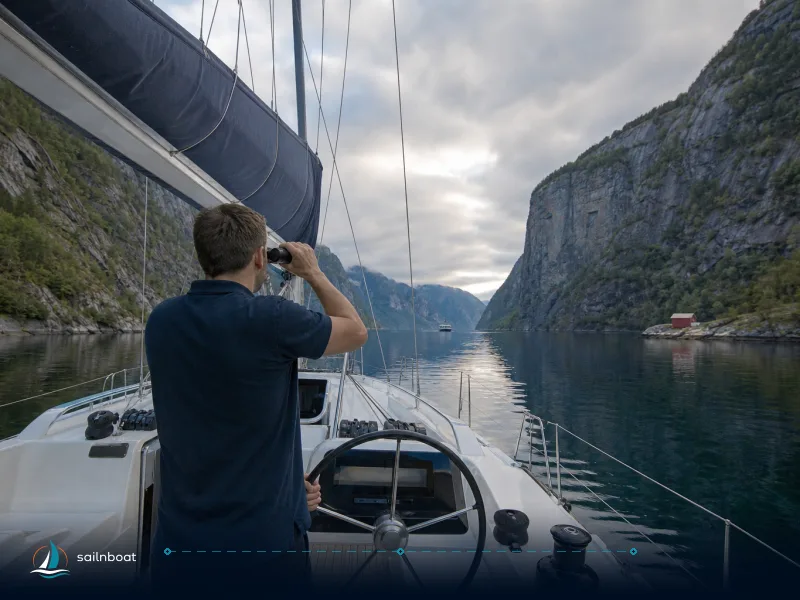
On‑water behaviour: reduce wake near haul‑outs, plan Zodiac approaches to avoid disturbance and brief crew on a strict non‑pursuit policy. Use optics (binoculars, scopes) rather than trying to close for a photo.
Cultural Considerations
- Heritage sites: many shore sites contain cultural remains (mining relics, graves, scientific sites); landing regulation and conservation rules restrict where you may go and how long you may stay.
- Settlements etiquette: inside Longyearbyen and other inhabited zones different rules apply (for example, firearms and loaded weapons are forbidden in settlements). Treat local services, residents and research stations with professional courtesy and follow posted community guidelines.
Contingency Planning for Search & Rescue
Top line: assume SAR will be slow and expensive — plan to self‑stabilise casualties for hours, carry robust communications and evacuation insurance, and register private trips with the Governor where required. The JRCCs coordinate major SAR; the Governor runs the local rescue sub‑centre.
Establishing Communication
- Local coordination: major SAR missions are coordinated by Norway’s Joint Rescue Coordination Centre (typically the Northern JRCC for Svalbard) while the Governor operates the local rescue sub‑centre and handles on‑island tactical response. JRCCs use a national incident system and may task Coast Guard vessels, aircraft and helicopters.
- Emergency contacts: the universal emergency numbers 112 (police) and 113 (ambulance) apply on Svalbard; however, your operational line of communication for maritime incidents will be JRCC and the Governor’s office. Brief your operator on how to escalate if you require helicopter medevac or Coast Guard assistance.
- Comms equipment: carry a 406 MHz EPIRB registered to the vessel, at least one sat phone (Iridium recommended for two‑way), and monitor VHF. An Iridium two‑way data channel is increasingly treated as essential for transmitting patient condition and coordinating medevac.
Emergency Preparedness
- Medical planning: designate a trained first‑aid lead; keep a trauma‑grade kit and hypothermia management supplies. For planned remote operations carry a medic or ensure emergency medevac insurance covers helicopter transfer to mainland hospitals.
- Insurance and costs: the Field Operation Safety Regulations require insurance for rescue costs in certain zones; the Governor has set minimum insurance amounts for different insurance zones (examples in the regulations show scaled minima). Operators typically include rescue insurance in the activity price; private travellers travelling outside the defined travel area must demonstrate coverage.
- Evacuation realistic timing: external assets can take many hours — weather, darkness and distance delay helicopters; the Captain and expedition leader must plan to stabilise casualties for prolonged periods and have pre‑planned rendezvous points and alternate routes.
Operational checklist before leaving Longyearbyen:
- Confirm permits and whether planned landings require an approved guide.
- Verify all EPIRBs/PLBs are registered and tested.
- Test sat phone and two‑way data link; confirm numbers for JRCC and the Governor’s on‑call duty.
- Review insurance certificates for search, rescue and medevac limits and ensure they meet zone requirements in the Field Operation Safety Regulations.
Final practical notes (what to tell a client / broker)
- Base selection: Longyearbyen is the practical hub — it provides provisioning, port services and basic medical care, and it’s where most charters stage handover and briefing. Expect to spend time ashore settling permissions and logistics.
- Contracts and APAs: expect operators to include expedition‑level APAs, insurance add‑ons and guide fees as line items; ask operators to show the Governor‑issued permits and guide approval numbers for any shore components.
- Flexibility is the primary charter currency in Svalbard: clients must accept itinerary changes driven by ice and wildlife protection regulations; a good operator explains the trade‑offs up front.
Plan your Svalbard sailing like an expedition: choose months that match the trip’s objective, equip to a polar standard, confirm permits and guide approval with the Governor of Svalbard well before departure, respect mandatory wildlife distances and speed limits, and contract evacuation insurance and robust communications. Do those things and you convert an extreme environment into a manageable operational plan.
Plan your Svalbard sailing adventure with confidence and safety.
Frequently Asked Questions
The primary sailing season runs roughly May–September; late June to late July is the widest 'sweet spot' for landings, bird activity and circumnavigation option, while late May favours pack ice and ice-edge wildlife and September favours whales and autumn light.
Permits for camping, landings in protected areas and tourist landings are issued by the Governor of Svalbard; apply via the Governor’s application portal with the timelines set out in the Field Operation Safety Regulations.
For polar operating envelopes plan for polar‑rated survival capacity (5 days), immersion suits or thermal protective aids, life raft sized for persons on board, EPIRB/PLB with polar coverage and reliable satellite communications; small‑craft operators follow a Polar Code–informed approach and industry best practice.
Keep at least 300 m from polar bears (500 m between 1 Mar–30 Jun); stay 150 m from walrus haul‑outs and reduce speed to 5 knots if within 300 m; bird‑cliff distance and seasonal speed limits also apply. These distances are legal requirements introduced in recent environmental regulations.
You cannot hire SAR directly — major SAR is coordinated by the Norwegian JRCC and the Governor runs the local rescue sub‑centre; ensure 406 MHz beacons, two‑way satellite comms and contract specialist medevac insurance before departure. Register planned private trips with the Governor where required.
Written by
Sailnboat Editorial
The Sailnboat editorial desk covers yacht and boat chartering worldwide — routes, bases, seasons, boat types, paperwork and the practical costs that decide a trip. We are a charter marketplace, not a boat owner or a local agency: what we sell is judgement and support, so our guides are written to help you make a decision, not to sell you a specific boat. Every guide is checked against live operator and marina data before it goes out.
Fact-checked against live operator and marina data, and published under our editorial standards. Last reviewed: .