Sailing Guide 1–99: Mastering Bareboat Charters in Greece
A stepwise bareboat skill ladder plus four one‑week itineraries for the Ionian and Saronic Gulfs, with onboard drills, marina notes and the paperwork that actually matters.

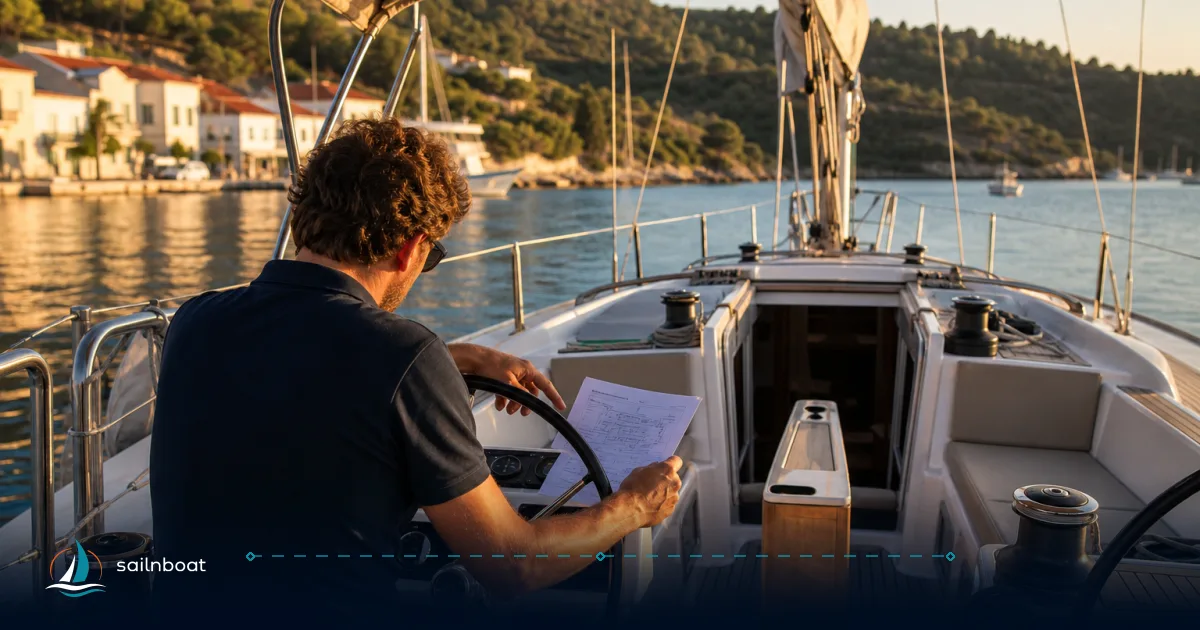
To move from assisted flotilla days to fully independent bareboat charters you need a staged skill ladder, repeated onboard practice and routes designed so you can rehearse one skill per day.
Essential Skills for Independent Bareboat Chartering
What you must be able to do, day one of independent charter
- Confident close‑quarters handling (stern‑to and alongside berthing, short‑line boat handling with a small crew).
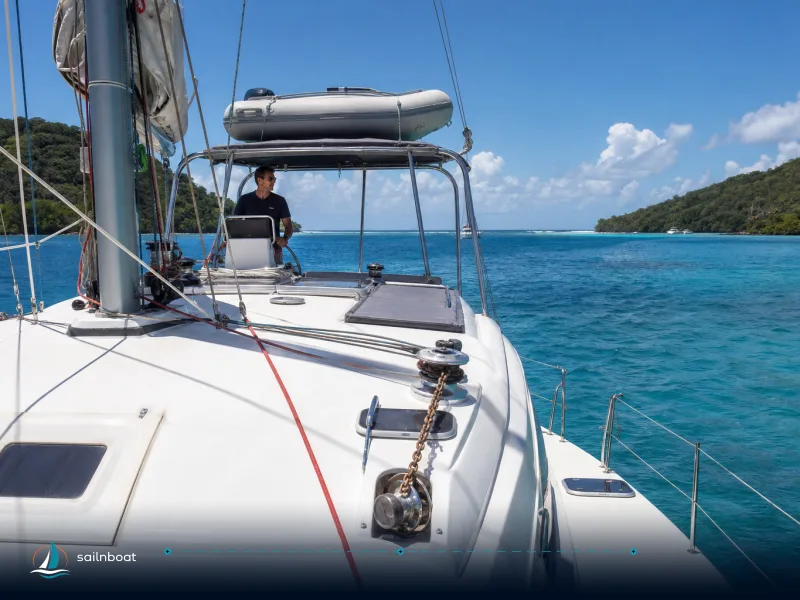
- Reliable anchoring: choose scope, check holding, set two references and confirm a good set before leaving the cockpit.
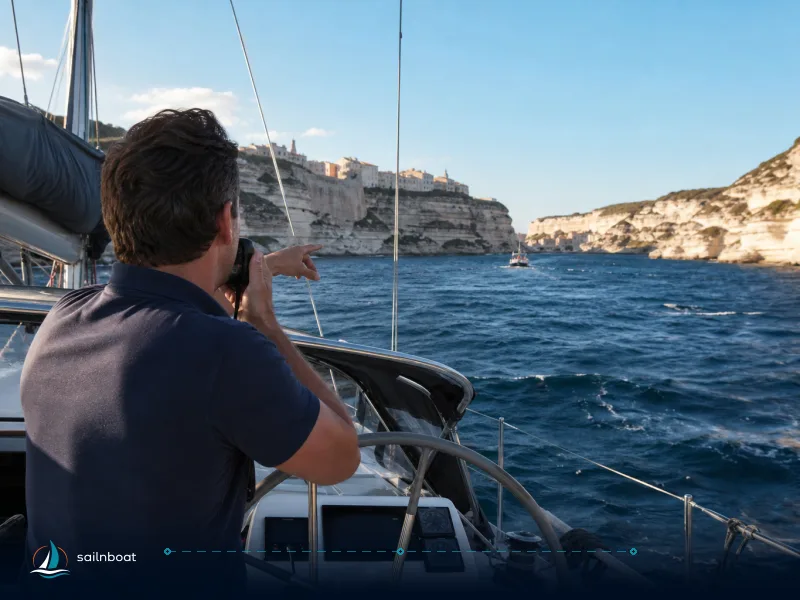
- Short‑range navigation and pilotage: read a paper chart for the harbour approach, mark transits, use GPS but always cross‑check with visual fixes.
- Safety and emergency procedures: MOB (man‑over‑board) recovery, fire response, basic first aid and having an abandon‑ship plan.
- Engine and systems: start‑up checks, raw‑water strainer inspection, simple fault isolation and where to find spare parts and oil aboard.
Skill Progression Overview (the ladder)
- Stage 1 — Shore and berth drills: med‑mooring, spring lines, fenders, hand signals and a routine for a safe step ashore. Practice until your crew executes a stern‑to without guidance.
- Stage 2 — Close quarters & propulsion: slow‑speed control, engine reverse/forward transitions, pivoting off stern line and short‑line manoeuvres in crosswind.
- Stage 3 — Anchoring & anchor recovery under load: set, back‑down test, check scope and retrieve with wind/current on; practise with both sand and weed bottoms when safe.
- Stage 4 — Short passages & navigation: plan watch, compass checks, passage WP (waypoint) planning and pilotage into narrow harbours.
- Stage 5 — Independent night and weather planning: simple night passages, watch rotations, and briefing on when to cancel or alter a leg for safety.
What a charter base will actually check at handover (and you should rehearse)
- Yacht inventory/charter check list: spar, sails, electronics and safety kit presence and condition.
- Engine and bilge checks: oil level, coolant, raw‑water strainer and evidence of fuel level.
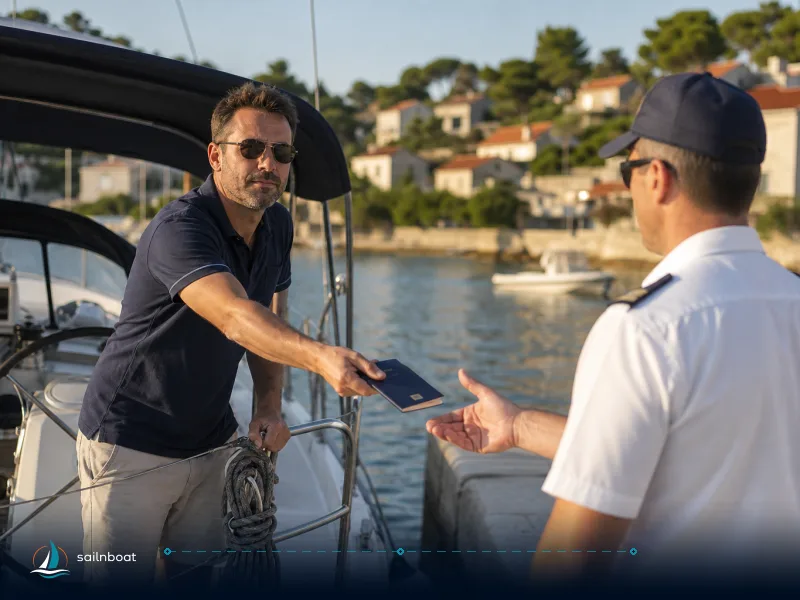
- Paperwork and licences: skipper identity, charter contract signature, and proof of any required operator certificate — many companies will request an SRC or other VHF operator certificate in addition to the skipper’s resume of experience.
- Walk‑through drill: show the crew emergency kill, main electrical isolation and location of spare parts.
Practical Exercises (do these in calm sheltered water first)
- Man‑over‑board drill: one person overboard with a marker buoy; execute immediate turn, approach under power and recover the person into the dinghy (or alongside) — practise both powered and sail‑driven recoveries.
- Anchoring sequence: choose a bay, run a controlled approach into 5–10 m depth, set anchor with correct scope (3:1 to 7:1 depending on conditions), back down and inspect holding, then recover and inspect the chain/rode for fouling.
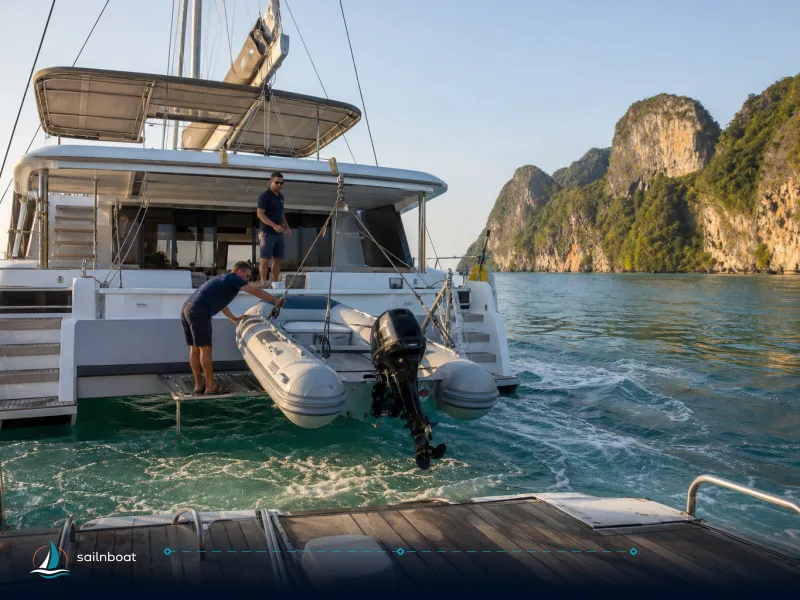
- Stern‑to med‑moor: with one person ashore holding a spring, practice stern‑to to a quay; rotate crew roles so everyone can cast and secure lines under coaching.
- Engine maintenance basics: change a primary fuel filter, inspect and clear the raw‑water strainer, and test starter batteries under load — log the checks.
- Night navigation practice: brief the watch, steer two short night legs, keep a lookout for navigation lights and charted hazards, and practice relay of position every 30–60 minutes.
Week‑by‑Week Itineraries in the Ionian Islands
How to use these itineraries
- Choose the itinerary that matches your stage (beginner → sheltered, intermediate → longer hops and more open water, advanced → cross‑island legs).
- Distances below use published harbour‑to‑harbour great‑circle figures and local pilotage notes; estimate times using your yacht’s cruising speed (typical 40‑ft monohull cruise ~6–7 kt, cruising catamaran ~8–9 kt) and add margin for traffic and wind. Corfu (Gouvia) → Gaios (Paxos) is commonly shown as about 30–33 NM, not the 20 NM sometimes quoted in casual lists; plan for ~5–6 hours on a 6–7 kt monohull.
Beginner: Corfu (Gouvia) → Paxos & Antipaxos (Week 1) Day 1 — Gouvia (Corfu) → Gaios (Paxos): ~30–33 NM; estimated 5–6 hours for a 6–7 kt monohull. Keep a morning departure for daylight arrival and avoid arriving late into Paxos when quay space is scarce. Day 2 — Explore Gaios: stern‑to town quay or anchor off; expect municipal mooring paperwork and modest harbour dues (many sources report roughly €20–€35 for a 12 m monohull in peak season — vary by berth and season). Day 3 — Gaios → Antipaxos: ~3–4 NM; a short hop for swimming and beach time in clear water — little quay space on Antipaxos, mostly anchor or buoy fields. Day 4 — Antipaxos → Lakka (Paxos) or Mongonisi: short hops (2–8 NM) to practise anchoring in sand and weed. Day 5 — Paxos → Parga or return to Corfu via a sheltered coastal leg (distance varies widely by route; allow a full day if returning direct to Gouvia).
Intermediate Ionian loop from Lefkada (Week 3) Day 1 — Lefkada (Lefkas Marina) → Meganissi (Vathi): ~4–10 NM depending on departure point; short nav, good for practising pilotage. Day 2 — Meganissi → Kastos: ~8–10 NM; a sheltered passage with narrow entrances — practise single‑handed sail trim and coast‑hugging navigation. Day 3 — Kastos → Kalamos: ~6–8 NM; anchorages are sheltered but often shallow; practise anchor setting and stern‑to raft ups. Day 4 — Kalamos → Sivota or Fiskardo (Kefalonia) depending on weather and range — use the day to practise longer single‑leg navigation and fuel checks.
Practical note on times and speeds: estimate sailing time as Distance (NM) ÷ Speed (kt). Use 6.5 kt for a typical 40‑ft monohull to calculate conservative durations and 8–9 kt for catamarans; always add a safety margin for traffic, currents and berthing windows.
Saronic Islands Sailing Itineraries
Why the Saronic is training‑friendly
- The Saronic Gulf is sheltered by the Attica peninsula and the Peloponnese; it avoids the full force of the Meltemi and offers short, well‑served legs — ideal for practising repeated berthing and pilotage.
Beginner Saronic (Week 2) Day 1 — Alimos (Athens) → Aegina: ~8–11 NM depending on marina exit point; ~1.5–2.5 hours on a 6–7 kt monohull — a short, traffic‑dense leg to practice VHF calls and timetabled arrivals. Alimos is a large charter hub with many berths and a published tariff structure for transient craft. Day 2 — Aegina → Hydra: ~18–22 NM depending on route; allow 3–4 hours on a conservative estimate — Hydra’s harbour is tight and busy, practise stern‑to techniques and follow harbour master instructions. Day 3 — Hydra → Spetses: ~12–18 NM; practise passage planning around evening arrival and harbour congestion. Spetses has good visitor berths and is a typical overnight stop.
Advanced Saronic / Argolic (Week 4) Day 1 — Porto Heli → Ermioni: ~8–10 NM; sheltered, good for short practice passages and provisioning. Day 2 — Ermioni → Spetses: ~8–10 NM; short hop, practise stern‑to and raft‑up procedures in a busier port. Day 3 — Spetses → Poros: ~16–22 NM depending on route; Poros entrance is narrow and busy near high season — practise tight‑channel pilotage and quick berth lines.
At‑a‑glance itinerary table
| Itinerary | Typical total NM (week) | Assumed cruise speed (monohull) | Estimated sail hours (monohull) | Primary bases |
|---|---|---|---|---|
| Ionian Beginner (Corfu → Paxos → Antipaxos) | 60–90 NM (including local hops) | 6–7 kt | 10–15 hours | Gouvia (Corfu), Gaios (Paxos). |
| Ionian Intermediate (Lefkada → Meganissi → Kastos) | 60–95 NM | 6–7 kt | 10–16 hours | Lefkas Marina, Meganissi anchorages. |
| Saronic Beginner (Alimos → Aegina → Hydra → Spetses) | 50–70 NM | 6–7 kt | 8–12 hours | Alimos, Aegina, Hydra, Spetses. |
| Saronic Advanced (Porto Heli → Ermioni → Spetses → Poros) | 60–80 NM | 6–7 kt | 10–14 hours | Porto Heli, Ermioni, Poros. |
Local Marinas and Mooring Options
Which marinas matter and why
- Ionian: D‑Marin Gouvia (Corfu) is a full‑service, 24/7 operations marina with fuel, travel‑lift capacity and workshops — a practical check‑out hub for Ionian charters. D‑Marin Lefkas (Lefkada) similarly provides fuel, travel lifts and strong support services for provisioning and repairs. Use these larger marinas to resolve technical issues and paperwork before you set longer legs.
- Saronic: Alimos Marina (Athens) is the main Saronic charter hub with large berth capacity and published transient rates — expect organised VHF guidance on arrival and a marina launch to help you to the dock. Local town quays in Aegina, Hydra and Poros supply short‑term visitor berthing, often collected by harbour staff mid‑afternoon.
Typical mooring fee guidance (what to budget)
- Town quays and municipal moorings: widely reported in the Ionian and Saronic as modest by western Mediterranean standards — commonly €20–€40 per night for a 10–12 m monohull in high season in small ports (Paxos, Poros, Aegina). Rates and whether utilities are included vary by port and are often collected by a harbour official.
- Large marinas (Gouvia, Lefkas, Alimos): fees vary strongly by berth length, season and included services — Alimos published transit rates for transient boats (example: a 2026 rate sheet showed around €42/day for certain small length bands, excluding VAT and utilities). Expect marina pricing to be higher than municipal quays but with shore power, water and services.
Practical mooring tips
- Call ahead on VHF to the marina (Alimos and D‑Marin marinas publish channel and berthing arrangements) and request a berthing launch. For town quays, aim to arrive before midday to avoid flotilla and excursion‑boat congestion.
- Many small ports add a small per‑night charge for water/electricity via a marina card — hold a few euros cash and be ready for a short visit from the harbour official.
- If you plan anchor nights in busy bays, carry at least 50–75 m of chain/rode for safe scope in changing winds and practise setting stern anchors for crowded quays.
Navigating Weather and Local Regulations
Weather patterns that shape your plan
- Meltemi (Etesian) winds: the Aegean experiences a persistent northerly in summer, usually strongest in July–August; the Ionian and the Saronic are generally less exposed to the full meltemi and are safer training grounds when northerlies build. Plan cross‑island or exposed legs outside the meltemi peak if you are advancing your skill ladder into heavier weather.
- Typical summer temperatures and sea conditions: daytime air temperatures commonly sit in the mid‑20s to low‑30s °C in July/August; sea state depends on local winds and fetch — always check a reliable marine forecast and GRIB/ENC routes before departure.
Local regulations and paperwork that actually matter
- TEPAI (the Greek cruising fee): applies to private pleasure craft over 7.00 m and is paid through the AADE e‑portal; the charge is calculated on overall length in bands and is a practical requirement for many arrivals — charter operators often handle this but ensure the receipt is aboard. Transit Log / customs clearance at first port may also be necessary for non‑EU flagged boats. These are actively policed in summer.
- Port authority practice: many Greek town quays are run by the municipal or port authority; harbourmasters or uniformed staff collect transient fees, give pilotage advice and enforce berth rules — be prepared for an afternoon visit to settle dues.
- Insurance & certificates: missing or inadequate qualifications do not automatically invalidate cover but can materially affect a claim or liability assessment — carry evidence of the skipper’s qualifications and the yacht’s insurance, and clarify operator requirements in advance.
Safety and legal compliance checklist before you cast off
- Confirm Transit Log / customs status and TEPAI payment status for the yacht (or have a charter company confirmation on file).
- Check that required safety kit is aboard: lifejackets for all, liferaft where equipped, flares in date, VHF and handheld backup, fire extinguishers and a functional bilge pump.
- File a float plan or notify a shore contact with ETAs at major waypoints; make a simple watch schedule and briefing for each passage.
Onboard Exercises to Enhance Proficiency
Daily practice routines (20–60 minutes, pick one per day)
- Sail trim and handling: practice headsail roll‑reefing, reefing the main under controlled conditions, and single‑handed sail changes with one crew on deck.
- Helm control: short drills in varying wind strengths — maintain a steady course on sail alone, practice steering off a range of wind shifts and learn to feel helm balance.
- Navigation practice: plan a short waypoint leg on chart and GPS, navigate by compass and visual marks, and cross‑check with AIS/GPS.
- Engine and systems checklist: run a daily start‑and‑inspect routine — check oil, fuel gauge, raw‑water strainer, battery voltage and bilge pumps; log any anomalies and test horn and navigation lights.
Team building and crew drills
- Roles & responsibilities: assign primary helm, primary lines person, lookouts, and on‑deck communicator; rotate roles each day so everyone gains repetitive practice.
- Communication drills for manoeuvres: practise standard line calls (e.g. “hold forward spring”, “take stern line now”) and a short sequence of calls for a stern‑to approach.
- Emergency scenarios: run a timed MOB sequence, a simulated fuel‑contamination response (isolate tanks, siphon, switch to reserve), and an abandon‑ship checklist walk‑through.
A simple repetition schedule that works on a seven‑day charter
- Days 1–2: berthing and stern‑to practice + MOB drill.
- Days 3–4: anchoring practice and sail handling under different wind conditions.
- Day 5: longer navigation leg and single‑handed short leg for skipper training.
- Day 6: system checks, fuel management and provisioning review.
- Day 7: debrief, checklist for handback and reserve time for repairs or paperwork.
Final practical advice — decisions you will make on the water
- If you are upgrading skill level, start in the Saronic for the first independent charter week — short legs, sheltered water and frequent marina options reduce risk while you practise.
- Always plan legs by worst‑case time: use conservative speeds for time planning, arrive in daylight, and keep one clear day in every week for weather or maintenance contingencies.
- Keep all receipts for TEPAI, transit logs and harbour dues in one envelope aboard; an organized paper trail saves hours if Customs or Coast Guard queries appear.
Plan your bareboat charter in the Greek Islands today — start with a training week in the Saronic or Ionian, build the 1–99 ladder into daily drills, and use the larger marinas (Gouvia, Lefkas, Alimos) as your technical and paperwork support hubs.
Frequently Asked Questions
You need confident close‑quarters handling (med‑moor, stern‑to), accurate short‑range navigation and pilotage, anchoring in varying bottoms, man‑over‑board recovery, basic engine checks and familiarity with local formalities such as the TEPAI cruising fee and Transit Log procedures.
Yes — the guide includes four week‑long itineraries: Ionian beginner (Corfu → Paxos → Antipaxos loop), Saronic beginner (Alimos → Aegina → Hydra → Spetses), an intermediate Ionian loop from Lefkada, and an advanced Saronic/Peloponnese leg from Porto Heli; each leg lists nautical miles and estimated times using common cruise speeds.
Daily practice drills: sail trim and sail changes, helm‑control exercises in light and medium wind, repeated MOB recovery with stop‑and‑return, anchor setting with scope checks, and a checklist‑driven engine start/inspection routine.
D‑Marin Gouvia (Corfu) and D‑Marin Lefkas (Lefkada) are full‑service Ionian bases; Alimos (Athens) is the main Saronic hub with extensive berths and published tariffs — but fees and services vary by season and berth size.
The Aegean is shaped by the northerly Meltemi (strongest July–August); the Ionian and Saronic are generally more sheltered and calmer in summer. May–October gives the widest window for day‑sail conditions, with July/August the busiest and most wind‑active.
Large practical effects: TEPAI (cruising fee) applies to pleasure craft over 7 m and must be paid via AADE; a Transit Log or customs clearance at first port may also be required for non‑EU flagged boats — many charter companies will handle these but keep documentation aboard.
Written by
Sailnboat Editorial
The Sailnboat editorial desk covers yacht and boat chartering worldwide — routes, bases, seasons, boat types, paperwork and the practical costs that decide a trip. We are a charter marketplace, not a boat owner or a local agency: what we sell is judgement and support, so our guides are written to help you make a decision, not to sell you a specific boat. Every guide is checked against live operator and marina data before it goes out.
Fact-checked against live operator and marina data, and published under our editorial standards. Last reviewed: .