Yacht Charter in Croatia: Navigating Schengen Entry and EES Checks
Practical guidance for skippers and charter crews on croatia schengen yachts — how Schengen membership and the EES change sea entry, what documents you must carry, and how to plan multi‑country loops.

If you're running a Croatia‑based charter, croatia schengen yachts now means two practical changes: internal land and sea passport checks were removed from 1 January 2023, but non‑EU nationals are now recorded electronically under the Entry/Exit System (EES) when crossing external Schengen borders.
The remainder of this guide gives you the step‑by‑step procedures skippers must follow at sea and in marinas, how EES affects crew and guest movements, what documentation marinas will typically want at check‑in, how to plan multi‑country loops without breaching the 90/180 limit, and the main long‑stay options available in Croatia.
Understanding Croatia's Schengen Integration
Overview of Schengen Membership
Croatia became a full member of the Schengen Area with the Schengen acquis applied from 1 January 2023 for land and sea borders (air borders followed a separate timetable). That means routine internal passport controls between Croatia and other Schengen countries were abolished on that date. For yacht operations the practical consequence is simpler transit within the area, but you still must observe external‑border rules when you enter Schengen from a non‑Schengen country.
The date (1 January 2023) and the legal change are settled facts and come from official Croatian and EU notices.
Implications for Yacht Chartering
- If you start a charter in Croatia and only cruise to other Schengen ports, you will not see routine internal passport checks between those ports. However, any arrival from outside Schengen (e.g., Montenegro, Bosnia and Herzegovina, Turkey) requires reporting at an authorised port of entry and the external‑border formalities described below.
- EES replaces manual passport stamps for non‑EU nationals: entries and exits are recorded electronically, so days spent in Schengen are tracked centrally. That reduces disputes about overstays but makes accurate recording of every crossing essential.
Entry/Exit System (EES) and Its Impact
What is the EES?
The Entry/Exit System is an EU border‑management system that records short‑stays of non‑EU/EEA/Swiss nationals (the 90 days in any 180‑day rule) by storing travel‑document data, date/place of crossing and biometric identifiers (a facial image and fingerprints). The EU set 12 October 2025 as the start of the progressive roll‑out; full operational status across the roll‑out group reached in April 2026.
Practically, that means a non‑EU guest or crew member who arrives into Schengen via Croatia will have their EES file created (facial image + fingerprint capture where applicable) on first crossing rather than receiving a passport stamp.
EES Compliance for Skippers
- Expect biometric collection at authorised external‑border points: either via self‑service kiosks, a tablet/smart device run by border staff, or direct capture by border police. Allow extra time on a first entry for the process.
- Fingerprint exceptions: children below a certain age are exempt from fingerprint collection, though a facial image will normally be captured for every non‑EU person; people physically unable to provide fingerprints are also handled under the exemption rules. Confirm the current age threshold with your operator. Plan for children and vulnerable passengers accordingly.
- If a non‑EU crew member refuses biometric capture at an external border, entry may be refused under the Schengen rules; ensure crew understand this in advance.
EES implementation dates and biometric scope come from European Commission / home‑affairs documentation; child fingerprint exemptions are in the EES regulation.
Documentation and Procedures for Entry
Required Documentation
Prepare this core packet for any international arrival into Croatia by yacht (authorities or the marina will ask for these):
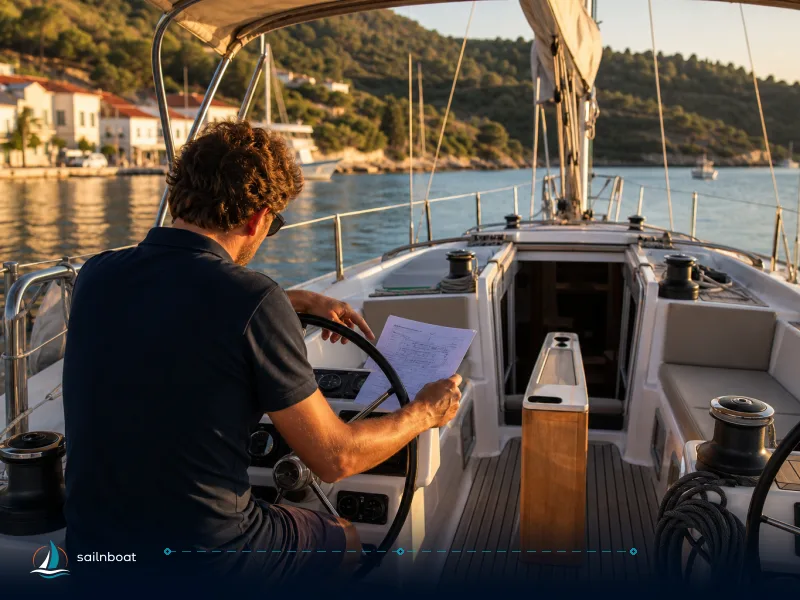
- Valid passports for every person on board; visas where applicable.
- For chartered boats: a signed charter agreement and vessel documents (registration/flag certificate).
- Proof of valid third‑party liability and hull insurance (many marinas and port authorities request this).
- A completed crew list with full names and passport numbers (the harbour master, customs or border police will want a copy).
Entry Procedures
- Report at an authorised port of entry (the designated border‑control port). EU rules allow a pleasure craft to enter a non‑authorised port only in exceptional cases, but in practice many yachts from outside Schengen head straight to a marina with port‑of‑entry functions — check the marina is an authorised BCP before arrival.
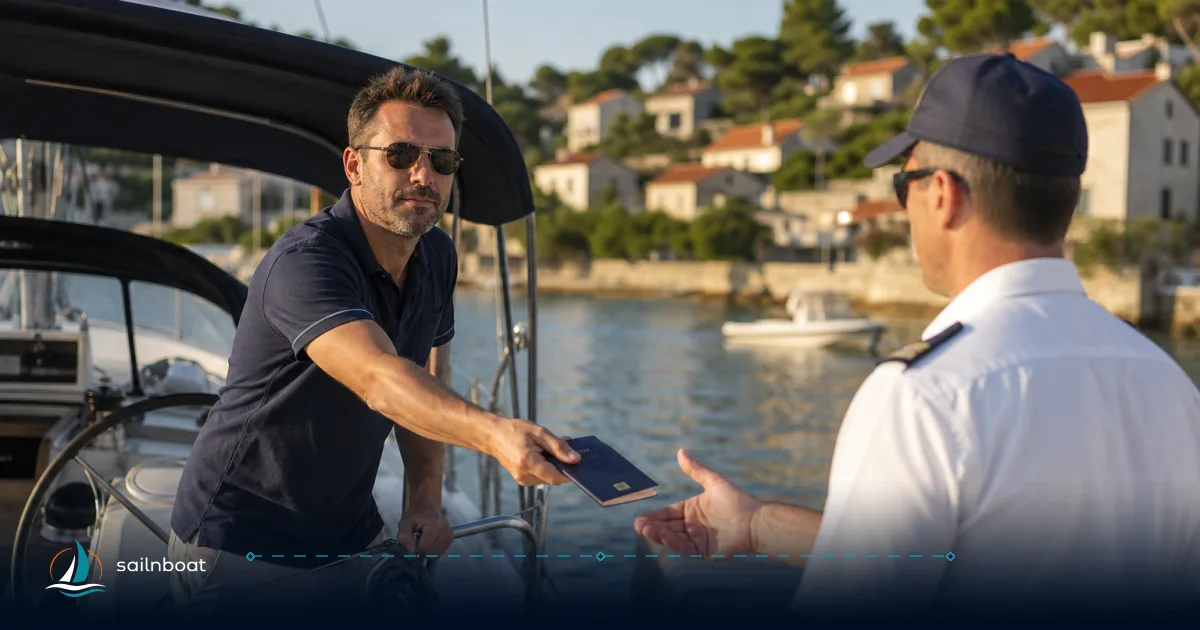
- On arrival you will usually meet three different authorities at the port: harbour master/port authority (mooring and local fees), border police (immigration/EES registration for non‑EU nationals) and customs (temporary importation of the vessel if required). Allow time for each check; first‑time EES capture adds time to the immigration step.
Table — who you meet at an external‑border marina
| Authority | Typical role at check‑in | Documents they will want |
|---|---|---|
| Harbour master / Port authority | Mooring contract, collect tourist tax / local fees, assign berth | Passports or copies; crew list; proof of payment |
| Border police / Border guards | Immigration control, EES biometric capture for non‑EU nationals | Passports; visas if required; biometric capture |
| Customs | Temporary importation of vessel (if non‑EU flagged), clearance of stores | Vessel registration, charter agreement, proof of insurance; customs forms or security deposit where applicable |
Based on the EU Schengen code and common marina check‑in practice.
Marina Check‑In Practicalities
Check‑In Requirements
- At many Croatian marinas the skipper is asked to present passports for all crew and guests; some commercial marina operators routinely take photocopies or scan IDs and will return them after check‑in. Expect this as a normal step in reception.
- If your yacht is non‑EU flagged and coming from a non‑Schengen country, customs may require a temporary importation declaration or an ATA carnet‑style procedure (requirements vary by arrival point). That can include a customs security deposit in some cases. Plan for extra paperwork and possible delay on arrival.
Practical note: many charter companies and larger marinas will handle most of this for you if you provide the documents in advance — confirm what the marina needs before you arrive so you can avoid queues.
Navigating Marina Regulations and Fees
- Marina tariffs in Croatia vary by operator, berth length and season; published visitor rates are commonly charged by metre of LOA. As a planning reference, typical high‑season visitor rates for a 12–14 m (40–46 ft) monohull often sit in the range reported by industry sources (examples vary by marina, peak season and services included). Expect lower rates in shoulder season.
- Additional predictable charges include national‑park or conservation zone tickets (priced per metre in some parks), tourist tax per person per night, and utilities or waste fees levied by some marinas.
Marina rates and park fees fluctuate by year and operator; the cited sources give modern, market‑level examples — always check the marina’s official tariff for exact prices.
Planning Multi‑Country Itineraries
90/180 Day Rule
Non‑EU nationals without a residence permit are subject to the Schengen short‑stay rule: a maximum of 90 days in any rolling 180‑day period across the Schengen Area. Because EES now records entries and exits electronically, the system can show authorities exactly how many days a person has used. Track the days for each non‑EU person on board and plan exits well before the 90‑day limit is reached. Use the EU short‑stay calculator or a trusted itinerary‑tracking tool.
Practical tip: keep a dedicated logbook (dates/times of each border crossing, port of entry and exit) and retain marina receipts, fuel slips or provisioning invoices that show your vessel’s position on particular dates — they can be useful evidence if a passport stamp dispute arises.
Crossing Borders Within Schengen
- When you move between Schengen countries you should not see routine border checks, but local authorities (harbour master, coastguard) still enforce maritime rules and may request to see documents for safety, customs or fisheries reasons. Always carry onboard the documents listed earlier.
- If your itinerary starts or finishes outside Schengen (for example, a loop from Montenegro to Croatia and back to Montenegro), ensure your first Croatian port is an authorised BCP for proper EES and customs processing. Failing to enter through a designated port can create paperwork problems.
Long‑Term Stays and Residence Permits
Obtaining Residence Permits
If you or a crew member plan to stay in Croatia for longer than 90 days, simple tourist stay is not sufficient. Croatia offers temporary‑residence routes (work, family reunification, study, and a digital‑nomad permit for qualified remote workers). The requirements typically include a valid travel document, proof of purpose, adequate funds, health insurance and a clean criminal record; applicants must register their address with police once temporary stay is granted. Processing times and fees vary by category and whether you apply from abroad or within Croatia.
Digital‑nomad note: Croatia has had a digital‑nomad residence permit since 2021; its duration, income threshold and administrative fees have evolved, so check the current guidance if this is your intended route.
Marina Considerations for Extended Stays
- Marinas sometimes offer monthly or seasonal contracts with discounted berth rates and different invoicing terms; for an extended stay ask for a long‑term tariff and confirm services, berthing minimums and utility billing.
- Long stays by non‑EU flagged private boats may require formal customs arrangements (temporary admission) — these can carry time limits and possible security requirements; consult the marina and local customs office before you commit to a long berth.
Practical checklists for Skippers — what to do, in order
Pre‑departure from non‑Schengen port
- Verify visa status for every non‑EU guest/crew (visa‑required nationals must hold a valid visa).
- Send copies of vessel docs, crew list and ETA to the marina / authorised port of entry if requested (many ports ask for advance notice).
On approach to Croatia (first Schengen arrival)
- Call the port administration or harbour master for berth assignment and instructions.
- Report to border police/immigration for EES registration (non‑EU nationals): allow 15–60 minutes for initial biometric capture depending on queueing and local arrangements.
- Visit customs if required (non‑EU flagged boats or stores needing declaration).
At marina check‑in
- Provide passports or ID, signed crew list, charter agreement/registration and insurance. Be ready for passport photocopies or scans.
- Pay local tourist tax and any berth or park fees; request a written receipt.
Before departing Croatia or Schengen area
- Ensure every non‑EU person on board is recorded as having exited Schengen (their EES exit should be registered at the border). Keep exit receipts or marina stamps where available.
Common problems and how to avoid them
- Overstay risk: rely on EES data — track days accurately and plan buffer days before the 90‑day limit.
- Missing EES registration: if a crew member’s first entry was not captured (early progressive roll‑out or human error), get the border police to correct the record as soon as possible — do not assume “no stamp = no record.”
- Passport handling: if a marina asks to temporarily hold passports, ask for a written receipt and leave a contact phone or email; reputable operators will return IDs promptly.
Final practical advice and next steps
- Confirm before travel which Croatian port is an authorised border crossing point if you are arriving from outside Schengen. Book a berth and check the marina’s check‑in list and preferred arrival window.
- Brief non‑EU crew and guests before boarding: they will need to present passports and submit to EES biometric capture on first entry to Schengen. Explain the fingerprint exemption for young children so families understand the procedure; confirm the current age threshold with your operator.
- For stays longer than 90 days, start a residence or permit application early; the digital‑nomad route is one available option but has specific income/insurance and administrative requirements.
Plan your yacht charter in Croatia with confidence and ensure compliance with all regulations by confirming the latest port procedures and marina tariffs with your charter company or the marina before you sail.
Frequently Asked Questions
Non‑EU nationals must present a valid passport (and visa if required), be registered at an authorised port of entry, and (since EES rollout) provide biometric data—facial image and usually fingerprints—on first entry; children under 12 are exempt from fingerprinting but still need a facial image in their EES file.
EES records all short stays for non‑EU nationals (90 days in any 180‑day period) by storing travel‑document data, the place/date of crossing and biometrics; skippers must ensure crew and guests are recorded correctly at ports of entry/exit to avoid inadvertent overstays.
Bring passports for all crew, vessel registration or charter agreement, proof of insurance, and a signed crew list; expect to report to the harbour master/port authority, border police and customs at an authorised port of entry and to show these documents on arrival.
Log every entry and exit for each non‑EU crew member, use the EU short‑stay (90/180) calculator or a dedicated tracking app, and plan for exit dates that keep total days ≤90 within the rolling 180‑day window; EES will make those days visible to authorities.
Schengen membership removed routine internal passport checks but didn’t change local marina tariffs or national‑park fees; expect the same marina and buoy tariffs, though entry formalities at external borders now include EES processing which can add a short delay at first crossing.
Options include standard temporary‑residence permits (work, family, study) and Croatia’s digital‑nomad residence permit; each route has distinct evidence, insurance and funds requirements and application times—start the paperwork well before your 90 days expire.
Written by
Sailnboat Editorial
The Sailnboat editorial desk covers yacht and boat chartering worldwide — routes, bases, seasons, boat types, paperwork and the practical costs that decide a trip. We are a charter marketplace, not a boat owner or a local agency: what we sell is judgement and support, so our guides are written to help you make a decision, not to sell you a specific boat. Every guide is checked against live operator and marina data before it goes out.
Fact-checked against live operator and marina data, and published under our editorial standards. Last reviewed: .