Sugar Scoop vs Swim Platform: Choosing the Best Stern Design
Compare sugar scoop, drop-transom and full swim-platform sterns and learn which gives the best access and safety for snorkeling, families and active groups.

The single most important choice when buying or chartering for water activities is how easy and safe your guests can get on and off the water. If you need the flattest, most stable surface for repeated tender transfers or loaded kit, a drop transom/full swim platform wins; if you want quick step-entry for repeated snorkel dips and a compact solution on production yachts, a sugar scoop is usually faster and simpler. This article compares sugar scoop vs swim platform sterns so you can choose the right yacht for snorkeling, families with young children, and active groups.
Understanding Sugar Scoop and Swim Platform Designs
What is a Sugar Scoop Stern?
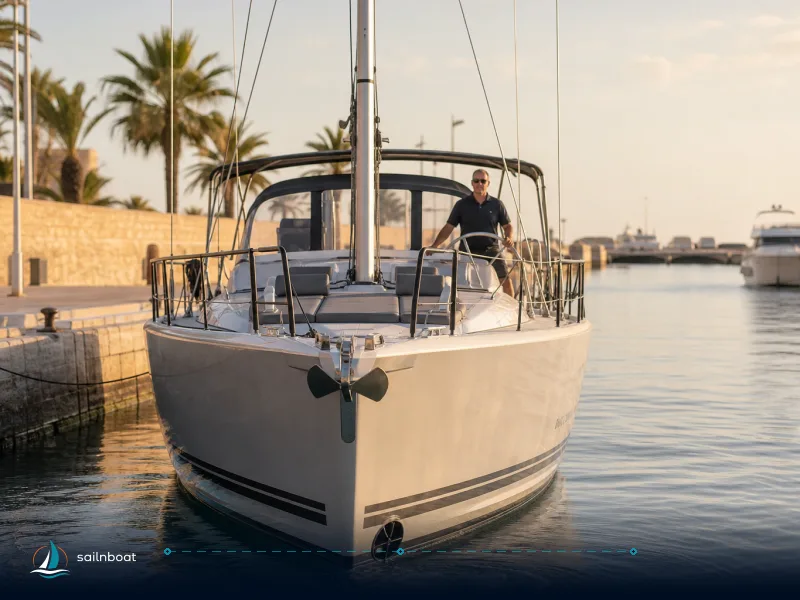
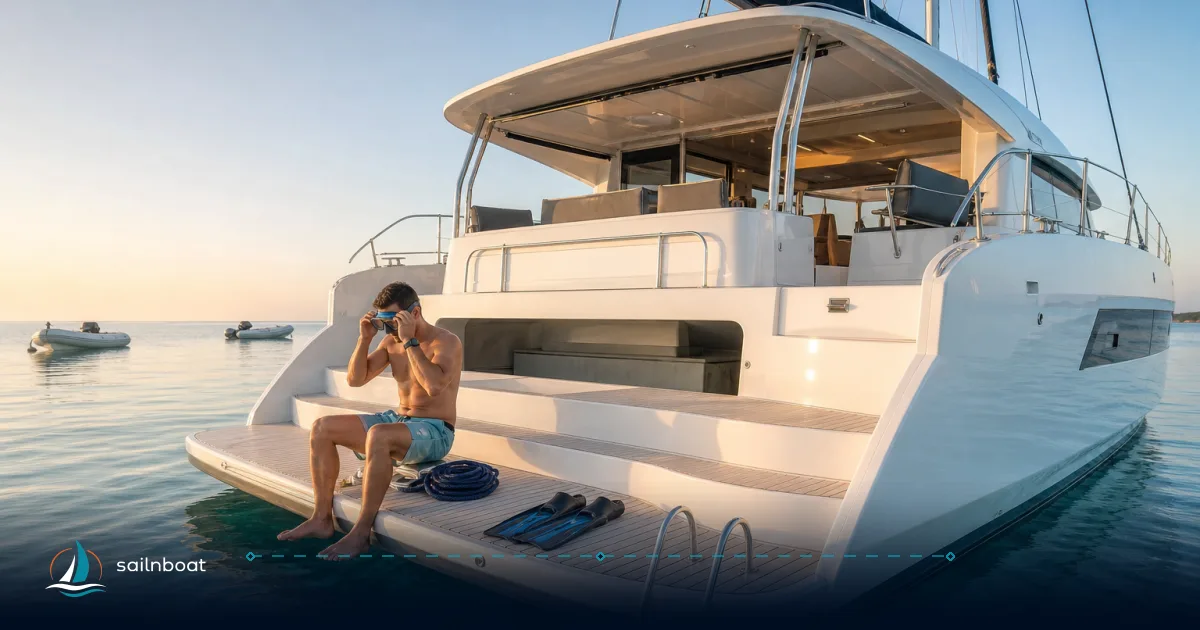
A sugar scoop is a stern design with integral steps or a molded ‘scoop’ at the waterline to aid boarding—built-in steps and a short swim ladder are common. Many sugar scoops are built into a reverse-raked transom, but 'reverse' or 'retroussé' describes the transom angle, not the presence of a scoop. Designers use the curved or stepped geometry to lower the entry point to the water without extending the hull length; that makes repeated shallow-water entries quicker and keeps the cockpit dry and compact.
Practical notes:
- You’ll find sugar scoops on many modern production cruisers and some bluewater designs where the builder wants lower aft access without a full platform.
- Expect integrated steps, a small fold-out ladder and often a teak slatted bathing step rather than a full-width deck.
What is a Swim Platform Stern?
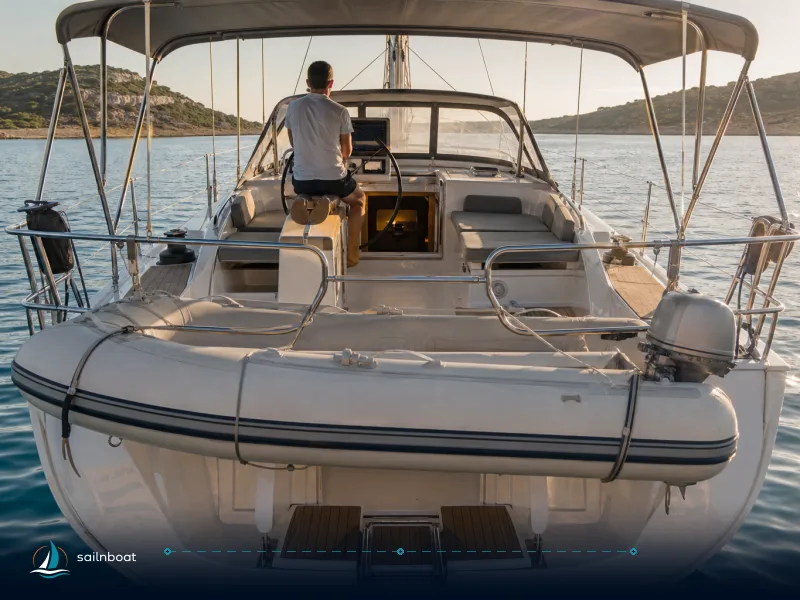
A swim platform is an extended, near-horizontal deck area at the transom used as a boarding and water-access surface. On many yachts a swim platform is a fixed or hinged (drop) transom that folds or lowers to create a broad, flat zone; on larger yachts this can be hydraulic and large enough to carry toys, a tender or act as a beach‑club entrance.
Practical notes:
- Drop transoms convert the transom into a horizontal platform when lowered; the stowed position keeps cockpit integrity while giving full-width access when deployed. Builders commonly fit these to provide a ‘beach club’ style area on cruising yachts.
- Full swim platforms give room for kit staging (masks, fins, spares), a boarding gate and safe transferring of heavy items like scuba cylinders or an outboard-equipped dinghy.
Practical Applications for Charter Activities
Snorkeling and Water Sports
Which is faster when you and your party plan multiple short entries?
- Sugar scoop: quicker step-entry for snorkelers and swimmers. Because steps are integrated into the transom, people can sit, swing their legs over and step into the water with minimal ladder use—handy for frequent in-and-out activity. Many production yachts use this layout to speed turnover of passengers.
- Swim platform/drop transom: preferred when you have bulky kit. The flat area lets you lay out masks, fins and snorkel vests, stage cylinders, and pass gear between tender and yacht without traffic bottlenecks. For groups using seabobs, SUPs or scuba, the platform is functionally superior.
Operational tip: ask whether the yacht’s ladder can be deployed from the water and whether crew will stage gear on the platform—this changes how practical each design is for heavy kit. Many owner manuals and operator notes explicitly flag ladder deployment and platform use as a primary boarding method.
Family Safety and Young Children
Design is one part of safety; procedures are the other.
- What matters most for children: a low, guarded access point (gates/railings), a non‑slip surface, a ladder that an adult can hold while a child steps up, and a clear crew briefing that enforces life jackets and no-alone rules. Authorities and safety campaigns consistently emphasise rules and physical barriers more than the stern type itself.
- Practical comparison: a full swim platform with a secure transom gate and broad deck is easier for supervised transfers and for staging children’s equipment; a sugar scoop can be safe if handholds and a proper ladder are fitted, but it leaves less flat space for supervising an anxious child while they climb.
Crew checklist for families:
- Confirm life‑jacket policy for children and tender trips.
- Inspect gates, locks and ladder condition at check-in.
- Agree on a single adult responsible for each child whenever people are in the water.
Active Groups and Dinghy Boarding
If your day will be moving people and kit between tender, yacht and shore multiple times:
- Full swim platforms (especially with davit‑borne tenders or when the tender is left alongside) make the transfer smoother and safer: you have space to brace people, pass kit and secure the tender next to a flat surface. Builders fit transom gates and removable rubbers to ease the step across.
- Sugar scoops still work for dinghy boarding—many charter operators use them successfully—but the narrower, stepped geometry requires crew coordination and sometimes a short step-up into the cockpit. On yachts that carry the tender on davits over the platform, expect the platform to be the primary boarding point.
Comparing Drop Transom and Sugar Scoop Designs
Advantages of Drop Transom / Full Swim Platform
- Flat, broad working area for transfers and kit staging—reduces bottlenecks and the risk of items falling into the water.
- Easier dinghy handling and safer boarding with a transom gate or cleats to secure the tender.
- Hydraulic or powered platforms on larger yachts can lower close to the waterline for near-level transfers and to act as a beach‑club entrance. Modern systems are designed to deploy steps as they lower.
Limitations of Sugar Scoop
- Less flat working area—useful for quick swim entries, but becomes cramped when staging multiple people or bulky kit.
- On very choppy days the stepped entry can be awkward; the sugar scoop’s advantage is convenience, not load capacity.
- If the tender is carried on davits close to the transom, access can be restricted compared with a full-width platform.
Quick comparison table
| Feature | Sugar scoop | Drop transom / Full swim platform |
|---|---|---|
| Boarding speed for quick swims | Excellent — fast step-entry | Good — flat but requires ladder or lowering |
| Handling bulky kit / scuba | Limited — less staging area | Excellent — flat area, room to stage gear |
| Tender transfers / dinghy boarding | Functional, needs coordination | Best — flat surface, gates and cleats |
| Family supervision | Adequate with rails, less space | Superior — room to hold/assist children |
| Large‑yacht options | Mostly manual/fold ladders | May be hydraulic with integrated steps (beach club) |
| (Features summarise typical behaviour; exact implementation varies by yacht model and builder.) |
Choosing the Right Yacht for Water Access
Key Features to Look For
When water access is a priority, inspect these items at check-in or ask your broker/charter company to confirm:
- Ladder design: can it be deployed from the water? Is it sturdy enough for a small child or someone carrying dive kit? Look for handholds above the ladder.
- Transom gates and locks: a gate that secures when underway reduces the risk of accidental falls and makes supervised transfers easier. Incidents have shown unsecured gates can be a real hazard.
- Non‑slip surface and handrails: wet decks are slippery—check for adequate non‑skid and rails at the boarding point.
- Tender stowage and davit arrangement: where the tender sits determines which boarding point you’ll actually use; a tender stowed on the platform changes how useful a sugar scoop is.
- Lazarette and kit storage: availability of nearby storage for masks, fins, PFDs and first-aid kit keeps the platform clear and organized.
Checklist to ask your charter operator:
- Which stern configuration does this specific hull have (sugar scoop, drop transom, fixed platform)?
- Where is the tender stowed and how will it be secured for boarding?
- Are transom gates and ladders inspected and working?
- Is crew available to assist tender transfers and gear handling?
Consulting Yacht Specifications
Model pages and spec sheets will list “transom type,” platform length and ladder features—use those to match your priorities. Builders and brokers often note “sugar scoop with bathing ladder” or “motorized drop-down platform” on spec sheets; that language tells you exactly what to expect at handover. Always compare the actual yacht photo and the specification sheet rather than relying on the model name alone.
Practical buying/charter trade-offs:
- If your trip is kit-heavy (scuba, SUPs, seabobs) choose a yacht with a full-width platform and davits or a beach‑club style drop transom.
- If you expect lots of short swims, snorkel hops and quick tender hops between islands, a sugar scoop on a modern production cruiser is often faster and less maintenance-prone.
Final operational tip: at handover test the routine you’ll use—tender alongside, one adult boarding a child, gear transfer—and note any awkward steps so you can adapt your plan or request crew assistance.
Get the Right Stern for Your Week
Choosing between sugar scoop vs swim platform is less about a label and more about how the yacht will be used day-to-day. For heavy kit and repeated tender operations pick a drop transom/full swim platform; for agile, frequent swim access a sugar scoop is efficient. Above all, check ladder deployment, gates, tender stowage and crew procedures at handover—those practical details determine whether the stern design actually delivers easy, safe water access for your charter.
Consider your activities and preferences when selecting your yacht design: bring the list above to your broker or base, test the exact yacht at handover, and ask the crew to demonstrate the tender routine before you cast off.
Frequently Asked Questions
A sugar scoop is a retroussé or stepped transom with integrated steps and a ladder for quick water access; a swim platform (often a drop transom) is a flat, extended surface—sometimes hydraulically operated—that provides a stable boarding and gear area.
Sugar scoops give easy step-up access to the cockpit via integrated steps; full swim platforms give the flattest, safest surface for holding a tender and transferring people or kit, especially with a transom gate or davit arrangement.
A full swim platform with secure gates, handrails and a ladder that can be deployed from the water offers the most controlled environment; however, good crew procedures and PFD use are equally important.
Sugar scoops allow easier step-entry to shallow water than a high transom, but they are not a substitute for a shallow-draft hull or a beaching-capable tender—careful approach and local conditions still govern feasibility.
Inspect ladder design and position, transom height, handrails, transom gates, tender stowage and davit layout; ask the charter operator which stern configuration that yacht has and how the tender is managed.
Written by
Sailnboat Editorial
The Sailnboat editorial desk covers yacht and boat chartering worldwide — routes, bases, seasons, boat types, paperwork and the practical costs that decide a trip. We are a charter marketplace, not a boat owner or a local agency: what we sell is judgement and support, so our guides are written to help you make a decision, not to sell you a specific boat. Every guide is checked against live operator and marina data before it goes out.
Fact-checked against live operator and marina data, and published under our editorial standards. Last reviewed: .