Motor Yacht vs Superyacht: Key Differences for Your Charter
A clear, operational comparison of motor yachts and superyachts: what changes at 24 m, how crew and service scale, berth and draft needs, and realistic booking and cost expectations.

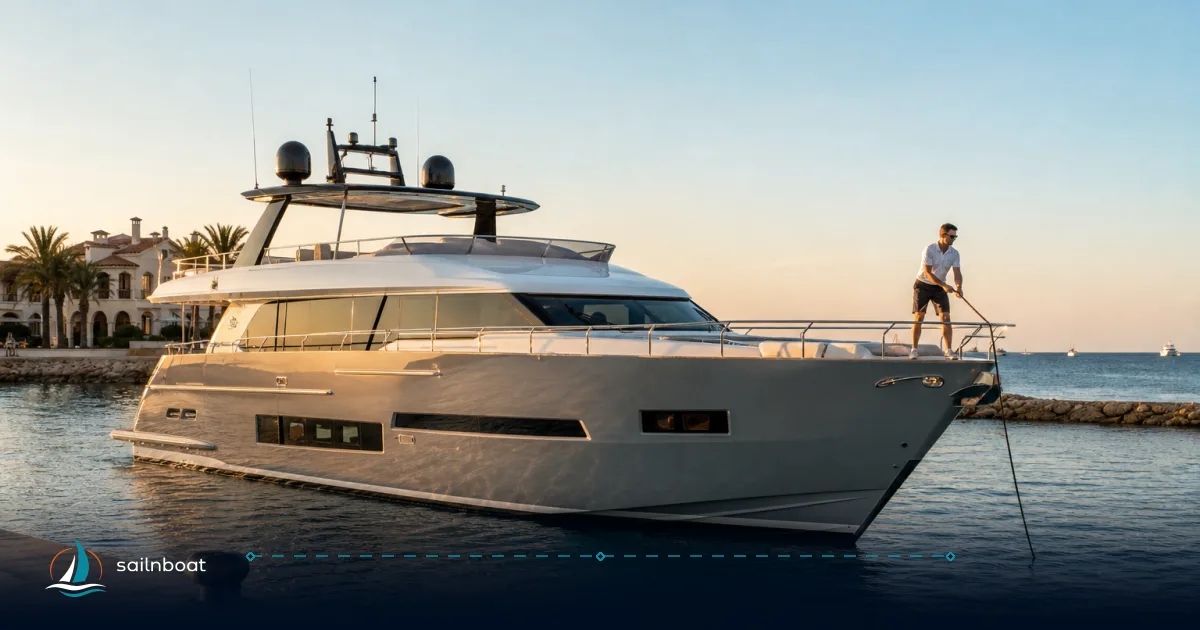
A practical dividing line you can use when choosing a charter is length: about 24 metres (79 ft) is where a private motor yacht steps into superyacht / large-yacht territory — and with that step you trade simpler logistics for hotel-grade service, larger crew departments, deeper-draft restrictions and far higher running costs.
Defining Motor Yachts and Superyachts
Start with length, then layer on certification and use. The industry and many flag administrations treat 24 m as the point where yachts enter the “large yacht” or superyacht category; that classification influences which codes apply, minimum manning and which safety and commercial rules the vessel must meet.
Size Classifications
- Motor yachts: commonly 10–24 m for small to large recreational motorboats; above that you start to see purpose-built crewed motor yachts (24–40 m) that are often offered for private or crewed charter.
- Superyachts: industry studies and broker practice use 24 m as the lower bound; from 24–40 m you have smaller superyachts, 40–60 m the mid-range, and 60 m+ the large-superyacht and mega-yacht territory — upper limits are commercial or practical rather than fixed.
Practical note: for commercial yachts, the Large/REG Yacht Code applies from 24 m Load Line length (not LOA) and under 3000 GT; coding status then drives crewing and safety requirements. Always check the yacht’s LL length and coding when assessing compliance and passenger limits.
Crew Composition and Service Levels
Crew size and role-splitting change quickly with length. The effect you feel as a charterer is not linear — a 10–15 m change in length often doubles or triples the onboard team and replaces multi-role staff with dedicated specialists.
Crew Size Differences
- Typical staffing brackets you will encounter: 24–30 m: typically about 3–6 crew; 30–40 m: typically about 5–9 crew; 40–60 m: typically about 8–15 crew; 60–80 m: typically about 15–25 crew; 80–100 m: typically about 25–35 crew or more depending on owner fit-out and yacht code. These are industry-typical ranges — exact numbers vary by yacht design and whether a vessel is set up for high-end charter service.
Service Quality
- On smaller motor yachts (24–40 m) the team tends to be multi-role: the chef may also provision, an interior crew member will double as steward and purser, and the deck team handles toys and lines. That keeps the vibe intimate and flexible but limits the number of simultaneous guest-facing services.
- On larger superyachts you get departmentalisation: dedicated chefs and galley staff, an interior team for stewarding and housekeeping, a purser or chief steward to handle logistics, an engineering department, and specialist roles (spa therapists, dive masters, helicopter technicians) where the yacht carries the equipment. Service is broader and more hotel-like; bookkeeping of APA, shore transfers and event logistics is customary.
Trade-off: more staff equals a higher service standard but also larger APA (Advance Provisioning Allowance), more crew accommodation to account for and stricter house rules about guests and events.
Guest Capacity and Onboard Amenities
What you can bring and what you will get changes with size, but two facts are decisive: regulatory guest caps on many commercial yachts, and the exponential growth of amenity capability.
Guest Capacity Regulations
- The most consequential rule for charterers is the common 12-passenger limit for large yachts operating commercially under many flag/LY codes — yachts certified to carry more than 12 are treated as passenger ships and must meet a different regulatory regime. That is why most charter superyachts advertise accommodation for about 10–12 guests, typically in 4–6 guest cabins; parties of more than 12 generally require a PYC-certified yacht (up to 36 passengers) or a day/event vessel rather than an LY-coded superyacht.
Amenities by Yacht Size
- Motor yacht (24–40 m): comfortable saloon, formal dining, a capable galley/chef, one or two tenders, water-sports toys (jet skis, seabobs, towables). Cabins comfortable for families or friends but limited in seating and entertainment spaces compared with larger yachts.
- Mid-size superyacht (40–60 m): multiple deck spaces, larger tenders and toy stowage, small gym or treatment room, sometimes a pool or plunge pool, bigger crew to run formal dining and events.
- Large superyacht (60 m+): full beach club, pool(s), dedicated spa and treatment rooms, cinema, helicopter deck or temporary helipad capability (where certified), extensive tender garage(s) and specialist toys (submersibles, larger RIBs). These yachts carry the staff and equipment to run large-scale hospitality and events.
Quick comparison table: what different sizes practically deliver
| Typical LOA band | Typical overnight guests | Typical crew (range) | Draft (typical loaded) | Berth / marina needs | Typical base weekly rate (indicative) |
|---|---|---|---|---|---|
| 12–24 m (motor yacht / large motorboat) | 2–8 | 1–3 | 0.8–1.8 m | Standard marina berths; wide availability | €1,500–€15,000 |
| 24–40 m (small superyacht / crewed motor yacht) | 6–12 | 3–9 | typically 1.5–3 m | Requires longer berths; many marinas accommodate | €30,000–€120,000 |
| 40–60 m (mid superyacht) | 8–12 | 8–15 | typically 2–3.5 m | Limited berths in some harbours; 3–4 m alongside helpful | €150,000–€400,000 |
| 60–80 m (large superyacht) | 10–12 | 15–25 | typically 3–4.5 m | Deep-water berths, increased beam; reserved berths at top marinas | €300,000–€900,000 |
| 80–100 m+ (mega) | 10–12 | 25–35+ | typically 4–6 m | Specialist berths, large beam and security needs; scarce availability | €900,000–€1,500,000+ |
| Notes: draft and rates vary by hull type, region and season; guests often capped at 12 for LY/charter compliance. Figures are industry-typical ranges. |
Marina Requirements and Docking Logistics
The difference in where you can go becomes concrete when you need a berth, shore power, provisions and crew access.
Berth Depth and Facilities
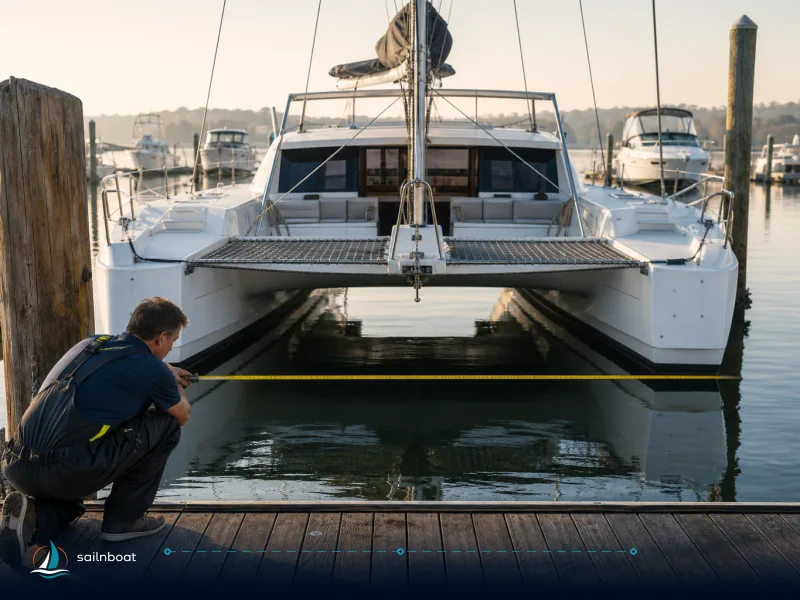
- Draft drives destination choice. Planing/semi-displacement motor yachts around 30–50 m typically draw 2–3 m; large displacement yachts (70 m+) commonly need 4–5 m or more alongside. Marinas that offer superyacht berths normally quote alongside depth and maximum LOA; the deeper the draft, the fewer marinas can accept the yacht without anchoring and tendering guests ashore.
Marina Access
- Many prestige marinas maintain only a handful of berths for yachts >50–60 m. That creates operational constraints: transits to alternative ports, overnight anchoring, or work with a marina operations team for end-tie or barge support. Expect additional fees, enhanced security screening and sometimes minimum-night rules at event weeks (e.g., show or Grand Prix dates).
Operational tip: always confirm the published harbour depth against the yacht’s loaded draft and the day’s tidal window — many marinas publish nominal depths but require specific assignments for deep-draft yachts.
Booking Logistics: What You Need to Know
Booking a motor yacht is operationally simpler than taking on a superyacht. The contract, deposit structure and timeline all scale with size and commercial exposure.
Lead Times and Contracts
- Short-notice bookings are common for small motor yachts and day-charters; in many regions 1–2 weeks’ notice secures a competent vessel in shoulder or low season. Peak weeks and specific models reduce that window.
- Superyacht charters typically need months of lead time for specific weeks — broker data and market trackers show the popular summer weeks (Mediterranean July/August) often book out 4–6+ months ahead for yachts >40 m; if you need a named yacht for a specific week, start early.
Broker Involvement
- Motor yachts can often be booked directly or through a small local broker; superyachts normally require a specialist broker to manage the MYBA-type charter party (or equivalent), owner approvals, detailed APA estimates, insurances and complex logistics like helicopter slots and international customs clearances. Expect more paperwork, larger deposits and stricter cancellation and insurance terms on superyachts.
Adjusting Expectations: Motor Yacht vs Superyacht
Experience Differences
- On a motor yacht you should expect immediacy: flexible routing, closer crew contact and simpler menus and entertainment. Service is warm and personal, but simultaneous, specialised offerings are limited.
- On a superyacht expect polished, department-led service: a dedicated chef, interior team, multiple service shifts, event logistics and the capacity to host formal nights and large-scale water-sports operations. That also means more formal briefings, stricter embarkation procedures and a higher threshold for bespoke requests.
Cost Considerations
- Base charter rates rise steeply with length and amenities; operational extras (APA, fuel, port dues, VAT and crew gratuity) typically add 25–40% or more to the headline weekly rate. Small motor-yacht charters can start in the low thousands per week or per day; crewed motor yachts and small superyachts commonly run tens of thousands per week; true superyachts often start in the low six-figures per week and scale quickly. Plan your total budget with APA (fuel, provisions, port fees) and a customary 10–20% crew tip in mind.
Practical checklists
What you should ask and confirm before you sign:
Pre-booking (both)
- Exact LOA and loaded draft; confirm marina alongside depth and tidal window.
- Exact guest limit and whether the yacht is LY/Commercial-coded.
- What’s included in the base rate and a draft APA estimate.
If you’re looking at 24–40 m motor yachts
- Confirm crew roles (is there a dedicated chef? engineer?).
- Check tender size and toy inventory; if you want a particular toy (SeaBob, jet-ski), confirm availability and insurance conditions.
If you’re booking a 40 m+ superyacht
- Engage a broker to manage the charter party and logistics.
- Ask for sample menus, spa/therapy rates, helipad certification (if using helicopters) and the purser’s APA breakdown.
- Confirm port access and whether the yacht requires end-tie, barge support, or shore-power adapters.
Final operational note: many practical details (crew numbers, precise berth depth, toy inventories) vary by vessel and operator; treat the yacht specification and the broker’s charter confirmation as the final authority for your trip planning.
Contact us to explore options and find the right-size yacht for your week — we’ll match your dates, appetite for service and itinerary to the vessels that really deliver.
Frequently Asked Questions
Industry practice and maritime codes commonly treat 24 metres (79 ft) load-line length as the threshold: under that you’re usually in motor-yacht territory; at and above it the Large Yacht/LY codes apply and the boat is commonly called a superyacht.
Smaller motor yachts (around 24–40 m) typically run 3–8 crew (captain, chef, engineer, deck and interior staff); large superyachts (60–100 m) commonly carry 15–35 crew including dedicated departments for interior, deck, engineering, spa/fitness and stewarding.
Most large commercial yachts operating to common LY/IMO standards carry no more than 12 passengers for overnight charters; yachts carrying more than 12 passengers fall into passenger-ship regulations and different codes.
Motor yachts typically offer comfortable lounges, a decent galley/chef and a tender plus standard toys; superyachts add large beach clubs, pools, full spa/fitness suites, multiple tenders (and sometimes helipads), cinema rooms and specialist staff to operate them.
As length and draft increase you need longer, wider berths and deeper alongside depth — many superyacht berths offer 4 m+ alongside depth and bespoke services (heavy provisioning, security, crew facilities) that smaller marinas do not provide.
Short-notice motor-yacht bookings (days to a few weeks) are frequently possible, especially off-peak; chartering a specific superyacht in peak season typically requires months of lead time and a broker to manage the detailed charter party and APA arrangements.
Expect markedly higher levels of specialization (dedicated chef, spa staff, purser), more complex logistics (helicopter transfers, larger tenders, special port permissions), higher operating costs (fuel, APA, berthing) and stricter booking and cancellation rules.
Written by
Sailnboat Editorial
The Sailnboat editorial desk covers yacht and boat chartering worldwide — routes, bases, seasons, boat types, paperwork and the practical costs that decide a trip. We are a charter marketplace, not a boat owner or a local agency: what we sell is judgement and support, so our guides are written to help you make a decision, not to sell you a specific boat. Every guide is checked against live operator and marina data before it goes out.
Fact-checked against live operator and marina data, and published under our editorial standards. Last reviewed: .