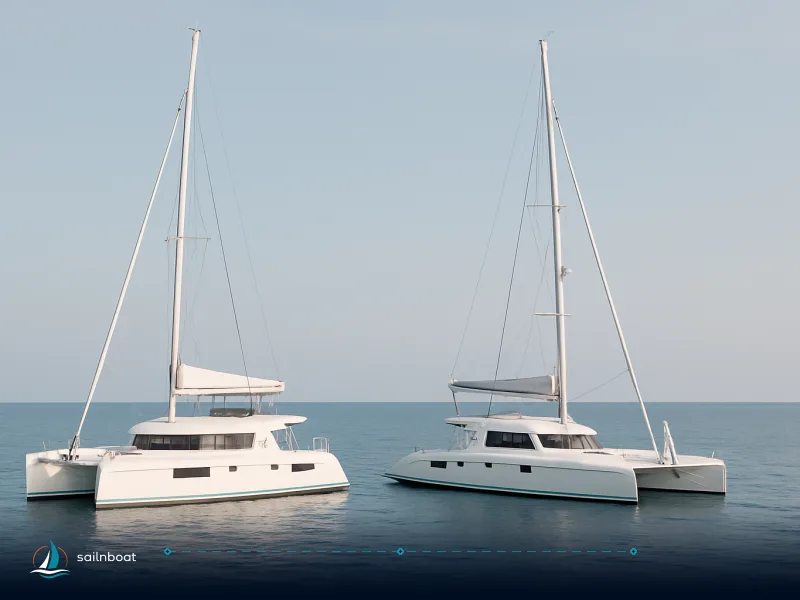
Catamaran vs Trimaran vs Monohull: Charter Tradeoffs Explained
A practical, decision-focused comparison of catamarans, trimarans and monohulls for yacht charters — what you can actually book, how they behave at sea, and the real operational trade‑offs.

If you want space, predictability and the least heeling for guests, choose a catamaran; if you want outright speed and a rarer experience, a trimaran can deliver; if you want the widest choice of boats, ports and simple dock handling, pick a monohull. This article compares catamaran vs trimaran vs monohull specifically for charters — availability, berthing costs, guest comfort, cruising speeds, crew needs and dinghy logistics — so you can decide which hull type fits your itinerary and party.
Availability of Catamarans, Trimarans, and Monohulls
Charter Fleet Insights
- Catamarans: The mainstream charter market is dominated by production cruising cats from large French yards and power‑cats in specific regions; most large charter platforms and bases offer many catamarans across sizes and cabin counts.
- Monohulls: Monohulls remain consistently available worldwide — from small 30–40ft bareboat yachts to larger crewed sloops — and are supplied by the largest number of bases and brokers. This makes them the easiest hull to source for specific dates and last‑minute plans.
- Trimarans: Trimaran listings are scarce by comparison. On major charter listings you will typically find only single‑digit to low‑double‑digit trimarans offered globally; availability is concentrated in a few bases or boutique operators rather than the mainstream fleet. If a trimaran is essential to your brief, expect to search specialty brokers or book further ahead.
What that means for you
- If you need a specific departure date, size and number of cabins, catamarans and monohulls give you the best shot of finding an exact match quickly.
- If you insist on a trimaran for speed or novelty, be prepared for fewer choices, higher upfront research time and potentially repositioning fees or nonstandard bases.
Marina Berthing Logistics and Fees
Docking Space and Fees
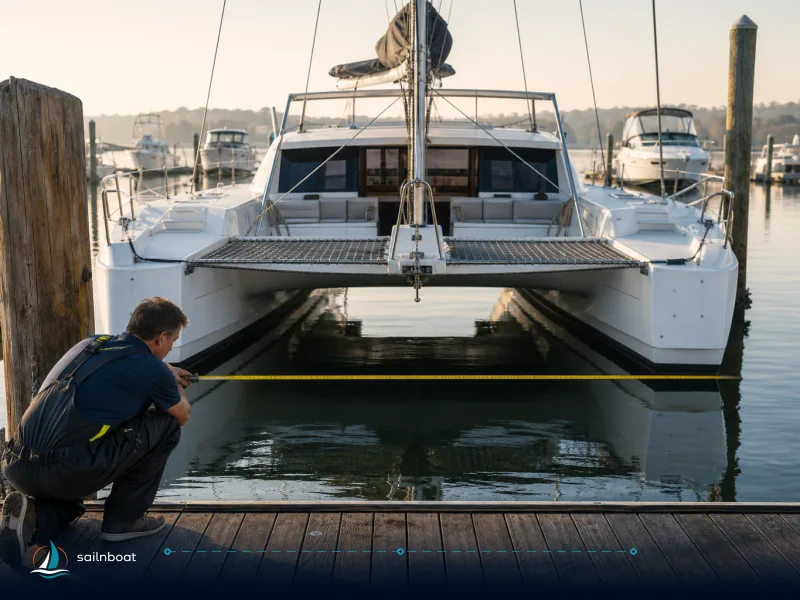
- Beam and berth pricing: Many marinas set rates by length or by length band but add explicit surcharges or higher bands when a vessel's beam exceeds the standard for that length category. In practice, catamarans with wide beams often attract higher per‑night berth fees or separate multihull rates. Published marina comparisons have recorded examples where multihulls incur materially larger charges for storage, lifting or berthing.
- Practical cost guidance: Where operators published data, catamaran charges and yard costs can run noticeably above a comparable monohull (examples in industry compilations show extra charges in the tens of percent in some marinas). The exact premium depends entirely on the marina’s pricing rules and berth layout.
- Manoeuvring and berth selection: Catamarans need wider berths and clear fore‑and‑aft access on both hulls for lines and fenders; some older or tighter marinas only accept cats on specific quays. Trimarans are narrower in overall mooring footprint than many cats but still wider than an equivalent monohull; check berth widths and nearby services (power, water) before committing.
Operational tips
- Always tell the marina your LOA and beam when enquiring — many systems price from beam thresholds.
- If you expect to overnight in a town marina rather than the charter base, provide both LOA and beam and ask whether a multihull/beam surcharge or wider‑berth rate applies; don’t rely on a length‑only quote if the marina uses multihull rates.
- If a marina uses travelift size limits or rack widths, confirm lifting and winter storage costs too — cats typically require wider and heavier equipment.
Guest Experience: Stability and Comfort
Stability Analysis
- Heeling behaviour: Catamarans are engineered to resist heel; in everyday sailing they typically remain near-flat to lightly angled — roughly in the order of single digits up to about 5–10° under normal cruising loads — which reduces the sensation of motion for many guests. Monohulls normally heel substantially more, commonly in the range of roughly 15–25° depending on sail trim and sea state; that heel changes how interiors and deck life feel.
- Trimaran dynamics: Trimaran designs vary widely. Many cruising trimarans sit between cats and monos in feel — they resist large heel but can lean onto an outrigger in gusts and, for performance designs, will surf or 'fly' a float at speed. That makes them very quick but more sensitive under certain points of sail.
- Guest comfort trade‑offs:
- Catamaran: minimal heel, a steady platform for socialising, cooking and sleeping; some guests favour the stability, especially those prone to seasickness.
- Monohull: the heel is a pronounced part of the sailing experience — many sailors prefer it and find it reassuring; others find it uncomfortable.
- Trimaran: can feel very stable at moderate speeds but is more likely to deliver performance surges that change the motion pattern (quick acceleration, potential for a flying ama), so guests used to quiet cruising might need time to adapt.
Interior and noise
- Cats typically have quieter saloons at anchor because there’s less motion and more beam for separate living areas.
- Monohull companionways and single‑hull acoustics often feel more enclosed; motion transmits differently through a single hull than across two hulls.
- Trimaran cabins are often concentrated in the central hull; depending on design, living spaces can feel narrower than a cat but more connected than a mono.
Cabin Configurations and Onboard Amenities
Space and Layout
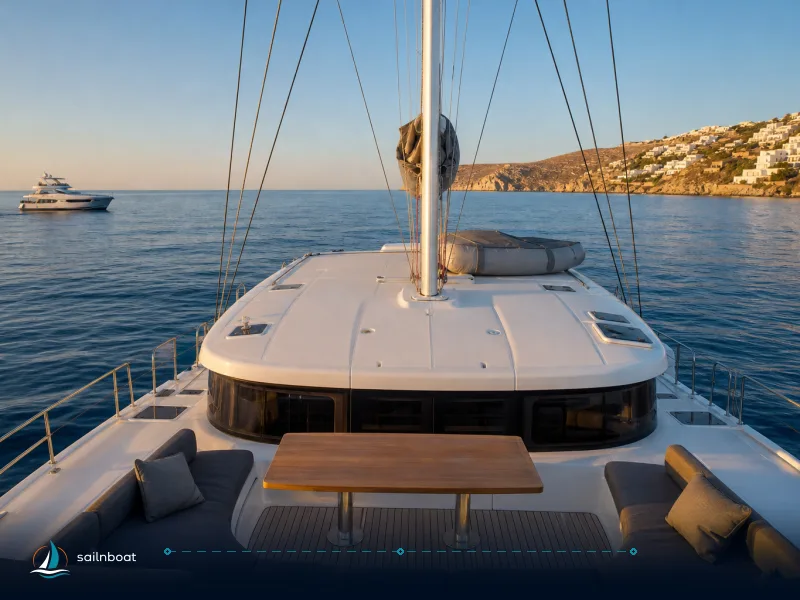
- Catamarans: For a given overall length, cats generally offer the largest usable interior volume. Typical charter layouts put private double cabins in each hull (two, three or four cabins common) with en‑suite or shared heads, and a large saloon and cockpit that sit on a single level. That separation suits groups that value privacy plus large common areas.
- Monohulls: Cabins are stacked fore and aft inside one hull. For the same LOA they typically have fewer private-saloon square metres than a cat, but their layouts can feel cozier and sometimes deliver more forward cabin volume (V‑berth) or larger single‑hull owners’ cabins on big sloops.
- Trimarans: Layouts vary by design — many trimarans concentrate guest cabins in the central hull and use amas for systems and storage. They can be more compact than cats for the same LOA, though some modern cruising trimarans are designed specifically to maximise interior volume and offer multiple cabins.
Which to choose for your party
- If you want max private space and separated cabins for four couples or families, a cat is usually the most convenient.
- If you want a traditional sailing feel and don’t need wide cabins, a monohull is sensible and often cheaper.
- If you want speed with reasonable accommodation (and accept a smaller saloon footprint), consider a cruising trimaran — but verify the exact cabin plan on the specific model.
Performance: Motoring Speeds and Sailing Characteristics
Speed Comparisons
- Trimarans: By design a trimaran’s slender main hull and light overall displacement give lower resistance and higher potential speed than comparable‑length cruising cats and monohulls; many cruising trimarans will comfortably cruise at higher speeds and can surge past typical cruiser speeds when conditions allow. Performance and racing trimarans are markedly faster.
- Catamarans: Typical production cruising cats used in charters commonly cruise in the general vicinity of mid‑single to low‑double digit knots depending on whether under sail or engine — working figures used by operators range from roughly 6–10 kt under power or sail in everyday conditions; exact figures vary by model, displacement and wind.
- Monohulls: Speed varies by hull form and waterline length. A well‑designed cruising monohull may match or exceed a cruising cat upwind in certain conditions, but multihulls generally outpace equivalent-length monos on reaches and off‑wind legs.
Practical route planning
- Use conservative cruise speeds from the boat’s spec when planning distances; for charter cats many operators plan passages using 6–8 kt conservatively, while cruisers and modern trimarans may plan 8–10 kt or more if conditions are favourable. Always add margin for weather and fuel planning.
Crew Requirements and Operational Considerations
Crew Skills and Experience
- Trimarans: Handling characteristics (higher speeds, potential for rapid acceleration, and different righting behaviour—if overpressed they risk capsize rather than rounding up) mean charter companies commonly require more experienced skippers and may only offer some trimarans as crewed or with skipper certification requirements. Ask the operator about minimum qualifications; expectations vary by country and company.
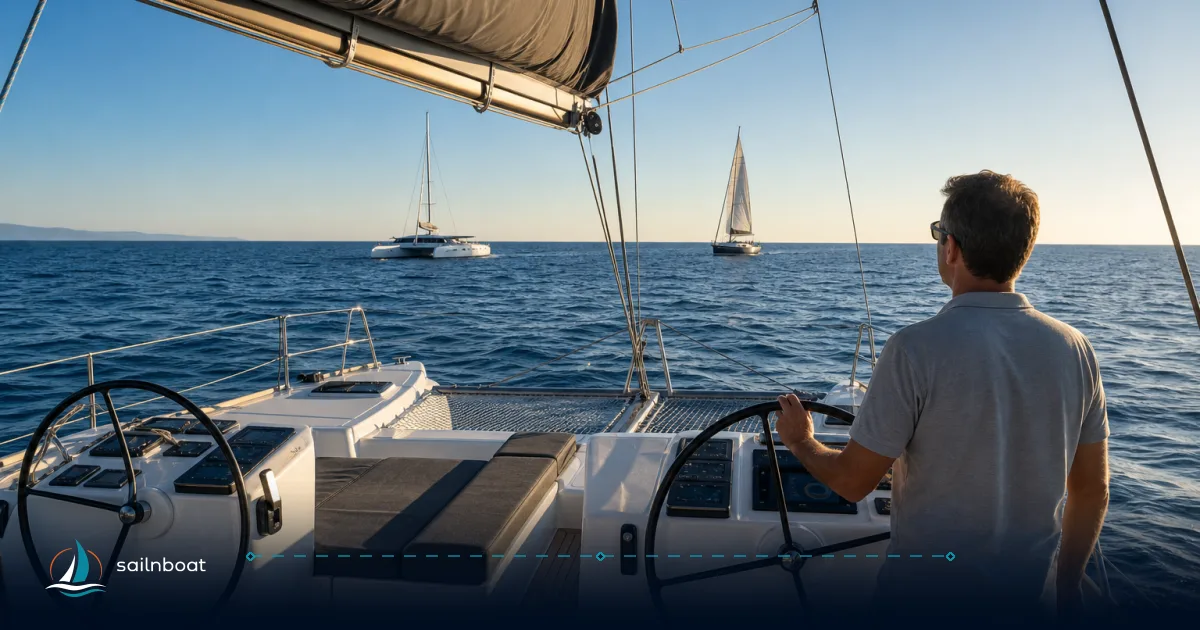
- Catamarans: Many cruising cats are widely offered as bareboat charters to competent skippers with multihull experience; however, because cats behave differently from monos (steering feel, docking with twin engines, bridge‑deck slamming), some companies prefer or require a short orientation or a skipper for first‑time multihull crews.
- Monohulls: Bareboat monohull charters are very common. Basic competence in sail handling and navigation is usually sufficient for many charter companies; qualifications requested vary by region and operator.
Operational notes for managers of the trip
- If you plan passages that require night passages, strong winds or offshore legs, hire an experienced skipper who knows the hull type you’ve chosen.
- If you want to learn a new hull type (e.g., your first cat or trimaran), consider booking a day skipper or an orientation day at check‑in.
Dinghy Operations: Ease of Use and Accessibility
Dinghy Storage and Access
- Catamarans: The wide aft platform and twin engines create several tender stowage patterns: davits across transoms, upturned on the coachroof or stowed on a stern platform between hulls. Wide beams can make boarding from a dinghy alongside less straightforward in berths where access alongside only one hull is possible, and tender handling on davits takes careful securing in a seaway. Many cat crews run the tender on davits when underway and lower it for landing.
- Monohulls: Tenders are commonly hung from paired stern davits (or a stern arch), carried on the foredeck and hoisted with a halyard, or launched from a bathing platform; boarding alongside is often simpler because only one hull side is involved and platforms are typically lower to the waterline.
- Trimaran considerations: Stowage depends on the design — some have stern davits on the main hull, others require custom solutions. The central-hull geometry can simplify boarding from the tender when alongside, but davit fitment and outboard clearance must be checked for each model.
Checklist for dinghy operations
- Confirm tender length, engine size and whether it will be stowed on davits or lashed on deck.
- Ask the charter company about boarding arrangements for guests with limited mobility (cats sometimes offer fold‑down platforms or wider boarding angles).
- If you expect frequent shore runs with a big tender, discuss davit strength, fuel stowage for the outboard and ease of deployment with the operator before booking.
Quick Comparison Table
| Feature | Catamaran | Trimaran | Monohull |
|---|---|---|---|
| Typical charter availability | High | Low | High |
| Berth/beam impact | Often wider, possible surcharge | Usually narrower than many cats but wider than monos | Narrower, easier berth fit |
| Typical heel at cruise | ~5–10° (very light) | Small but variable; may lean onto ama at speed | ~15–25° commonly under sail |
| Typical working cruise speed (charter guidance) | ~6–10 kt (model dependent) | Often higher than cats; 8–12 kt typical for many cruising designs; performance designs much faster. | Wide range by design; often comparable or slower than multihulls on reaches |
| Cabin/space | Most interior volume for LOA | Central hull cabins; less saloon volume than cat often | More compact, single‑hull layouts |
| Crew / handling | Often bareboat possible with multihull experience | Frequently requires experienced skipper for charter | Many bareboat options; widely familiar handling |
| Dinghy ops | Davits common; tender stowage needs planning | Depends on design; check davits/clearance | Simpler stern/platform options |
When a Trimaran Makes Sense (and When It Doesn’t)
Choose a trimaran when:
- You prioritise passage speed on longer coastal legs or a fast hop between islands and bases.
- You value a more performance‑oriented feel and don’t mind a smaller social saloon compared with a cat.
- You can secure a skipper with trimaran experience or book a crewed option.
Avoid a trimaran when:
- You need maximum privacy and cabin volume for multiple couples — a cat will usually win.
- Your itinerary requires frequent tight marina berthing in crowded, narrow slips — a mono or small cat will be easier.
- You require a very standard charter experience with wide availability and numerous bases.
Final checklist before you book
- Confirm exact LOA and beam for marina pricing and berth suitability; ask the marina for their beam thresholds and any multihull surcharge.
- Ask the charter company for conservative cruising speed they use for planning fuel and passage time (use their number for ETA calculations).
- Confirm tender length, davit type and who handles lowering/raising the dinghy; get a run‑through at check‑in.
- Check qualification requirements for your chosen hull — trimarans in particular may carry stricter skipper rules.
- If guest comfort is the priority, request a cat and, if seasickness is a concern, plan day legs in calmer forecast windows.
Explore our fleet and book your preferred yacht today.
Frequently Asked Questions
Trimarans are far less common than catamarans or monohulls in mainstream charter fleets; expect far fewer listings and limited bases offering them.
Marinas often charge more for multihulls that exceed the standard beam for a length band; published examples show catamaran charges and storage costs running noticeably higher in many locations.
Catamarans heel very little (typically about 5–10°), which reduces seasickness for many guests; monohulls commonly heel 15–25°, which some guests find more lively but others prefer for the sensation of sailing.
Catamarans usually offer larger, private double cabins in each hull and a roomy saloon; monohulls concentrate cabins along a single hull and often feel more compact and intimate.
Trimarans commonly cruise faster than equivalent-length cats and monos (working cruising figures typically higher by several knots); catamarans commonly cruise in the mid-to-high single digits under sail/engine, while monohull speeds vary widely by design.
Trimarans often demand more experienced helmsmanship and seamanship—charter companies frequently require experienced skippers for performance multihulls; cats and monohulls are more frequently offered as bareboat options to competent amateurs.
Catamarans' wide sterns and davit placements can complicate tender stowage and boarding; monohulls more often have straightforward dedicated stern or side platforms and easier single‑point davit arrangements.
Written by
Sailnboat Editorial
The Sailnboat editorial desk covers yacht and boat chartering worldwide — routes, bases, seasons, boat types, paperwork and the practical costs that decide a trip. We are a charter marketplace, not a boat owner or a local agency: what we sell is judgement and support, so our guides are written to help you make a decision, not to sell you a specific boat. Every guide is checked against live operator and marina data before it goes out.
Fact-checked against live operator and marina data, and published under our editorial standards. Last reviewed: .