Charter Boats Bow Thruster: Do You Need One and How to Use It Safely
A bow thruster can make marina work faster and less stressful, but it isn’t mandatory on every charter. Learn when it helps, how to use it safely, and what to check at handover.

A charter boats bow thruster can make docking in a tight, windy marina far easier — but it’s not a universal must-have. Whether you need one depends on boat type, marina size, local wind/current, and your crew’s skill: monohulls and larger charter yachts commonly benefit from a thruster, while many catamarans manage with twin-engine manoeuvring alone.
Understanding Bow Thrusters in Charter Boats
What is a Bow Thruster?
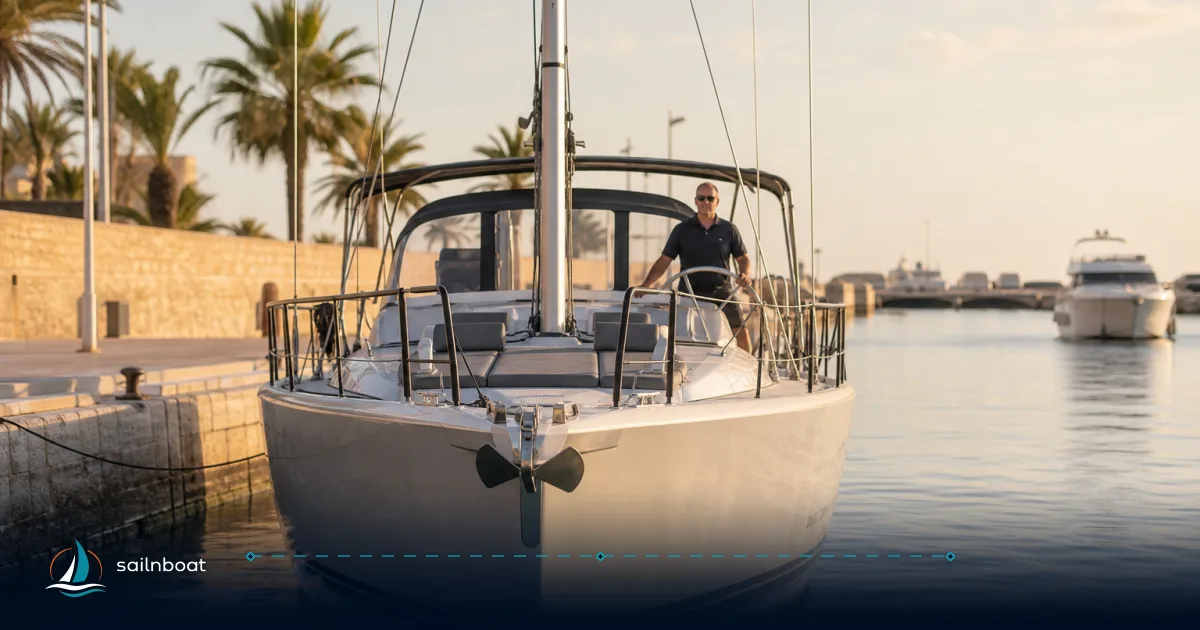
A bow thruster is a transverse propeller (or jet unit) mounted low in the bow that produces sideways thrust to move the bow to port or starboard at low speed or when stationary. It’s intended to give you fine lateral control where the rudder is ineffective — close quarters, short approaches and when wind or current is exerting leverage on the hull.
Practical role and limits
- Use: short bursts to correct the bow’s position, stop an unwanted swing, or hold the bow into wind during a close approach.
- Not a primary propulsion device: thrusters move the bow only at low speeds and are not designed for continuous thrust; most systems are rated for intermittent operation and can overheat if run continuously. Manufacturer duty-cycle guidance varies by model.
When to Use a Bow Thruster
- Crosswinds while approaching a berth: a few short pulses will counter the wind’s tendency to swing the bow and buy time for a final engine or spring-line correction.
- Tight slips or alongside rafting: when centimetres matter and you need immediate lateral correction without forward motion.
- Low-speed manoeuvres where rudder authority is minimal (close to zero speed) and asymmetric engine thrust alone is insufficient or risks hitting adjacent boats.
Trade-off you must accept: thrusters simplify the task but add weight, complexity, battery demand and maintenance items to the charter inventory.
Bow Thrusters on Catamarans
Do Catamarans Need Bow Thrusters?
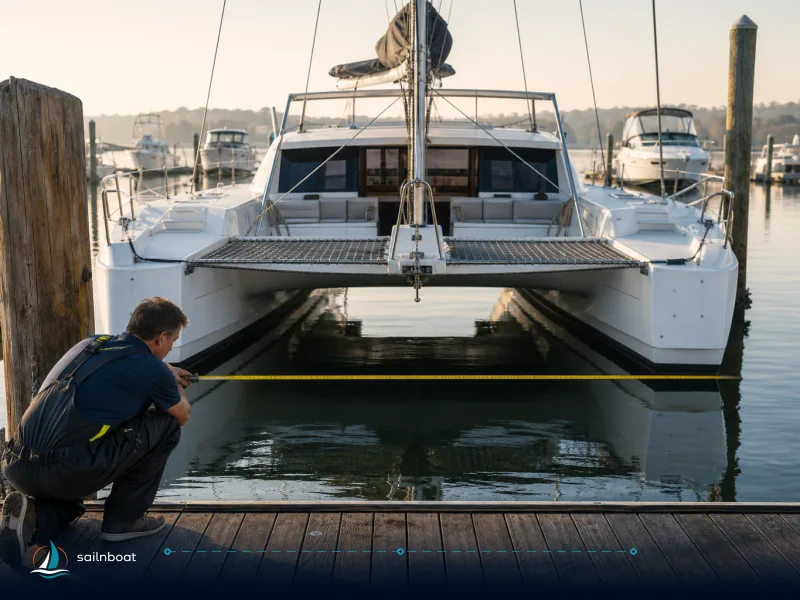
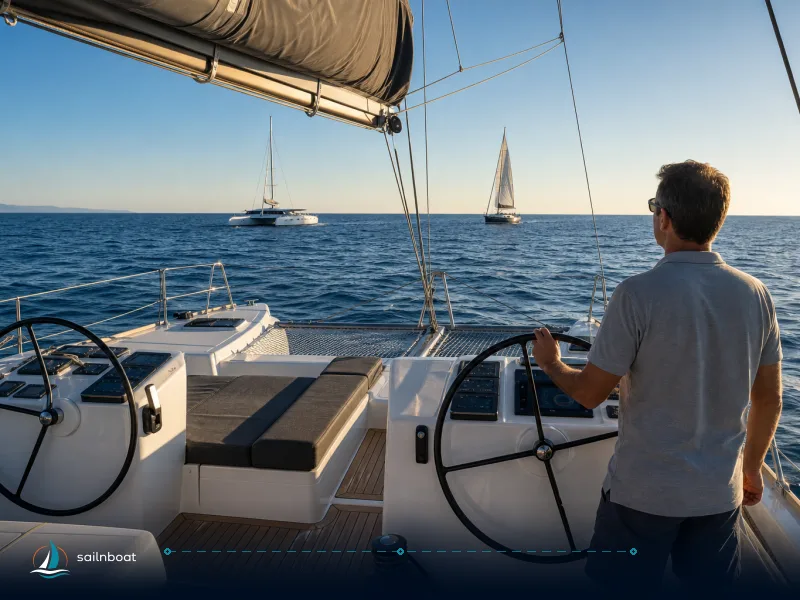
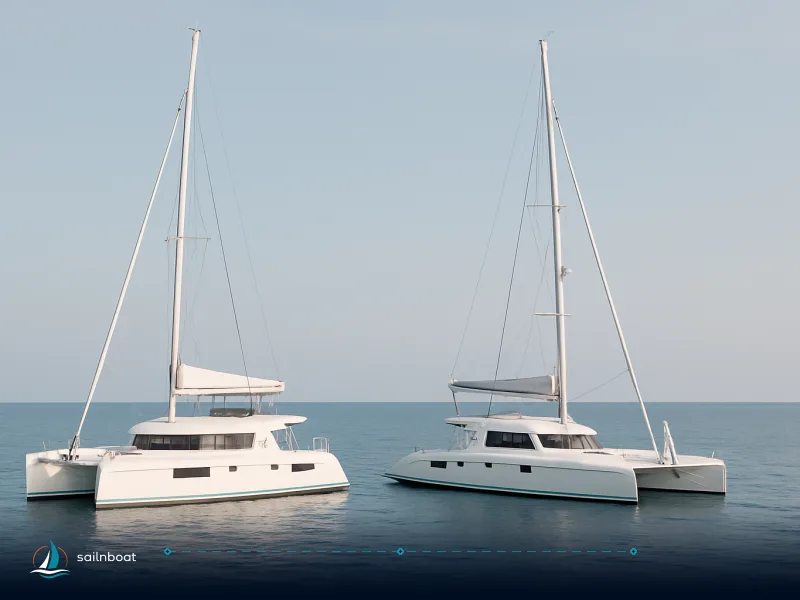
Many cruising catamarans are highly manoeuvrable because each hull carries its own engine; by applying opposite thrust (one ahead, one astern) a cat can pivot in its own length. For that reason, many catamarans used for private ownership and charter schemes do not carry a bow thruster as a standard item. Where a thruster is fitted it is usually an option chosen for tighter charter marinas, owner preference, or larger models with more windage.
How builders and charterers treat thrusters
- Manufacturer options: some builders list a bow thruster as an optional extra or include it on larger models; others rely on joystick or integrated manoeuvring systems. Confirm the spec for the specific model and year when booking. Examples show both approaches across modern catamaran ranges.
Popular Catamarans and Their Features (overview)
Use this table as a quick comparison when choosing a charter platform or reading a spec sheet.
| Boat type | Typical manoeuvring method | Thruster commonality on charter models | When a thruster helps most |
|---|---|---|---|
| Monohull cruiser (35–50 ft) | Single screw + rudder; use engine+rudder for swing | Frequently fitted or offered as an option | Tight marina berths, strong crosswinds |
| Catamaran (40–60 ft) | Twin engines allow pivoting | Less common as standard; often optional on larger or charter-configured boats | Narrow berths, marinas with little room to use asymmetric thrust |
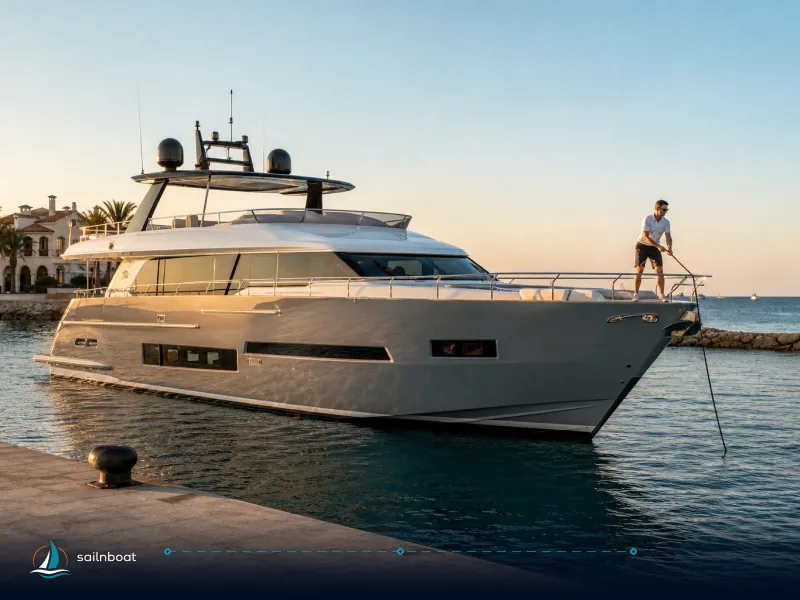
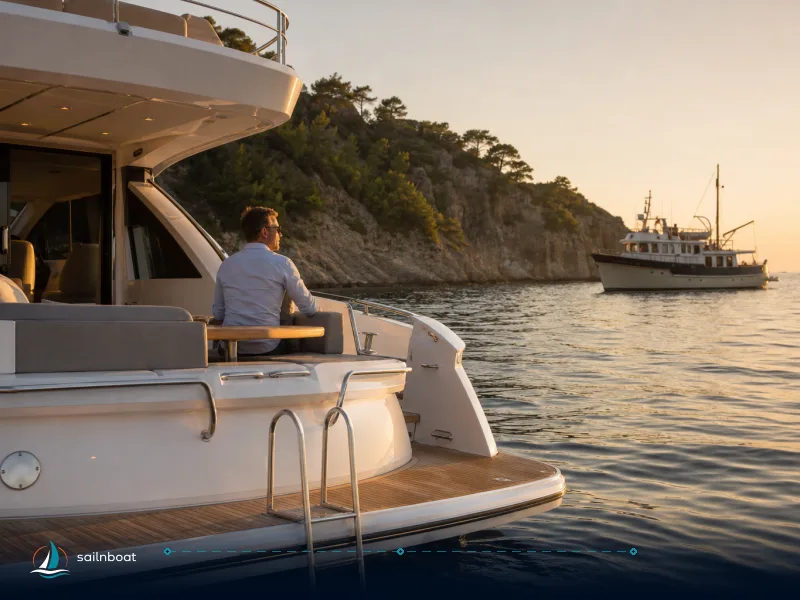
| Motor yacht / flybridge | Powerful engines + bow/stern thrusters | Common on larger motor yachts | Close-quarters docking, crowded marinas |
Safe Operational Techniques for Bow Thrusters
Before you start: mental checklist
- Know the thruster’s controls and indicators at the helm (left/right, power limit, emergency isolate). Turn it on only when required.
- Assign one person as an observer on deck or on the quay to call fenders and lines — the helmsman should not multitask during the final approach.
- Expect heavy battery draw; if the charter uses a dedicated thruster bank, make sure the charger/isolator is in the correct position for use. Many installations have a dedicated 24 V bank or converter arrangements.
Approaching a dock — step‑by‑step (practical)
- Reduce speed early — control is easier at slow headway.
- Set the engine(s) for fine control: short bursts of ahead/astern create predictable yaw. Combine with thruster pulses rather than relying on the thruster alone.
- When the bow begins to swing, use the thruster in short (1–3 second) pulses to stop or correct the motion; avoid long sustained use. The engine should provide the primary energy to complete the final position.
- Keep crew ready with fenders and a bowline; have the observer take the leg to the dock only when the boat is stable.
- If wind/current increases, back off and re-approach—continuous high-power thruster use is a common way to overheat the unit or flatten batteries.
Why short pulses: thrusters are electrically powerful and can overheat or trigger thermal protection if run continuously; the correct method is intermittent correction plus engine work. This protects the motor and leaves battery reserve for other systems.
Tight marina spaces — tactical tips
- Give yourself room to engine‑pivot first; use the thruster only for fine lateral adjustments.
- Mind propwash and stern clearance: a bow thruster shifts the bow but doesn’t remove the stern’s inertia — watch the stern’s swing towards pilings.
- Avoid overuse in strong crosswind/gusty conditions; if the wind is sustained above the thruster’s ability, reverse course and take a different approach with a spring line. Practical seamanship beats forceful thruster use.
Maintenance and Inspection of Bow Thrusters
Pre‑charter checks at handover (what to do, in order)
- Visually confirm the thruster control is present and operational at the helm. Ask the handover crew to demonstrate left/right operation while you watch/hear the motor.
- Check the thruster battery isolator is in the correct position and view the battery voltage on the vessel’s monitor where fitted. Note the starting voltage and ask if the thruster has its own bank or uses a converter. Many installations run 24 V off a dedicated bank; smaller units may be 12 V.
- Listen for unusual noises or grinding during operation—clicking, heavy vibration or slow spin can indicate mechanical or electrical issues. If present, log it on the inventory and ask for an operator note.
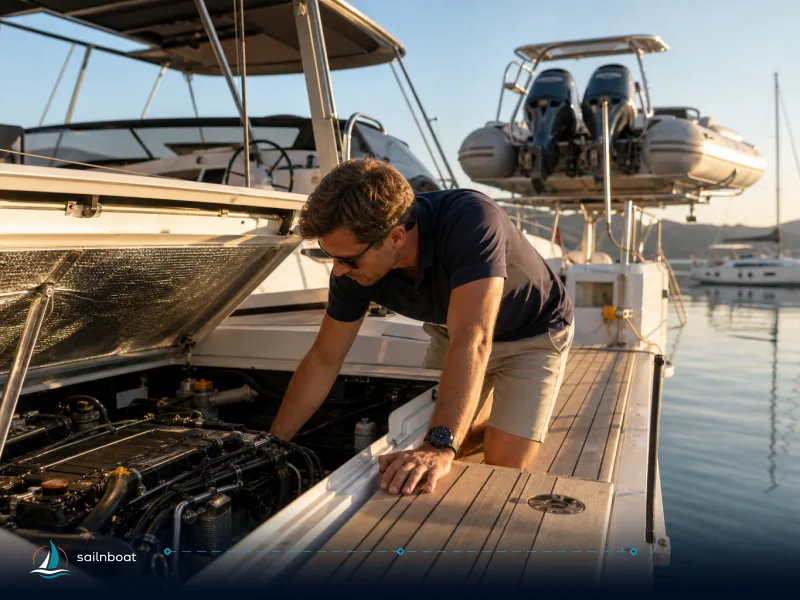
- Inspect the bow thruster hatch/tunnel if accessible: signs of impact damage, deformation or heavy marine growth should be recorded. Retractable units have an additional deploy mechanism to test.
Regular maintenance tips (what owners/charter operators do)
- Check electrical connections and anodes regularly; fouled tunnels or damaged propellers are common fault points.
- Confirm the manufacturer’s duty cycle and install overload protection where required — this prevents thermal damage from prolonged runs.
- Keep the thruster battery on a maintained charge when the boat is in port and switch the unit off when not in use to prevent parasitic drain.
Common Questions About Bow Thrusters
Do all charter boats have bow thrusters?
- No. Thruster fitment depends on boat type, size, builder choices and operator. Many monohull charter yachts include them; many catamarans do not because twin engines provide alternate manoeuvring options. Always confirm the individual boat spec when you book.
What are the operational limits?
- Most electric tunnel thrusters are specified for intermittent duty (short bursts). Limits vary by model and supply voltage — consult the manufacturer’s manual on duty-cycle, maximum continuous run time and required battery bank. Overrunning a thruster can trigger thermal cut‑out or damage the motor.
How do I avoid battery drain?
- Use the thruster sparingly; combine with engine control; verify the thruster battery bank is healthy at handover and ask if shore power or a charger is fitted for longer uses. Larger charter boats commonly have dedicated thruster banks to avoid flattening house/start batteries.
Is a retractable thruster better than a tunnel unit for charter?
- Retractable units reduce drag and fouling when retracted but add mechanical complexity; tunnel units are simpler but always in the water. The choice depends on boat mission, hull form and operator preference. Both need routine inspection.
Final practical checklist before you go
- Confirm thruster presence and that it is demonstrated during handover.
- Note the thruster battery voltage and isolator position.
- Ask about the manufacturer’s duty‑cycle or the operator’s restrictions for thruster use.
- Practice short pulses in a quiet basin before attempting crowded berths; assign an observer ashore.
Consider your charter boat’s bow thruster capabilities when you choose your base and plan marina approaches: a thruster reduces stress in many close-quarters situations, but good seamanship and awareness of the thruster’s electrical and thermal limits will protect the system and keep your deposit intact.
Consider your charter boat's bow thruster capabilities for a safer docking experience.
Frequently Asked Questions
No. Many monohull charters often have them as an option or standard; many catamarans rely on twin engines and may not have a bow thruster unless fitted as an option.
They give lateral thrust at the bow so you can push the bow sideways at low or zero speed, useful to stop a swing or hold the bow into wind or current.
Less common than on monohulls: twin-engine cats can pivot using asymmetric engine thrust, but some catamarans (especially larger or charter-configured boats) do carry bow thrusters.
Thrusters are designed for short, intermittent bursts; continuous use risks overheating and heavy battery drain—follow the manufacturer’s duty-cycle guidance.
Use short pulses, combine with engine thrust (ahead/astern), keep speed low, assign an observer ashore, and make small, controlled corrections rather than long holds.
Operate the thruster left and right, listen for unusual noise, check the thruster isolator and battery voltage, inspect the hatch/tunnel visually if accessible, and note any previous damage on the inventory.
Written by
Sailnboat Editorial
The Sailnboat editorial desk covers yacht and boat chartering worldwide — routes, bases, seasons, boat types, paperwork and the practical costs that decide a trip. We are a charter marketplace, not a boat owner or a local agency: what we sell is judgement and support, so our guides are written to help you make a decision, not to sell you a specific boat. Every guide is checked against live operator and marina data before it goes out.
Fact-checked against live operator and marina data, and published under our editorial standards. Last reviewed: .