Best Bluewater Cruisers for Extended Charters
A practical guide to choosing the best bluewater cruisers for charter, focusing on hull strength, tank capacities, systems redundancy and crew needs for multi‑week offshore trips.

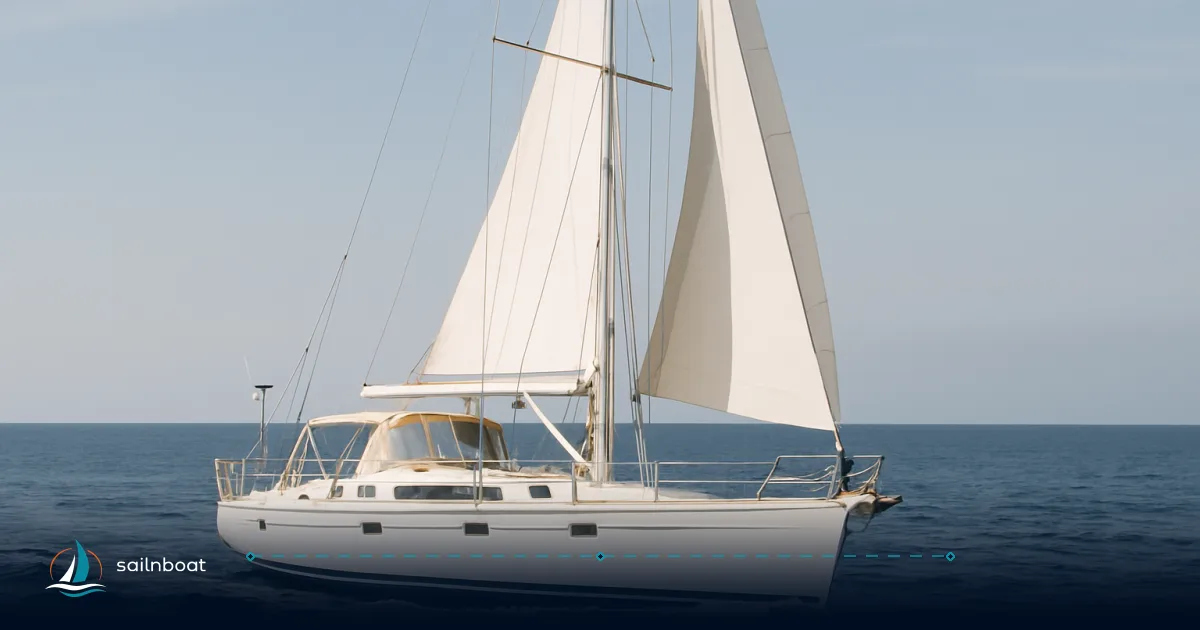
For multi‑week offshore charters, the boat you choose is your home, your lifeline, and your only guarantee of a safe, workable voyage. Robust hull construction, sufficient fuel and water (or a dependable watermaker), and true systems redundancy are not optional—they’re the baseline for any extended itinerary. This guide evaluates the best bluewater cruisers for charter by seaworthiness, range, and liveaboard comfort, with the practical details you need to plan a multi‑week offshore passage.
Key Features of Bluewater Cruisers for Extended Charters
Hull Construction and Seaworthiness
- What to look for: Prioritise a hull and keel built for ocean use—solid or vinylester‑bonded GRP laminate below the waterline, stainless or encapsulated lead ballast (not thin bolted plates), robust structural bulkheads, and a deep centre‑of‑gravity ballast profile. Many serious bluewater builders design to CE Category A (unlimited ocean voyages). This is a design standard, not a guarantee, but it’s a valuable filter when comparing models.
- Trade‑offs: Aluminium or steel hulls are proven for expedition work—offering impact tolerance and easier repairs in remote yards—but they add cost and complexity. Modern cored composites save weight but require careful engineering and sealing at all through‑hull points. Heavier displacement boats carry more stores and feel steadier off‑wind; lighter boats are more agile but require attentive seamanship, especially in rough weather.
- Steering and rudder: Look for skeg‑protected or semi‑balanced rudders and accessible steering gear. Always check for rudder or tiller backups (emergency tiller, redundant hydraulic circuits); these are essential for extended charters.
Tank Capacities
- How tankage shapes range: Fuel and water tank sizes directly determine your offshore autonomy and how often you must plan port calls. Typical bluewater monohulls in the 40–50 ft range often carry fuel tanks of 300–700 L and water tanks of 400–900 L. Larger passagemakers and performance cruisers (50–60 ft and up) can reach 1,000–1,400 L fuel and 900–1,500 L water. These are real, observed ranges across both contemporary builders and classic designs.
- Watermaker vs tanks: A reliable watermaker changes the calculation—you can carry less water and still be autonomous for long legs, but the unit itself requires power, routine maintenance, and a supply of spares. Many experienced crews treat tankage as the baseline and use a watermaker for redundancy and flexibility.
- Holding tanks and sanitation: For multi‑week liveaboard comfort, ensure at least one adequately sized black‑water tank per heads and clear pump‑out access. Discharge rules differ by region, so plan your itinerary for legal pump‑outs or arrange for portable holding capacities as needed.
Systems Redundancy
- Redundancy in practice: For reliability, look for twin engines (on cats), dual battery banks with independent charging (alternator, generator, shore power, solar), duplicate primary navigation devices or at least a secondary chartplotter/handheld GPS, independent autopilot or wheel/manual backup, and a planned spares kit for high‑failure items (raw‑water pump impellers, belts, starter, critical filters). Redundancy is about graceful failure: if Device A fails, you need a realistic, tested backup.
- Refrigeration and power: Extended charters depend on reliable refrigeration. Prioritise compressor‑type fridges with a dedicated DC charge path. Consider a small generator or shore‑power‑capable HVAC if you expect to run air‑conditioning or heavy freezer loads at anchor. Carry basic fridge spares (compressor relay, spare thermostat) and confirm repair access before committing to a boat.
Top Bluewater Cruiser Models for Multi‑Week Offshore Voyages
These models are commonly chosen for extended charters. The specs below are manufacturer or broker figures—always confirm the actual configuration with your operator before booking.
Monohulls
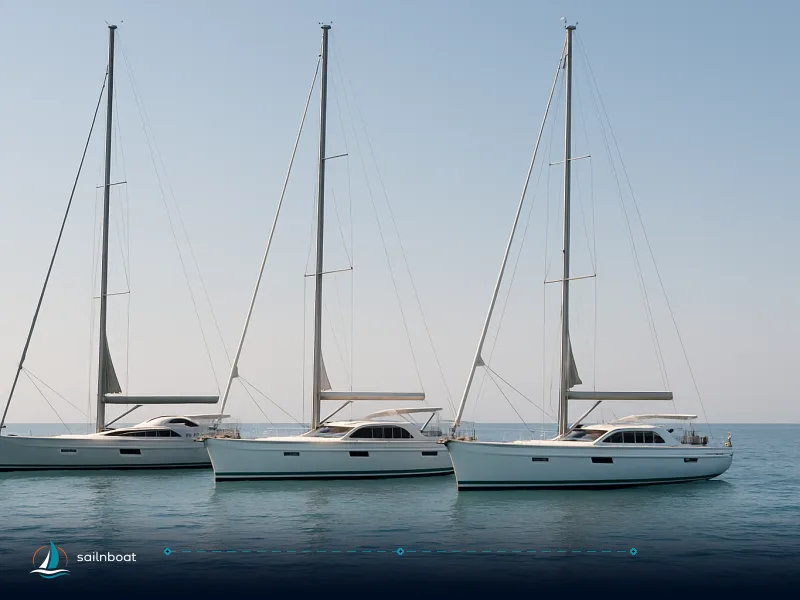
- Hallberg‑Rassy 44 — Mid‑size bluewater monohull with heavy displacement, robust construction, and sizable tankage (diesel ~420 L, fresh water ~745 L), CE Category A intent, and a deep lead keel option. Well suited for crews prioritising sea‑kindliness and interior comfort.
- Amel 50 — Purpose‑built bluewater cruiser known for integrated systems, generous tankage (fuel ~675 L, water ~600 L), and factory options for redundancy and liveaboard comfort. Favoured for extended crewed or skippered charters.
- Tayana 42 — Classic passagemaker with heavy displacement and proven durability. Tankage varies by build year but many examples offer 300–600 L diesel and 400–800 L water, depending on refits and tank configurations.
- Swan / Hylas (premium options) — Swan 58 and Hylas H60 offer wide tankage and high‑spec systems. Hylas H60 typically carries ~1,500 L fuel and ~1,500 L water; Swan 58 varies by build, but fuel is often in the 1,050–1,300 L range and water 950–1,300 L. These are aimed at those wanting high speed, strong build, and generous live‑aboard systems.
Catamarans
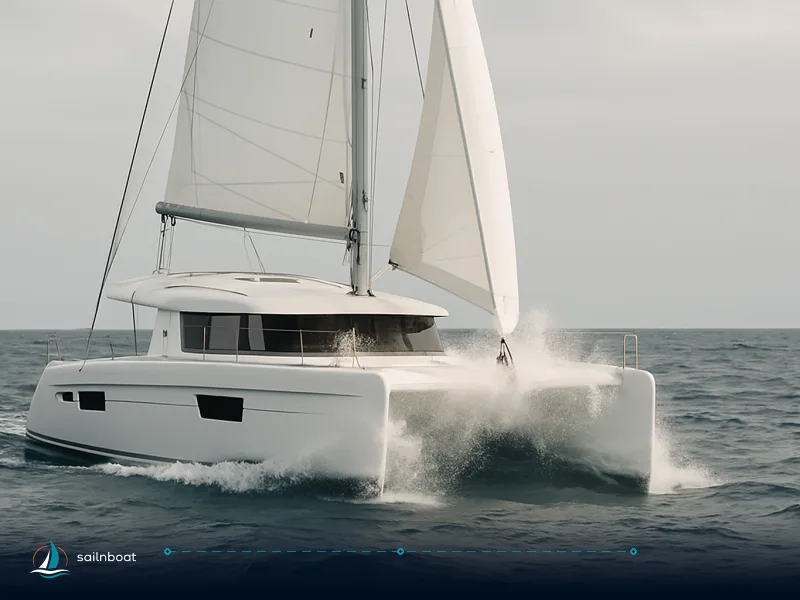
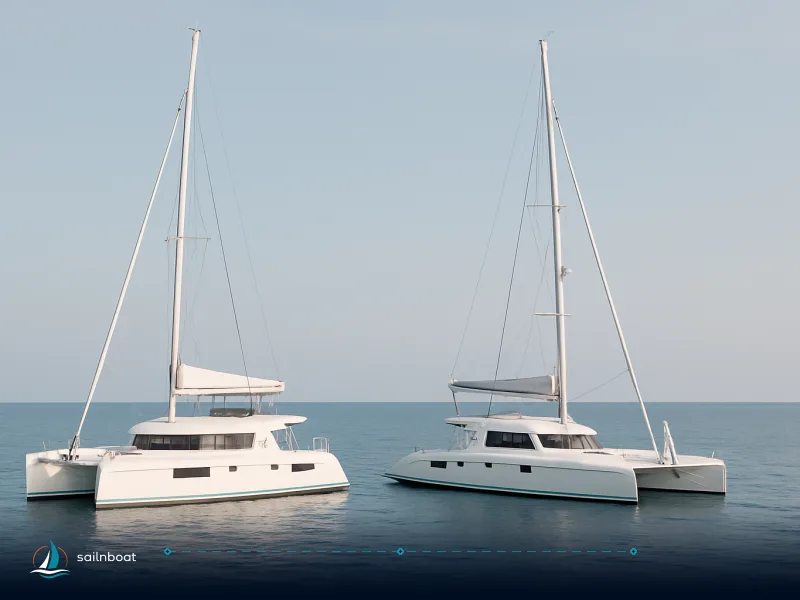
- Outremer 45 — Performance cruising catamaran with efficient tankage (fuel ~440 L, water ~500 L, but can vary by build), fast passage speeds, and the intrinsic redundancy of twin engines. Good upwind performance for a cat; check daggerboard vs fixed keels if shoal draft is needed.
- Lagoon 65 (Sixty 5) — Large cruising cat with vast living space and long‑range tankage (fuel ~1,300 L, water ~1,000 L), shallow draft (~1.55–1.6 m), and layouts optimised for crewed charters and liveaboard comfort. Common for luxury extended charters.
- Beneteau Cyclades 50.5 — A charter‑market workhorse balancing guest capacity and straightforward systems: fuel typically ~400–440 L, water 250–930 L depending on configuration and refit. Suited to skippered family charters rather than bareboat ocean passages.
Comparison Table — Quick Reference
| Model | Type | LOA | Fuel (L) | Water (L) | Draught (m) | Typical crew for charter |
|---|---|---|---|---|---|---|
| Hallberg‑Rassy 44 | Monohull | 13.7 m | 420 | 745 | 2.10 | Skipper ± mate |
| Amel 50 | Monohull | 15.5 m | 675 | 600 | 2.15 | Skipper + 1 (cook/hostess) |
| Tayana 42 | Monohull | 13.4 m | 341–454 | 568–600 | ~1.90 | Skipper or skipper + mate |
| Hylas H60 | Monohull | 18.05 m | ~1,500 | ~1,500 | 2.50 (std) | Skipper + 1–2 |
| Outremer 45 | Catamaran | 14.6 m | ~440 | ~500 | ~2.05 | Skipper + mate (or skipper only) |
| Lagoon Sixty 5 | Catamaran | 20.55 m | 1,300 | 1,000 | 1.55–1.60 | Skipper + 1–2 (crewed) |
| Swan 58 | Monohull | 17.96 m | 1,050–1,300 | 950–1,300 | varies | Skipper + 1–2 |
Values are manufacturer or broker specifications and vary by year, layout, and refit. Always confirm actual specs with your operator before booking.
Provisioning, Storage Capacity, and Recommended Spares
For extended charters, provisioning and storage can make or break the experience. Choose a boat with deep bilges, accessible lockers, and a galley sized for real meal prep. Here’s what to look for:
Storage and Galley Capacity
- Fridge/freezer space: At least 100–150 L refrigeration for 6+ crew is practical for weekslong passages. Larger cats and monohulls often have dual fridge/freezer units.
- Dry storage: Deep lockers, under‑saloon sole bins, and secure cabinet space are critical for bulk provisioning. On many 45–60 ft bluewater boats, expect 400–600 L of dry storage volume.
- Watermaker spares: If you rely on a watermaker, carry pre‑filters, a spare high‑pressure pump head, and membrane cleaning chemicals.
Recommended Spares List (Minimum)
| System | Recommended Spares |
|---|---|
| Engine(s) | Raw water pump impeller, belts, oil/fuel filters, starter motor, spare alternator |
| Electrical | Fuses, relays, battery terminal clamps, spare nav lights |
| Refrigeration | Compressor relay, thermostat, spare door seals |
| Watermaker | Pre‑filters, pump head, membrane cleaner |
| Plumbing | Hose clamps, spare hoses, macerator pump, seacock seals |
| Rigging/Sails | Shackles, blocks, spare halyard, sail repair kit |
| Navigation | Backup handheld GPS, paper charts, batteries |
Plan provisioning for at least 7–10 days of autonomy between major ports, especially for ocean crossings or remote anchorages.
Understanding Crew Requirements for Extended Charters
Crew Size and Roles
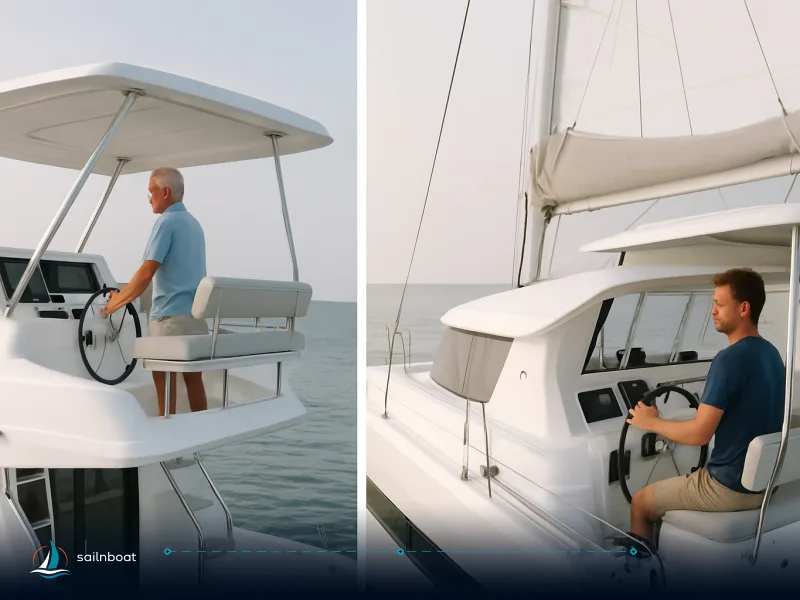
- Typical staffing: On skippered charters, you’ll usually see either a single professional skipper (with the charterer handling provisioning and housekeeping), or a skipper plus hostess/cook on boats in the 40–50 ft range. For full‑service charters on larger yachts, expect 2–4 crew (captain, chef, steward(ess), deckhand/engineer) depending on the level of service. Where guests share provisioning and watch‑keeping, a single professional skipper with an experienced mate is often sufficient.
- Regional and company variation: Crew requirements and manning rules are shaped by both national law and charter company policy. Commercial charters in Europe, for example, often require the skipper to hold a commercially endorsed Yachtmaster or equivalent, with Safe Manning Documents for larger yachts. In the Caribbean, requirements can be less formal but still depend on flag state and insurance. Always confirm the operator’s compliance with local codes and clarify minimum qualifications and medical fitness expectations.
Certifications and Experience
- Skipper qualifications: For ocean passages, most operators require skippers to hold a Yachtmaster Ocean or equivalent, with recent sea time on similar vessels. Many companies in the Mediterranean and Caribbean require an International Certificate of Competence (ICC) or RYA Day Skipper as a minimum for bareboat but will insist on higher credentials for offshore or extended itineraries.
- Crewed charters: The operator typically provides certified, experienced crew. For skippered charters, check in advance what insurance and certification documents are expected and clarify who is responsible for any additional crew training or endorsements.
Advantages of Monohulls vs. Catamarans for Bluewater Cruising
Monohull Advantages
- Motion and seaworthiness: Monohulls heel under sail, which helps shed wind and makes handling heavy seas more predictable. They have a narrower beam and, in many markets, lower charter rates. Heavier monohulls carry more stores and often have deeper keels for better tracking. For long bluewater legs, these traits make monohulls a conservative, proven choice.
Catamaran Advantages
- Space, shallow draft, and redundancy: Catamarans offer more usable living area, shallower draft for anchoring, and inherent propulsion redundancy from twin engines—a meaningful safety and convenience benefit on long trips. They can also achieve higher average passage speeds under sail, shortening legs and reducing engine hours. The trade‑off is higher charter cost, less deep storage in narrow hulls, and a different motion at sea that some find less comfortable in rough weather.
Practical Considerations for Extended Charters
Mooring and Fees
- Marina and mooring fees: Costs vary widely by region and season. In the Mediterranean, expect nightly marina rates of €40–90 per night for a 45‑foot berth in high season; in premium locations (French Riviera, Balearics), rates can exceed €120–180 per night for similar size. In the Caribbean, marina fees are often €25–70 per night for 40–50 ft boats, with more affordable rates in off‑season or less developed islands. Long‑term charters typically anchor more than they dock, but you should budget for occasional marina nights for reprovisioning, pump‑outs, and crew changes. Many operators offer discounted rates for charters over two weeks—ask when comparing offers.
- Other fees: Expect additional charges for water, electricity, and, in some regions, tourist/environmental taxes on top of mooring fees.
Weather Windows
- Planning around weather: In mid‑latitudes, avoid storm seasons (e.g., hurricane season in the Caribbean runs mid‑June to late November). In higher latitudes, choose summer windows for more reliable conditions. Always plan an out‑and‑back option for any major crossing, and use reliable long‑range forecasts. Professional charter skippers will delay departures rather than risk marginal weather. The optimal months will depend on your cruising ground and the prevailing climatology.
Insurance, APA, and Deposits
- Insurance: For extended charters, the base fee typically includes hull and liability insurance, but you are responsible for a security deposit (often €2,000–7,000 depending on boat size and region). Many operators offer a non‑refundable damage waiver option in place of a larger deposit. For ocean passages or high‑value yachts, additional insurance or a higher deposit may be required. Always confirm the terms—some policies exclude certain latitudes, seasons, or types of passage.
- APA (Advanced Provisioning Allowance): For fully crewed charters, expect to prepay an APA—often 20–30% of the charter fee—which covers fuel, food, drinks, and incidental costs. Any unspent funds are returned at the end of the trip.
- Personal insurance: Medical and travel insurance with evacuation coverage is strongly recommended for all crew on bluewater charters.
Offshore Communications and Safety
- Communications gear: For any offshore itinerary, insist on a boat equipped with AIS (Automatic Identification System), a reliable VHF (with DSC), and for legs outside coastal coverage, a satphone or satellite messenger (Iridium, Inmarsat, or Starlink Maritime where available). For longer crossings, an EPIRB (Emergency Position Indicating Radio Beacon) is standard.
- Backup navigation: Carry a backup handheld GPS and paper charts. Ensure all crew know how to access distress frequencies and use the satphone in an emergency.
Conclusion: Choosing the Right Bluewater Cruiser for Your Needs
The best bluewater cruiser for your extended charter depends on your priorities and route. If you want proven seaworthiness, straightforward systems, and traditional handling, mid‑sized monohulls like Hallberg‑Rassy and Amel offer strong value. If you need more space, shallower draft anchorages, and propulsion redundancy, performance or cruising catamarans such as Outremer or Lagoon are the better fit. Always focus your pre‑charter checklist on verified tank capacities, watermaker presence and condition, refrigeration and storage, and the operator’s approach to spare parts and systems redundancy. The right choice minimises unscheduled stops, keeps provisioning manageable, and makes multi‑week offshore life genuinely comfortable.
When you’re ready to select the best bluewater cruiser for extended charters, explore the latest fleet options and match your base boat to your route, crew, and comfort priorities. Sailnboat’s team is here to help you make the right call—before, during, and after your charter.
Frequently Asked Questions
A durable hull and keel arrangement, generous fuel and water tankage (or a reliable watermaker), robust refrigeration and electrical systems with redundancy, accessible mechanical systems, and adequate berths/storage for provisions and spares.
Proven choices include Hallberg‑Rassy models and Amel 50 for monohull comfort and build quality; performance catamarans such as Outremer 45 and large cruising cats like Lagoon 65 for space and range; Hylas and Swan models sit at the premium performance/liveaboard end.
Fuel and water tank sizes determine how long you can stay offshore between refuelling and reprovisioning; larger tanks or a watermaker reduce the number of port calls and increase route flexibility.
For 40–50 ft yachts, a professional skipper alone is common (skippered charter); for full‑service crewed charters expect skipper + chef/hostess or 2–4 crew depending on yacht size and service level.
Extremely important—backup navigation power, independent charging paths, spare critical parts, and a clear failure‑recovery plan materially reduce risk and downtime on long passages.
Monohulls generally track better in heavy seas, heel to shed wind and often have lower mooring fees; catamarans offer more living space, shallower draft, and often greater range under sail and power redundancy (twin engines).
Written by
Sailnboat Editorial
The Sailnboat editorial desk covers yacht and boat chartering worldwide — routes, bases, seasons, boat types, paperwork and the practical costs that decide a trip. We are a charter marketplace, not a boat owner or a local agency: what we sell is judgement and support, so our guides are written to help you make a decision, not to sell you a specific boat. Every guide is checked against live operator and marina data before it goes out.
Fact-checked against live operator and marina data, and published under our editorial standards. Last reviewed: .