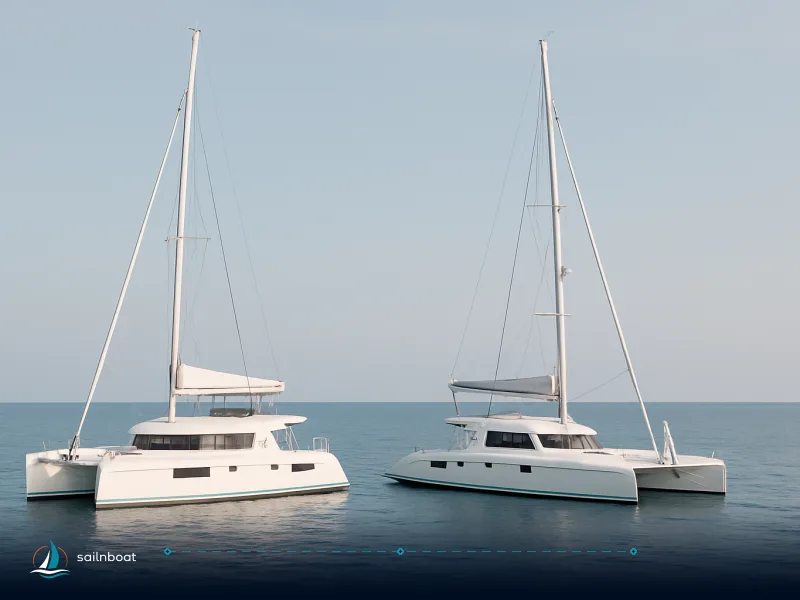
Catamaran vs Sailing Yacht: Which Is Better for Couples?
For couples, the choice between a catamaran and a sailing yacht comes down to space, stability and cost. This guide compares cabins, draft, handling and real charter ranges so you can pick the right boat.

Catamaran vs Sailing Yacht for Couples: The Practical Trade-offs
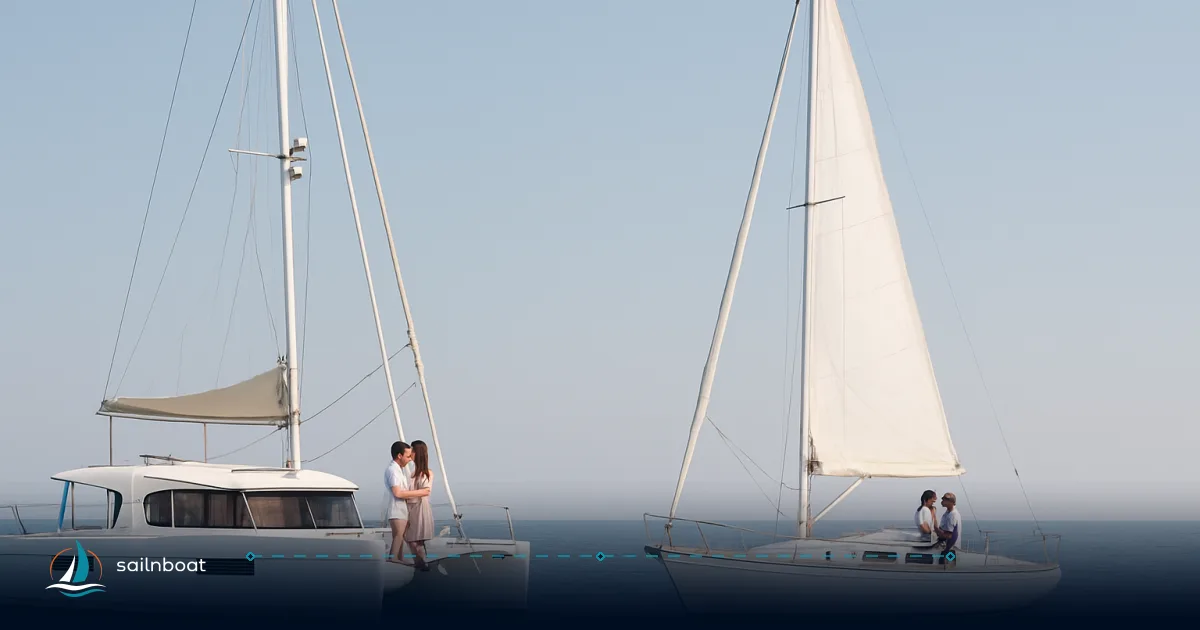
When you’re booking a yacht charter as a couple, the decision between a catamaran and a monohull is mainly about living space, comfort, handling, cost, and the kind of sailing experience you want. Catamarans give you more living area, a gentler ride, and easier low-speed manoeuvring, while monohulls deliver a classic sailing feel and are often simpler to berth in busy Mediterranean harbours. Here’s what actually changes for you and your partner when you’re living aboard for a week or more.
Space and Comfort: Catamarans vs Monohulls
The most immediate difference for couples is usable living space. Catamarans, with their wide beam and dual hulls, offer a much larger interior and deck area compared to monohulls of equivalent length. While there’s no reliable figure for the percentage increase, it’s common to find that a 45 ft catamaran provides a similar volume and deck space to a 55–60 ft monohull. This extra space translates into separate zones for sleeping, relaxing, and cooking—something you’ll notice every day aboard.
Living Space Comparison
- Usable area: For a typical 40–46 ft charter yacht, a catamaran provides a full-beam saloon, a wider cockpit, and a forward lounge or trampoline area. On a monohull, the saloon is narrower, and companionways can become pinch points, especially if both of you are moving about at the same time.
- Deck flow: Catamarans are designed for easy movement fore and aft, with wide, flat coachroofs and multiple lounging spaces. Monohulls are more compact, which can feel more connected but less private.
- Storage & systems: Catamarans have distributed storage across both hulls and often two engine rooms. This is practical for a couple provisioning for a week, as it keeps the galley and cabins less cluttered.
Cabin Layouts
- En-suites: Many 40–46 ft charter catamarans are configured with three or four cabins, and in most modern models, each has an en-suite head. Monohulls of similar length typically have two or three cabins, and usually only one or two heads. If you want real privacy or might host another couple, this is a strong consideration.
- Berth size: Catamaran cabins tend to have wider berths (across the hull), while monohull doubles are often longer but narrower. If a queen-width bed is important, always check the actual berth dimensions in the spec sheet.
Decision point: If having a private cabin, a full-width saloon, and separate living zones matters for your trip, a catamaran’s extra space is meaningful. If you prefer intimacy and don’t mind closer quarters, a monohull offers classic ergonomics and a cosier feel.
Accessibility and Mobility
Couples with any mobility concerns should consider the deck layout:
- Catamarans: Usually feature fewer steps between cockpit and saloon, wide side decks, and stable, level movement—safer for anyone with limited mobility.
- Monohulls: Often have steeper companionways and narrower gangways. Moving from cockpit to saloon or forward deck can involve more climbing and balancing.
Stability and Sailing Experience
Couples often have different tolerances for motion. Catamarans and monohulls diverge sharply here.
Heeling vs. Flat Sailing
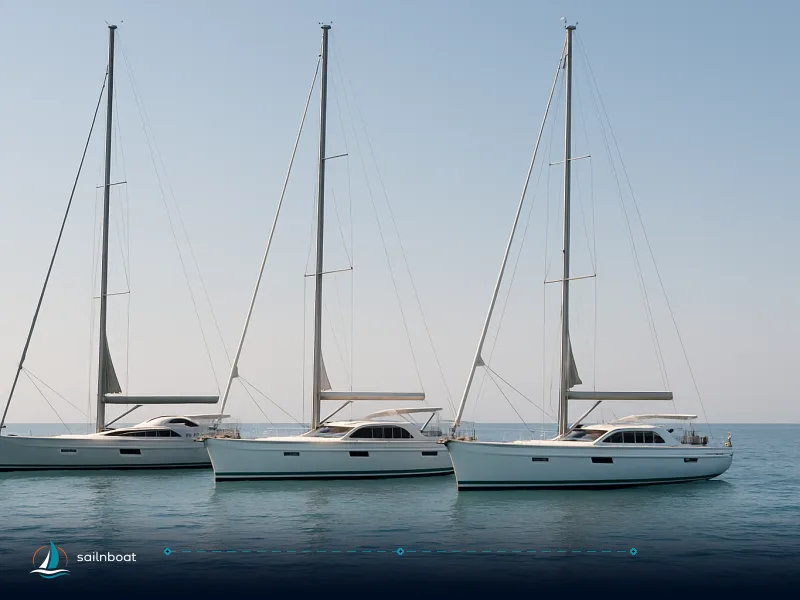
- Monohull feel: Monohulls heel under sail, giving you a classic, tactile sailing sensation—leaning to windward, feeling the boat respond, and a sense of engagement with the elements. The heel helps with windward tracking and can feel more dynamic.
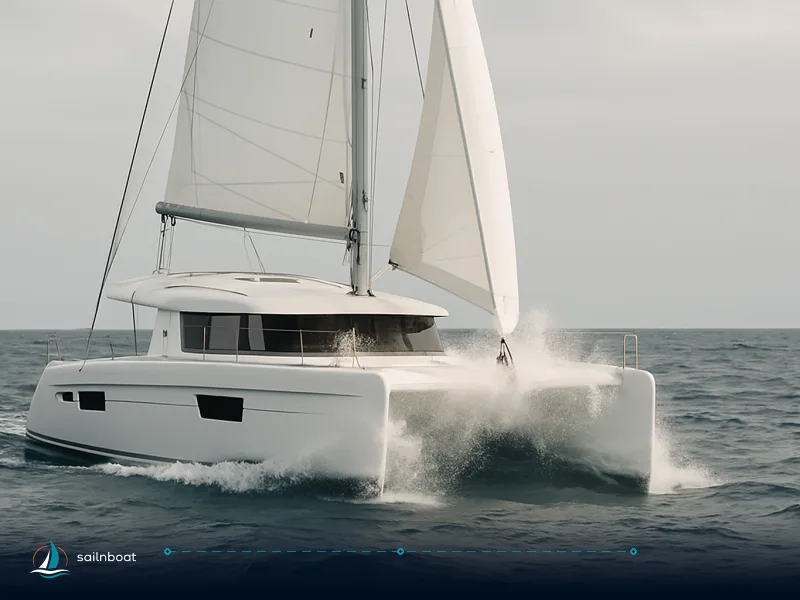
- Catamaran feel: Catamarans sail nearly flat. You’ll notice less heel, which means meals are easier, sleep is less disturbed, and moving about is safer. At anchor, the stability is a real advantage if one of you is sensitive to motion.
Sailing Performance and Comfort
- Windward and responsiveness: Monohulls typically point higher into the wind and tack faster, making them better for routes with lots of upwind work. Catamarans can be quicker off the wind due to less wetted surface and lighter displacement in some designs, but are slower through tacks and require more planning in gusty conditions.
- Seasickness: If one of you is prone to motion sickness, a catamaran’s stability is often a plus. However, some sailors find a cat’s faster, “snappier” motion in short, steep seas less comfortable than the slower, more predictable roll of a monohull.
Practical note: Choose a catamaran for minimal roll and stable living; pick a monohull if you want the direct, engaged sailing experience and plan to spend time beating to windward.
Cost Considerations for Couples
Charter pricing depends on the market, season, yacht age, and whether you’re booking bareboat or crewed. Two consistent patterns stand out:
- Catamarans command a premium: In most markets, a 45 ft catamaran carries a significant price premium over a 45 ft monohull. In the Caribbean and Mediterranean, a bareboat 45 ft monohull often starts around €3,000–7,000 per week in high season, while comparable catamarans typically range from €7,000–15,000 or more. The premium reflects more cabins, stability, and living space.
- Per-cabin value: Catamarans offer more equal cabins, so if you’re sharing with another couple or inviting guests, the per-cabin cost can be more competitive. For two people, though, you’re paying for space you may not use.
Charter Rates and Running Costs
| Item | Monohull (40–46 ft) | Catamaran (40–46 ft) |
|---|---|---|
| Bareboat high-season weekly base | €3,000–7,000 (typical) | €7,000–15,000 (typical) |
| Cabins / charter layout | 2–4 (often 3) | 3–4 (usually all en-suite) |
| APA / Running costs | Lower (fuel, toys) | Can be higher (toys, A/C) |
| Marina beam surcharges | Rare | Often €20–60/night in busy Med marinas (e.g., Lefkas, Split) |
| Security deposit (typical) | €2,000–4,000 | €3,000–6,000 |
- What changes price: Build year, generator/A/C, watermaker, number of en-suites, included toys, and season all make a difference. Fuel use under power is usually lower for sailing cats than for similar-length motor yachts.
Tip: Always compare per-cabin price and what’s included (linen, towels, outboard, permits). The headline rate rarely tells the full story.
Provisioning and Tankage for Couples
Provisioning for two is simpler than for a full crew, but tankage and storage still matter—especially if you plan to anchor out.
- Catamarans: Typically have larger fridges (often 120–180 litres), more cold storage, and water tanks ranging from 400–800 litres. Fuel tanks often hold 400–600 litres, split between two engines. This allows longer stays at anchor without resupply.
- Monohulls: Fridges are usually smaller (60–100 litres), and water tanks often range from 300–500 litres. Fuel tanks are commonly 150–250 litres. You’ll need to plan more carefully for water and food, especially if you want to avoid marinas.
- Practical advice: For a week-long trip, most couples find a 400-litre water tank sufficient if you’re conservative with showers and dishwashing. Catamarans sometimes include a watermaker, but this is not universal—always check the specs.
Provisioning tip: Make a meal plan for the week and shop accordingly. Catamarans offer more pantry and fridge space, so you can stock up in advance. Monohulls may require more frequent stops for fresh food and water.
Seasonality, Weather Windows, and Destinations
The best time for a couple’s charter depends on your destination and tolerance for crowds and weather.
- Mediterranean: Peak season (June–September) brings warm weather, settled seas, and full marinas—prices and crowds are highest. May and October are quieter, often with better berth availability and lower rates, but weather can be less predictable.
- Caribbean: High season runs December–April, with steady trade winds and little rain—ideal for couples. Hurricane season (June–November) brings risk, but also the best deals; many operators restrict bookings during peak storm months.
- Weather windows: For less experienced couples, shoulder seasons offer cooler nights, fewer crowds, and often better service at marinas and restaurants, but check the local wind patterns and daylight hours.
Operational tip: Always confirm the local forecast and prevailing winds for your week. For example, the Meltemi in the Aegean can make passages challenging for short-handed crews in July–August.
Maneuverability and Handling
Docking and handling are critical for couples, especially if you’ll be managing the boat without extra crew.
Docking and Berthing
- Catamarans: With twin engines spaced wide apart, cats are easier to pivot and control at low speed, even in crosswinds—an advantage for couples berthing stern-to or side-to with limited help. Their wide beam can limit marina options and may incur a beam surcharge (often €20–60/night in busy Mediterranean marinas such as Lefkas in Greece or ACI Split in Croatia).
- Monohulls: Single-screw monohulls are more nimble in tight fairways but need more skill for crosswind berthing, especially without a bow thruster. Marinas are usually designed for monohull widths, so finding a berth is simpler.
Handling Underway
- Windage and beam: Catamarans have higher windage and a larger turning radius, so plan your approach carefully in strong winds. Always confirm berth width and availability with your charter base.
- Under sail: Monohulls tack more sharply and feel more responsive. Cats are steadier at anchor and underway, but less agile through tacks and jibes.
Checklist:
- Confirm berth width and any marina surcharges for cats.
- Ask for a technical handover at the base—understand the differential engine controls and bow thruster operation.
- If you’re new to catamarans, consider a short trial charter before committing to a full week.
Privacy and Social Spaces
How you use living space as a couple—especially on longer charters—can make or break the experience.
Cabin Privacy and Noise
- Catamaran: Separate hulls allow true privacy—cabins on opposite sides of the boat, often with en-suite heads. Noise from the saloon or galley is less likely to disturb someone sleeping. At anchor, cats are quieter due to reduced rolling.
- Monohull: Fewer cabins and shared companionways mean less privacy, but also a more intimate, connected living space. Engine and galley noise can carry more due to the compact layout.
Social and Galley Spaces
- Catamaran: Multiple social areas—cockpit, saloon, forward lounge—make it easier for two people to enjoy separate activities. The galley is often up, integrated with the saloon and cockpit for easy communication.
- Monohull: Saloon and cockpit are closer together, making for a cosier, shared experience. Galleys are usually down, which can feel cramped but keeps cooking smells contained.
Trade-off: If you want the option to host another couple or value privacy, a catamaran’s layout is superior. If you prefer a single, shared living space and enjoy the rhythm of classic sailing, a monohull is the better fit.
Insurance, Security Deposits, and Cancellation Policies
These are often overlooked but can make a real difference to your experience and risk exposure.
- Insurance: Most charter operators include basic hull and liability insurance in the base rate, but you’ll be liable for a security deposit (typically €2,000–6,000, depending on yacht size and operator). Damage waiver insurance is often available for an extra daily fee, reducing your liability.
- Cancellation: Policies vary widely by operator. Non-refundable deposits are common, and cancellation terms can be strict, especially in high season. Some bases offer flexible rebooking or credit if weather or force majeure intervenes—always check before you commit.
- Required qualifications: Most European operators require at least an ICC or RYA Day Skipper for bareboat charter; in Croatia and Greece, a VHF operator certificate is also commonly requested. Always check your documentation matches local requirements.
Sample Scenario: A Couple’s Week in the Ionian
Anna and Mark, both with basic sailing experience, are planning a week in the Ionian in late September. They want easy living, privacy, and access to shallow anchorages close to beaches.
- Boat choice: They compare a 42 ft catamaran and a 42 ft monohull.
- The catamaran offers 4 cabins (all en-suite), a wide saloon, and a draft of ~1.2 m—ideal for anchoring in bays with 1.5–2 m depths.
- The monohull has 3 cabins, 2 heads, and a draft of ~2.0 m, limiting access to some shallow spots.
- Cost: Catamaran base rate is €8,500 for the week; monohull is €4,800. Both require a €3,000 security deposit. The catamaran incurs a €35/night beam surcharge at Lefkas Marina.
- Experience: Anna prefers flat decks for sunbathing and cooking underway. Mark enjoys hands-on sailing but is happy to trade some performance for comfort.
- Decision: They opt for the catamaran, valuing the extra privacy, shallow draft, and stable ride. They book in September for lower rates and quieter anchorages.
Pros and Cons Table: Catamaran vs Monohull for Couples
| Feature | Catamaran | Monohull |
|---|---|---|
| Living space | Larger, multiple zones | Compact, cosier |
| Cabin privacy | High (separate hulls, en-suites) | Moderate |
| Sailing experience | Flat, stable, less heeling | Classic, tactile, heels under sail |
| Docking/handling | Easier with twin engines, wide | Simpler in tight marinas |
| Cost (base rate) | Higher (premium for space) | Lower |
| Marina surcharges | Often for beam | Rare |
| Shallow anchoring | Easier (draft ~1.2–1.3 m) | Deeper draft (~1.8–2.2 m) |
| Accessibility | Fewer steps, wider decks | More steps, narrower |
| Best for | Privacy, comfort, hosting guests | Intimacy, hands-on sailing |
How to Choose: Checklist
- Space: Do you want maximum privacy and separate living zones? → Catamaran
- Sailing feel: Prefer classic heel and windward performance? → Monohull
- Maneuvering: Will you dock mostly in marinas with limited space? → Monohull
- Anchorages: Want to access shallow bays? → Catamaran (check draft)
- Budget: Compare per-cabin and per-person costs, including marina surcharges
- Season: Check for weather windows, crowding, and rates in your region
- Qualifications: Ensure you meet local skipper and VHF requirements
Booking and On-the-Water Tips for Couples
- Confirm berth width and beam surcharges before booking a catamaran—many marinas in the Med apply these, especially in high season.
- Try a short charter first if you’re new to either boat type—a weekend is enough to discover your comfort and motion preferences.
- Review the handover process: Most bases will require at least ICC or RYA Day Skipper; ask for a technical briefing and walkthrough.
- Provision for two: Catamarans have more storage and often larger fridges; monohulls may require more careful provisioning and water management.
- Check tankage: For couples doing longer passages, water and fuel tank size matter—cats typically carry more, but always confirm specs.
- Insurance and deposit: Understand your liability and consider extra insurance to reduce your deposit exposure.
Next Steps: Making Your Decision
Focus on your priorities—privacy and comfort versus classic sailing feel—then request two quotes (cat and mono) for your preferred week and base. Compare all-in rates, included extras, and per-cabin economics. If in doubt, try a short charter or consult with a Sailnboat advisor for tailored recommendations.
Ready to plan your charter? Contact us for a detailed quote and destination advice, or browse our yacht charter options to compare available boats and itineraries.
Frequently Asked Questions
Catamarans typically offer about 1.25 times the usable deck and cabin area of a same‑length monohull, with full‑beam saloon areas, wide cockpits and multiple en‑suite cabins; that extra room improves privacy, separate sleeping zones and a living area that actually functions for two people spending long days aboard.
In many charter markets a same‑length catamaran commands a premium over a monohull; for example, BVI weekly bareboat ranges often show 45ft monohulls in the low‑thousands while comparable 45ft cats sit at higher weekly rates — though cost per cabin or per guest can favour cats when you use the extra cabins. Use seasonal rate cards for the base marina you plan to sail from.
Common production catamarans in the 40–46 ft bracket have drafts around 1.2–1.3 m, which lets you enter shallow bays, anchor closer to beaches and step ashore through small sandbars that a monohull with a 1.8–2.5 m draft cannot reach. That access changes itineraries: more beach time, safer anchorages in many Caribbean and tropical bays.
Monohulls heel under sail, which many sailors find engaging: you feel heel, helm feedback and a classic sailing rhythm; catamarans sail flat, reducing motion, easing meal prep and onboard comfort — a clearer trade‑off between 'sailing feel' and 'comfort/stability'.
Twin engines, widely spaced in each hull, give catamarans very effective differential thrust at low speed; that makes close quarters turns and stern‑to berthing in crosswinds easier than a single‑prop monohull without a bow thruster. It’s a real operational advantage for two‑person crews.
Written by
Sailnboat Editorial
The Sailnboat editorial desk covers yacht and boat chartering worldwide — routes, bases, seasons, boat types, paperwork and the practical costs that decide a trip. We are a charter marketplace, not a boat owner or a local agency: what we sell is judgement and support, so our guides are written to help you make a decision, not to sell you a specific boat. Every guide is checked against live operator and marina data before it goes out.
Fact-checked against live operator and marina data, and published under our editorial standards. Last reviewed: .