Essential Night Sailing Techniques for New Sailors
Clear, practical night sailing techniques for new sailors: preserve night vision, check and carry spare navigation lights, plan routes to avoid hazards, and prepare your crew and watch system.

Night sailing techniques let you extend passages and arrive when tides or berths suit you — but the rules and sensory demands change after dusk. Use the practical techniques below to preserve night vision, plan a safe route, check and carry the right lighting spares, and organise watchkeeping so you and your crew can navigate confidently after dark.
Preserving Night Vision While Sailing
Night vision is a skill you protect, not a switch you flip. The single most effective measures are to limit white light exposure and use red or dim lighting for tasks that don’t require full colour vision.
Use of Red Lighting
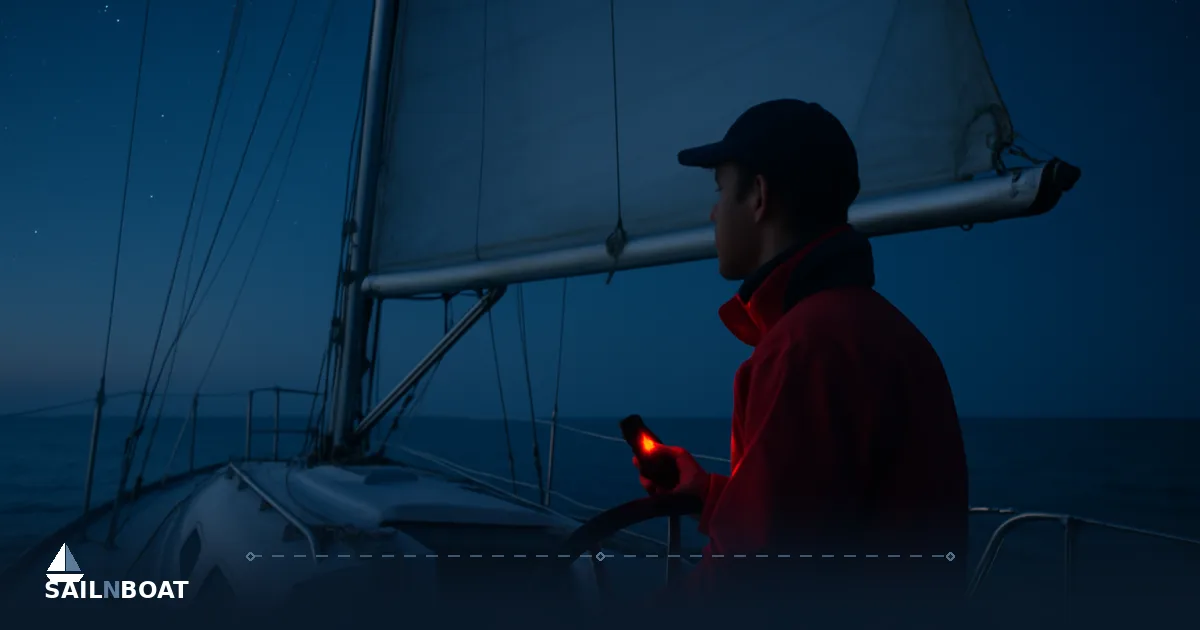
- Fit a red-dim option for cockpit and chart lights and use instrument backlighting in its lowest comfortable setting. Red light has far less effect on rod-mediated vision than white light, so brief glances at charts and instruments won’t wipe out your dark adaptation.
- Give every crew member a headlamp or torch with a red mode; reserve white light for urgent tasks only. A small red-filtered torch is quicker to use and less likely to ruin everyone’s night vision.
Adaptation Time
- Expect dark adaptation to begin within about 20–30 minutes and to improve further with continued darkness; however, a single flash of bright white light can reset that adaptation. Plan your lighting and tasks with that in mind.
- Practical steps: dim screens or switch them to night mode before sail-away, keep personal devices in airplane mode or use apps with red/night modes, and conduct any bright-light tasks well before watch changes.
Essential Navigational Skills for Night Sailing
Night navigation relies on a managed combination of planning, instruments, and disciplined lookout. Know the lights, know your electronics, and practise judgement.
Pre-Sailing Route Investigation
- Chart your passage to identify shoals, ledges, wrecks, isolated danger marks, lit navigational aids and traffic separation schemes; mark conservative waypoints so there are no surprises at night.
- Note port entry lights, harbour sectors, safe anchorages and alternative berths well before dusk. Include tidal heights and timing in your plan because reduced visual cues make tidal navigation riskier at night. RYA passage-planning principles apply equally after dark.
Recognizing Lights and Buoys
- Learn the common light characteristics used in your cruising area (colour, period, sector). When you see a light, log its bearing and flash pattern before assuming identity — count flashes and note the interval.
- Binoculars extend your effective lookout range and help identify colours and flash patterns. Visibility of small lights varies widely with atmospheric conditions; historical measurements and practical guides suggest small white lights on a clear night might be seen at roughly 1–3 nautical miles depending on intensity and conditions, while larger sector lights and lighthouses can be visible much farther. Treat any quoted distance as conditional on weather, haze and background shore lights.
Safety Measures Before Setting Sail at Night
A deliberate, itemised pre-departure check prevents night surprises. Focus on lights, communications, redundancies and crew readiness.
Check Navigation Lights
- Verify every required navigation light (masthead, sidelights, stern light and any additional lights for your mode of propulsion) is operational well before dusk; replace bulbs or recharge batteries during daylight. The COLREGs require the appropriate lights to be exhibited, and small-craft guidance strongly recommends carrying spares and an emergency handheld light.
- Carry spare bulbs/LEDs, fuses and a plug-and-play handheld white spotlight or powerful torch for signalling — solar panels give no charge at night, so battery reserves matter. Keep the spare parts grouped in a labelled kit.
Personal Light Sources
- Issue each crew member a headlamp and a handheld torch; choose units with a red-light mode and carry spare batteries. A headlamp frees hands for seamanship without forcing you to point a torch into someone’s eyes.
- Train the crew to use short red flashes for internal signalling and white light only for essential tasks. Reinforce that pointing white torches at other vessels can blind their lookouts and should be avoided unless signalling in an emergency.
Planning a Safe Route for Night Sailing
Conservative routing and clearly defined waypoints are the backbone of safe night passages.
Using Electronic Navigation Tools
- Plan with up-to-date electronic charts and set clear waypoints that keep you well clear of charted hazards and shallow areas. Use the chartplotter’s night mode and reduce its backlight to preserve vision.
- Use radar and AIS to complement the visual lookout, but do not rely on them alone; collision regulations and seamanship still require a proper lookout by sight and hearing. Cross-check radar contacts against AIS, bearings and visual cues.
Adjusting Speed
- Under COLREGs you must proceed at a safe speed for the prevailing conditions; at night, “safe speed” usually means significantly slower than by day because detection range is reduced and reaction time is shortened. Use a conservative speed and increase the distance you keep from traffic lanes, shore lights and charted hazards.
- If visibility worsens (rain, fog, glare from shore), reduce speed further and consider stopping in a safe area or swinging into an identified holding anchorage until conditions improve.
Recommended Lighting Techniques for Night Sailing
Control lighting onboard so you retain vision without compromising conspicuity to other vessels where required.
Minimizing Boat Lighting
- Eliminate unnecessary white deck and cabin lights; shield and dim any light that cannot be turned off. Dimmable switches or resistors are worth fitting if you sail nights frequently.
- Use screened or recessed lighting and direct fixtures downwards or behind panels. Bright, unshielded lights increase glare and reduce effective lookout capability for everyone on board.
Utilizing Navigation Lights Properly
- Display the correct navigation lights for your mode (under sail, under power, at anchor — anchor lights when at anchor in restricted visibility or where required). Confirm light sectors are unobstructed by sails, dodgers or dodger poles.
- Practice an onboard test routine: check each light from a position near the stern and both quarters where relevant, then confirm visibility at a small distance by walking a neighbour berth or using a handheld torch to simulate another vessel’s viewpoint. Carry a reliable handheld red-filtered torch for chart work and a bright white torch for signalling or identifying a contact if necessary.
Watchkeeping, Crew Roles and Emergency Preparedness
Even small crews benefit from clear roles, short watches and rehearsed emergency procedures.
- Set clear watch lengths and expectations. Short night watches (commonly 2–3 hours for coastal passages, with longer rotations used offshore depending on crew endurance) keep lookouts alert. Decide these before you leave and stick to them. Be explicit who mans the helm, who watches radar/AIS, who does the visual lookout and who handles communications. (This varies by crew size and passage length.)
- Run a short night-safety briefing at least 30–60 minutes before dusk: lights in use, helm handover procedures, man-overboard method at night, VHF channels, and the plan if you encounter heavy traffic or a distress situation.
- Check and ready emergency equipment: lifejackets with lights and harnesses, rescue gear, spare torch, and a charged handheld VHF and phone. If operating in busy coastal waters, brief how you will signal intentions (VHF call, light signals) and who will make the call.
Practical Exercises to Build Confidence
- Do a local, short night hop near known marks before committing to a longer passage. Practice identifying buoy and shore lights, executing an engine-start in the dark, and switching a failed navigation light for a spare.
- Practice radar contact identification: pick a known, lit object ashore and compare its radar return, AIS target, and visual bearing so you learn how each system represents the same contact.
Final trade-offs and common mistakes
- Trade-off: more onboard lighting increases comfort but reduces lookout effectiveness. Your task is to find the minimum light level that allows safe operation and navigation tasks.
- Don’t rely on a single system — visual lookout, radar, AIS and a robust plan together make night passages manageable. Check spares, brief the crew and adopt conservative speeds and margins: night sailing is a disciplined extension of good daytime seamanship.
CTA: Prepare your crew and boat for a safe and enjoyable night sailing experience.
Frequently Asked Questions
Use red or dim lighting for instruments and personal torches, avoid white screens before and during watches, and allow about 20–30 minutes for your eyes to dark-adapt.
Be able to identify navigation lights and buoys, plan a route that avoids hazards and heavy traffic, and use electronic charts, radar and AIS while keeping a proper visual lookout.
Check all navigation lights, carry spare bulbs and fuses, issue personal torches/headlamps with red modes, brief the crew and confirm communications and emergency procedures.
Investigate charts and pilot books for shoals, lights and traffic separation schemes, plan conservative waypoints, and identify safe anchorages or ports as alternates.
Dim or remove unnecessary white lighting, fit red-dim cockpit and instrument lights, use personal red-filtered torches, and ensure the correct navigation lights are visible from required sectors.
Written by
Sailnboat Editorial
The Sailnboat editorial desk covers yacht and boat chartering worldwide — routes, bases, seasons, boat types, paperwork and the practical costs that decide a trip. We are a charter marketplace, not a boat owner or a local agency: what we sell is judgement and support, so our guides are written to help you make a decision, not to sell you a specific boat. Every guide is checked against live operator and marina data before it goes out.
Fact-checked against live operator and marina data, and published under our editorial standards. Last reviewed: .