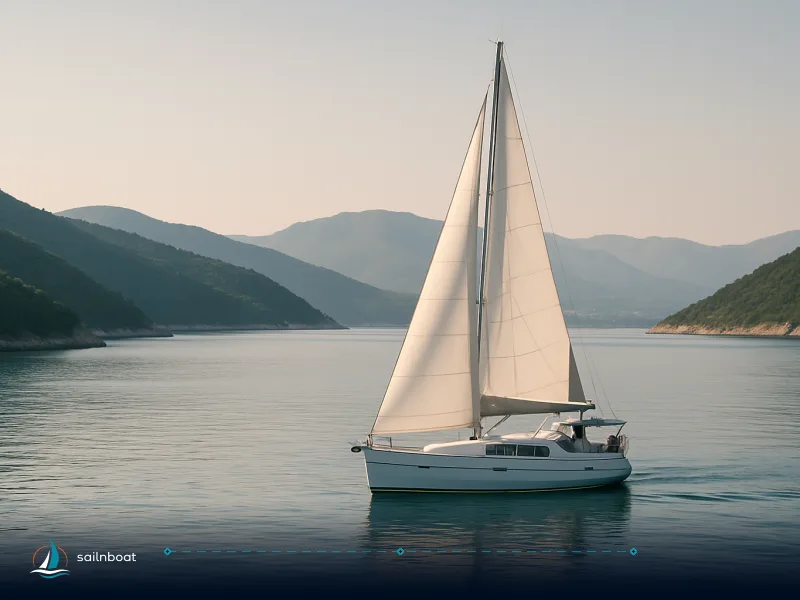
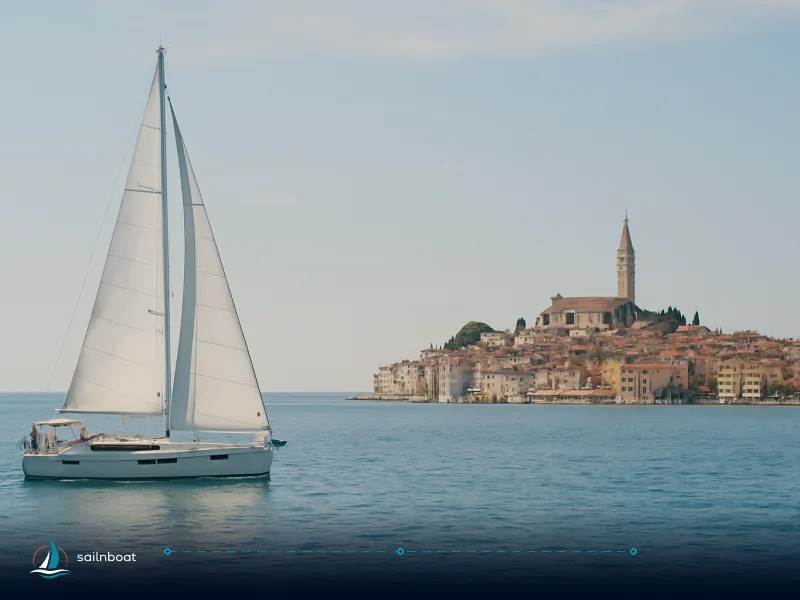
Lošinj Sailing Itinerary: A Week of Pine‑Fringed Bays
Seven realistic days from Mali Lošinj that keep daily hops short, prioritise sheltered, pine‑fringed anchorages and leave time for scooters, hill walks and late‑night berths.

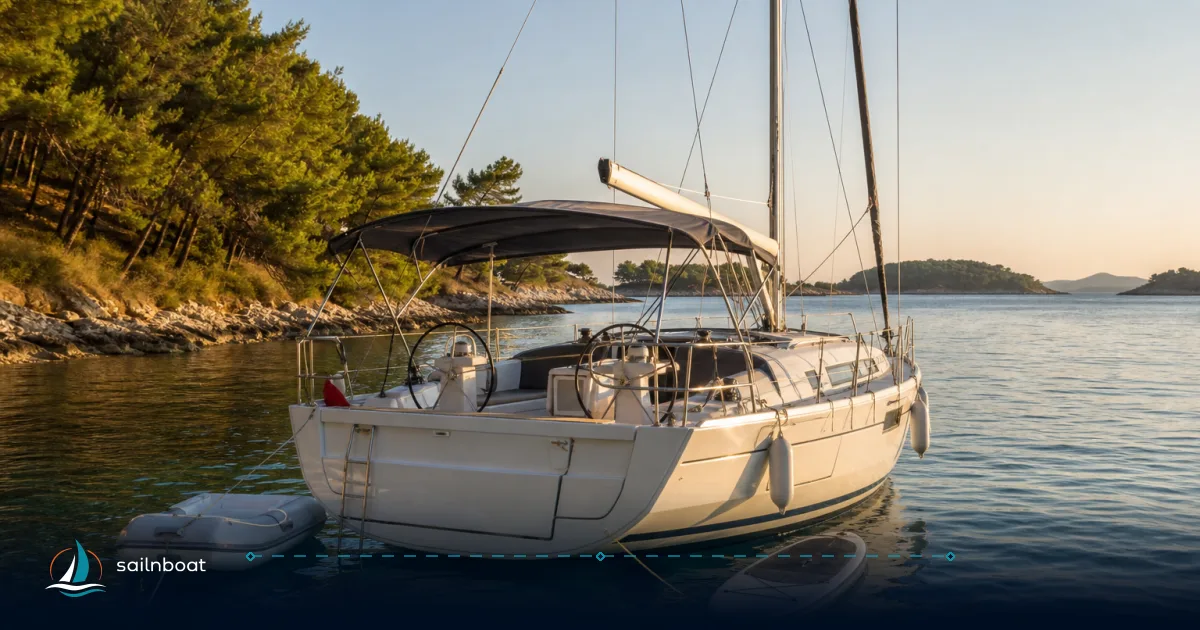
Start here: a practical lošinj sailing itinerary gives you short, comfortable hops so you spend evenings ashore and mornings exploring—not long days beating across open water. This week‑long Cres loop from Mali Lošinj is designed to keep most legs under 10 NM, with a total distance that typically ranges around 50–60 NM depending on routing, and hits well‑protected, pine‑fringed anchorages while leaving time for scooter runs and late‑night berths in marinas when you need them. The plan below is written for an owner‑driver or experienced skipper working from a charter base in Marina Lošinj; adjust daily legs for your boat’s cruising speed, the forecast and bridge opening times at Osor.
Daily Sailing Distances and Itinerary Overview
This loop is intentionally short: easy mornings, long afternoons ashore, and straightforward night‑handovers. Distances are the sailed routing between the named overnight spots — they assume the direct channel passages a skipper would normally use. Estimated times use a conservative cruising speed band (5–6 knots), which matches typical charter monohulls on this coast. Use the table to pick days you want to shorten or lengthen.
Day-by-day summary (distance = nautical miles; times = estimates at 5 / 6 knots)
| Day | Passage | NM | Est. time at 5 kn | Est. time at 6 kn | Overnight (recommended) |
|---|---|---|---|---|---|
| Day 1 | Mali Lošinj → Veli Lošinj | 5 NM* | 1:00 | 0:50 | Veli Lošinj (bay or town quay). |
| Day 2 | Veli Lošinj → Valun (Cres) | 8 NM* | 1:36 | 1:20 | Valun Bay (anchor or village mole). |
| Day 3 | Valun → Lubenice (Cres) | 6 NM* | 1:12 | 1:00 | Lubenice area (anchor beneath the village / Plava Grota options). |
| Day 4 | Lubenice → Cres (town) | 10 NM* | 2:00 | 1:40 | ACI Marina Cres or swing‑in town harbour. |
| Day 5 | Cres → Ilovik | 8 NM* | 1:36 | 1:20 | Ilovik harbour / buoys in the channel (sheltered). |
| Day 6 | Ilovik → Osor | 7 NM* | 1:24 | 1:10 | Osor quay / nearby anchorage (watch bridge openings). |
| Day 7 | Osor → Mali Lošinj | 10 NM* | 2:00 | 1:40 | Return to Marina Lošinj (handover). |
Notes on times and planning
- Times above are conservative working estimates — a particular yacht may shave 10–30% off these figures. Typical charter monohulls commonly cruise in the mid‑5 to low‑7 knot range; plan on the lower side when passage planning for a chartered boat.
- The Osor channel has a swing bridge that opens at fixed times; plan passage and berth times to match the published openings. The channel is narrow — keep speed and lookouts sharp.
- The straight‑line distances are realistic routed legs for this loop; expect to add some miles for detours around reefs, buoyed channels, or to reach a lee anchor spot.
Sheltered Anchorages in Pine‑Fringed Bays
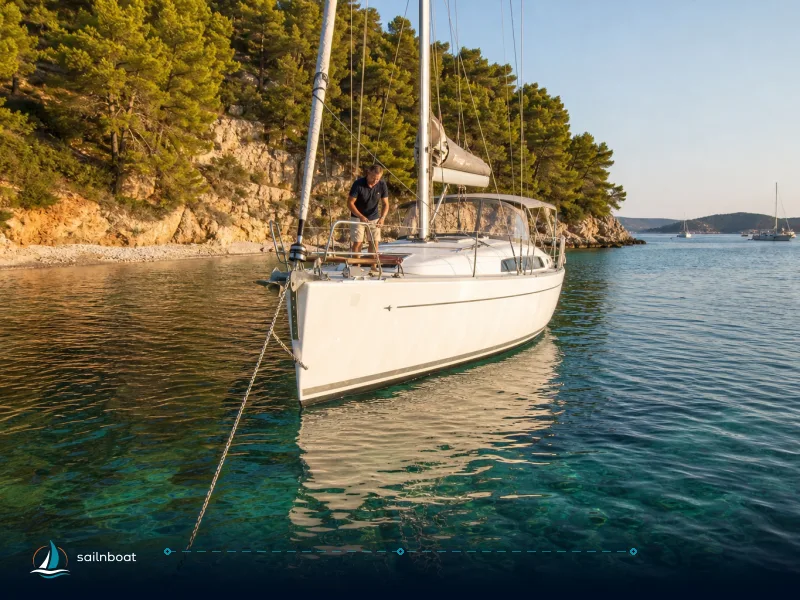
This coast is characterised by small bays shaded by pine and mixed woodland. The anchorages listed below are the practical ones you will use for overnight stops; I note the reason to pick each and what to watch for.
Top anchorages (practical notes)
- Veli Lošinj (Krivica / Balvanida area): calm waters close to town, pine trees and small beaches within walking distance; good holding in sand/mixed bottom in settled weather — take a berth in the inner bay or bow‑to the town quay if available. Ferry traffic through the channel requires an attentive night watch.
- Valun Bay (Cres): long, well‑sheltered bay with village mole and firm holding in most places; good protection for northerly and westerly winds but exposed to a strong NW bora — if the forecast shows bora, prefer ACI Cres or a more enclosed cove.
- Lubenice / St. John’s Bay: dramatic cliffs and pine above, anchoring close to pebble beaches gives easy shore access to the hilltop village (expect a steep walk). Holding is generally reliable on sand and Posidonia‑free patches — pick a spot with good swing room.
- Cres town (ACI Marina Cres / natural harbour): large, deep and very protected harbour; use the marina if you need services (water, power, fuelling) or if the forecast looks uncomfortable. Several quiet anchor spots exist in the town’s larger bay when the marina is full.
- Ilovik (harbour and Sveti Petar channel): the channel between Ilovik and Sveti Petar is a classic late‑afternoon mooring — buoys and limited quays, reliable protection from most directions; pick stern‑to or a buoy depending on size and depth.
- Osor channel / nearby coves: sheltered anchorages exist either side of the channel; Osor town quay is handy for a late‑night arrival but check swinging room if the canal is busy and note the bridge schedule.
Practical anchoring tips
- Always check seabed type with the echo sounder before dropping; Posidonia meadows are common and many bays have protected seagrass — avoid unnecessarily dragging anchor over meadows. Many guide sources and local harbormasters will point out the Posidonia areas.
- Carry adequate scope (4:1–7:1 depending on conditions), check swinging room and set a second stern anchor or pick up a spare stern line to shore if the quay allows.
- If the forecast shows a strong bora or sirocco, favour the full‑service marina rather than exposed anchorages.
Scooter Rentals and Land‑Based Excursions
A short land rover (scooter) lets your crew see the hilltop villages, pine‑lined roads and beaches ashore while the boat rests in a quiet bay.
Where to rent scooters
- Mali Lošinj: multiple rental operators offer mopeds, scooters and bicycles during the main season; shops cluster near the waterfront and marina. Recent price lists show 24‑hour scooter rentals at €45 for 50 cc and €59 for 125 cc, with rates higher in peak July/August. Book in advance for high season or weekends.
- Cres town: rental choice is more limited than Lošinj; hire early in high season or consider a taxi for single trips if scooters are sold out. Many providers have one‑day minimums in peak months.
Recommended excursions
- Lubenice hilltop: park the scooter in the small lot above the village and walk down to the bay; take the late afternoon to watch the light on the cliffs. The walk up is steep — plan water and comfortable shoes.
- Valun food stops: the tiny village of Valun hosts a couple of classic konobas (tavernas) specialising in local seafood; a short scooter ride lets you sample shellfish and return to the boat.
- Ilovik island loop: Ilovik is car‑free but small — use a scooter on arrival on nearby Cres or Lošinj for a short coastal ride and beach stops; on Ilovik itself you’ll walk between beaches and cafés.
Practical rental notes
- Helmets are legally required and usually supplied. Rental contracts commonly insist on a recent driving licence, and some operators may require a credit card, passport, or security deposit—confirm requirements with your chosen rental provider.
- Rates vary by season and scooter size; expect a noticeable premium in July–August and on public holidays.
Late‑Night Mooring Options
When you need fuel, electricity, showers, or a late check‑in, two marinas dominate the practical choices in this loop.
Marina facilities (what to expect)
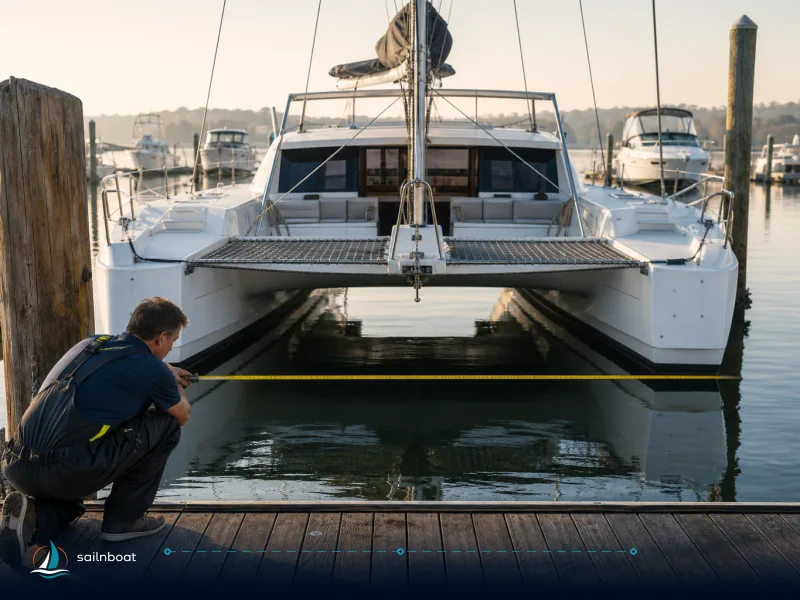
- Marina Lošinj (Mali Lošinj): full marina services, electricity and water on berths, haul‑out and technical assistance — a sensible choice for handover and last‑night provisioning. The marina publishes a tariff and service list for on‑site operations. If you plan a late arrival, call ahead so a berth can be held.
- ACI Marina Cres: large, well‑protected and with guest services; useful fallback if weather closes anchorages on the west coast of Cres. ACI’s official information lists standard marina amenities and guest berthing.
Guest buoys and quays (practical choices)
- Many bays around Ilovik, Krivica (Lošinj) and Valun have guest buoys or small quays — they are comfortable for an evening but limited in number during high season. If the crew wants a late dinner ashore, pick an early‑arrival plan or accept a short tender ride ashore if you anchor nearby.
Safety and etiquette for late arrivals
- Call the marina on VHF before entry (many keep a 24/7 watch in peak season but will request a call); stow fenders and prepare lines before you arrive.
- If taking a stern‑to quay, be ready to pay the overnight guest fee and top up lines for tide or wind shifts overnight. Marina price lists are published and vary by vessel size and season.
Local Maritime Regulations and Permits
Clear paperwork and respect for local rules keep the week smooth. Two enforcement‑heavy areas are qualification checks and anchoring rules.
Skipper qualifications and radio
- For bareboat charter in Croatia the skipper of record must hold a recognised sailing licence plus a VHF radio operator certificate (commonly the Short Range Certificate, SRC). Croatian charter companies and harbour authorities routinely check originals at handover — if you lack the paperwork, a skipper from the base is typically the practical alternative. Carry originals and a short sailing CV if you can.
Speed limits and safe speed
- Marinas and narrow channels commonly require slow speeds (many marinas adopt a 5‑knot guidance; some spots set lower limits in congested areas). When passing narrow channels, local published notes or harbourmaster guidance may specify a speed restriction — reduce speed early to avoid wash and to maintain steerage.
- Basic rule: keep speed down in marina approaches, within 200 m of waterfront installations, and around swimmers or divers.
Anchoring restrictions and protected seabed
- Some bays contain Posidonia beds or lie within protected or managed zones; anchoring over seagrass is discouraged or prohibited in many places to protect the habitat. Local port authorities (Lučka Kapetanija) and marina notices identify restricted areas — when in doubt, pick a marina or a sandy patch away from seagrass.
Practical paperwork checklist
- Originals of your skipper licence (ICC, RYA/IYT or national equivalent accepted by Croatia) and VHF/SRC certificate.
- Passports for all crew.
- Charter documents, insurance papers and skipper contact details.
- Local rules and the marina’s price list (a copy on board is useful). If you are unsure which licences are accepted, contact your charter company in advance — acceptance can vary by operator and the harbourmaster’s local interpretation.
Final practical checklist (before you cast off)
- Weather window: prefer mornings for channel transits; if a strong bora is forecast, plan to reach a marina the night before.
- Fuel & water: top up at Marina Lošinj or ACI Cres; fuel stations on the route are limited.
- Lines & fenders: carry an extra stern line for stern‑to quay moorings and a second anchor or kedge for exposed bays.
- Scooter bookings: reserve scooters for day‑use at least 24–48 hours in peak season.
- Documents: originals of skipper licence and VHF/SRC on board and at handover.
Plan the week with flexibility: this loop is intentionally light on miles so you can shorten a day for weather or linger ashore when the crew finds a favourite taverna.
Frequently Asked Questions
Plan roughly 5–10 NM each day; at a conservative cruising pace of 5–6 knots expect 1–2 hours underway per leg — the full seven‑day loop covers about 54 NM total.
Veli Lošinj (Lošinj), Valun Bay and nearby coves (Cres), Lubenice (access to the village and pebble beaches), Ilovik (sheltered bays and buoys) and Osor channel; each has well‑protected spots fringed by pine or low forest.
Mali Lošinj hosts several rental shops (scooters, mopeds and bikes); book in July–August and budget roughly €30–50 per day (many guides quote about 250 HRK/day as a typical baseline).
Use Marina Lošinj or ACI Marina Cres for late arrivals or services (water, electricity, fuel); otherwise anchor in sheltered bays or pick up guest buoys where available — be aware of limited space during high season.
Carry your skipper licence accepted in Croatia (ICC, RYA Day Skipper / practical, ASA/IYT equivalents commonly accepted) and a VHF Short Range Certificate (SRC) — these are checked at handover; observe marina speed limits and local anchoring restrictions which vary by bay.
Written by
Sailnboat Editorial
The Sailnboat editorial desk covers yacht and boat chartering worldwide — routes, bases, seasons, boat types, paperwork and the practical costs that decide a trip. We are a charter marketplace, not a boat owner or a local agency: what we sell is judgement and support, so our guides are written to help you make a decision, not to sell you a specific boat. Every guide is checked against live operator and marina data before it goes out.
Fact-checked against live operator and marina data, and published under our editorial standards. Last reviewed: .