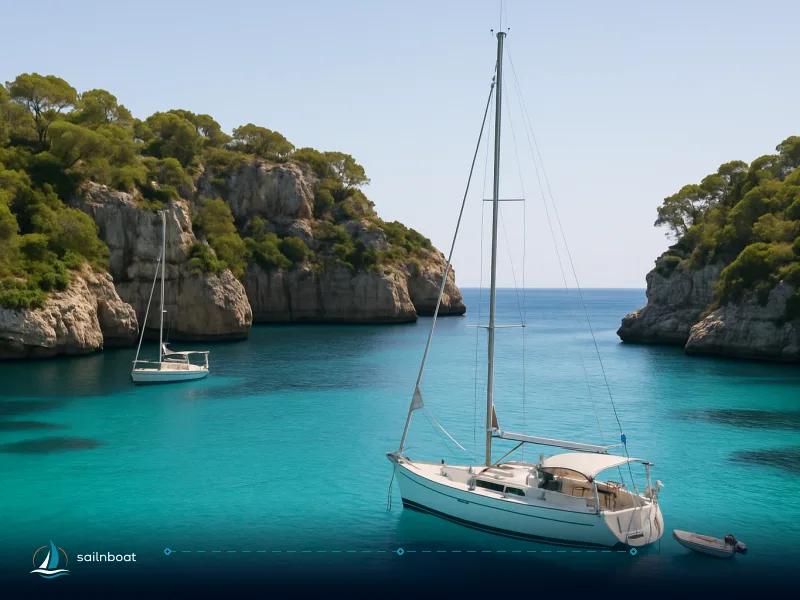
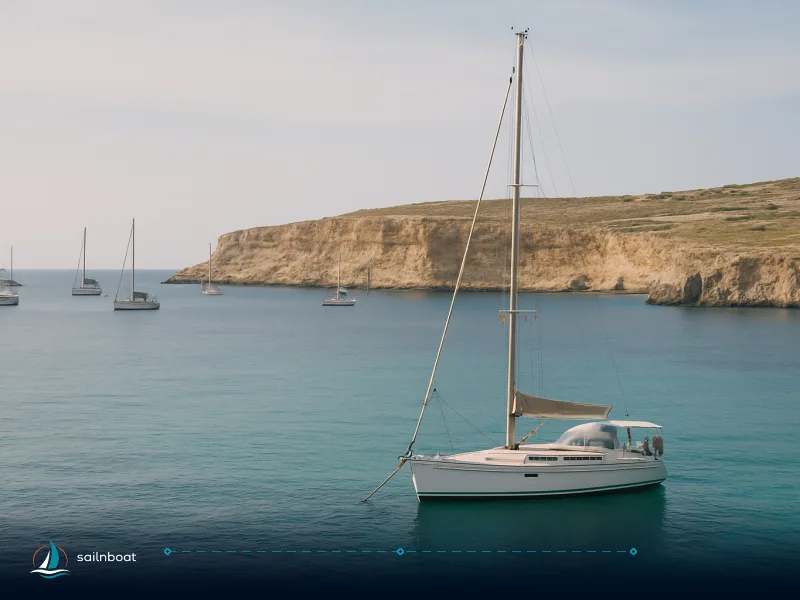
Anchoring Posidonia: Protecting Seagrass in Mediterranean Bays
Practical guidance for yacht crews on how to avoid damaging Posidonia oceanica: how to find it, what alternatives exist to anchoring on it, and the legal and dinghy practices you must follow.

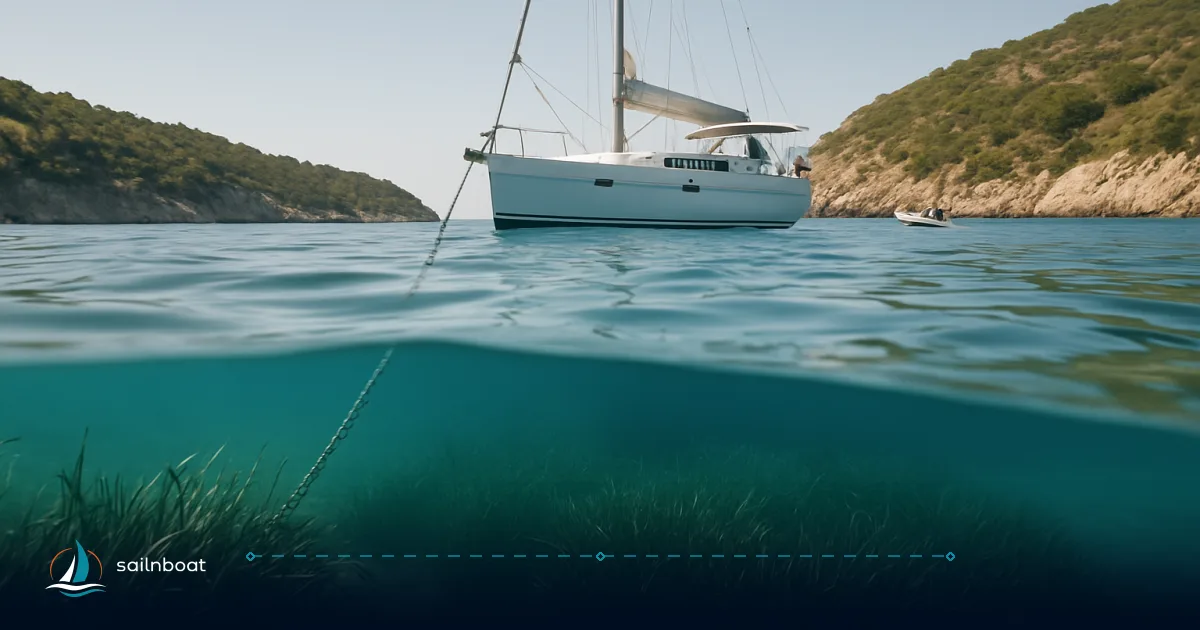
You must not anchor on Posidonia if you want to avoid years of ecological damage and the risk of heavy fines — anchoring posidonia directly tears rhizomes and creates scars that can take decades to recover.
Understanding Posidonia Oceanica
Ecological Role
Posidonia oceanica is the signature seagrass of the Mediterranean. It forms dense meadows in shallow subtidal areas and functions as an ecosystem engineer: trapping and stabilising sediments, improving water clarity, and creating nursery and feeding grounds for many fish and invertebrates. Posidonia mattes also sequester and store blue carbon in the seabed; the accumulated material and rhizomes form a persistent habitat whose loss is essentially permanent on a human timescale.
Why that matters to you as a skipper: a single anchor drop that damages a meadow can leave an obvious scar for decades, reducing local fisheries, increasing turbidity and risking enforcement action in jurisdictions that protect these habitats. The practical consequence is simple — treat suspected Posidonia as off‑limits.
Identifying Seagrass Meadows
Visual Identification Techniques
- From the surface, look for continuous dark green or olive bands close to shore that follow the shoreline contour; in clear water this is often the leaf canopy. In shallow bays you may see leaves moving in the swell close to the surface. These are typical cues of a seagrass meadow.
- Depth range: Posidonia commonly grows from roughly 1–2 m depth down to about 30–40 m in very clear water; it does not occur in the intertidal. If the bay shoals to that range and you see a green belt, assume Posidonia.
Use maps and apps before committing
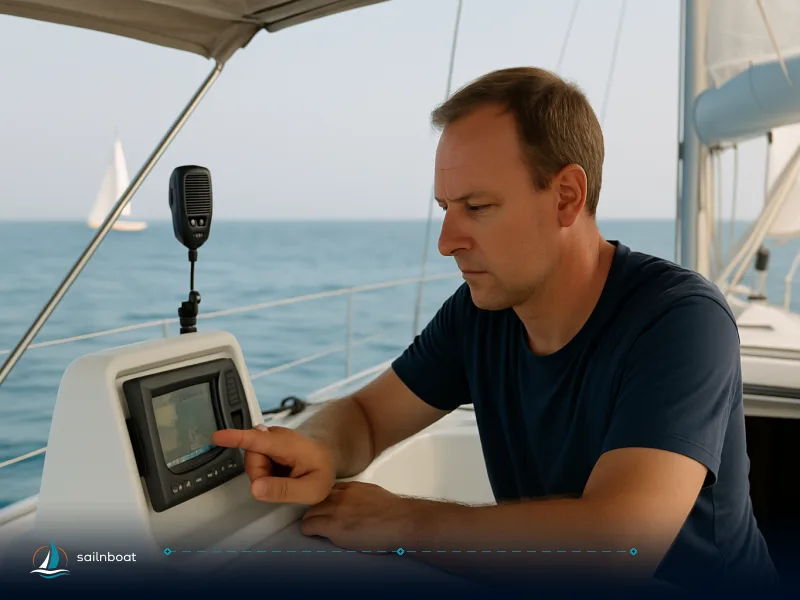
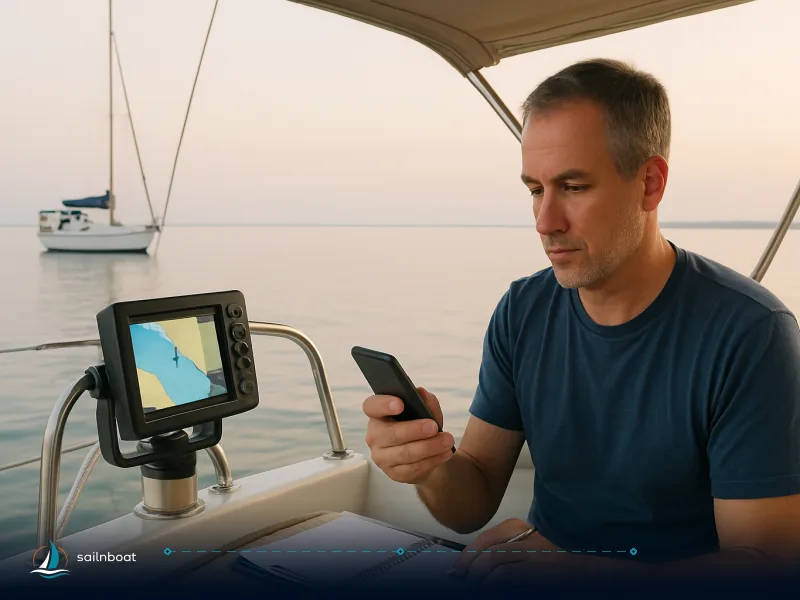
Numerous regional mapping projects and management apps exist to help skippers avoid meadows — for example mapping efforts led by Andromède Océanologie and associated mobile applications and maps for the French Mediterranean that display habitat classes and guide anchoring choices. Use official marine habitat maps, charts annotated with seabed type, and any national or regional “posidonia” overlays available for your cruising area. When a mapped layer exists, favour it over uncertain visual judgement in low visibility.
Practical checklist before you drop anchor:
- Check the latest official seabed map/app for the bay.
- Look for a continuous green band or dark patch through binoculars.
- If the chart shows “seagrass”, choose an alternative (buoy or sandy patch).
- If visibility is poor and no map is available, do not anchor here—move to a buoy, marina, or another bay. If safety requires immediate anchoring, prioritise vessel and crew safety and anchor, then report to authorities if required.
Anchoring Alternatives
When Posidonia is present, your options are: use an authorised mooring buoy, locate a clearly sandy patch well outside the meadow, or tie to an approved low‑impact mooring system (installed screw anchors, manta‑ray style systems). Direct anchoring on seagrass is the last resort and in many places illegal.
Mooring Buoys and Sandy Patches
- Mooring buoys: where authorities have installed fields of buoys, you are normally required to use them instead of anchoring. These buoys are designed and managed to minimise seabed damage. In some regions (for example the Balearic Islands) buoy fees and reservation systems are administered by port authorities and published in the regional tariffs. The Balearics’ published rates illustrate the structure of fees by boat length and season — in high season small boats often pay double the off‑season rate.
- Sandy patches: an anchor set on consolidated, clean sand outside any mapped meadow will not cut rhizomes. If you must anchor, position so the chain/rode will lie only on sand, not over nearby seagrass. Approach slowly to avoid dragging the chain across the meadow while setting.
Table — quick comparison of anchoring options
| Option | Typical impact on Posidonia | When to use | Practical notes |
|---|---|---|---|
| Official mooring buoy | Very low (no chain dragging on meadow) | Where a buoy field exists | Book or pay at port authority; expect seasonal rates. |
| Low‑impact fixed mooring (screw/Manta Ray) | Low (designed to avoid scouring) | In specially authorised sites | Installed by authorities/MPA managers; look for certified fittings. |
| Sandy patch anchoring | Low if truly sand and clear of meadow | When buoy not available and sand is confirmed | Inspect seabed, set anchor carefully to avoid chain sweep. |
| Direct anchoring on meadow | High — destroys rhizomes | Never | Prohibited in many regions and often punished. |
Low‑impact moorings: what to expect
Low‑impact moorings (proprietary designs or screw anchors) avoid long dragging chains and are commonly specified in regional conservation regulations. Where they are authorised you may be asked to use them by harbour or MPA managers; prefer marked low‑impact moorings (e.g., screw/driven anchors or elastic mid‑water systems). Avoid traditional block‑and‑chain moorings on or near Posidonia, which can scour meadows. Projects to install these systems are common around islands and protected bays.
Legal Considerations and Fines
Regulations differ across Mediterranean states but the trend is clear: stronger, basin‑wide protection and local enforcement. Spain has established a national framework: Real Decreto 191/2026 sets conservation measures and a legal regime for fondeo in Spanish Mediterranean waters, explicitly regulating anchoring systems and prohibiting damaging practices over seagrass meadows.
Penalties and enforcement — what to expect:
- Fines and sanctions are regionally determined and range from modest administrative penalties to very large fines and, in some countries, criminal sanctions for severe or deliberate habitat destruction. France’s environmental code and local decrees allow for substantial fines (reported in cases up to €150,000 and, in high‑profile incidents, seizure or navigation bans). Italy and Spain apply administrative fines that vary by region and case severity; recent Spanish court cases include multi‑thousand‑euro penalties for anchoring in protected areas. The moral: expect significant, variable penalties and enforcement activity in busy seasons.
Operational implications:
- Many Spanish autonomous communities (Balearics, Comunidad Valenciana, etc.) have region‑level decrees or tariffs that prohibit anchoring on Posidonia and require buoy use in certain zones. If you cruise the Balearic Islands you will encounter regulated buoy fields and published daily fees — these are enforced.
A practical rule: before you plan an overnight in a bay, check the national/regional rules for that harbour or MPA — fines and authorised mooring requirements are set locally and are publicly available.
Dinghy and Shore Etiquette
Your dinghy and shore behaviour extend the same obligations you follow when anchoring the mothercraft.
Best practices for dinghy use
- Use official landings and beaches where provided. These are chosen to avoid sensitive beds.
- Approach slowly and avoid beaching or dragging the dinghy over shallow meadows — if a shallow green fringe is present, it is almost certainly Posidonia or another seagrass.
- Keep outboard propellers raised when over suspected seagrass; propeller wash can uproot shoots and resuspend sediment.
- Where no landing exists, make a short tender approach to a rocky or sandy spit; use a painter and step ashore rather than dragging the dinghy over vegetation.
If you anchor off a beach to go ashore, pick a sandy landing or a marked path and leave no trace; avoid creating new tracks through littoral vegetation or pushing a dinghy over submerged meadows.
How to set anchor if there’s any doubt — step‑by‑step
- Run a final check: chart/app for seabed + visual inspection for green band. If either indicates Posidonia, stop — find a buoy or move.
- If you find a sand patch well away from any meadow, approach bow‑to‑wind, stop, and slowly pay out rode.
- Pay out appropriate scope depending on conditions: typically 5:1 to 7:1 rode (length of rode: effective depth) for overnight holds; use more in wind or current. Confirm set by gently backing and checking an anchor alarm or GPS drift.
- Avoid letting chain sweep across beds while manoeuvring — bring the vessel fully to a stop before dropping the anchor and pay rode steadily.
- Before you leave the bay, ensure the anchor is retrieved carefully; if fouled, avoid violent recovery that could dislodge rhizomes — call harbour services if necessary.
Conclusion: Responsible Anchoring
Anchoring posidonia is avoidable with a small amount of planning. Use maps and buoy fields, pick sandy spots well away from green belts, prefer low‑impact moorings where provided, and treat dinghy landings with the same care you would for your main anchor. Legal regimes across the Mediterranean are tightening — Legal regimes across the Mediterranean are tightening — Spain’s protection of Posidonia is set by national biodiversity law and region/MPA‑level regulations (for example, the Balearic Islands’ Decree 25/2018) and local anchoring rules — and fines and enforcement are real and local. Make the pre‑anchor checklist part of your routine: chart, app, visual; if in doubt, move.
Plan your next anchoring with these responsible practices in mind — they keep your crew safe, preserve the bay for future visits, and avoid the administrative and ecological costs of damaging Posidonia.
Frequently Asked Questions
Posidonia oceanica is a slow‑growing, endemic Mediterranean seagrass that builds dense meadows. These meadows trap sediment, protect coasts from erosion, act as nurseries for fish and store significant amounts of organic carbon — losses are hard to reverse.
Identify meadows visually (continuous green bands, leaf waving), check up‑to‑date seabed maps and use public apps and regional habitat maps (several Mediterranean projects provide mobile maps). If unsure, assume seagrass is present and avoid anchoring.
Consequences vary: Spain introduced Real Decreto 191/2026 to regulate and prohibit damaging fondeo; France and some regions apply large fines and, in extreme cases, criminal penalties — local authorities set specific sanctions.
Yes — use authorised mooring buoys, purpose‑designed low‑impact moorings (e.g., 'Manta Ray' or screw anchors), or find clearly sandy patches away from seagrass; many Mediterranean areas now require buoy use where fields exist.
Use official landing points or beaches; carry a short painter and low‑friction approach; avoid dragging the dinghy over meadows, and keep outboard propellers raised over seagrass.
Written by
Sailnboat Editorial
The Sailnboat editorial desk covers yacht and boat chartering worldwide — routes, bases, seasons, boat types, paperwork and the practical costs that decide a trip. We are a charter marketplace, not a boat owner or a local agency: what we sell is judgement and support, so our guides are written to help you make a decision, not to sell you a specific boat. Every guide is checked against live operator and marina data before it goes out.
Fact-checked against live operator and marina data, and published under our editorial standards. Last reviewed: .